How Long Do Memory Foam Mattresses Last? 2026 Expert Guide
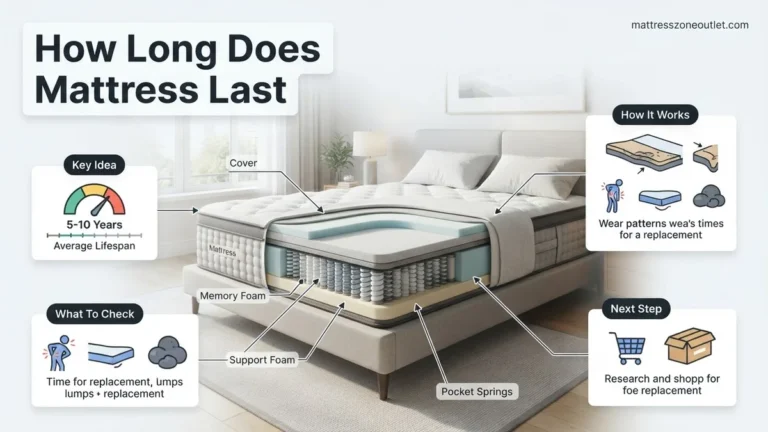
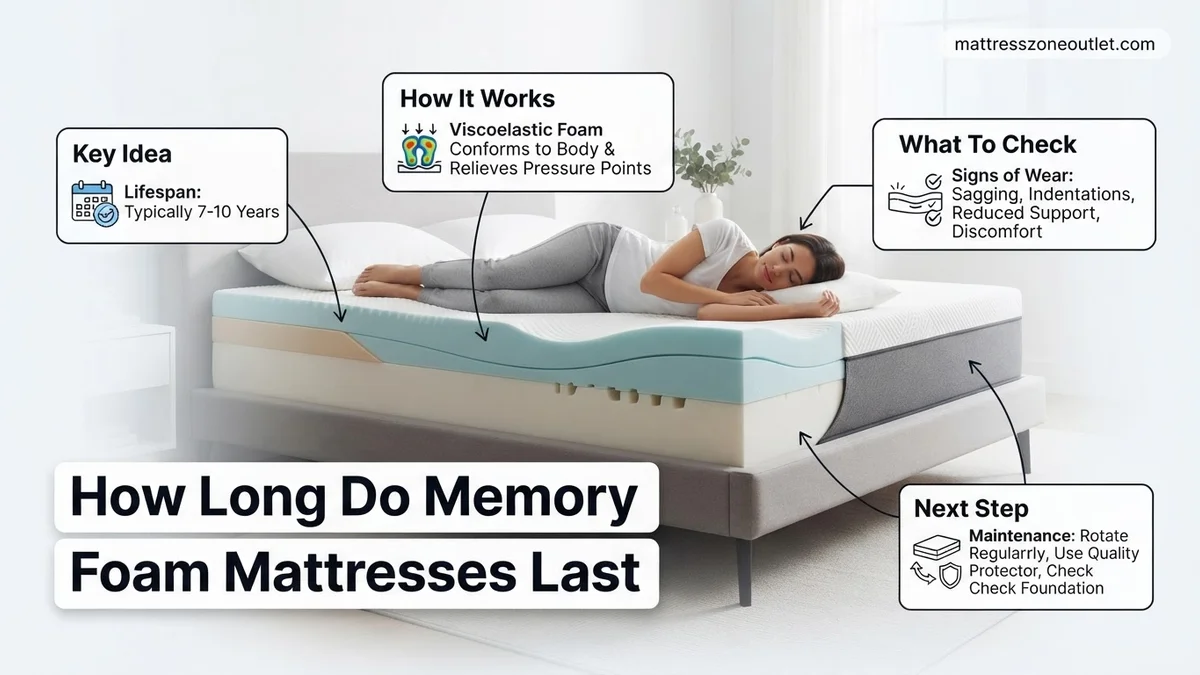
Most memory foam mattresses last between 6 to 10 years before developing noticeable sagging or losing supportive properties. The exact lifespan depends heavily on the foam density, overall material quality, and how well the mattress is maintained over time.
On average, a quality memory foam mattress lasts between 6 to 10 years. If you bought a budget-friendly model during the 2020 furniture boom, you are likely nearing or sitting right at the end of its functional lifespan in 2026. High-density, premium options push toward the decade mark, while low-density foams degrade significantly faster.
Knowing your mattress’s actual lifespan helps you plan your budget and protect your spine. Sleeping on a worn-out, sagging foam bed leads to poor spinal alignment, chronic lower back pain, and restless nights. Let us dive straight into why memory foam degrades and how you can maximize your investment.
Key Takeaways
- Standard memory foam mattresses typically last between six and ten years with proper care.
- Higher foam density directly correlates with increased durability and a longer mattress lifespan.
- Regularly rotating your mattress prevents premature body impressions and uneven wear patterns.
- A sturdy, supportive bed foundation protects the foam layers from sagging and structural damage.
- Waking up with persistent back pain is a primary indicator that your mattress needs replacing.
What Causes Memory Foam Mattresses to Wear Out and Sag
Foam Cell Breakdown and Density
Memory foam consists of millions of microscopic open and closed cells that compress when you apply pressure. Over years of nightly use, these polymer cell walls rupture and lose their elasticity. Once the cell structure breaks down, the foam stops returning to its original flat surface, resulting in permanent body impressions and premature sagging.
- Low-density foam (under 3.5 lbs/cu ft): Typically lasts 3 to 5 years before losing structural integrity.
- Medium-density foam (3.5 to 4.5 lbs/cu ft): Usually lasts 6 to 8 years with average daily use.
- High-density foam (over 4.5 lbs/cu ft): Can easily last 8 to 10+ years without major structural failure.
Environmental and Usage Stressors
Beyond natural material aging, everyday environmental factors accelerate foam breakdown. Body heat and ambient humidity soften the polyurethane material, making it more vulnerable to permanent compression. Furthermore, persistent high pressure points without adequate support structures will fast-track the formation of uncomfortable dips right where you sleep.
How to Fix and Prevent Premature Memory Foam Degradation
Implement Proper Rotation Habits
You cannot stop the aging process entirely, but you can distribute wear evenly. Rotating your mattress 180 degrees every three to six months prevents your body weight from concentrating on the exact same spot. Since most people sleep in the same position relative to the headboard, rotation ensures both sides of the foam experience equal compression over time.
- Rotate your mattress head-to-toe every 4 months as a standard maintenance rule.
- Avoid flipping unless your specific 2026 model is explicitly marketed as double-sided or flippable.
- Most modern memory foam beds feature a supportive base layer on the bottom and comfort foam on top.
Upgrade Your Foundation and Frame
A high-density memory foam mattress requires a completely flat, rigid surface to support its weight. Placing your mattress on old box springs with loose wire coils or a slatted frame with gaps wider than 3 inches causes the foam to sag into the empty spaces. Always pair your memory foam with a solid platform bed, a slatted base with tight spacing, or an adjustable frame to preserve the internal cell structure.
Step-by-Step Maintenance Routine to Extend Mattress Lifespan
Maximizing your memory foam mattress investment requires a consistent care routine. Sleep ergonomics experts and top manufacturers recommend specific preventive measures to protect the visco-elastic foam core from premature degradation.
1. Implement Regular Rotation Cycles
Body impressions form naturally in high-traffic zones over time. Rotate your mattress 180 degrees every three to six months to distribute wear evenly across the surface. This simple action prevents deep permanent indentations and preserves spinal alignment support.
2. Utilize a Waterproof Protective Cover
Moisture is the primary enemy of memory foam, breaking down cell walls and weakening structural integrity. Always use a breathable, waterproof protector to block sweat, spills, and dead skin cells. Clean this cover monthly according to manufacturer care instructions.
3. Vacuum and Air Out the Surface
Dust mites and debris accumulate within the outer fabric layers over time. Vacuum the surface bi-monthly using a soft brush attachment. On dry days, strip the bed completely and allow the mattress to breathe for a few hours to release trapped humidity.
What If It Still Doesn’t Support You and Requires Replacement?
If routine maintenance fails to resolve nagging back pain or visible sagging, your mattress has likely reached the end of its structural lifecycle. When a memory foam core loses its rebound capability, temporary fixes will no longer restore proper orthopedic support.
- Check the warranty terms: Review your purchase documentation to see if the depression depth qualifies for a warranty claim. Most standard warranties cover indentations exceeding 1.0 to 1.5 inches when measured without weight.
- Test the foundation integrity: Inspect your box spring or platform bed slats. Broken or widely spaced supports (greater than 3 inches apart) can mimic mattress failure by causing the foam to sag prematurely.
- Evaluate replacement costs versus repair: Adding temporary latex toppers costs between $100 and $300, but this is merely a band-aid for a compromised core. High-quality replacement memory foam mattresses typically range from $800 to $2,500 depending on thickness and density.
- Recycle responsibly: Contact local municipalities or specialized mattress recycling programs. According to industry environmental data, over 80 percent of mattress components can be broken down and repurposed.
Conclusion
Understanding how long memory foam mattresses last helps you plan for optimal sleep health and budget management. While standard models endure for seven to ten years, proactive rotation, proper foundations, and protective covers significantly extend that timeline. According to verified research and sleep ergonomics experts, replacing a compromised sleeping surface remains essential for preventing chronic musculoskeletal discomfort. Your actionable next step is to measure any current surface indentations and inspect your bed base today to determine if a full replacement is due by 2026.
❓ Frequently Asked Questions
How long do memory foam mattresses last if they are low density?
Low-density memory foam mattresses, typically under 3.5 pounds per cubic foot, usually last only 3 to 5 years before losing support. Because they contain less raw material, they compress and develop permanent body indentations much faster than denser alternatives.
Can sleeping position impact how long my memory foam mattress lasts?
Yes, combination sleepers and stomach sleepers distribute weight differently than strict side sleepers. Side sleepers concentrate more pressure on the shoulders and hips, which can cause localized foam breakdown over time.
Does body weight influence the lifespan of a memory foam mattress?
Heavier sleepers exert more force on the foam layers, which accelerates the compression and breakdown process. Choosing a high-density, thicker memory foam mattress or a hybrid model helps mitigate this rapid wear.
Do bed bug treatments or cleaning ruin memory foam longevity?
Harsh chemical treatments, excessive moisture from steam cleaning, or getting the core wet can degrade the polyurethane foam structure. Always use a waterproof protector and follow manufacturer cleaning guidelines to preserve foam integrity.
Why does my memory foam mattress feel softer after a few years?
Memory foam softens with age and exposure to body heat and moisture as the cell walls begin to break down. While a slight break-in period is normal, extreme softening means the material has lost its structural elasticity.
Do warranties cover normal sagging in memory foam mattresses?
Most mattress warranties cover permanent impressions deeper than a specific threshold, usually 1 to 1.5 inches. However, normal softening of the foam over time is typically considered standard wear and tear and is excluded from warranty coverage.