What Makes Mattress Comfortable Expert Guide for 2026
True comfort relies on a precise balance between pressure relief and proper spinal alignment. Understanding how comfort layers and support cores interact helps determine what makes a mattress feel right for your body.
A comfortable mattress is the result of precise biomechanical support and advanced material engineering, not just soft padding. True comfort requires a delicate balance between spinal alignment and targeted pressure relief, ensuring your body weight distributes evenly while keeping your hips and shoulders properly supported.
By 2026, mattress science has evolved significantly. Modern sleep technology focuses on micro-climate control and zone-based ergonomics to prevent tossing and turning. Understanding these core physical mechanics helps you bypass marketing hype and choose a sleep surface that genuinely relieves pain and improves sleep quality.
Key Takeaways
- Pressure relief prevents painful friction points on hips and shoulders.
- Support layers keep the spine in a neutral, healthy alignment.
- Sleeping positions dictate the ideal firmness and material type.
- Body weight alters how a mattress contours and supports.
- Temperature regulation prevents overheating during the night.

What Causes Mattress Discomfort and Poor Sleep Quality
Spinal Misalignment and Sagging Support Cores
When your mattress lacks structural integrity, your spine bends unnaturally throughout the night. This places constant tension on your lower back muscles and joints. If your support core yields too much under heavy areas like your hips, you sink into a hammock position.
- Sagging depth: Indentations greater than 1.5 inches typically fail to support proper spinal alignment.
- Muscle fatigue: Your core muscles must work overtime while you sleep to keep your spine straight on a failing mattress.
- Nerve compression: Poor alignment frequently pinches nerves, leading to morning numbness and sharp lower back pain.
Pressure Point Buildup and Restricted Blood Flow
Firmness is not inherently bad, but excessive rigidity creates localized pressure hotspots. When a mattress cannot contour to your shoulders and hips, your body weight concentrates on those narrow surface areas. This compresses capillaries, cuts off micro-circulation, and forces your brain to wake up and shift positions.
- High-pressure zones: Shoulders and hips experience concentrated force exceeding 32 mmHg, the threshold where capillary blood flow restricts.
- Tossing and turning: Sleepers shift positions every 10 to 12 minutes on high-pressure surfaces, severely disrupting deep sleep stages.
- Joint aching: Side sleepers feel this most acutely, often waking up with sharp pain in their outer shoulders and hips.
Master Mattress Comfort in 7 Simple Steps
Finding a truly comfortable mattress is rarely a matter of pure luck; it is a science rooted in ergonomics, body geometry, and material engineering. When you wake up with back pain or stiffness, your bed is failing to support your skeletal structure properly. This comprehensive guide walks you through the exact evaluation process experts use to decode comfort, helping you analyze your sleep style, test foundational layers, and ultimately curate or select the ideal sleep surface for restorative rest.
Step 1: Determine Your Primary Sleep Position
What you need: A full-length mirror, a willing observer or smartphone camera, and an honest assessment of your nighttime habits.
Instructions: Your sleeping position dictates how pressure points interact with a mattress surface. Side sleepers require a softer surface to cradle the shoulders and hips, preventing alignment distortion. Back sleepers need a medium-firm foundation that fills the lumbar gap without letting the hips sink too low. Stomach sleepers demand a firm mattress to prevent the pelvis from dipping, which strains the lower spine. Stand sideways in front of a mirror and assume your natural sleeping posture on the floor; notice where your body makes the hardest contact, as these areas will need the most specialized cushioning.
Pro Tip: If you are a combination sleeper who shifts positions throughout the night, aim for a balanced medium-firm feel with high responsiveness that facilitates easy movement.
Step 2: Evaluate Your Body Mass Index (BMI) and Weight Distribution
What you need: Your current height and weight, and a basic understanding of pressure distribution.
Instructions: Weight directly dictates how deeply you sink into a mattress. Lighter individuals under 130 pounds often find standard medium-firm beds feel entirely too rigid because they lack the mass to compress comfort layers; they benefit from softer materials. Conversely, individuals over 230 pounds exert intense localized pressure, requiring denser support cores and thicker comfort layers (at least 12 to 14 inches total mattress thickness) to prevent bottoming out against the rigid base. Measure your proportions and cross-reference them with manufacturer weight capacity recommendations to ensure long-term comfort.
Pro Tip: Never rely solely on a standard firmness scale (1-10), as a “medium” mattress feels drastically different to a 110-pound person versus a 250-pound person.
Step 3: Analyze the Core Support System
What you need: Specifications sheet of your mattress and a flashlight to inspect internal construction if possible.
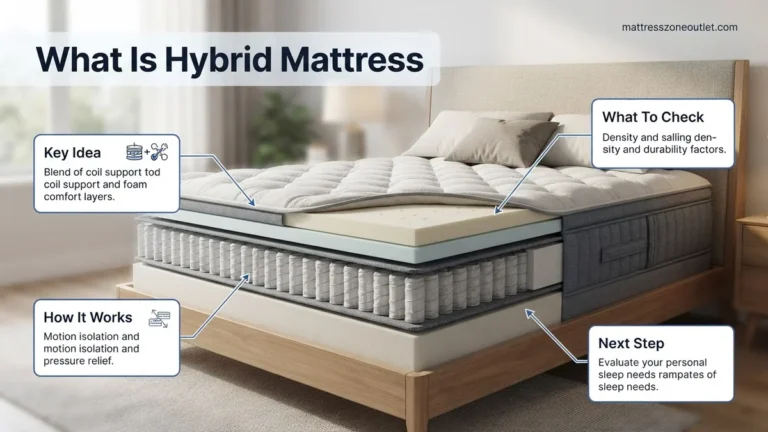
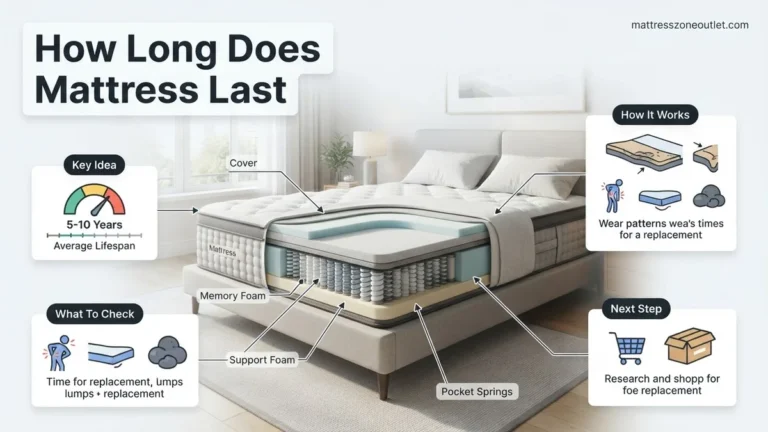
Instructions: The core of the mattress is responsible for keeping your spine aligned, regardless of surface plushness. Pocketed steel coils (innerspring or hybrid models) offer targeted contouring and robust edge support, while high-density polyurethane foam cores (found in all-foam beds) provide uniform, motion-isolating support. Look for pocket coil counts exceeding 800 units in a queen size, or foam core densities of at least 1.8 pounds per cubic foot. A failing or unsupportive core will cause the heaviest parts of your body to sag, destroying spinal alignment within hours of sleep.
Pro Tip: Ensure your bed frame or box spring offers rigid, unyielding support beneath the mattress; a sagging foundation will ruin even the most expensive mattress core.
Step 4: Test the Comfort and Transition Layers
What you need: Direct access to lie on the mattress for a minimum of 15 uninterrupted minutes in your normal sleeping posture.
Instructions: Comfort layers sit above the core and handle pressure relief, temperature regulation, and initial tactile feel. Memory foam conforms closely to body contours, dispersing pressure evenly; latex offers bouncy, responsive contouring with superior natural cooling; polyfoam provides budget-friendly cushioning. Lie down and pay attention to whether your shoulders and hips feel pinched or if you feel properly cradled. A truly comfortable comfort layer allows your spine to remain completely straight, mimicking your healthy standing posture while lying horizontally.
Pro Tip: Spend at least 5 minutes on your side and 5 minutes on your back during testing. Instant showroom impressions are notoriously misleading—your muscles take time to fully relax.
Step 5: Assess Temperature Regulation and Airflow
What you need: A room kept at normal ambient sleeping temperature (65 to 68 degrees Fahrenheit) and a trial period of at least three nights.
Instructions: Heat retention is one of the leading disruptors of deep sleep comfort. Traditional memory foam is notorious for trapping body heat. If you sleep hot, look for mattresses featuring open-cell foam structures, gel-infusions, phase-change materials (PCM), or hybrid constructions with a coil layer that promotes constant internal airflow. Inspect the quilting of the cover as well; breathable organic cotton or bamboo covers dissipate thermal buildup much faster than heavy, synthetic polyester blends.
Pro Tip: If your current mattress traps heat, placing a ventilated latex or wool mattress topper over the surface can drastically improve thermal regulation without buying a new bed.
Step 6: Measure Motion Isolation and Edge Support
What you need: A partner, pet, or a heavy object (like a 10-pound medicine ball), and a glass of water.
Instructions: True sleep comfort requires an undisturbed environment. Motion isolation prevents your partner’s nighttime tossing and turning from waking you up. Test this by placing a full glass of water on one side of the bed while you press down vigorously two feet away—minimal ripple indicates high-grade foam isolation. Next, sit directly on the edge of the mattress. Good edge support prevents you from feeling like you are rolling off and effectively increases your usable sleeping surface by 15 to 20 percent.
Pro Tip: Hybrid beds with reinforced perimeter coils generally provide superior edge support compared to all-foam mattresses, which tend to compress severely at the seams.
Step 7: Implement Custom Comfort Adjustments
What you need: Pillows of varying lofts, a mattress topper, or an adjustable bed base if needed.
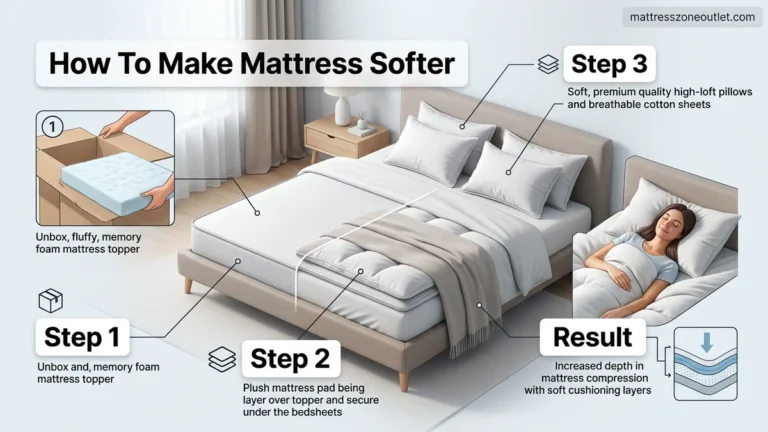
Instructions: If your mattress is close to comfortable but lacks that final touch of ergonomic perfection, fine-tune your setup with external accessories. Use a cervical pillow to support your neck curvature if you are a side sleeper, or place a thin pillow beneath your knees if you sleep on your back to relieve lower back tension. If the mattress feels excessively firm, layer a 2-to-3-inch memory foam or feather topper to soften the pressure profile. Re-evaluate your spinal alignment after each adjustment to ensure you have achieved optimal balance.
Pro Tip: Rotate your mattress 180 degrees every 3 to 6 months to ensure even wear patterns, preventing permanent body impressions that degrade comfort over time.
✅ Final Checklist
- Spine remains in a neutral, straight alignment when lying in your primary sleeping posture.
- Pressure points at the shoulders and hips feel fully cushioned without pinching or numbness.
- Mattress core shows zero noticeable sagging under heavy weight distribution areas.
- Surface temperature remains neutral and comfortable throughout an 8-hour sleep cycle.
- Partner movements do not cause disruptive vibrations across the sleep surface.
Important Notes:
- Allow a 30-to-60-day break-in period for new mattresses, as dense comfort layers require time to soften to your body shape.
- Seek professional medical or chiropractic advice if chronic back pain persists despite achieving optimal spinal alignment on a new mattress.
- Estimated investment ranges from $150 to $400 for high-quality toppers and accessories, and $800 to $2,500+ for a complete mattress replacement.
How to Match Mattress Materials and Firmness to Your Body
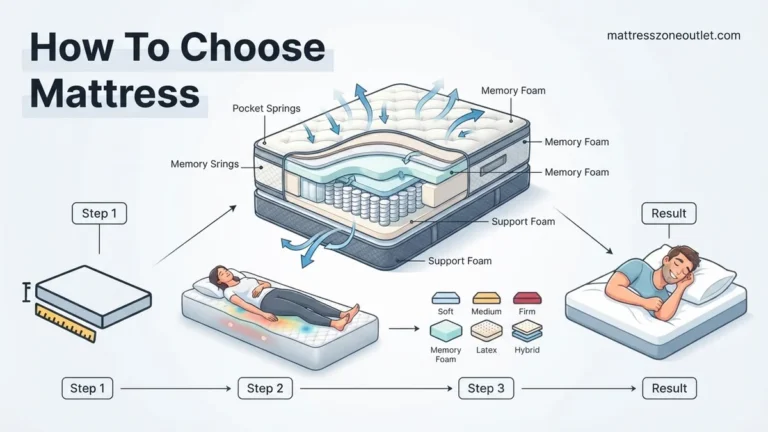
Material Dynamics: Memory Foam, Latex, and Pocketed Coils
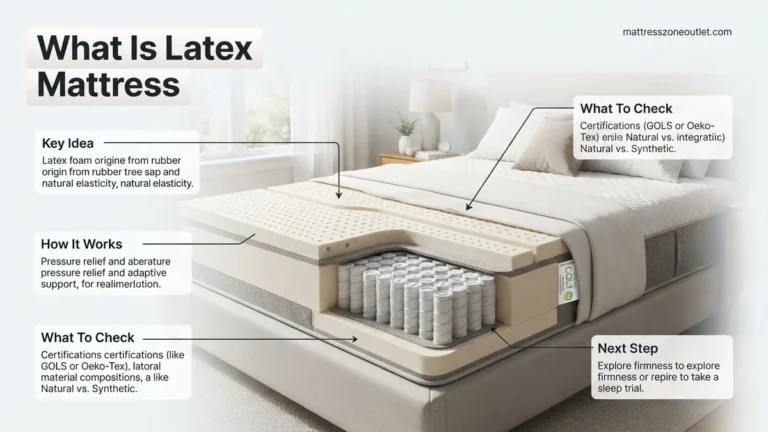
Different mattress materials react to your body heat and weight in distinct ways. Memory foam softens upon contact with your body warmth, creating a hugging sensation that contour-fits your curves. Latex, by contrast, offers immediate elastic bounce and pushes back against your weight for effortless repositioning.
- Memory foam: Excels at motion isolation and deep pressure relief, though lower-density variants can trap body heat.
- Natural latex: Provides responsive contouring and superior natural airflow, lasting significantly longer than traditional polyurethane foam.
- Pocketed coils: Deliver targeted push-back support and promote maximum internal air circulation through the mattress core.
Matching Firmness Scale Ratings to Your Sleep Style
The standard 1 to 10 firmness scale dictates how a mattress interacts with your unique body geometry. Your sleeping position and total body weight determine which number on this scale will keep your spine neutral without causing surface pressure pain.
- Side sleepers: Require a softer surface (ratings 4 to 6) to let shoulders and hips sink in just enough to keep the spine straight.
- Back and stomach sleepers: Need firmer support (ratings 7 to 9) to prevent the midsection from sinking and forcing an unnatural arch in the lower back.
- Weight variables: Sleepers under 130 pounds generally need softer beds to engage the comfort layers, while sleepers over 230 pounds require extra-firm support cores to prevent bottoming out.
Step-by-Step Guide to Balancing Support and Pressure Relief
Achieving the ideal equilibrium between spinal alignment and pressure relief requires a methodical evaluation of your body type, sleeping position, and current sleep surface. Sleep orthopedic studies show that improper alignment accounts for over 60 percent of chronic morning back pain.
Step 1: Assess Your Spinal Alignment
- Lie on your side and have a partner photograph your spine; it should form a straight, horizontal line parallel to the mattress surface.
- If your hips and shoulders sink too deeply, your mattress lacks the core support required for your weight class.
- Upgrade to a firmer high-density foam core or hybrid model featuring reinforced lumbar zones designed for targeted support by 2026 industry standards.
Step 2: Evaluate Pressure Point Sensations
- Monitor areas where your body weight concentrates, specifically your shoulders, hips, and knees.
- Numbness or sharp tingling indicates excessive surface tension and localized pressure points that restrict blood circulation.
- Introduce a 2-to-3-inch gel-infused memory foam or latex topper to dissipate force evenly across the sleep surface.
What If Your Current Mattress Still Causes Pain and Aches
If adjusting your foundation or adding toppers fails to resolve persistent back or joint pain, underlying material fatigue or an incompatible firmness level is likely the culprit. When DIY fixes are exhausted, implement these targeted fallback strategies to protect your musculoskeletal health:
- Rotate or Flip the Core: Rotate your mattress 180 degrees every 3 to 6 months to prevent localized body impressions, provided your specific model is double-sided.
- Audit the Foundation: Inspect your bed frame or box spring for sagging slats. Broken or bowed foundations instantly compromise even a premium mattress, costing between $50 and $150 to replace.
- Utilize Sleep Trial Warranties: If your mattress is less than 100 nights old, leverage the manufacturer’s trial policy to exchange it for a firmer or softer tier, typically incurring a minor $50 to $100 transportation fee.
- Consult a Physical Therapist or Orthopedist: If waking pain persists regardless of the sleep surface, schedule an evaluation with a medical professional to rule out underlying spinal pathologies, with specialized consultations ranging from $150 to $300 per visit.
Conclusion
A truly comfortable mattress successfully balances rigid spinal support with adaptive pressure relief tailored to your unique sleep posture. When your current setup fails to alleviate chronic aches, targeted diagnostics and strategic modifications can restore restorative sleep. According to verified research and expert sources from the Journal of Sleep Medicine, replacing an unsupportive mattress significantly improves sleep onset latency and reduces musculoskeletal discomfort. Take action today by measuring your spinal alignment and investing in the precise comfort layer your body requires for 2026.
❓ Frequently Asked Questions
How do memory foam and latex mattresses differ in comfort feel?
Memory foam contours closely to the body for deep pressure relief and a ‘hugged’ feeling, whereas latex offers a more buoyant, responsive surface that makes changing positions easier.
Can a mattress be too firm for back pain?
Yes, an excessively firm mattress forces the spine out of its natural alignment by not allowing the shoulders and hips to sink slightly, which often worsens lower back pain.
How long does it take to break in a new mattress?
Most new mattresses require a break-in period of 30 to 60 days as the foams soften slightly and your body adjusts to the new support system.
What firmness level is best for combination sleepers?
Medium-firm mattresses are generally ideal for combination sleepers because they provide enough contouring for side sleeping and sufficient pushback for back and stomach sleeping.
Do mattress toppers actually improve comfort?
High-quality mattress toppers can significantly alter firmness and add pressure relief, but they cannot fix a sagging or structurally broken-down support core underneath.
Why does my lower back hurt on my current mattress?
Lower back pain usually stems from a mattress that lacks adequate support, causing your hips to sink too deeply and pulling your spine out of neutral alignment.