What Is Latex Mattress Real Guide to Materials & 2026
A latex mattress is constructed using supportive foam derived from the sap of rubber trees or synthetic materials, offering a unique blend of contouring pressure relief and responsive bounce. Unlike traditional memory foam, latex sleeps significantly cooler and provides natural durability without trapping body heat. Understanding how these mattresses are built helps you determine if the material matches your comfort and support needs.
A latex mattress is a bed built using supportive layers of rubber tree sap or synthetic compounds rather than traditional steel coils or petroleum-based poly foam. When you sleep on a latex mattress, you experience a unique combination of buoyant contouring and rapid response bounce that prevents the trapped, sinking feeling common in memory foam.
Navigating the mattress market in 2026 requires understanding these core materials. Knowing whether your bed utilizes natural sap or synthetic blends directly impacts your comfort, spinal alignment, and long-term durability. This guide cuts through the marketing noise to explain exactly what latex is and how to choose the right build for your body.
Key Takeaways
- Latex foam is derived from rubber tree sap or produced via synthetic chemical processes.
- Natural latex offers superior eco-friendly durability, breathability, and hypoallergenic properties compared to synthetic alternatives.
- Dunlop latex is denser and firmer, while Talalay latex undergoes an extra vacuum-flushing step for a softer feel.
- Latex beds excel at temperature regulation, preventing the heat retention common in standard memory foam.
- These mattresses tend to be heavier and more expensive, requiring a higher upfront investment.
What Causes Confusion About What Is a Latex Mattress
The Myth of 100% Solid Foam Construction
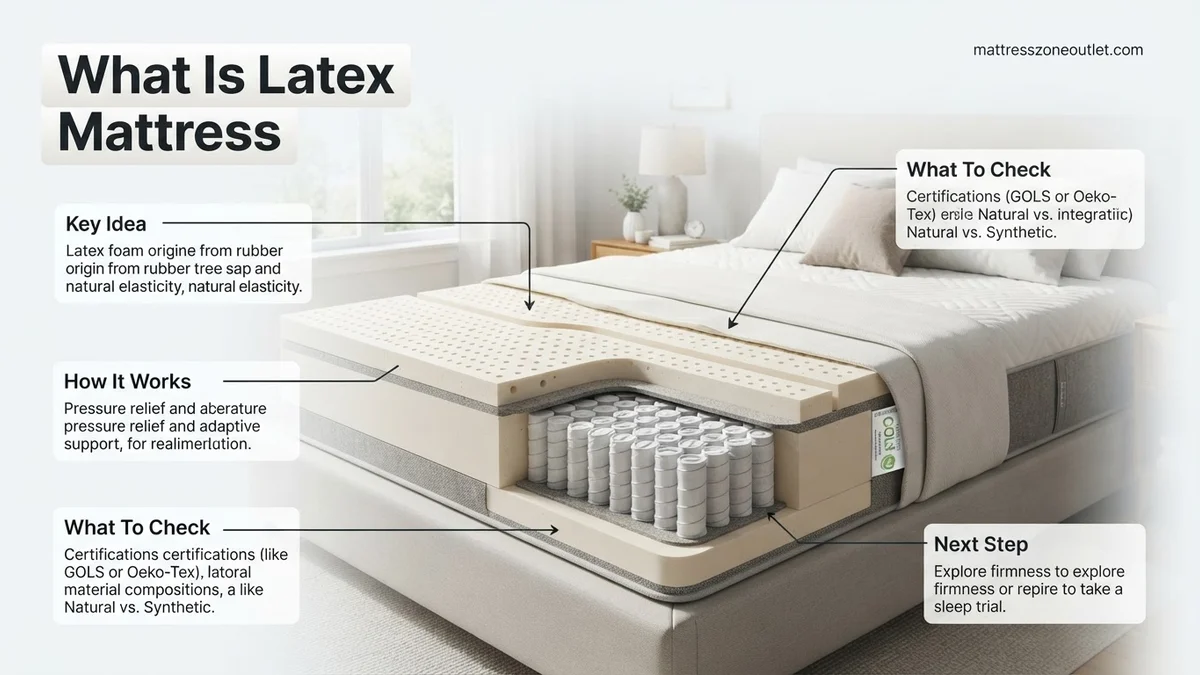
Many shoppers assume a latex mattress is a single, massive block of dense rubber. In reality, most high-performance models feature a multi-layer design. You typically find a firmer base core for deep support, a medium-density middle layer for pressure relief, and a softer top layer for surface cushioning. Manufacturers punch pinholes throughout these layers during production to ensure proper airflow and a balanced feel. If you think latex only offers a rock-hard surface, you are likely confusing dense base support with comfort layers.
Natural Sap Versus Synthetic Blends
Another major point of confusion involves the origin of the foam itself. Natural latex comes straight from the Hevea brasiliensis rubber tree, harvested sustainably through a tapping process similar to maple syrup. Synthetic latex is petroleum-based, manufactured in a lab to mimic the physical properties of natural rubber at a lower price point. Blended latex combines both materials to balance cost and durability. Understanding this distinction matters because natural options generally offer superior breathability and a lifespan exceeding 12 to 15 years, while synthetic variants wear out faster.
How to Fix Your Sleep Setup by Choosing the Right Latex Type
Dunlop Versus Talalay Manufacturing
Once you choose your material source, you must decide between two distinct manufacturing methods that change how the mattress feels. The Dunlop process pours the liquid latex into a mold all at once, allowing heavier particles to settle. This creates a denser, bottom-heavy layer that provides exceptional deep support. The Talalay process adds a vacuum-sealing and flash-freezing step before baking, resulting in a lighter, more consistent feel from top to bottom. If you struggle with lower back pain, a Dunlop core offers the firm foundation your spine requires. If you suffer from shoulder pressure, a Talalay top layer contours more gently.
Matching Latex Density to Your Sleep Style
Your body weight and preferred sleeping position dictate the exact firmness rating you should buy. Latex is measured in ILD (Indentation Load Deflection), which tracks how many pounds of pressure are needed to compress the foam by 25 percent.
-
Side sleepers generally need a softer ILD (around 19 to 24) to cushion shoulders and hips.
Back and stomach sleepers require a medium to firm ILD (28 to 36+) to keep the hips from sinking and straining the lower back.
Combination sleepers benefit from versatile medium blends that respond instantly as you change positions through the night.
Step-by-Step Guide to Evaluating Latex Pros and Cons
Weighing the advantages and disadvantages of natural materials requires a methodical approach. According to consumer sleep research and independent testing labs, latex beds offer a unique balance of durability and responsiveness. Here is a systematic framework to evaluate whether a latex sleep surface matches your physiological needs and purchasing budget in 2026.
1. Assess Your Spinal Alignment and Sleep Style
First, analyze your primary sleeping position and body mass index (BMI). Side sleepers generally require softer ILD (Indentation Load Deflection) ratings to cushion shoulders, while back and stomach sleepers need medium-firm to firm latex layers to prevent lumbar sagging.
2. Calculate Total Cost of Ownership
Second, evaluate the financial investment against lifespan metrics. While a certified organic Dunlop or Talalay model typically ranges from $1,800 to $3,500, verified durability studies show they last 12 to 20 years. Divide the upfront retail cost by 15 years to calculate your actual annual bedding expense.
3. Test Temperature Regulation Needs
Third, determine your thermal sensitivity during rest. Pinpoint if you sleep excessively hot by reviewing your current bedding climate. If night sweats disrupt your cycle, prioritize open-cell natural latex with pinhole aeration channels over high-density memory foam.
What If It Still Doesn’t Work?
If you have purchased a latex mattress and find that it fails to provide the expected comfort or pain relief, do not panic. Premium manufacturers usually provide sleep trials ranging from 100 to 365 nights. Implement these fallback steps to resolve persistent discomfort:
- Swap the Comfort Layer: Contact the manufacturer to request a firmer or softer modular insert if your mattress features a zipper-accessible core. Estimated cost ranges from free (under warranty or trial) to $250 for a replacement topper.
- Adjust Your Foundation Base: Verify that your support slats are spaced no more than 3 inches apart. Incompatible box springs can cause unnatural sagging and invalidate warranties.
- Utilize the Sleep Trial Exchange: Initiate a return or exchange before the trial window expires. Restocking or exchange transport fees typically range from $0 to $150 depending on the brand policy.
- Consult an Orthopedic Specialist: If chronic back or joint pain persists across multiple mattress types, seek professional medical guidance to rule out underlying structural biomechanical issues.
Conclusion
Navigating the mattress market requires distinguishing between marketing terminology and genuine material performance. Natural latex delivers exceptional temperature neutrality, pressure relief, and long-term durability without synthetic off-gassing. According to verified research and sleep science experts, investing in certified organic materials protects both your spinal health and your household budget over the next decade. Your actionable next step for 2026 is to verify third-party certifications like GOLS and GOTS before purchasing your new sleep system.
❓ Frequently Asked Questions
What is the primary difference between natural and synthetic latex?
Natural latex is harvested from Hevea brasiliensis rubber trees, making it eco-friendly, highly durable, and naturally hypoallergenic. Synthetic latex is petroleum-based, generally less expensive, and tends to wear out faster over time.
How can I tell if a latex mattress is 100% natural?
Look for reputable third-party certifications like GOLS (Global Organic Latex Standard), OEKO-TEX, or Rainforest Alliance. Manufacturers will explicitly state if their foam is blended with synthetic SBR rubber.
Is a latex mattress supportive enough for heavier sleepers?
Yes, high-density latex foam provides natural push-back and progressive support that prevents heavy sleepers from sinking too deeply, making it an excellent choice for durability and spinal alignment.
Do latex mattresses have an unpleasant chemical odor?
Natural latex may have a faint, harmless vanilla or earthy rubber scent upon unboxing, which typically dissipates within a few days. Synthetic or blended latex might exhibit a stronger off-gassing smell similar to conventional foams.
Are latex mattresses hypoallergenic?
Natural latex is inherently resistant to dust mites, mold, mildew, and bacteria because the dense foam structure leaves no room for allergens to thrive, making it ideal for allergy sufferers.
How heavy is a latex mattress compared to other beds?
Latex mattresses are noticeably heavier than standard innerspring or memory foam beds due to the dense weight of pure rubber foam, which can make moving or rotating the mattress a two-person job.