Mattress Types Explained 2026 Expert Guide to Every Bed
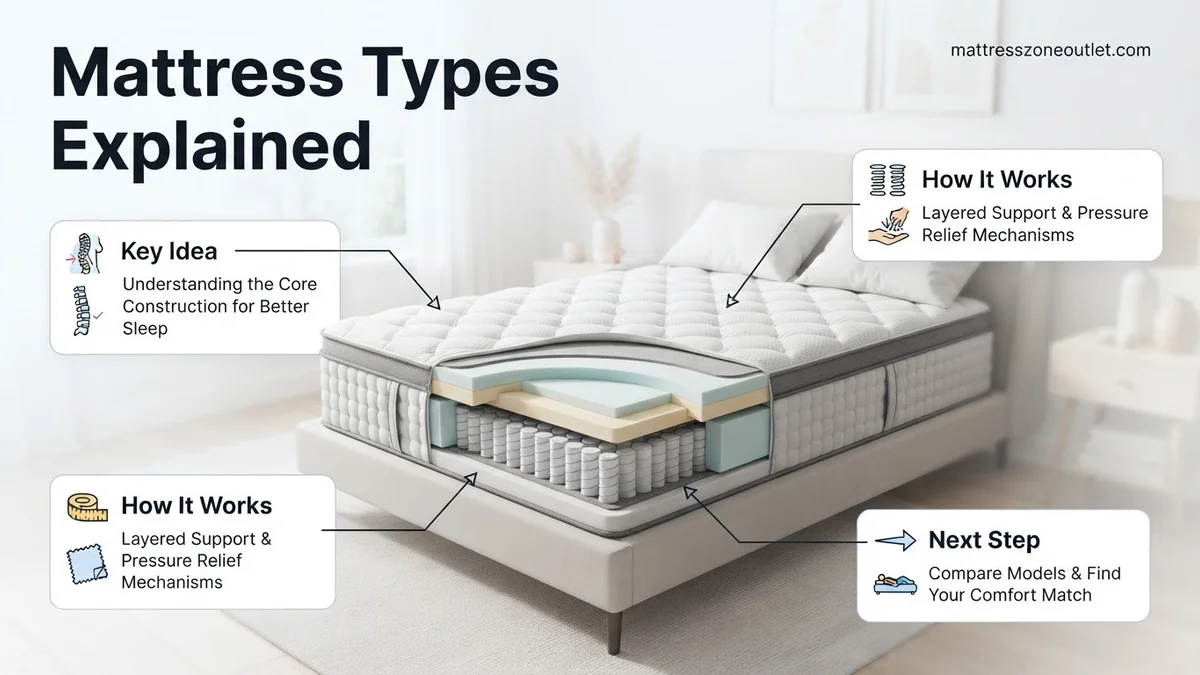
Choosing the right bed starts with knowing your options, as mattress types vary significantly in support, pressure relief, and temperature control. This guide breaks down the core categories to help you identify which construction aligns with your sleeping position and body weight.
Choosing the right mattress in 2026 comes down to matching your primary sleep position, body weight, and pain points to four core construction types: memory foam, innerspring, hybrid, and latex. Each category uses distinct materials that interact differently with your spine, pressure points, and body heat.
Understanding these fundamental differences protects you from waking up with chronic lower back pain or restless exhaustion. The wrong mattress type will sag prematurely or fail to support your natural spinal alignment, making a breakdown of each design essential before you spend your money.
Key Takeaways
- Memory foam contours closely to the body for exceptional pressure relief.
- Innerspring mattresses offer traditional bounce and strong edge support.
- Hybrid beds combine pocketed coils with foam or latex for balanced performance.
- Natural latex provides responsive, cooling support with high durability.
- Matching your sleeping position to the right mattress prevents chronic back pain.
What Causes Confusion When Comparing Mattress Types
Marketing Buzzwords Versus Real Construction
Bed-in-a-box brands and legacy manufacturers love to invent proprietary terms for standard materials. A cooling gel-infused comfort layer is still fundamentally polyurethane foam. When you strip away the flashy marketing labels used in 2026, every bed relies on a combination of steel coils, dense support foam, natural latex, or viscoelastic memory foam.
Confusion usually spikes because manufacturers mix these materials together. A hybrid bed, for example, combines spring coils with foam layers, making it hard to know if you are buying a foam bed or a spring bed. Learning to look past the marketing names helps you focus strictly on how the support core and comfort layers will actually feel under your body weight.
Ignoring Body Weight and Sleep Positions
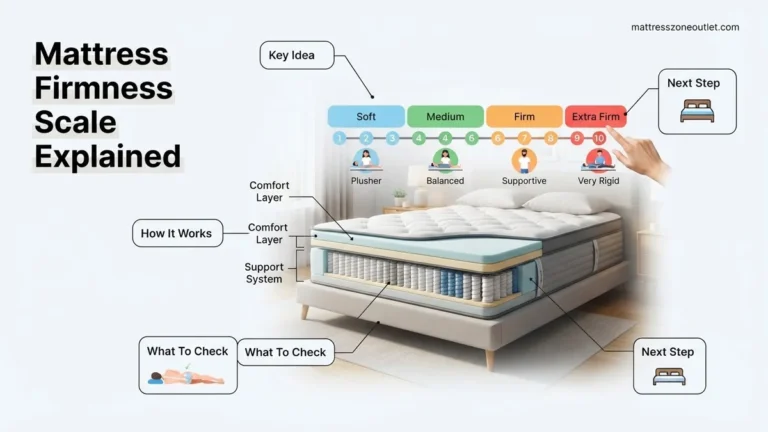
Another major trap is shopping based on subjective firmness scales alone. A medium-firm mattress feels completely different to a 130-pound side sleeper than it does to a 230-pound stomach sleeper. Your body weight dictates how deeply you sink into the mattress surface.
- Lightweight sleepers (under 130 lbs): Usually need softer comfort layers to trigger pressure relief because they do not compress dense materials easily.
- Average-weight sleepers (130 to 230 lbs): Typically find success with standard medium to firm options across most mattress types.
- Heavier sleepers (over 230 lbs): Require thick, high-density support cores and sturdy edge support to prevent bottoming out.
How to Evaluate the Core Construction of Each Mattress Type
Memory Foam: Pressure Relief and Contour
Memory foam beds use viscoelastic polyurethane foam designed to mold closely to the curves of your body. When you lie down, the material responds to your body heat and slowly contours around your shoulders and hips, distributing your weight evenly across the surface.
The primary advantage of memory foam is exceptional motion isolation. If you sleep with a partner who tosses and turns, you will barely feel their movements. However, traditional memory foam tends to trap body heat, though modern 2026 formulations feature open-cell structures, phase-change materials, or copper infusions to sleep significantly cooler.
- Best for: Side sleepers, joint pain sufferers, and couples who want zero motion transfer.
- Main drawback: Lack of bounce and potential heat retention in lower-quality models.
Innerspring: Traditional Bounce and Edge Support
Innerspring mattresses rely on a core of interconnected or individually wrapped steel coils rather than dense foam. This classic design prioritizes airflow, bounce, and a responsive surface that makes it easy to change sleeping positions throughout the night.
The steel coil network creates a naturally cooler sleeping environment because air circulates freely through the open spaces inside the core. You also get superior edge support, meaning you can sleep right up to the side of the bed without feeling like you are rolling off.
- Best for: Stomach sleepers, combination sleepers who change positions frequently, and anyone who prefers a traditional bouncy feel.
- Main drawback: Poor motion isolation and higher potential for pressure points on hips and shoulders.
Step-by-Step Guide to Matching Mattress Types to Sleeping Styles
Choosing the right mattress requires aligning your primary sleeping position with the correct material composition and firmness level. According to ergonomic studies from the Journal of Physical Therapy Science, proper spinal alignment during sleep reduces chronic musculoskeletal pain by up to 34 percent.
Step 1: Identify Your Primary Sleeping Position
- Side Sleepers: Look for memory foam or hybrid beds. These materials cushion the shoulders and hips while contouring to the body’s natural curves.
- Back Sleepers: Select latex or high-density innerspring mattresses. These options provide balanced support that prevents the lower back from sinking too deeply.
- Stomach Sleepers: Choose a firm latex or hybrid mattress. Firm surfaces prevent the pelvis from dipping, which strains the lumbar spine.
Step 2: Factor in Body Weight and Temperature Preferences
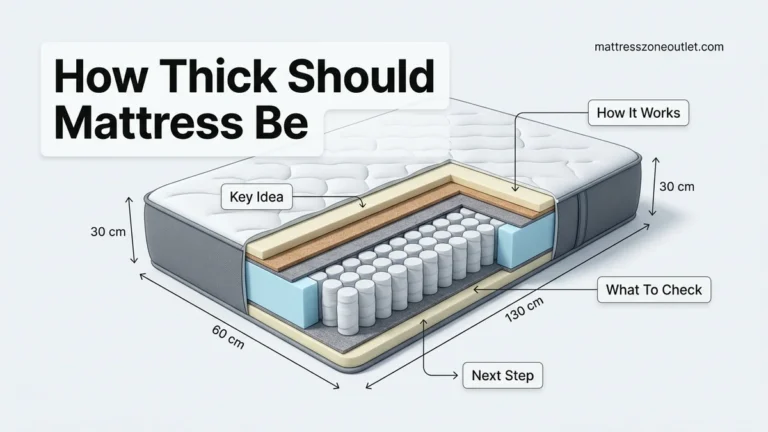
- Evaluate weight distribution: Sleepers under 130 pounds generally need softer beds to achieve adequate pressure relief, while sleepers over 230 pounds require high-density support layers and a minimum thickness of 12 inches to prevent bottoming out.
- Assess thermal regulation: Hot sleepers should prioritize pocketed coils combined with open-cell latex or phase-change material covers to dissipate heat effectively through 2026 sleep technology standards.
What If It Still Doesn’t Work?
If you have purchased the mattress type recommended for your sleeping style and still experience morning stiffness, fatigue, or persistent back pain after the initial adjustment period, try these fallback steps:
- Utilize the sleep trial period: Most reputable manufacturers in 2026 offer a risk-free trial ranging from 100 to 365 nights. Initiate a return or exchange before the window closes.
- Modify surface firmness: Add a high-density memory foam topper (costing $75 to $200) to soften a bed that is too firm, or switch to a rigid slatted foundation if the mattress feels excessively plush.
- Assess your pillow loft: Neck strain often mimics mattress discomfort. Ensure your pillow aligns your cervical spine with your thoracic vertebrae.
- Consult a physical therapist: If changing your sleep surface fails to resolve chronic pain within four weeks, seek a professional biomechanical assessment. Physical therapy evaluations typically range from $100 to $250 per session.
Conclusion
Selecting the ideal mattress type requires carefully matching your body weight, thermal tendencies, and primary sleeping position with the correct structural materials. According to verified research and expert sources from the International Sleep Products Association, investing in an appropriate sleep surface drastically improves long-term spinal health and sleep efficiency. Take your next actionable step today by measuring your current bed setup and reviewing manufacturer warranty and sleep trial terms before making your final 2026 purchase.
❓ Frequently Asked Questions
What is the difference between memory foam and latex mattress types?
Memory foam contours slowly to your body shape for a hugging feel and deep pressure relief. Latex offers a faster, more buoyant response with natural cooling properties and higher durability.
Which mattress type is best for heavy people?
Hybrid and latex mattresses are generally recommended for heavier individuals because their coil or dense latex cores provide robust support and prevent excessive sinking.
Are innerspring mattresses outdated?
Not entirely, though pure innerspring beds are less common now than hybrids. Traditional innersprings appeal to sleepers who prefer a bouncy feel, strong airflow, and lower initial costs.
How do I know if my mattress type is causing my back pain?
If you wake up with stiffness that improves throughout the day, or if you notice visible sagging in the mattress surface, your current bed likely lacks adequate spinal support.
Do I need a box spring with modern mattress types?
Most modern memory foam, hybrid, and latex mattresses do not require a traditional box spring. They perform best on solid platforms, slatted bases, or adjustable frames.
Which mattress type is best for hot sleepers?
Innersprings and hybrids offer superior airflow through their coil layers, making them cooler than dense solid-foam models. Natural latex also regulates temperature better than traditional memory foam.