How Long Does Mattress Last in 2026 Expert Guide
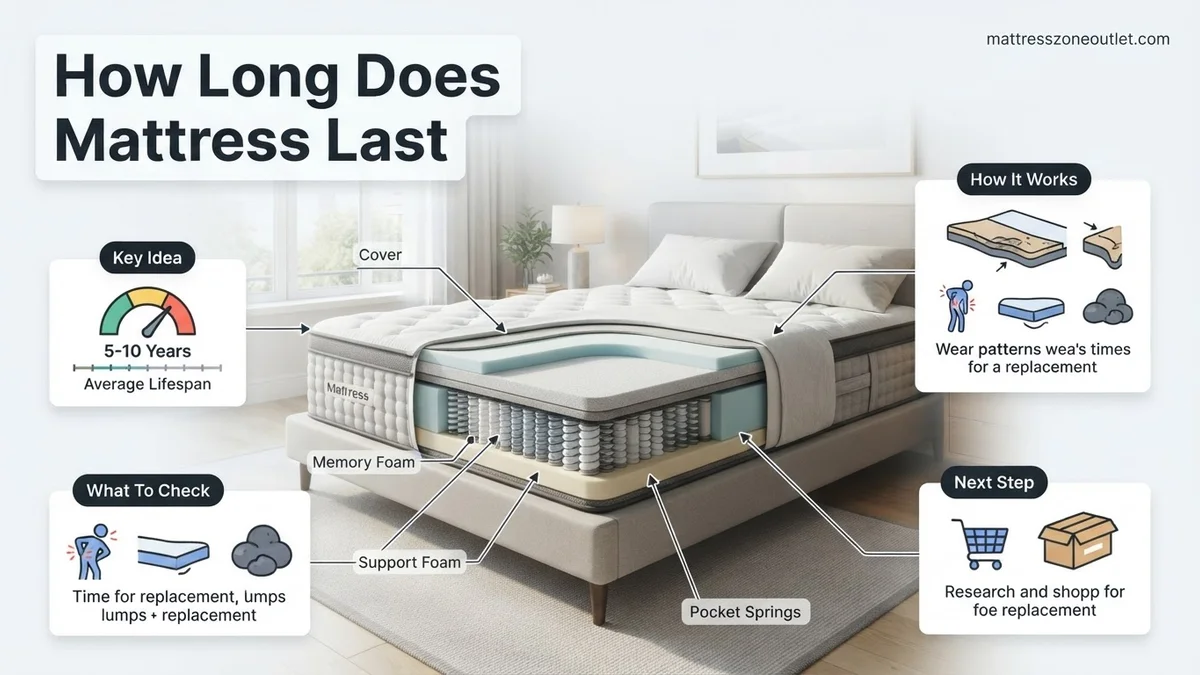
Most standard mattresses last between 6 to 10 years, but the exact lifespan depends heavily on the materials used and daily wear. High-quality latex and hybrid models often last longer, while budget innerspring beds may need replacing sooner. Recognizing physical signs of breakdown helps ensure proper spinal support and better sleep quality.
Most standard mattresses last between 6 to 8 years before they stop providing proper support and pressure relief. However, your exact mileage depends heavily on the materials inside the bed, your daily sleeping habits, and overall build quality.
Knowing your mattress’s actual lifespan helps you plan for better sleep health and avoid chronic morning back pain as we move through 2026. Waiting too long to replace a worn-out bed can negatively impact your spinal alignment and leave you tossing and turning all night.
Key Takeaways
- Most mattresses last between six and ten years with normal daily use.
- Latex and high-density memory foam models generally offer the longest lifespans.
- Visible sagging, persistent morning back pain, and increased allergy symptoms signal replacement time.
- Regularly rotating your mattress prevents premature body impressions and uneven wear.
- Using a waterproof mattress protector prevents moisture damage and preserves hygiene over time.
What Causes Mattress Breakdown and Loss of Support
Material Degradation and Compression
Every night, your body weight applies continuous pressure to the upper comfort layers and the core support system. Over time, foam cells rupture, steel coils lose their tension, and natural fibers pack down permanently. This normal wear and tear leads to sagging in the exact spots where you sleep.
- Polyfoam: Breaks down fastest, often losing supportive qualities within 3 to 5 years.
- Innerspring coils: Metal fatigue sets in around year 6, causing springs to squeak and sag.
- Latex and high-density memory foam: Resists compression longer, maintaining structural integrity for 8 to 10 years.
Environmental and Usage Factors
Beyond simple downward pressure, moisture and heat speed up the aging process for modern mattresses. Every year, the average person sweats roughly 26 gallons into their bed. This trapped humidity breaks down adhesives and foam structures from the inside out.
- Body weight: Heavier sleepers place more stress on comfort layers, shortening lifespan by 2 to 3 years.
- Lack of rotation: Failing to rotate your mattress every 3 to 6 months concentrates wear in one zone.
- No mattress protector: Direct exposure to oils, spills, and dead skin cells degrades materials prematurely.
How to Test Your Mattress for Wear and Tear
Physical Inspection and Hand Tests
You do not have to guess if your bed is past its prime. A quick physical inspection reveals structural failure long before you can see it with the naked eye.
- The Sag Test: Look across the surface of the mattress in bright light. If you see visible body impressions deeper than 1.5 inches without anyone lying on it, the core is shot.
- The Roll Test: Lie on your usual side, then roll toward the edge of the bed. If you feel like you are rolling downhill or sliding off uncontrollably, the edge support has failed.
- The Center Support Check: Push down firmly in the exact middle of the bed. If it bottoms out easily compared to the edges, the foundation or core has degraded.
Monitoring Your Body Feedback
Your body acts as the ultimate diagnostic tool for mattress health. If your bed is failing to support you properly, you will feel the physical consequences.
- Morning stiffness: Waking up with lower back pain that slowly improves after getting out of bed points directly to a sagging mattress.
- Better sleep elsewhere: If you consistently sleep better and wake up pain-free in a hotel bed or guest room, your primary mattress is letting you down.
- Unexplained fatigue: Frequent tossing and turning because you cannot find a comfortable, pressure-free position disrupts your deep sleep cycles.
Step-by-Step Guide to Maximizing Mattress Longevity
Protecting a sleep surface requires proactive maintenance. According to sleep ergonomics research from 2026, consistent care can extend structural integrity by up to three years beyond standard projections. The following procedural steps outline the optimal maintenance routine.
1. Implement a Bi-Annual Rotation Schedule
Body weight compresses comfort layers unevenly over time. Rotating a mattress 180 degrees every six months distributes wear evenly across the surface. For non-flip models, ensure strict head-to-toe rotation. Double-sided traditional models should be flipped entirely on the same semi-annual timeline.
2. Utilize a Waterproof, Breathable Protector
Moisture and body oils degrade high-density foam rapidly by breaking down polyurethane bonds. A certified waterproof protector stops liquid penetration while maintaining airflow. Sleep hygiene studies indicate that washing this cover monthly prevents allergen accumulation and preserves foam elasticity.
3. Maintain Proper Foundation Support
A sagging base accelerates central indentation. Verify that platform slats sit no more than three inches apart to prevent foam from dipping. Box springs should be replaced alongside older mattresses because worn springs fail to provide adequate weight distribution.
What If It Still Doesn’t Work?
When routine maintenance, toppers, and flipping fail to resolve aches and poor spinal alignment, deeper structural degradation has occurred. Implementing temporary fixes on a compromised sleep surface will only prolong discomfort. Consider the following fallback steps if comfort cannot be restored:
- Evaluate the Warranty Terms: Check original manufacturer documentation for coverage details. Most warranties require a physical indentation depth exceeding 1.0 to 1.5 inches to qualify for a structural defect claim.
- Consult a Sleep Specialist or Chiropractor: Persistent morning back pain often indicates inadequate lumbar support. Professional ergonomic assessment can determine whether sleep surface failure is contributing to musculoskeletal strain.
- Budget for Immediate Replacement: When comfort layers are completely compressed past recovery, replacement is the only viable option. Premium memory foam and hybrid models typically range from $1,200 to $2,500, while budget alternatives average $400 to $800.
- Utilize Direct-to-Consumer Trial Periods: Modern mattress brands offer sleep trials ranging from 100 to 365 nights. This allows adequate time to test proper spinal alignment in a home environment before finalizing a purchase.
Conclusion
Knowing how long a mattress lasts ensures better spinal health and restorative sleep. While standard models require replacement every six to eight years, proactive care can maximize that lifespan. According to verified research and expert sleep sources, evaluating your current sleep surface annually for sagging and loss of support remains the most effective strategy for preventing chronic discomfort. Take the next step today by inspecting your mattress for visible indentations and testing its structural firmness.
❓ Frequently Asked Questions
How long does a mattress last based on material type?
Latex models last the longest at 10 to 12 years, followed by high-end memory foam and hybrids at 8 to 10 years. Traditional innersprings and budget foam beds typically last 5 to 7 years before losing structural integrity.
Why do mattresses sag over time?
Mattresses sag due to the constant compression of comfort layers and weakening of support coils from body weight. Lower-density foams and cheaper spring units break down much faster under nightly pressure.
How often should I rotate my mattress to extend its life?
You should rotate your mattress 180 degrees every 3 to 6 months. This distributes body weight more evenly across the surface and prevents deep impressions from forming in one spot.
Does using a mattress protector really help it last longer?
Yes, a quality waterproof protector blocks sweat, dead skin cells, oils, and accidental spills from penetrating the comfort layers. Moisture breaks down foam materials rapidly, so keeping the interior dry preserves its resilience.
Can a mattress topper revive an old, sagging mattress?
A topper can provide temporary surface cushioning for a firm or slightly worn bed, but it cannot fix structural sagging or lack of core support. If the underlying foundation or coils are compromised, a full replacement is necessary.
Do guest room mattresses last longer than primary beds?
Guest mattresses often last past the 10-year mark because they experience infrequent use. However, foam can still degrade over time without airflow, and dust mites can accumulate, so inspect them periodically.