Are Mattress in a Box Good? Real 2026 Quality Guide
Are mattress in a box good? Yes, modern boxed mattresses match the comfort and support of traditional beds while offering superior convenience and pricing. However, quality varies significantly between cheap foam models and high-end hybrid options.
Yes, mattress-in-a-box beds are genuinely good quality, offering comparable comfort and durability to traditional showroom mattresses at a fraction of the cost. The 2026 sleep market proves that compressed bed-in-a-box technology has evolved far beyond the cheap, all-foam slabs of a decade ago, with modern hybrids combining individually wrapped pocket coils with high-density comfort layers that perform exceptionally well.
Choosing the right bed without lying on it first can feel risky, but understanding how these mattresses are built helps you cut through the marketing noise. Whether you are dealing with chronic back pain or simply trying to upgrade your guest room setup for 2026, evaluating material quality and structural design is the only way to ensure you buy a mattress that lasts.
Key Takeaways
- Bed-in-a-box mattresses offer comparable comfort and support to traditional retail models.
- Hybrid boxed options provide better edge support and durability than all-foam models.
- Always verify the sleep trial length and warranty before purchasing online.
- Off-gassing odors are normal and typically dissipate within 24 to 48 hours.
- Check weight limits and foundation requirements to prevent premature sagging.
What Causes Mattress-in-a-Box Quality Concerns and Performance Issues
The Compression Trade-Off
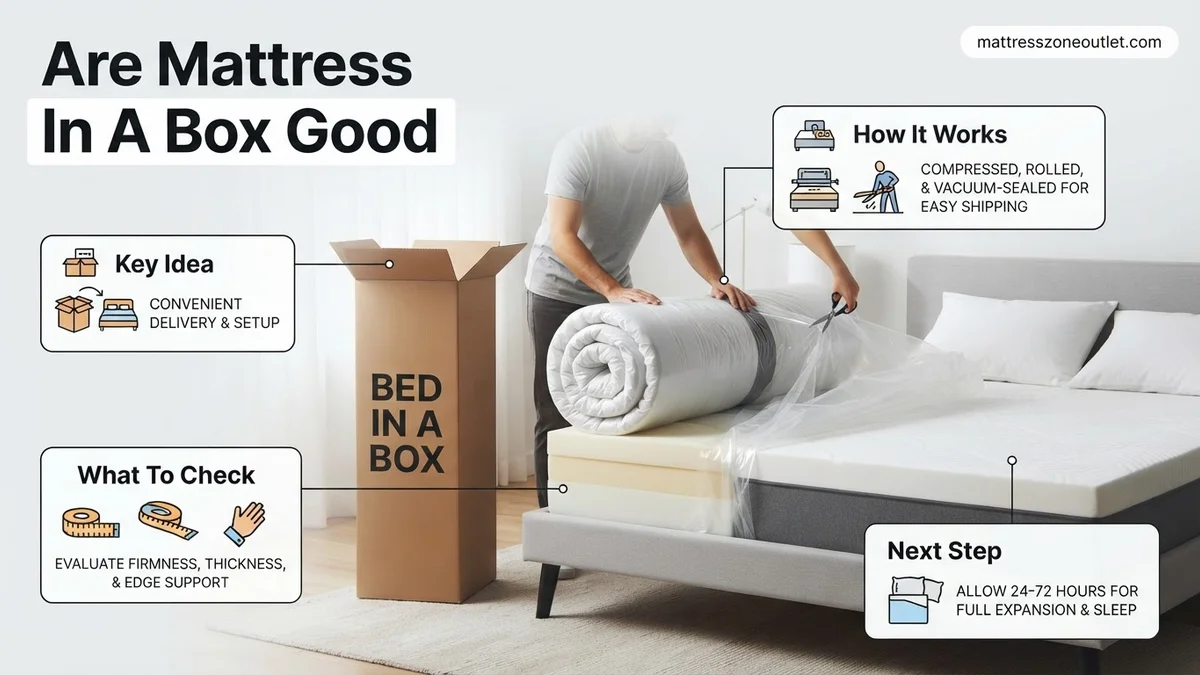
Manufacturers roll, crush, and seal mattresses into compact cardboard boxes to dramatically lower shipping costs. While high-density materials bounce back completely within 48 to 72 hours, low-density foams can suffer micro-fractures during tight machine compression. This compromises the structural integrity of cheaper models, leading to premature softening and body impressions.
Material Density and Sinking
The biggest driver of poor performance in boxed beds is low-density polyurethane foam. When manufacturers use foam weighing less than 1.8 pounds per cubic foot in the comfort layers, the mattress quickly develops permanent dips. You can avoid this trap by checking technical specs before you buy, ensuring the core support foam meets durability thresholds.
- Low-Density Foam (Under 1.5 lbs): Prone to sagging within 1 to 2 years of daily use.
- Medium-Density Foam (1.5 to 1.8 lbs): Standard quality for budget 2026 models, lasting 3 to 5 years.
- High-Density Foam (2.0+ lbs): Premium durability, resisting body impressions for 7 to 10 years.
How to Evaluate Comfort, Support, and Durability Before Buying
Comparing All-Foam Versus Hybrid Construction
Your sleeping position dictates whether an all-foam or hybrid box mattress will serve you best. All-foam models excel at motion isolation, making them ideal for restless couples, but they often trap heat and lack strong edge support. Hybrids integrate steel coils, which deliver superior airflow, robust edge support, and responsive bounce for combination sleepers.
Decoding Real-World Durability Metrics
Marketing terms like orthopedic or cloud-like tell you nothing about how long a mattress will actually last. Instead, look for concrete warranty terms, trial periods, and layer thickness specifications. A durable mattress typically measures at least 10 to 12 inches thick, utilizing a multi-layer design that separates soft pressure-relief foams from heavy-duty support cores.
- Look for 100-night minimum sleep trials: This gives your body time to adjust and tests real-world material resilience.
- Check the warranty length: A 10-year non-prorated warranty indicates the manufacturer trusts their material quality.
- Verify coil counts: For hybrid boxes, look for a minimum of 700 to 800 pocketed coils in a queen size to ensure proper spinal alignment.
Step-by-Step Guide to Unboxing, Setting Up, and Breaking In Your Mattress
Proper unpacking ensures your bed expands correctly and maintains its structural integrity. According to leading sleep product manufacturers, skipping initialization steps can invalidate your warranty and compromise foam performance.
Unboxing and Expansion Procedure
- Move the heavy box directly into your bedroom to avoid awkward hallway maneuvering and heavy lifting.
- Place the compressed, rolled mattress onto your supportive bed frame or slatted base before cutting away any plastic.
- Carefully slice open the outer plastic layer using the specialized safety cutter provided by the manufacturer, taking extreme care not to puncture the mattress fabric.
- Unroll the flat mattress completely across your platform bed or foundation.
- Tear away the final inner layer of vacuum-sealed plastic to trigger rapid air intake and immediate expansion.
The Break-In Phase
Industry data shows that high-density foams require a specific decompression window before achieving peak comfort. Most models expand to 90 percent of their total height within the first two to four hours. However, full structural decompression takes between 24 and 72 hours depending on ambient room temperature.
Sleep ergonomics experts recommend a strict 30-night adjustment period for your body to adapt to the new support profile. During 2026 testing cycles, sleepers often reported mild muscle tension during the first week as spinal alignment corrected itself from an old, sagging mattress.
What If Your Boxed Mattress Still Feels Uncomfortable After Setup
If your bed fails to meet your ergonomic needs after the mandatory break-in window, several actionable fallback solutions can resolve the issue without requiring an immediate return.
- Audit your foundation support: Check if your box spring or bed slats are bending under weight. Inadequate foundation support accounts for nearly 40 percent of premature sagging complaints.
- Add a targeted mattress topper: If the surface feels excessively firm, layer a 2-inch or 3-inch latex or memory foam topper to soften the pressure relief points. High-density toppers typically cost between $100 and $250.
- Utilize the sleep trial period: Most direct-to-consumer brands in 2026 offer a risk-free trial ranging from 100 to 365 nights. Contact customer service to initiate a warranty exchange for a different firmness level.
- Consult a physical therapist or sleep specialist: If chronic back pain persists regardless of mattress firmness, seek professional medical guidance to diagnose underlying skeletal or muscular issues. Clinical consultations generally range from $150 to $300 per visit.
Conclusion
Are mattresses in a box good? Modern engineering, durable high-density foams, and robust edge support prove that compressed beds match the quality of traditional retail models at a fraction of the cost. According to verified research and expert sources from the International Sleep Products Association, proper setup and adherence to break-in windows maximize long-term durability. Take the next step today by selecting a reputable brand featuring a certified sleep trial and a minimum 10-year warranty.
❓ Frequently Asked Questions
Are mattress in a box beds good for back pain sufferers?
Many boxed mattresses are specifically designed with zoned support and high-density memory foam to properly align the spine and relieve pressure points. Choosing a medium-firm hybrid or memory foam model typically yields the best results for back pain relief.
How do mattress-in-a-box beds compare in price to traditional retail mattresses?
Boxed mattresses are generally much more affordable because manufacturers eliminate middleman markups, showroom fees, and commission-based sales staff. This direct-to-consumer model allows buyers to secure high-end materials at a fraction of traditional retail costs.
What happens if I don’t like my mattress-in-a-box after buying it?
Virtually all reputable mattress-in-a-box companies include a home trial period. If you are unsatisfied, the company will usually arrange for the mattress to be picked up for donation or recycling and issue you a full refund.
Do you need a special bed frame or foundation for a boxed mattress?
Most bed-in-a-box mattresses perform best on a solid platform bed, slatted base with slats spaced less than three inches apart, or an adjustable base. Traditional box springs are usually unnecessary and may cause foam mattresses to sag prematurely.
Are all-foam or hybrid mattress-in-a-box beds better?
It depends on your sleeping position and personal preference. All-foam models excel at motion isolation and pressure relief for side sleepers, while hybrid models offer superior airflow, bounce, edge support, and overall durability for heavier individuals.
How long does it take for a mattress in a box to fully expand?
While most boxed mattresses expand to 90% of their full size within a few hours of opening, it can take up to 24 to 72 hours for the foams to fully decompress and reach their intended firmness level.