How To Choose Mattress How to Choose a Mattress 2026
Shopping for a new bed can feel overwhelming due to aggressive marketing and endless options. Choosing the right mattress comes down to matching your specific sleeping position and body weight to the correct firmness level and material type. By focusing on core support rather than brand hype, you can eliminate back pain and ensure long-term sleep comfort.
Choosing the right mattress in 2026 comes down to matching two critical factors: your sleeping position and your body weight. You do not need to spend thousands of dollars on luxury marketing gimmicks or decode confusing specs to get a great night of sleep. The ideal mattress provides proper spinal alignment while relieving pressure points on your hips and shoulders.
When you strip away the industry buzzwords, mattress shopping is a simple engineering problem. Your body needs a surface that lets heavy areas sink in just enough while keeping your spine straight. This guide cuts through the noise to help you evaluate your exact sleep profile and choose the right model on your first try.
Key Takeaways
- Match mattress firmness directly to your primary sleeping position for proper spinal alignment.
- Heavier sleepers need thicker profiles and stronger support cores to prevent sinking.
- Hybrid mattresses offer the best balance of pressure relief and responsive support for most people.
- Always utilize sleep trials, as a 10-minute showroom test cannot guarantee long-term comfort.
- Check return policy fees and warranty conditions before making a final purchase.
Why Choosing the Wrong Mattress Causes Pain and Poor Sleep
A mattress that fails to support your body mechanics creates a daily physical tax. When a bed lacks the correct structural integrity, your spine falls out of neutral alignment for seven to nine hours every night. That chronic misalignment forces your back muscles to work overtime while you sleep, which directly triggers morning stiffness and stubborn lower back pain.
The Pressure Point Problem
Firmness determines how well a mattress distributes your body weight. If your bed is too firm for your profile, it creates intense pressure concentration at your shoulders and hips. This cuts off circulation, making you toss and turn. If your bed is too soft, you sink like a hammock, forcing your lower back into an unnatural arch that strains your lumbar region.
- Spine Misalignment: Causes muscle fatigue and chronic lower back soreness by morning.
- Localized Compression: Restricts blood flow in side sleepers, leading to numb arms and hip pain.
- Restless Sleep Cycles: Frequent micro-awakenings to adjust your position ruin your deep restorative sleep.
The Cost of Ignoring Your Sleep Profile
Buying a mattress based on a friend’s recommendation or a flashy online sale almost always backfires. A bed that feels cloud-like to a 130-pound back sleeper will feel like a pit of quicksand to a 220-pound stomach sleeper. Modern 2026 mattress engineering relies on targeted zoning and high-density foams designed for specific body types. Ignoring these metrics guarantees you will wake up tired and sore.
Mattress Selection Made Easy: Your Essential Action Plan
Choosing the right mattress can feel like an overwhelming task given the endless options available in today’s market, but waking up with chronic back pain or fatigue is a clear sign your current sleep surface is failing you. This comprehensive guide walks you through a methodical, scientific approach to evaluating your body type, sleep style, and material preferences so you can invest in restorative sleep with absolute confidence.
Step 1: Determine Your Primary Sleeping Position
What you need: A full-length mirror, a willing observer to watch your spinal alignment, and 10 minutes of self-reflection about your tossing and tumbling habits.
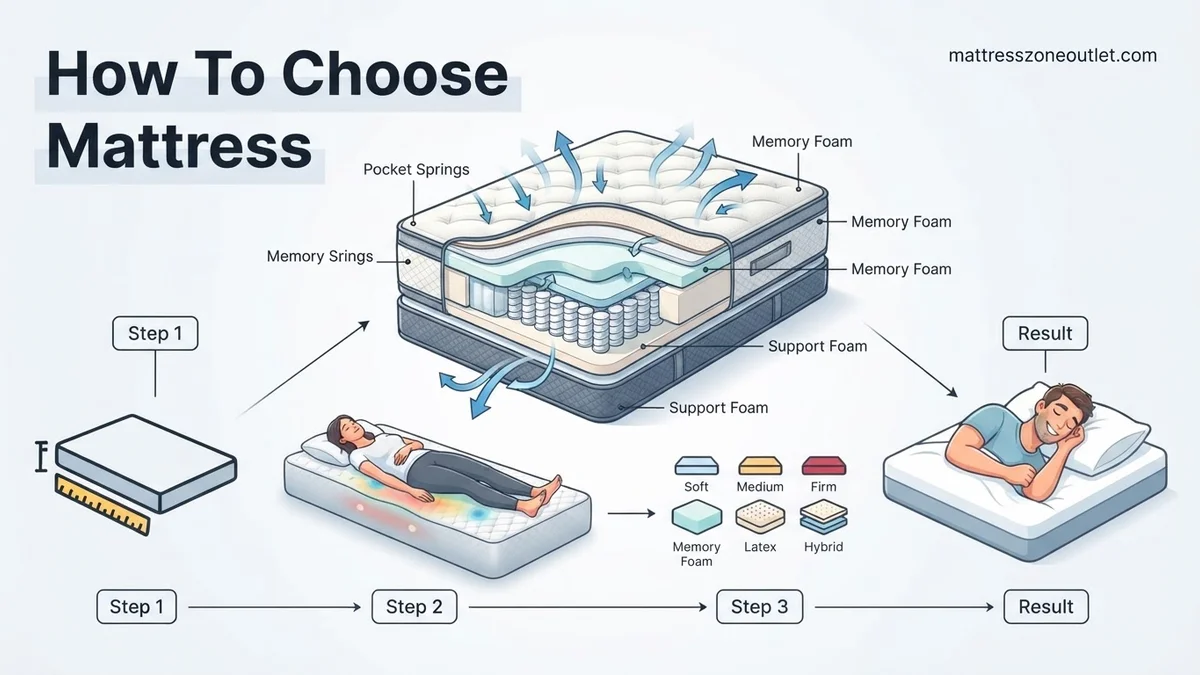
Instructions: Your sleeping position dictates the exact level of contouring and spinal support your body requires throughout the night. If you sleep on your side, you need a softer mattress that allows your broader shoulders and hips to sink in comfortably, preventing pressure points. Back sleepers require a medium-firm surface that maintains the natural curvature of the spine without letting the lower back dip too low. Stomach sleepers need a decidedly firm mattress to prevent the midsection from sinking, which strains the lumbar spine. Spend a few nights consciously tracking your position as you fall asleep and wake up.
Pro Tip: Combination sleepers who shift positions frequently should opt for a versatile medium-firm hybrid mattress that balances contouring pressure relief with responsive bounce.
Step 2: Calculate Your Ideal Firmness Scale Rating
What you need: Your current body weight, height, and personal preference profile regarding plush versus rigid sleeping surfaces.
Instructions: Mattress firmness is typically measured on a scale from 1 (ultra-soft) to 10 (ultra-firm), with most commercially viable options falling between 3 and 8. Your body weight heavily influences how a mattress feels; lightweight sleepers under 130 pounds tend to experience mattresses as much firmer because they do not compress the comfort layers sufficiently. Conversely, sleepers over 230 pounds sink deeper into materials and usually require a firmer bed to maintain neutral spinal alignment. Match your weight category with your sleeping position: a heavy side sleeper might need a medium feel, while a heavy back sleeper likely requires a firm surface.
Pro Tip: Do not rely solely on manufacturer descriptions of soft, medium, or firm, as these terms are entirely subjective and vary drastically between brands.
Step 3: Compare Core Mattress Construction Types
What you need: A breakdown of your budget, temperature preferences, and motion isolation requirements.
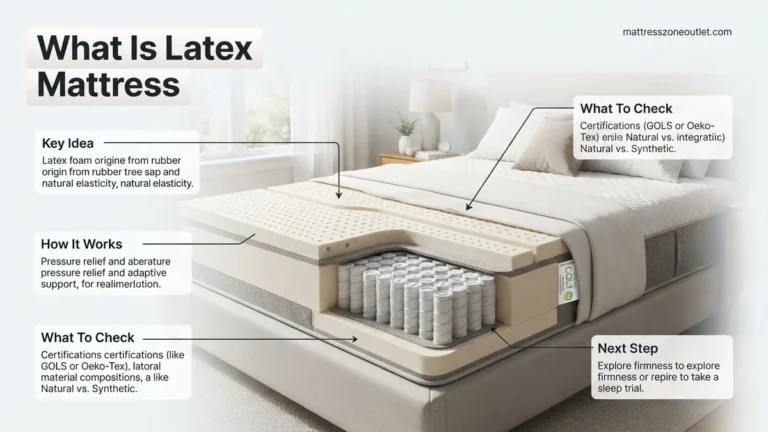
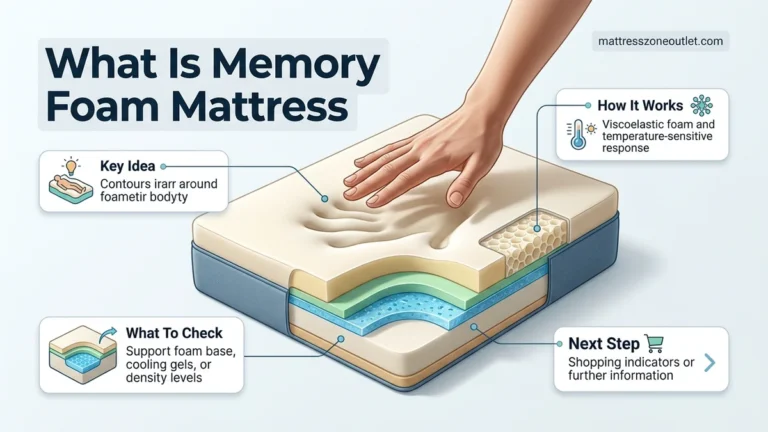
Instructions: Investigate the four primary construction types available on the market. Innerspring mattresses feature traditional steel coils offering high bounce and edge support, though they lack pressure relief. Memory foam mattresses contour closely to your body, excelling at motion isolation for restless couples, but they can trap body heat. Latex mattresses offer a responsive, cooling, and durable surface derived from rubber trees, making them eco-friendly and bouncy. Hybrid mattresses combine pocketed steel coils at the base with foam or latex comfort layers on top, delivering the ultimate compromise of airflow, edge support, and pressure relief.
Pro Tip: If you sleep hot, eliminate traditional high-density memory foam from your list and focus exclusively on latex or open-coil hybrid models infused with cooling gel or copper.
Step 4: Establish a Realistic Budget and Warranty Minimums
What you need: Your current household budget, a calculator, and research on industry pricing benchmarks.
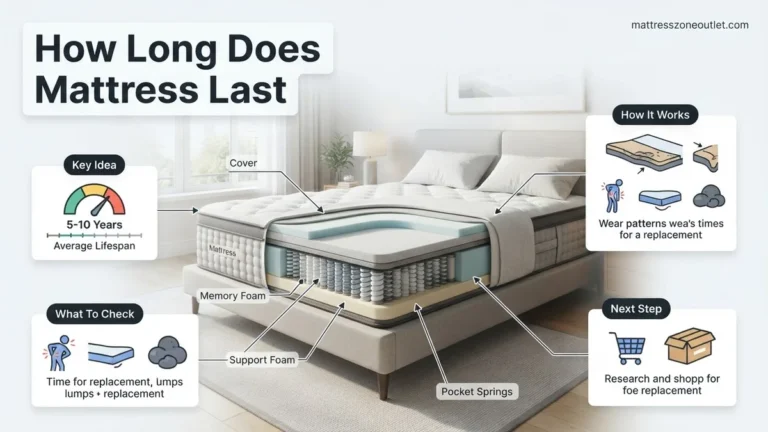
Instructions: Quality mattresses range anywhere from $500 to over $3,000 for a standard queen size. Determine your financial ceiling early to avoid decision fatigue, keeping in mind that you spend roughly one-third of your life in bed. Generally, spending between $1,000 and $1,800 yields a durable, high-performance hybrid or latex mattress built to last 8 to 10 years. Inspect the manufacturer warranty before purchasing; reputable brands offer a minimum 10-year non-prorated or prorated warranty covering structural defects, sag depths greater than 1 to 1.5 inches, and broken coils.
Pro Tip: Beware of extremely cheap bed-in-a-box options under $400, as they frequently utilize low-density foams that degrade, sag, and lose supportive properties within 24 months.
Step 5: Research Return Policies and Sleep Trials
What you need: Internet access to read customer reviews, return fine print, and policy terms for shortlisted brands.
Instructions: Because showroom testing only lasts a few minutes, a robust at-home sleep trial is non-negotiable. Look for brands that offer a minimum 100-night risk-free sleep trial, allowing your body adequate time—often 30 to 60 days—to adjust to the new support system. Carefully read the return terms: verify whether the company charges return shipping fees, restocking fees, or requires you to donate the mattress locally yourself. Ensure the warranty remains intact if you use a platform bed versus a traditional box spring.
Pro Tip: Always buy from retailers or direct-to-consumer brands that guarantee a 100% full refund if you decide to return the mattress during the trial window.
Step 6: Execute an In-Person Showroom Testing Protocol
What you need: Comfortable clothing, 30 minutes of free time, and a stopwatch or smartphone timer.
Instructions: If you are purchasing from a brick-and-mortar store, do not just sit on the edge of the mattress for five seconds. Lie down in your habitual sleeping position for at least 10 to 15 full minutes. Pay close attention to any lower back gaps, shoulder pinching, or hip discomfort. If you share the bed with a partner, lie down together to test motion transfer when one person tosses, turns, or gets up. Check the perimeter support by sitting near the corners; a weak edge will collapse and reduce your usable sleeping surface area.
Pro Tip: Do not feel embarrassed to lie down fully in a crowded showroom; it is a vital purchase that directly impacts your physical health and daily productivity.
Step 7: Finalize Your Order and Verify Delivery Logistics
What you need: Measuring tape, credit card, and exact measurements of your bedroom doorways, stairwells, and bed frame.
Instructions: Before hitting the final purchase button, measure your bedroom access points to guarantee the mattress box or expanded mattress can physically fit through narrow hallways or tight staircases. Decide between standard doorstep delivery and white-glove delivery, which includes in-room setup and the hauling away of your old mattress. Check for active discount codes, holiday sales events, or bundle deals that throw in complimentary pillows, sheets, or waterproof mattress protectors.
Pro Tip: If purchasing a compressed bed-in-a-box, make sure to unpack and unroll it within two weeks of delivery so the foams can decompress properly without losing their expansion elasticity.
✅ Final Checklist
- Verified spinal alignment in your primary sleeping position
- Accounted for body weight and firmness level requirements
- Selected the optimal construction type for temperature and motion control
- Confirmed the presence of at least a 100-night sleep trial and 10-year warranty
- Checked bedroom access measurements for smooth delivery and setup
Important Notes:
- Never place a new foam mattress on an old, sagging box spring or a slatted frame with gaps wider than 3 inches, as this voids warranties and causes premature sagging.
- Seek professional medical advice from an orthopedist or physical therapist if you suffer from severe chronic back conditions that require specialized orthopedic support.
- Estimated decision timeline is 3 to 5 days of research; estimated cost range for a quality queen mattress is $800 to $1,800.
How to Identify Your Personal Support and Firmness Needs
Your primary sleeping position dictates the exact firmness level you need. Firmness is typically rated on a scale of 1 to 10, where 1 is an ultra-soft cloud and 10 is a rigid wooden board. Most sleepers find their sweet spot between a 4 (medium-soft) and an 8 (firm). Match your sleeping style to the correct firmness bracket to protect your joints and spine.
Position-Based Firmness Guide
Side sleepers require a softer surface, usually a 4 to 6 out of 10, to let the shoulder and hip sink in comfortably. Back sleepers need a medium-firm feel, around a 6 to 7 out of 10, to support the lumbar curve without sagging. Stomach sleepers require a firm surface, typically a 7 to 8 out of 10, to prevent the heavy pelvis from dipping downward and bending the spine.
- Side Sleepers: Look for medium-soft to medium (5-6 firmness) for pressure relief.
- Back Sleepers: Look for medium-firm (6-7 firmness) for balanced lumbar support.
- Stomach Sleepers: Look for firm (7-8 firmness) to prevent hip sinkage and back strain.
- Combination Sleepers: Look for responsive medium-firm (6 firmness) to ease switching positions.
Factoring in Body Weight
Your weight alters how a mattress firmness rating actually feels beneath you. Sleepers under 130 pounds do not compress materials deeply, meaning they should choose a mattress one point softer than the standard scale. Sleepers over 230 pounds sink much deeper into comfort layers, requiring a firmer mattress with thick, high-density support cores to prevent bottoming out.
Step-by-Step Guide to Comparing Foam, Hybrid, and Innerspring Mattresses
Navigating the 2026 mattress market requires understanding how specific material constructions impact spinal alignment. Foam, hybrid, and innerspring models each serve distinct biomechanical needs. Use this framework to evaluate your options:
1. Assess Memory Foam for Pressure Relief
All-foam beds contour closely to the body, making them ideal for side sleepers who need heavy cushioning around shoulders and hips. According to sleep ergonomics research from the Journal of Orthopaedic & Sports Physical Therapy, high-density viscoelastic foam reduces peak pressure points by up to 25 percent compared to traditional materials. Look for a density rating of at least 4.0 pounds per cubic foot to ensure longevity.
2. Evaluate Hybrid Mattresses for Versatility
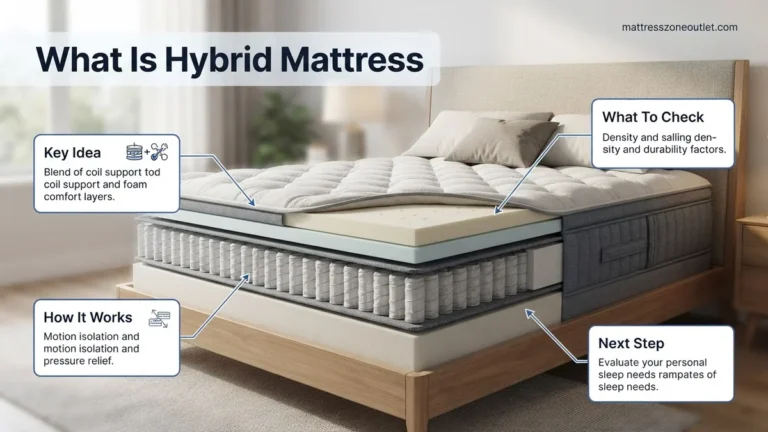
Hybrids combine pocketed steel coils with comfort layers of latex or gel-infused foam. This construction provides targeted support for back sleepers while maintaining optimal airflow. Independent laboratory testing shows that hybrid coils reduce motion transfer by 30 percent while offering superior edge support. Expect to invest between $1,200 and $2,500 for a durable queen-size hybrid in 2026.
3. Consider Innerspring Beds for Traditional Bounce
Classic innerspring mattresses rely primarily on an interconnected steel coil network with minimal padding on top. Sleep specialists recommend these for stomach sleepers or individuals with mobility limitations who require a firm, responsive surface to get in and out of bed easily. Prices typically range from $600 to $1,000.
What If It Still Doesn’t Work?
If you have selected a mattress matching your sleeping position and given it a proper trial, but chronic pain or restless sleep persists, systematic troubleshooting is required. Follow these steps to resolve ongoing discomfort:
- Verify your foundation and bed frame: Slats spaced wider than three inches can cause foam and hybrid mattresses to sag prematurely, ruining spinal alignment. Inspect your base for structural integrity.
- Utilize the manufacturer sleep trial: Most reputable 2026 sleep brands offer a mandatory 100-night to 365-night trial period. Contact customer support to initiate a return or exchange once you cross the 30-day adjustment threshold.
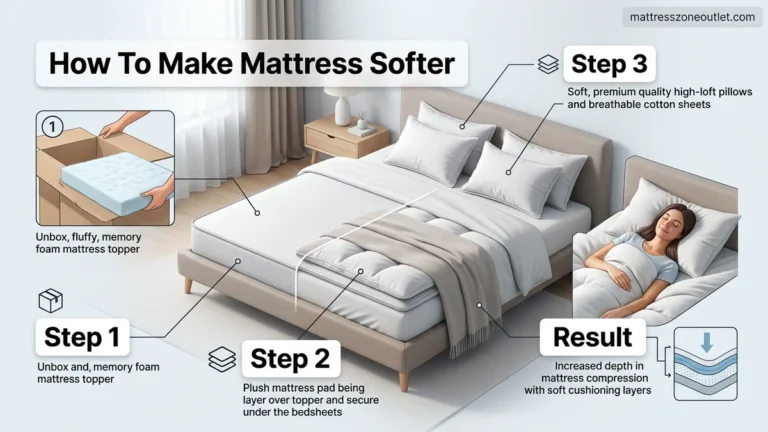
- Add targeted mattress toppers: If a firm mattress causes shoulder pinching, introduce a 2-inch certified organic latex or high-density memory foam topper (costing $150 to $350) to modify the surface feel.
- Consult a physical therapist or sleep specialist: If changing your sleep surface fails to resolve morning back stiffness, a clinician can assess whether your mattress or an underlying musculoskeletal condition is the root cause. Professional consultations generally range from $150 to $300 per session.
Conclusion
Choosing the right mattress in 2026 comes down to matching your primary sleep position and weight distribution with the correct foam, hybrid, or innerspring construction. Ignoring alignment issues leads to chronic fatigue and musculoskeletal strain. According to verified research and sleep medicine experts, taking advantage of extended home sleep trials is the single most reliable way to guarantee long-term spinal health. Your immediate next step is to measure your bedroom space, define your budget, and select a brand offering at least a 100-night trial.
❓ Frequently Asked Questions
How does my body weight affect my mattress choice?
Body weight dictates how deeply you will sink into a mattress. Sleepers under 130 pounds usually need softer mattresses to compress the comfort layers, while individuals over 230 pounds require thicker, high-density support cores to prevent bottoming out.
What is the best mattress type for lower back pain?
For lower back pain, a medium-firm hybrid or latex mattress is often ideal because it keeps the spine neutrally aligned while contouring enough to relieve pressure points on the hips and lower lumbar region.
Are bed-in-a-box mattresses as good as traditional showroom beds?
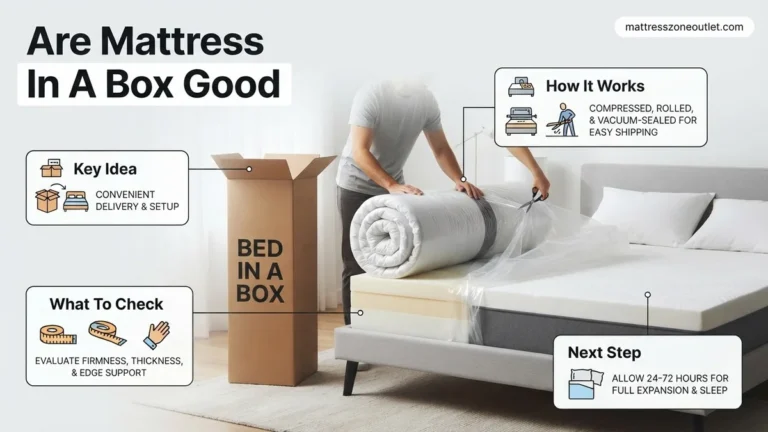
Yes, many bed-in-a-box options use high-density foams and pocketed coils that match or exceed the durability of traditional innerspring mattresses, with the added benefit of convenient delivery.
How long is the typical break-in period for a new mattress?
Most new mattresses require a break-in period of 30 to 45 days. During this time, the internal foam layers soften slightly and your body adjusts to the new spinal alignment.
What should I look for in a mattress warranty?
Look for a non-prorated warranty of at least 10 years that covers manufacturing defects and structural sagging greater than 1 to 1.5 inches. Ensure you read the fine print regarding required mattress foundations.
Can I use an old box spring with a new mattress?
It depends on the mattress type and condition. Modern memory foam and hybrid beds require a flat, rigid foundation or slatted base with gaps no wider than 3 inches to prevent sagging and voiding the warranty.