How to Sanitize Mattress Step-by-Step Guide for 2026
Learning how to sanitize a mattress is essential for removing deep-set sweat, odors, and dust mites using simple household ingredients. Regular cleaning prevents allergen buildup and extends the overall lifespan of your bed. This step-by-step guide outlines safe, effective methods to deep clean and refresh your mattress.
Sanitizing your mattress requires stripping all bedding, vacuuming the entire surface thoroughly, treating specific stains with targeted enzymatic solutions, and deodorizing with baking soda to neutralize trapped organic matter. Because you spend roughly a third of your life in bed, your mattress inevitably accumulates sweat, dead skin cells, body oils, and microscopic dust mites that regular sheet washing cannot prevent.
As we navigate household maintenance in 2026, routine deep cleaning extends the lifespan of your sleep surface and dramatically improves indoor air quality. Skipping this essential chore allows allergens and bacteria to multiply unchecked, directly impacting your respiratory health and sleep quality. This guide breaks down the exact, actionable steps required to completely sanitize your mattress at home.
Key Takeaways
- Vacuum the entire surface thoroughly to remove loose dust mites, dead skin, and debris.
- Apply baking soda generously to absorb trapped moisture and neutralize stubborn odors effectively.
- Target specific stains like sweat and urine using hydrogen peroxide and dish soap mixtures.
- Never saturate memory foam mattresses with excessive liquids to prevent permanent structural damage.
- Allow the mattress to dry completely in open air and sunlight before making the bed.
What Causes Mattress Odors, Stains, and Dust Mites
The Accumulation of Body Waste and Moisture
The average human sweats up to a pint of moisture every single night. This liquid, combined with natural body oils and sloughed-off skin cells, seeps directly through your fitted sheets and settles deep into the fabric and comfort layers of your mattress. Over time, this organic buildup creates a breeding ground for bacteria and mold.
- Sweat and Oils: Cause yellowing fabric stains and sour, musty odors.
- Dead Skin Cells: Act as the primary food source for microscopic pests.
- Spills and Bodily Fluids: Create deep-set organic stains that require targeted chemical breakdown.
Dust Mites and Allergens in Modern Bedrooms
Dust mites are microscopic arachnids that thrive in warm, humid environments filled with human dander. While they do not bite or transmit diseases, their waste products and decomposing bodies are potent indoor allergens that trigger asthma attacks, rhinitis, and year-round skin irritation.
- Population Density: A single unwashed mattress can harbor millions of dust mites.
- Allergen Triggers: Inhaling dust mite feces is a leading cause of chronic morning nasal congestion.
- Environmental Factors: High bedroom humidity accelerates mite reproduction rates significantly.
How to Sanitize a Mattress Like a Pro: A Practical Walkthrough
Your mattress absorbs sweat, dead skin cells, dust mites, and accidental spills every single night, making regular deep cleaning essential for a healthy indoor environment. Left uncleaned, these microscopic invaders can trigger allergies, asthma flare-ups, and lingering odors that disrupt your sleep quality. This practical, step-by-step walkthrough takes the guesswork out of mattress care, providing you with a systematic approach to banish hidden grime and restore a fresh, hygienic sleeping surface using simple household items.
Step 1: Strip and Launder Bedding
What you need: Laundry detergent, oxygen-based bleach (optional), large laundry hamper or baskets, washing machine, and a dryer.
Instructions: Begin by completely stripping your bed of all sheets, pillowcases, mattress protectors, duvet covers, and washable blankets. Do not leave a single textile on the bed. Separate your bedding according to fabric care labels, paying special attention to temperature recommendations. Wash everything in the hottest water setting safely permitted for each fabric type—ideally 130°F (54°C) or higher—to effectively kill dust mites, bacteria, and microscopic pathogens. Toss the freshly washed items into the dryer on the highest heat setting that fabrics can tolerate for at least 30 to 45 minutes to ensure total dryness.
Pro Tip: Wash your decorative throw pillows and stuffed animals too if they frequently rest on the bed, as they harbor similar allergens.
Step 2: Vacuum the Entire Surface
What you need: A vacuum cleaner equipped with a clean upholstery attachment and a crevice tool.
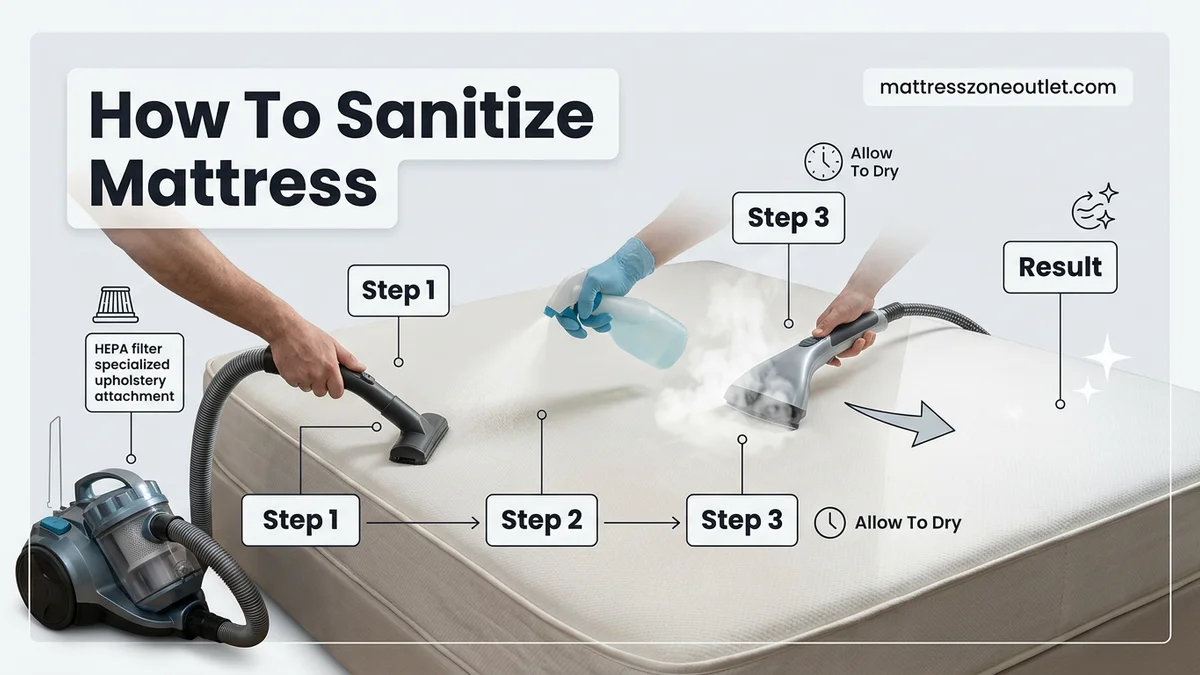
Instructions: Attach the upholstery tool to your vacuum hose and ensure the brush roll is turned off or the tool is free of debris from previous flooring jobs. Systematically vacuum the entire top surface of the mattress, moving in overlapping grid patterns from the top headboard edge down to the foot. Once the top is thoroughly cleared of loose dust, switch to the narrow crevice tool to get deep into all piped seams, tufts, and button depressions where dust bunnies and skin flakes love to accumulate. Do not forget to flip or tilt the mattress to quickly vacuum the sides and the top half of the bottom surface if you plan to flip it later.
Pro Tip: Empty your vacuum canister or replace the vacuum bag immediately before starting so your vacuum maintains maximum suction power.
Step 3: Spot-Clean Tough Stains
What you need: Mild dish soap, hydrogen peroxide, baking soda, a clean white microfiber cloth, a spray bottle, and cold water.
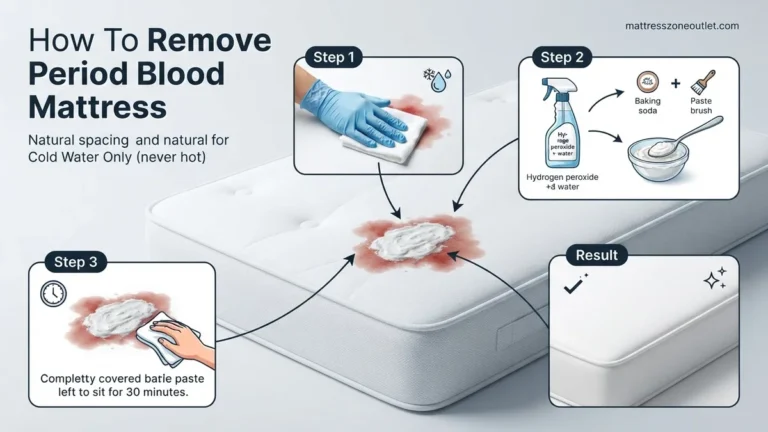
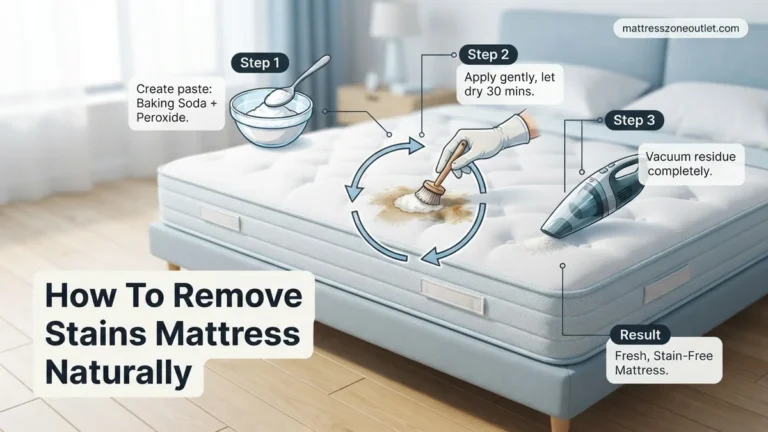
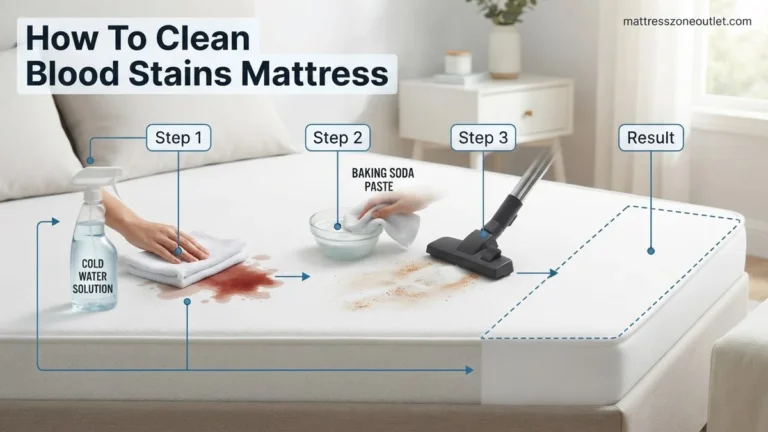
Instructions: Identify any visible stains from sweat, blood, or food. Never saturate your mattress with liquid, as excess moisture causes mold growth inside the foam or inner springs. For general organic stains, mix equal parts cold water and hydrogen peroxide with a drop of mild dish soap in a spray bottle. Lightly mist the stained area—do not drench it—and blot gently with your white microfiber cloth, working from the outside edges inward to prevent ring formation. For stubborn protein-based stains like blood, apply a paste of baking soda and cold water directly to the spot, let it sit for 30 minutes, and gently scrape or blot it away with a damp cloth.
Pro Tip: Always use a white or light-colored cloth to avoid dye transfer from colored fabrics onto your mattress fabric.
Step 4: Neutralize Odors with Baking Soda
What you need: 1 to 2 boxes of pure baking soda and 15 to 20 drops of your favorite essential oil (lavender or eucalyptus work wonderfully).
Instructions: In a mixing bowl, combine the baking soda with a few drops of essential oil, stirring thoroughly to break up any clumps and distribute the fragrance evenly. Take the bowl or a sifter and generously distribute the scented baking soda across the entire surface of the dry mattress. Use your hands or a soft-bristled brush to rub the powder lightly into the fabric fibers so it makes direct contact with the material. Let the baking soda sit undisturbed for a minimum of 4 to 8 hours. During this time, the alkaline powder will absorb deep-seated body oils, moisture, and foul-smelling volatile organic compounds trapped inside the mattress padding.
Pro Tip: Position a sunny floor-to-ceiling window open or place a oscillating fan nearby to circulate fresh air across the room while the baking soda works its magic.
Step 5: Vacuum Away the Baking Soda
What you need: A vacuum cleaner with a clean brush or upholstery attachment.
Instructions: Once the baking soda has had adequate time to absorb trapped odors and moisture, retrieve your vacuum cleaner. Attach the clean upholstery brush attachment. Slowly and methodically vacuum up every trace of the white powder from the mattress surface. Make multiple slow passes over each section to ensure no powdery residue remains behind, which could otherwise feel gritty against your sheets or dry out your skin. Pay special attention to corners, crevices, and quilted depressions where baking soda tends to pack tightly and hide.
Pro Tip: If your vacuum filter begins to clog with fine baking soda dust, stop and tap out the filter mid-process to maintain strong suction.
Step 6: Sanitize with UV Light or Disinfectant Spray
What you need: A handheld UV-C mattress sanitizer wand or a fabric-safe antimicrobial disinfectant spray (like Lysol or a natural ethanol-based spray).
Instructions: To eliminate lingering bacteria and viruses that survived standard cleaning, you need a sanitizing pass. If using a UV-C sanitizing light, slowly glide the device across the entire mattress surface, holding it roughly one to two inches above the fabric for about 10 to 15 seconds per section. Alternatively, if using a fabric-safe disinfectant spray, hold the bottle 8 to 10 inches away and mist the surface in an even, light sweeping motion. Ensure the mattress surface is left slightly damp rather than soaking wet.
Pro Tip: Never use harsh chemical bleaches or ammonia-based cleaners on a mattress, as they will degrade memory foam and ruin synthetic ticking fabrics.
Step 7: Air Dry and Re-Make the Bed
What you need: Ceiling fan, open windows, portable box fans, and fresh bedding.
Instructions: Allow the mattress to air dry completely before putting any sheets back on. Turn on overhead ceiling fans, open bedroom windows to maximize cross-ventilation, or position box fans directly facing the mattress sides. This drying phase typically takes between 1 to 3 hours depending on how much moisture was used during spot-cleaning and disinfecting steps. Once you can touch the mattress and confirm it is 100% bone dry, encase it in a breathable, waterproof mattress protector to shield it from future spills, skin shedding, and dust mites.
Pro Tip: Make mattress sanitizing a seasonal ritual, aiming to deep clean your mattress every 3 to 6 months for optimal sleep hygiene.
✅ Final Checklist
- All bedsheets, pillowcases, and mattress pads have been laundered in hot water and thoroughly dried.
- The entire mattress top, sides, and crevices have been thoroughly vacuumed of dust and debris.
- Specific stains have been spot-treated with minimal moisture and allowed to dry completely.
- Baking soda odor-neutralizer sat for at least 4 hours and was completely vacuumed away.
- The mattress is 100% dry to the touch before putting on a protective cover and fresh linens.
Important Notes:
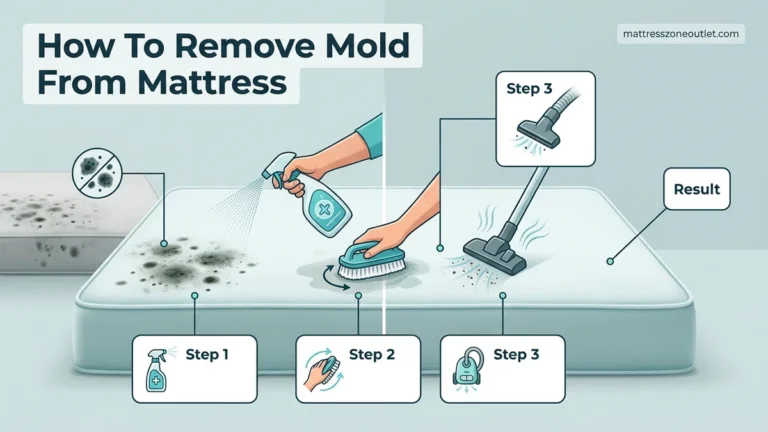
- Never saturate memory foam or latex mattresses with excess water, as trapped moisture creates prime conditions for black mold growth.
- Seek professional mattress cleaning services if you are dealing with extensive biological waste, severe mold infestations, or stubborn antique mattress materials.
- Estimated time: 30 minutes of active work time, plus 4 to 8 hours of passive baking soda absorption and drying time. Estimated cost: $5 to $15 for household cleaning supplies.
How to Deep Clean and Sanitize Your Mattress Step-by-Step
Preparation and High-Powered Vacuuming
Before applying any liquids or powders, you must physically remove loose debris, hair, and dust mites from the surface and crevices. Strip all sheets, pillowcases, and mattress protectors, throwing them immediately into the washing machine on the hottest recommended setting.
- Equip Your Vacuum: Attach the clean upholstery tool to your vacuum cleaner to maximize suction.
- Target the Crevices: Press deeply into tufts, seams, and quilted piping where dust and dead skin accumulate.
- Cover Every Inch: Vacuum the top, sides, and as much of the bottom surface as your mattress design allows.
Stain Pre-Treatment and Spot Removal
Never saturate your mattress with water or harsh chemical cleaners, as excess moisture trapped inside the memory foam or inner springs will cause mold growth. Instead, mix targeted, low-moisture solutions based on the specific type of stain you are treating.
- Protein Stains (Blood, Sweat): Mix three tablespoons of hydrogen peroxide, one tablespoon of liquid dish soap, and one tablespoon of baking soda into a light paste. Apply gently, let sit for 15 minutes, and blot away with a damp cloth.
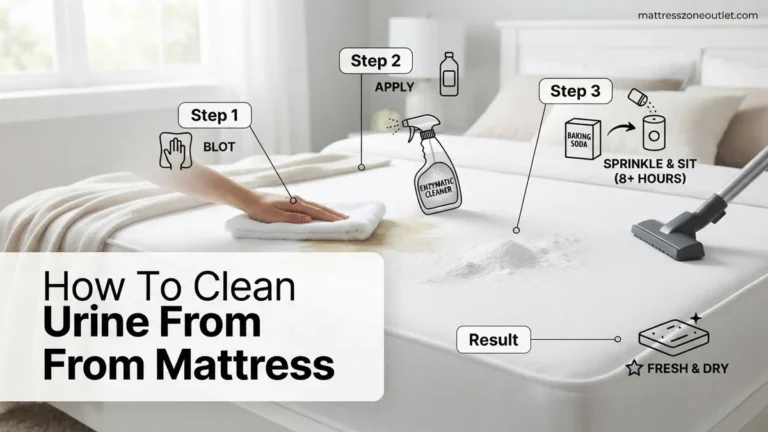
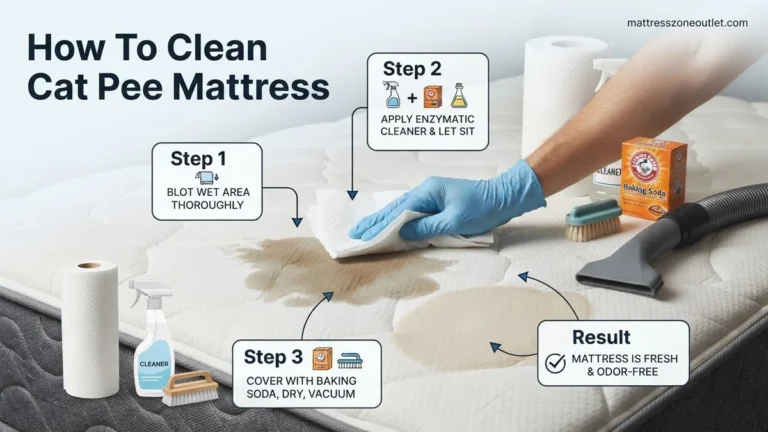
- Organic Stains (Urine): Spray a commercial enzymatic cleaner directly onto the spot to break down uric acid crystals, then blot thoroughly with a dry towel.
- General Dirt: Apply a mild upholstery shampoo with a damp sponge, working in small circular motions without soaking the core.
How to Remove Sweat, Urine, and Blood Stains from a Mattress
Targeted stain removal requires chemical strategies tailored to specific biological fluids. According to textile chemists, treating a mattress incorrectly can set proteins permanently into the fabric fibers. Always blot rather than rub liquid spills to prevent pushing moisture deeper into the memory foam or inner spring layers.
Treating Yellow Sweat and Urine Stains
- Mix a solution of one cup of hydrogen peroxide, three tablespoons of baking soda, and a single drop of liquid dish soap in a bowl.
- Transfer the mixture into a spray bottle and lightly mist the stained area without soaking the mattress material.
- Allow the bubbling solution to sit on the surface for twenty to thirty minutes while it breaks down uric acid crystals.
- Blot the area firmly with a clean, dry microfiber cloth to absorb lifted residue and excess moisture.
- Direct a portable fan at the treated spot until the surface is completely dry to prevent mold growth in 2026.
Lifting Tough Blood Stains
- Combine one part cold water with two parts hydrogen peroxide in a small container.
- Apply the cold mixture directly to the blood stain using a clean cloth, ensuring the water remains cold to prevent protein coagulation.
- Let the solution sit for no longer than ten to fifteen minutes to protect synthetic mattress fabrics.
- Blot away the reddish-pink liquid firmly with a dry white towel until no more color transfers.
- Rinse the spot lightly with a damp cloth soaked in cold water, then press dry with a heavy towel.
What If Odors and Stains Still Remain After Cleaning
Stubborn blemishes or deep-set biological smells sometimes survive standard home treatments. When surface cleaning fails to penetrate multi-layered memory foam cores, specialized interventions are required to restore mattress hygiene safely.
- Apply an enzymatic pet-stain cleaner formulated specifically for organic protein breakdown, letting it dwell according to the manufacturer instructions.
- Rent a professional-grade upholstery extractor machine from a local hardware store for approximately $30 to $50 per day to flush deep fibers.
- Hire a certified professional mattress cleaning service, which typically costs between $100 and $250 depending on mattress size and stain severity.
- Evaluate the age of the mattress; sleep health experts recommend replacement every 7 to 10 years if structural odors and deep stains become permanent.
Conclusion
Sanitizing your mattress regularly eliminates hidden allergens, dust mites, and persistent biological stains that degrade indoor air quality. By combining targeted baking soda deodorizing with specific enzymatic stain treatments, you extend the lifespan of your sleep surface significantly. According to verified research and sleep hygiene experts, executing this deep-clean protocol twice a year maintains optimal bedroom health. Take your next step today by stripping your bed and starting the initial vacuuming process.
❓ Frequently Asked Questions
What is the safest way to sanitize a mattress without harsh chemicals?
The safest method involves using household staples like baking soda, white vinegar, and mild dish soap. Baking soda acts as a natural deodorizer and abrasive, while vinegar helps neutralize bacterial odors without ruining delicate fabric.
How do I kill dust mites during the sanitization process?
To eliminate dust mites, thoroughly vacuum the mattress surface using a HEPA filter attachment. You can also sanitize the outer layers by spraying a light mist of rubbing alcohol or using a garment steamer on inner-spring models.
How long does it take for a mattress to dry after deep cleaning?
Depending on the amount of moisture used and humidity levels in your home, a mattress typically takes between 4 to 8 hours to dry completely. Always ensure it is 100% dry before putting sheets back on to prevent mold.
Can UV sanitizing wands effectively clean a mattress?
UV-C light wands can help kill surface bacteria and dust mites, but they do not remove physical stains, dead skin cells, or deep odors. They work best as a supplementary step after traditional vacuuming and spot cleaning.
How do you get rid of a stubborn urine smell from a mattress?
Mix equal parts hydrogen peroxide, warm water, and a few drops of dish soap, spray the affected area, let it sit for 10 minutes, and blot dry. Cover the damp spot with baking soda to draw out remaining moisture.
What preventative measures keep a mattress sanitary between deep cleanings?
Using a waterproof, washable mattress protector is the single most effective way to block sweat, spills, and dead skin cells. Additionally, wash your bed sheets weekly in hot water to minimize allergen transfer.