How to Clean Blood Stains Mattress Step-by-Step Guide 2026
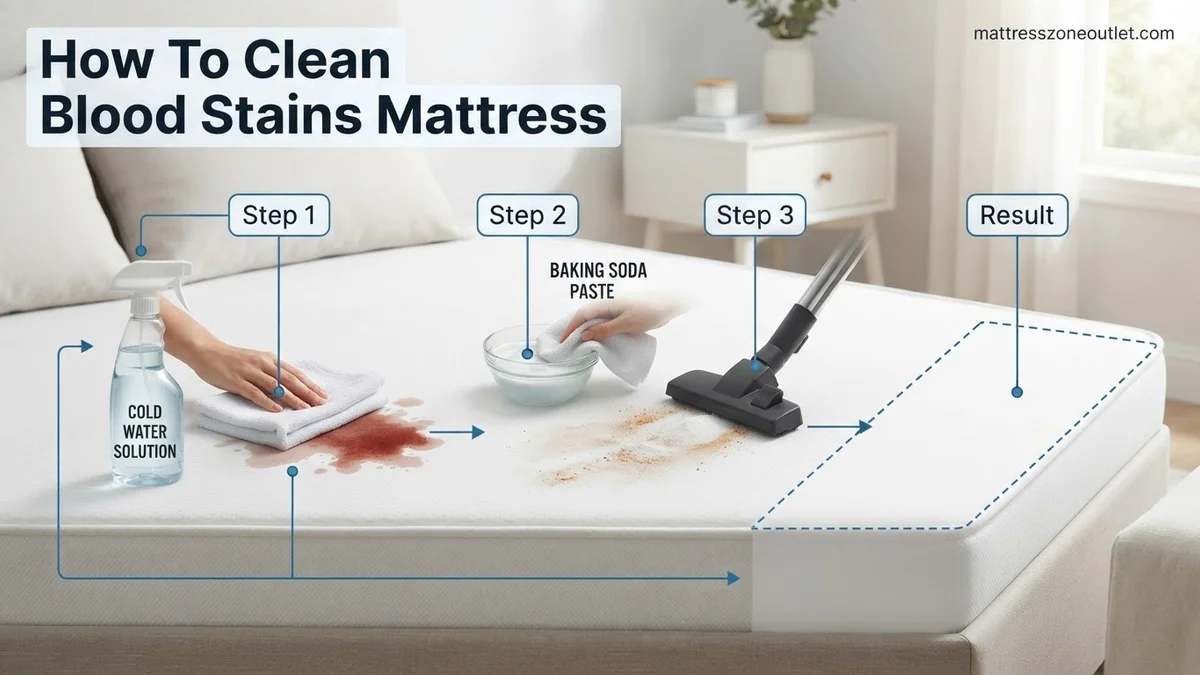
Knowing how to clean blood stains mattress surfaces safely requires immediate action using specific household ingredients. You must always use cold water instead of hot water to prevent setting the protein-based stain permanently.
Removing a blood stain from your mattress requires a targeted approach utilizing basic household chemistry, specifically cold water and enzymatic breaking agents. Whether dealing with a fresh spot or a set-in mark, treating a protein-based fluid demands precision rather than aggressive scrubbing, which only pushes the liquid deeper into your memory foam or inner springs.
As mattress materials evolve heading into 2026, knowing the exact step-by-step cleaning recipes prevents permanent discoloration while preserving your expensive sleep surface. By bypassing commercial chemical sprays and relying on proven DIY solutions, you can safely lift the iron and protein compounds out of your mattress core in less than an hour.
Key Takeaways
- Never use hot water on blood stains as heat cooks proteins into the fabric.
- Blot the stain gently instead of rubbing to prevent spreading the liquid.
- Hydrogen peroxide safely lifts biological stains through oxidation.
- Baking soda absorbs remaining moisture and lifts lingering residue effectively.
- Ensure the mattress dries completely to prevent mold growth.
Why Blood Stains on Mattresses Require Specialized Cleaning
The Protein and Iron Challenge
Blood is not a standard surface spill like spilled coffee or muddy footprints. It is a complex biological fluid packed with dense proteins and heavy iron molecules that bind tightly to fabric fibers. When blood contacts a mattress fabric, these proteins immediately anchor themselves into the weave. Standard laundry detergents often fail because they lack the specific oxidative or enzymatic power needed to shatter these biological bonds. You need a targeted cleaner that physically breaks down the protein structure rather than just masking the discoloration.
The Danger of Saturation
Mattresses are massive, thick slabs of dense foam, cotton padding, and pocketed coils that cannot be tossed into a washing machine. When you apply too much liquid during the stain removal process, that moisture plunges deep into the internal layers. This trapped moisture creates an ideal breeding ground for mold, mildew, and dust mites within 24 to 48 hours. A proper cleaning method relies on controlled, targeted applications:
- Use damp cloths or spray mists instead of pouring liquids directly onto the bed.
- Apply thick paste solutions that sit strictly on the surface layer.
- Ensure complete air drying using fans or open windows immediately following the treatment.
Master Mattress Blood Stain Removal in 7 Simple Steps
Dealing with blood stains on a mattress can feel overwhelming, but acting quickly and using the right chemical approach will save your expensive bedding. This comprehensive walkthrough guides you through safe extraction techniques, preventing fabric damage and deep-set biological residue without ruining your mattress warranty.
Step 1: Strip the Bed and Assess the Damage
What you need: Heavy-duty garbage bag, laundry basket, rubber cleaning gloves, and a high-intensity flashlight or phone light.
Instructions: Immediately strip all sheets, pillowcases, mattress protectors, and duvets off the bed. Place any soiled linens directly into the wash or a containment bag to prevent the blood from transferring to other fabrics. Put on your rubber gloves to maintain sanitary conditions. Turn off overhead lights and use your flashlight held at an angle across the mattress surface. This oblique lighting helps you locate both fresh, damp blood and dried, oxidized rings that might otherwise blend into the mattress fabric during daylight.
Pro Tip: Never use hot water when washing the stripped sheets later, as heat sets protein-based stains permanently into fabric fibers.
Step 2: Blot Fresh Stains or Vacuum Dry Debris
What you need: Clean white microfiber cloths, cold tap water, and a vacuum cleaner with an upholstery attachment.
Instructions: If the blood stain is completely fresh and still wet, take a clean white cloth dampened with ice-cold water and gently blot the area. Never rub or scrub, as friction pushes the red blood cells deeper into the foam core. Lift the cloth straight up repeatedly until no more red transfers to the fabric. If the stain is completely dried and crusty, run your vacuum cleaner gently over the surface to remove any flaky dried protein crusts before applying liquid solutions.
Pro Tip: Always use white or light-colored cloths. Colored towels can bleed their own dye onto the mattress when mixed with cleaning solutions.
Step 3: Mix the Enzymatic Cleaning Solution
What you need: Hydrogen peroxide (3%), clear liquid dish soap, table salt, and a small mixing bowl or spray bottle.
Instructions: Blood is a protein stain that standard water alone cannot break down. In your mixing bowl, combine 1 cup of 3 percent hydrogen peroxide, 1 tablespoon of liquid dish soap, and 1 tablespoon of table salt. Stir the mixture gently until the salt is completely dissolved and a light foam forms on top. Hydrogen peroxide acts as a mild oxidizing agent that breaks down the hemoglobin proteins, while the dish soap lifts grease and oils present in bodily fluids.
Pro Tip: Always test this mixture on a hidden underside corner of the mattress first, as hydrogen peroxide can bleach certain colored synthetic memory foam fabrics.
Step 4: Apply the Solution and Let It Effervesce
What you need: Spray bottle or clean cotton ball, and a kitchen timer.
Instructions: Pour your mixed solution into a spray bottle for controlled application, or dip a cotton ball into the bowl and dab it directly onto the stained areas. Saturate the stain thoroughly, but be careful not to oversaturate the mattress to the point where liquid pools inside the inner springs or thick foam layers. As the peroxide touches the blood, you will notice a foaming or fizzing reaction. This chemical effervescence actively lifts the blood particles up and away from the fabric weave. Set a timer and let the solution sit undisturbed for 10 to 15 minutes.
Pro Tip: Do not let the solution dry out completely during this waiting period, or the lifted residue may resettle into the fabric.
Step 5: Blot Away the Dissolved Residue
What you need: Several clean, dry white microfiber cloths or paper towels.
Instructions: Take your dry white cloths and firmly press them down onto the treated stain area. Apply moderate hand pressure to absorb the liquid containing the dissolved blood particles. Lift the cloth straight up, shift to a clean dry section of the cloth, and repeat the blotting process. Continue this cycle until the cloth comes away completely dry and clean. If a faint yellowish halo or shadow of the stain remains, repeat Steps 4 and 5 one more time before moving forward.
Pro Tip: Change your blotting cloths frequently so you do not accidentally transfer extracted brown-red residue back onto clean sections of the mattress.
Step 6: Apply a Baking Soda Draw-Out Layer
What you need: A box of standard baking soda and a fine-mesh kitchen sieve.
Instructions: Even if the stain appears gone, lingering moisture deep inside the padding can cause mildew and odors. Fill your kitchen sieve with baking soda and dust a generous, even layer about one-quarter inch thick across the entire treated area. Baking soda acts as a natural deodorizer and a desiccant that draws remaining moisture upward out of the core foam layers. Leave the baking soda undisturbed on the mattress for a minimum of 8 hours, or ideally overnight, in a well-ventilated room with a fan running.
Pro Tip: Point a small oscillating room fan directly at the treated spot to speed up the air-drying process and prevent mold growth.
Step 7: Final Vacuuming and Inspection
What you need: Vacuum cleaner equipped with a clean brush attachment.
Instructions: Return to the mattress after the 8-hour drying period. The baking soda should now be completely caked and dry to the touch. Attach your vacuum’s clean upholstery or brush tool and carefully vacuum up every trace of the dried baking soda powder. Inspect the mattress surface under bright lighting to confirm the blood stain has vanished entirely. Once verified clean and completely dry, remake your bed with fresh sheets and a waterproof mattress protector.
Pro Tip: Always install a quality waterproof mattress protector immediately after cleaning to make future accidental stain remediation effortless.
✅ Final Checklist
- All linens have been stripped, washed in cold water, and dried
- Hydrogen peroxide solution successfully broke down and bubbled away protein residue
- Blotting was done exclusively with clean white cloths without rubbing
- Baking soda completely absorbed lingering moisture and neutralizing odors
- The mattress interior is 100% dry to the touch before remaking the bed
Important Notes:
- Never use hot water or commercial steam cleaners on blood stains, as heat cooks the protein bonds and makes the stain permanent.
- If the mattress has deep mold growth, structural foam damage, or extensive blood saturation covering large areas, contact a professional upholstery cleaning service or consider mattress replacement.
- Estimated time: 30 minutes of active work time plus 8 hours of drying time. Total cost: Under $10 using standard household ingredients.
The Critical Rule: Why Hot Water Destroys Mattress Cleaning Efforts
The Science of Protein Denaturation
The single biggest mistake you can make when tackling a blood stain is turning on the hot water tap or grabbing a steam cleaner. Heat causes the proteins in blood to denature, meaning they rapidly unfurl, cross-link, and permanently bind to the textile fibers. Once cooked by heat, hemoglobin essentially bakes into the mattress fabric, turning a removable blemish into an indelible, rust-colored permanent fixture. No amount of detergent will lift a heat-set blood stain.
Strict Temperature Guidelines for 2026 Cleaning Protocols
Modern textile care strictly mandates cold temperatures for biological spills. To ensure your mattress cleaning efforts succeed, follow these strict fluid rules:
- Always use ice-cold or tap-cold water for all pre-rinses and mixing solutions.
- Keep ambient room temperature moderate to avoid speeding up chemical bonding.
- Never use heated hair dryers or irons to speed up the drying process over the treated area.
By strictly enforcing the cold water rule, you keep the protein molecules loose and vulnerable to lifting agents like hydrogen peroxide, dish soap, or baking soda paste.
Step-by-Step Guide to Fix Fresh and Dried Blood Stains
Removing blood requires a methodical approach because proteins bond permanently to fabric fibers when exposed to heat. According to textile cleaning experts, acting quickly prevents permanent discoloration. Here is how to treat both fresh and dried stains safely on modern memory foam and hybrid mattress models in 2026.
Treating Fresh Blood Stains
- Blot the excess liquid immediately with a clean, dry microfiber cloth. Do not rub, as rubbing pushes the hemoglobin deeper into the mattress core.
- Fill a spray bottle with cold water. Never use warm or hot water, which cooks the protein bonds and sets the stain.
- Mist the damp area lightly and blot again with a dry cloth to lift the diluted pigment.
- Apply a paste made from two parts baking soda and one part cold water directly to any remaining discoloration.
- Let the mixture sit for 30 minutes to absorb the organic residue.
- Scrape away the dried paste with a dull edge and vacuum the remaining residue thoroughly.
Treating Dried Blood Stains
- Mix a powerful lifting solution in a small bowl: 1/2 cup of cornstarch, 1 tablespoon of baking soda, and 1/4 cup of 3 percent hydrogen peroxide.
- Spread a thick layer of the mixture over the dried stain using a soft-bristled brush or spatula.
- Allow the treatment to dry completely, which usually takes between 45 to 60 minutes.
- Observe the paste as it turns crusty and lifts the reddish-brown pigment out of the mattress ticking.
- Vacuum the dried flakes using an upholstery attachment to reveal a clean surface.
- Dampen a separate cloth with cold water to wipe away any residual peroxide residue.
What If It Still Doesn’t Work?
If persistent organic discoloration remains after executing the standard peroxide and baking soda treatments, advanced intervention is necessary. Do not saturate the memory foam layers with excess liquid, as trapped moisture creates mold and structural degradation within the mattress core. Try these expert fallback strategies:
- Switch to a specialized enzymatic cleaner formulated specifically for biological proteins, available at most home goods stores for $12 to $25.
- Apply a 3 percent dilution of household ammonia mixed with one cup of warm water for stubborn spots, ensuring adequate room ventilation during application.
- Hire a certified professional upholstery cleaning service to perform hot-water extraction or low-moisture encapsulation on the affected mattress surface.
- Expect to pay between $75 and $150 for professional on-site mattress sanitization and stain removal services.
- Replace the mattress entirely if structural saturation or deep biological contamination compromises hygienic sleep standards.
Conclusion
Successfully treating blood stains on a mattress requires immediate cold-water blotting, appropriate chemical breakdown via hydrogen peroxide or enzymes, and strict avoidance of heat. According to verified research and textile manufacturing experts, acting swiftly preserves the structural integrity of advanced foam and innerspring materials while preventing permanent discoloration. Your actionable next step is to test your chosen cleaning solution on a hidden seam of the mattress before treating the visible blemish.
❓ Frequently Asked Questions
How do I remove dried blood stains from a mattress?
Mix hydrogen peroxide, a small amount of liquid dish soap, and baking soda into a thin paste. Apply it to the dried stain, let it sit for 30 minutes, and gently scrape or blot away the residue with a cold, damp cloth.
Will hydrogen peroxide bleach my memory foam mattress?
Hydrogen peroxide can have a mild bleaching effect on certain dark or colored fabrics. Always test the solution on a hidden underside corner of the mattress before applying it to a visible stain.
Can I use meat tenderizer to clean blood stains?
Yes, unseasoned meat tenderizer contains enzymes that break down protein-based blood stains. Mix it with cold water to form a paste, apply it to the stain for 30 minutes, and wipe it away with a cold, damp cloth.
What is the safest way to clean a blood stain from a memory foam mattress?
Memory foam cannot handle excessive moisture or harsh heat. Use a minimal amount of cold soapy water or a mild hydrogen peroxide spray, blotting carefully to avoid saturating the foam.
How long does it take for a mattress to dry after cleaning?
Depending on the amount of liquid used, a mattress typically takes between two to six hours to dry completely. Speed up the process by pointing a household fan directly at the damp spot.
Can enzyme cleaners remove old blood stains?