How to Clean Cat Pee Mattress Proven Step-by-Step Fix 2026
Cat urine on a mattress requires immediate action to prevent uric acid crystals from bonding permanently to the fabric. Using a proven enzymatic cleaner alongside household items like hydrogen peroxide and baking soda safely neutralizes both the stain and the lingering odor without ruining the bed.
Rescuing a mattress from cat urine requires breaking down uric acid crystals rather than just masking the odor. Standard detergents fail because they leave behind microscopic crystals that reactivated humidity brings back to life, ruining your sleep space.
By 2026, proven DIY chemical reactions combined with biological enzymes remain the gold standard for restoring a contaminated mattress. This step-by-step method neutralizes the stain and completely eradicates the pungent smell without ruining your bed.
Key Takeaways
- Blot excess urine immediately with clean paper towels instead of rubbing.
- An enzymatic cleaner is mandatory to break down odor-causing uric acid crystals.
- Apply a 1:1 mixture of white vinegar and water to lift fresh stains.
- Cover the treated area with baking soda to absorb residual moisture and smells.
- Ensure the mattress dries completely to prevent dangerous mold growth.
Why Cat Urine Ruining Your Mattress Requires Immediate Action
The Science of Uric Acid Crystals
Cat urine is made of urea, urobilin, and uric acid. When the liquid dries on your mattress, the urea breaks down and creates that unmistakable ammonia smell. However, the uric acid binds to the foam and fabric fibers, forming stubborn crystals. These crystals can remain dormant for years. The moment humidity rises in your bedroom, those crystals reactivate and release a fresh wave of odor, even if the surface looks clean. Traditional household cleaners and vinegar alone will not dissolve these persistent crystals permanently.
Why Standard Detergents Fail
Most laundry detergents and surface sprays only clean the top layer of your mattress fabric. They push the deeper uric acid crystals further down into the memory foam or inner springs. Masking the scent with febreze or heavily perfumed sprays only creates a nauseating mixture of artificial fragrance and cat ammonia. To permanently solve this problem in 2026, you must chemically break down the uric acid bonds and target the root cause of the stench at a molecular level.
- Surface cleaning leaves deep-set uric acid intact.
- Water pushes the urine deeper into mattress layers.
- Ammonia-based cleaners mimic cat urine and encourage repeat marking.
Master Cat Pee Mattress Removal in 7 Simple Steps
Dealing with feline accidents in the bedroom can feel like a nightmare, but a ruined mattress is not a foregone conclusion if you act quickly and methodically. This comprehensive walkthrough provides a foolproof, chemical-neutralizing strategy to eradicate both the pungent odor and the unsightly yellow stains at a molecular level, rather than just masking them. By following these targeted instructions, you will salvage your expensive bedding and restore a fresh, hygienic sleeping environment.
Step 1: Immediate Blotting and Extraction
What you need: Heavy-duty paper towels, clean white microfiber cloths, heavy books or weights, and disposable gloves.
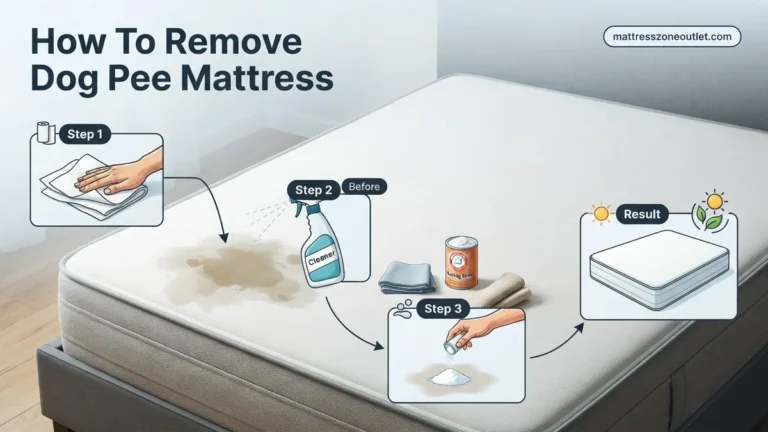
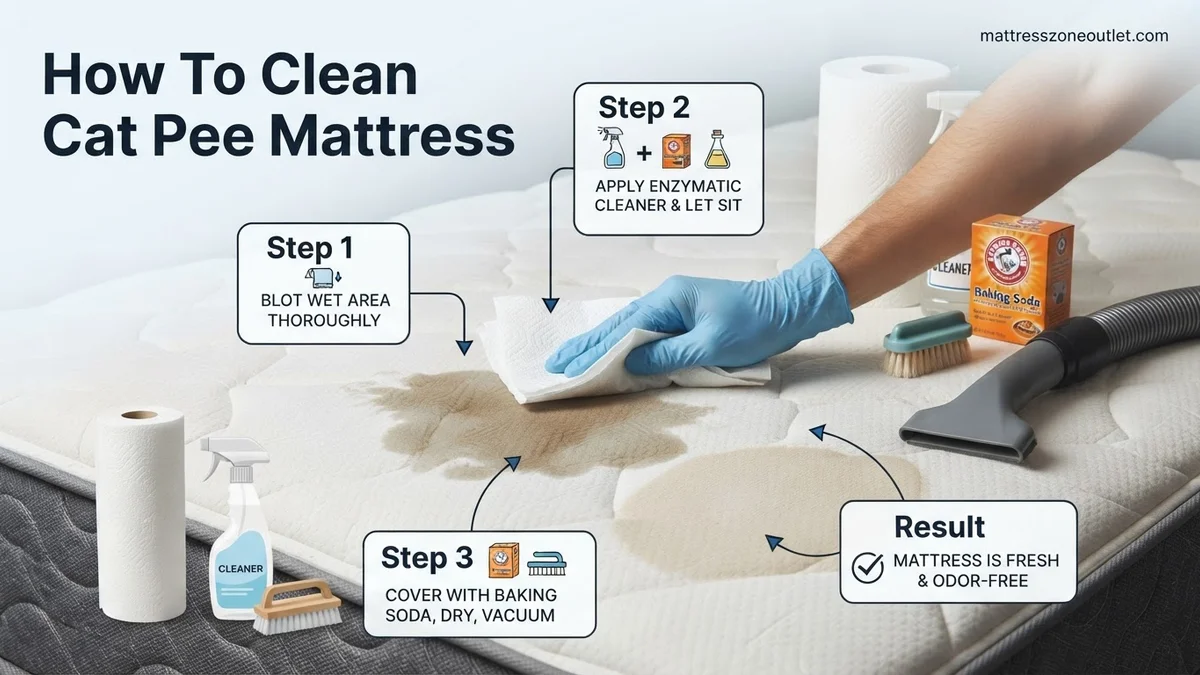
Instructions: Put on your gloves immediately to maintain hygiene. If the cat urine is still wet, act with urgency. Press multiple layers of paper towels or a clean white microfiber cloth firmly into the mattress surface to absorb as much liquid as possible. Step or press down gently to reach deep into the foam or inner springs. Never rub or scrub the area, as friction pushes the liquid further into the core of the mattress fibers, widening the affected zone. Continue swapping out saturated towels for dry ones until pressing down yields no more moisture.
Pro Tip: Avoid colored towels, as the harsh cleaning agents or urine acids can cause dyes to bleed permanently into your mattress fabric.
Step 2: Mixing the Enzymatic Neutralizer Solution
What you need: 16 ounces of 3% hydrogen peroxide, 3 tablespoons of freshly baking soda, 2 drops of liquid dish soap, and a clean plastic spray bottle.
Instructions: Pour the hydrogen peroxide, baking soda, and dish soap directly into the spray bottle. Gently swirl the container rather than shaking it vigorously, allowing the baking soda to dissolve fully into the liquid without creating an unmanageable foam explosion inside the bottle. This specialized concoction works because the dish soap breaks down oily urine proteins, the hydrogen peroxide oxidizes the uric acid crystals, and the baking soda helps lift lingering organic residues. Use this mixture immediately upon creation for maximum potency.
Pro Tip: Never mix bleach with ammonia or vinegar in an attempt to clean urine, as this creates highly toxic and dangerous chemical fumes.
Step 3: Saturated Application and Penetration
What you need: The freshly mixed spray bottle from Step 2 and a soft-bristled scrub brush.
Instructions: Spray the cleaning solution generously over the entire stained and damp area of the mattress. You want the liquid to penetrate deep into the fabric and underlying padding where the urine originally pooled. The mixture should fizz actively upon contact with the uric acid crystals. Take your soft-bristled scrub brush and very lightly agitate the surface fibers in a circular motion to work the solution into the depths of the mattress material without fraying the fabric. Ensure the entire perimeter of the stain is covered, going at least two inches past the visible edges.
Pro Tip: Do not over-soak memory foam mattresses, as excessive moisture trapped in dense foam can take days to dry and invite mold growth.
Step 4: Chemical Reaction and Waiting Period
What you need: A timer and a well-ventilated room with open windows or running fans.
Instructions: Allow the cleaning solution to sit undisturbed on the mattress for 15 to 20 minutes. During this active window, the hydrogen peroxide and baking soda will chemically dismantle the uric acid crystals—the primary culprit behind that unmistakable, lingering ammonia smell that intensifies when humidity rises. You may hear slight fizzing or bubbling as the reaction neutralizes the bacteria. Keep pets and children away from the bed during this period so they do not disturb the chemical process or track the solution across your home.
Pro Tip: Resist the urge to rush this step; chemical neutralization takes time to break down stubborn proteins completely at a microscopic level.
Step 5: Secondary Blotting and Residue Removal
What you need: Clean, dry white cotton towels and lukewarm water in a small bowl.
Instructions: After the waiting period, take fresh dry towels and press down firmly across the treated area to extract the residual liquid, loosened dirt, and broken-down urine byproducts. Once you have absorbed as much surface moisture as possible, lightly dampen a separate clean cloth with plain lukewarm water and dab the area to rinse away leftover soap residue. Follow this immediately with one final dry towel press to remove the rinse water. Leaving soap residue behind will attract future dust and dirt, leaving a stiff, discolored patch on your mattress.
Pro Tip: Press straight down instead of wiping to prevent spreading the moisture to clean areas of the mattress.
Step 6: The Baking Soda Deep-Dry Extraction
What you need: A full 16-ounce box of plain baking soda and a fine-mesh kitchen sieve.
Instructions: Shake the baking soda through a kitchen sieve to create an even, thick layer (about one-quarter inch deep) entirely covering the damp treatment zone. Baking soda is a natural desiccant and odor sponge that will draw out the final traces of deep-set moisture and trap lingering volatile organic compounds. Leave this powdery layer completely undisturbed for 8 to 12 hours, or ideally overnight, allowing it to cake as it absorbs the remaining humidity from the core of the mattress.
Pro Tip: Position an oscillating room fan or a dehumidifier directly facing the mattress to accelerate the evaporation process during this drying phase.
Step 7: Vacuuming and Final Freshness Check
What you need: A vacuum cleaner with a clean upholstery attachment and a fabric-safe enzymatic refresher spray (optional).
Instructions: Once the baking soda layer has completely dried into a hard crust, attach the upholstery tool to your vacuum cleaner. Slowly and thoroughly vacuum up every trace of the caked baking soda from the mattress surface. Inspect the area closely under bright lighting; if any faint yellow shadow remains, lightly dab with a hydrogen peroxide-soaked cotton swab. Finally, smell the area closely. If the room still carries a faint reminder of the accident, lightly mist with a pet-safe enzymatic spray and let it air dry completely before making the bed.
Pro Tip: Empty your vacuum canister or dispose of the vacuum bag immediately after this step to prevent the trapped urine odors from smelling up your vacuum cleaner.
✅ Final Checklist
- The mattress surface is 100% dry to the touch across all layers.
- No residual ammonia or urine odors remain when tested up close.
- All baking soda powder has been completely vacuumed away.
- The fabric texture is soft and free of sticky soap residue.
- A waterproof mattress protector has been installed to prevent future incidents.
Important Notes:
- Always wear gloves and ensure adequate room ventilation when working with hydrogen peroxide and cleaning agents.
- If the urine has penetrated deep into the structural core of an older, heavily soiled mattress and the odor persists after two deep cleanings, you may need to consult a professional upholstery cleaning service or replace the mattress.
- Estimated time: 45 minutes of active work plus 8-12 hours of drying time. Cost range: $10 to $25 using household ingredients and a store-bought enzymatic spray.
Step-by-Step Guide on How to Clean Cat Pee from a Mattress
Phase 1: Blotting and the Vinegar-Water Neutralizer
Act fast before the liquid sets. Press clean white towels firmly into the wet spot to absorb as much liquid as possible. Do not rub, as rubbing pushes the urine deeper into the core. Next, mix a solution of equal parts white vinegar and cool water in a spray bottle. Saturate the stained area generously. Vinegar is acidic and helps neutralize the alkaline components of the cat urine. Let the solution sit for 10 to 15 minutes, then blot up the excess moisture thoroughly with dry towels.
Phase 2: The Hydrogen Peroxide and Baking Soda Reaction
Once the vinegar treatment is blotted, sprinkle a thick, even layer of baking soda directly over the damp stain. In a separate bowl, mix 8 ounces of 3 percent hydrogen peroxide with one teaspoon of liquid dish soap. Gently pour or spray this mixture over the baking soda. A bubbling chemical reaction will occur, lifting the uric acid crystals out of the mattress foam. Allow the mixture to sit undisturbed for at least 8 to 12 hours until the area is completely dry and forms a crusty powder.
- Mix 8 oz hydrogen peroxide with 1 tsp dish soap.
- Pour over baking soda to create a lifting fizz.
- Allow 8 to 12 hours for complete chemical breakdown.
Phase 3: Vacuuming and Enzymatic Finishing Touches
After the baking soda and peroxide mixture dries completely into a crust, grab your vacuum cleaner. Use the upholstery attachment to thoroughly vacuum away all the dried residue. If any faint odor lingers, apply a targeted enzymatic cleaner specifically formulated for pet urine. These enzymes feed on the leftover organic proteins. Let the enzymatic spray air-dry naturally without blotting. Your mattress will finally be fresh, sanitized, and safe for sleep.
How to Neutralize Deep-Set Odors Using Enzymatic Cleaners
Surface cleaning only masks cat urine temporarily. According to veterinary dermatologists and pet care researchers, uric acid crystals bond tightly to memory foam and inner spring fibers, remaining dormant until humidity reactivates them. Specialized bio-enzymatic formulas are the only proven method to permanently break down these microscopic crystals.
When selecting a cleaner for your 2026 home maintenance toolkit, look for formulas containing live bacterial strains and targeted enzymes. These biological agents actively digest uric acid, completely eliminating the pungent ammonia smell at a molecular level rather than just masking it with fragrance.
Step-by-Step Enzymatic Treatment
- Blot the target zone: Remove any residual moisture using clean microfiber towels, pressing firmly without rubbing to prevent driving the liquid deeper into the core.
- Apply a generous amount: Saturate the stained area completely. The enzymatic solution must reach the exact depth that the urine penetrated to be fully effective.
- Allow dwell time: Cover the damp mattress section with a breathable plastic sheet to slow down evaporation. This forces the active enzymes to remain wet and work continuously for 15 to 24 hours.
- Air dry thoroughly: Remove the cover and direct a high-velocity fan at the mattress. Ensure the interior layers dry completely within 48 hours to prevent mold growth.
What If It Still Doesn’t Work?
If persistent odors remain after multiple enzyme treatments, the uric acid has likely reached the absolute core of the mattress layers. Standard residential cleaning methods can no longer reach these deep deposits. Consider these fallback steps:
- Use an industrial blacklight: Inspect the mattress in complete darkness with a 365nm UV flashlight to map hidden urine rings that standard cleaning missed.
- Apply an oxidizing rinse: For extreme cases, professional upholstery technicians utilize specialized chlorine dioxide or stabilized peroxide rinses to oxidize stubborn residues.
- Hire a certified upholstery cleaner: Commercial-grade extraction units use high-pressure steam and vacuum suction specifically designed for deep fabric remediation. Professional cleaning services typically cost between $100 and $250.
- Replace the mattress: If the urine has saturated dense memory foam or structural inner coils beyond remediation, replacement is the only sanitary solution.
Conclusion
Dealing with cat urine on a mattress requires swift action, thorough blotting, and powerful enzymatic treatments to break down stubborn uric acid crystals. According to verified research and textile care experts, acting within the first fifteen minutes drastically improves your chances of complete odor removal. For your next step, inspect the mattress under UV light today to confirm the stain radius, and apply a professional-grade enzymatic formula immediately to salvage your sleep environment for 2026 and beyond.
❓ Frequently Asked Questions
What is the absolute best way to clean cat pee from a mattress?
The most effective method involves blotting excess liquid, soaking the area with a specialized enzymatic cleaner, letting it sit, and then covering the spot with baking soda and hydrogen peroxide before vacuuming.
Why do regular household detergents fail against cat urine?
Standard soaps and water only clean surface stains while leaving behind microscopic uric acid crystals that release a strong ammonia odor when exposed to humidity.
How do I dry a mattress quickly after deep cleaning?
Use fans, a hair dryer on a cool setting, or a wet/dry vacuum to pull excess moisture out of the internal padding to prevent mold.
Is it possible to remove dried, set-in cat urine stains?
Yes, though older stains require a heavy saturation of an enzymatic cleaner wrapped in plastic to keep the solution wet longer so it can break down old proteins.
How can I prevent my cat from peeing on the mattress again?
Use a waterproof, zippered mattress protector and spray the area with a pet-safe deterrent after cleaning to discourage repeat accidents.
When is a mattress past the point of saving from cat urine?
If the urine has soaked through multiple layers into the core springs or wooden frame and the odor persists after multiple enzymatic treatments, replacement may be necessary.