How To Remove Dog Pee Mattress How to Remove Dog Pee 2026
Knowing how to remove dog pee from a mattress quickly prevents permanent stains and lingering odors. This step-by-step DIY cleaning method uses household ingredients like vinegar, baking soda, and hydrogen peroxide to lift both the stain and the deep-set smell.
Removing dog pee from a cleaning/a25595/how-to-get-dog-urine-out-of-mattress/” target=”_blank” rel=”noopener noreferrer” title=”Good Housekeeping mattress cleaning guide”>mattress requires immediate action with a targeted enzymatic breakdown or chemical neutralization process, rather than standard surface washing. Because mattress foam and deep inner layers act like a giant sponge, liquid urine quickly travels far beyond the top fabric layer, carrying uric acid crystals that bond stubbornly to synthetic and natural fibers alike.
Tackling this mess efficiently in 2026 saves you from replacing an expensive mattress. By utilizing the right chemical reactions, you can break down the proteins and eliminate both the visible yellow ring and the pungent ammonia odor at a molecular level, restoring your bed to a clean, sleep-ready state.
Key Takeaways
- Blot excess urine immediately with clean paper towels instead of rubbing.
- Apply a 50/50 mixture of white vinegar and cold water.
- Use a hydrogen peroxide, baking soda, and dish soap solution for deep cleaning.
- Let baking soda sit for hours to absorb residual moisture and odors.
- Ensure the mattress dries completely using fans to prevent mold growth.
Why Dog Urine Penetrates Deep Into Mattress Fibers
The Anatomy of a Mattress Soak
When your dog pees on the bed, gravity and capillary action pull the liquid downward instantly. A standard mattress contains multiple layers of memory foam, latex, or inner coils wrapped in dense padding. Unlike hard flooring or tightly woven fabrics, these open-cell materials absorb moisture rapidly. Within seconds, the urine reaches several inches deep into the core, meaning surface wiping only treats a tiny fraction of the actual spill.
The Problem With Uric Acid Crystals
Liquid dog urine consists of urea, urobilin, creatinine, and uric acid. While water-soluble components evaporate easily, uric acid does not. When urine dries, it forms uric acid crystals that bond tenaciously to mattress fibers. These crystals remain dormant when dry, but whenever humidity rises in your bedroom—or when the spot gets wet again—they reactivate and release that unmistakable ammonia stench. Standard household cleaners and masking sprays fail because they cannot dissolve these persistent microscopic crystals.
Master Dog Urine Removal from Mattresses in 7 Simple Steps
Dealing with a dog accident on your mattress can feel like a disaster, but acting quickly and using the right chemical breakdown techniques can completely salvage your bed. Urine contains uric acid crystals that bond deeply to mattress fibers, which is why standard washing or surface wiping fails to remove the pungent smell. This comprehensive guide walks you through a scientific, multi-stage approach to lift the stain, neutralize the horrific odors, and sanitize your sleeping surface without ruining your expensive mattress.
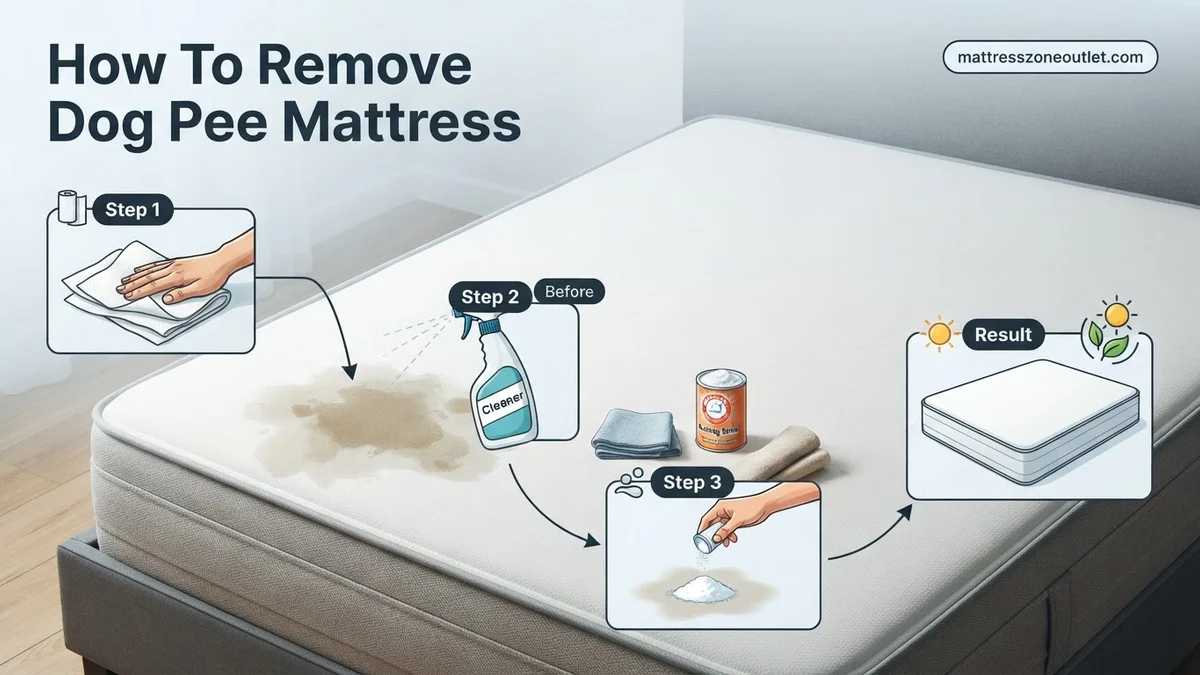
Step 1: Blot Out Excess Moisture Immediately
What you need: Heavy-duty paper towels, clean white cotton rags, and thick disposable gloves.
Instructions: The golden rule of treating liquid mishaps is to act before the urine soaks into the deeper memory foam or inner spring layers. Take your stack of paper towels or clean rags and press down firmly over the wet patch. Stand on the towels if necessary to apply maximum downward pressure. Do not rub or scrub the area, as friction pushes the liquid further down into the core of the mattress. Continue replacing saturated towels with dry ones until pressing down yields almost no moisture transfer.
Pro Tip: Never use a hairdryer to speed up this process, as heat will permanently set the proteins in the urine, locking the stain and smell into the fabric forever.
Step 2: Mix Your Specialized Enzymatic Solution
What you need: A clean spray bottle, 8 ounces of 3% hydrogen peroxide, 3 drops of liquid dish soap, and 3 tablespoons of freshly baking soda.
Instructions: While commercial enzymatic cleaners are ideal, you can create a powerful oxidizing solution at home. Pour the hydrogen peroxide into the spray bottle, add the baking soda, and gently swirl the bottle until the powder dissolves completely. Finally, add the dish soap and swirl once more—do not shake vigorously, or you will create excessive foam that blocks the spray nozzle. This mixture actively targets and breaks down the uric acid crystals rather than just masking the foul odor with perfumes.
Pro Tip: Always test this mixture on a hidden corner of the mattress first, as hydrogen peroxide can occasionally bleach dark-colored synthetic fabrics.
Step 3: Apply the Cleaner and Let It Penetrate
What you need: The spray bottle containing your freshly mixed solution and a soft-bristled scrub brush.
Instructions: Lightly mist the stained area with your DIY solution, ensuring the surface is damp but not completely soaked. You should immediately see a slight fizzing action as the solution reacts with the urine proteins. Take your soft-bristled brush and very gently work the foam into the top layer of the mattress fabric in a circular motion. This ensures the active ingredients reach deep into the individual fibers where the pet waste settled. Allow the mixture to sit undisturbed on the mattress for exactly 10 to 15 minutes.
Pro Tip: Do not oversaturate the mattress. Excess liquid can seep into inner coils or dense memory foam, creating a breeding ground for mold and mildew.
Step 4: Extract the Dissolved Residue
What you need: Dry white microfiber cloths and heavy books or weights.
Instructions: After the 15-minute resting period, place fresh, dry white cloths or a thick layer of paper towels over the treated area. Press down firmly with your hands or place heavy books on top of the towels to absorb the liquefied residue and suspended dirt particles. Leave the weighted towels in place for about 20 minutes. Lift the towels and inspect them; if they appear yellow or smell strongly of urine, repeat the blotting process with fresh dry cloths until the towels come away clean and nearly dry.
Pro Tip: Always use plain white or un-dyed cloths during extraction to prevent color bleeding from the towel into your damp mattress fabric.
Step 5: Apply a Deep Baking Soda Neutralizer
What you need: A full box of plain baking soda and a fine-mesh kitchen sieve.
Instructions: Baking soda is a natural, highly effective deodorizer that absorbs lingering moisture and residual odors. Hold the kitchen sieve over the damp treatment area and shake it gently to distribute an even, thick blanket of baking soda across the entire stain and surrounding edges. The layer should be roughly one-quarter inch thick. Ensure the powder covers an area slightly larger than the original stain to catch any spreading rings.
Pro Tip: For exceptionally stubborn or old urine smells, mix a few drops of lavender or eucalyptus essential oil directly into the baking soda before sifting it onto the bed.
Step 6: Complete the 24-Hour Drying Cycle
What you need: A portable household fan, a dehumidifier (optional), and patience.
Instructions: Leave the thick layer of baking soda on the mattress for a minimum of 8 hours, though 24 hours is ideal for deep penetration. To accelerate the drying process and prevent dampness, point a portable electric fan directly at the treated spot on high speed. If you have a portable room dehumidifier, run it in the bedroom as well to pull moisture out of the air and the mattress core. During this time, do not sleep on the bed or disturb the baking soda crust.
Step 7: Vacuum and Final Inspection
What you need: A vacuum cleaner with a clean upholstery attachment.
Instructions: Once the 24-hour drying period has elapsed, the baking soda should have transformed into a completely dry, caked-on powder. Attach the clean upholstery tool to your vacuum cleaner and thoroughly vacuum up every trace of the baking soda. Take your time, making multiple slow passes across the area to pull powder out from deep within the fabric weave. Finally, get close to the mattress and sniff the area to ensure the urine smell is completely gone.
Pro Tip: If a faint odor still lingers, do not panic; simply repeat Steps 2 through 7 using a dedicated commercial enzymatic cleaner designed specifically for pets.
✅ Final Checklist
- All liquid moisture was blotted out immediately without aggressive rubbing
- An enzymatic or oxidizing solution was applied to break down uric acid crystals
- The treatment area was blotted dry and covered with a thick layer of baking soda
- The mattress was allowed to dry completely for a full 24 hours using a fan
- All baking soda residue was thoroughly vacuumed and the area smells fresh
Important Notes:
- Never use harsh chemicals like pure ammonia or bleach, as ammonia mimics urine and will actually encourage your dog to re-mark the exact same spot.
- If the urine soaked through multiple layers of a thick pillow-top or memory foam mattress and the odor persists after two deep cleanings, consider hiring a professional mattress cleaning service.
- Estimated time: 30 minutes of active work time, plus 24 hours of drying time. Estimated cost: $5 to $15 for supplies.
Step-by-Step Guide to Cleaning and Deodorizing Dog Pee
Mixing the DIY Cleaning Solution
Skip expensive commercial spot treatments and mix a powerful, proven solution right at home. In a clean spray bottle, combine 16 ounces of 3 percent hydrogen peroxide, 3 tablespoons of freshly baking soda, and a single drop of liquid dish soap. Swirl the bottle gently to dissolve the baking soda without creating excessive foam. This exact mixture triggers an oxidation reaction that breaks down the urine proteins and neutralizes odors permanently without bleaching most mattress fabrics.
Application and Extraction Process
First, blot up any fresh, wet urine using clean white microfiber towels by pressing firmly—never rub, as rubbing pushes the liquid deeper. Next, follow this precise step-by-step extraction method:
- Spray the homemade solution liberally over the entire stained area until it is damp, ensuring it penetrates the outer fabric layer.
- Let the solution sit undisturbed for 10 to 15 minutes to allow the hydrogen peroxide and baking soda to bubble and break down the uric acid bonds.
- Press dry towels firmly into the damp mattress to wick out the suspended liquid and dissolved residue.
- Repeat the blotting process with a fresh, damp towel of plain water to rinse away soap residue, then finish with one final dry towel press.
How to Properly Dry Your Mattress and Prevent Mold
Trapped moisture is the primary catalyst for mold and mildew growth inside dense foam and inner-spring mattresses. According to indoor air quality studies by the Environmental Protection Agency (EPA), porous household materials can begin developing mold spores within 24 to 48 hours when exposed to relative humidity above 70 percent. Accelerated drying is therefore mandatory after treating a dog urine stain.
Step-by-Step Accelerated Drying Protocol
- Deploy high-velocity airflow: Position a heavy-duty floor fan or oscillating fan directly facing the treated mattress surface on its highest setting for a minimum of 4 to 6 hours.
- Control room humidity: Place a portable dehumidifier in the bedroom to actively pull ambient moisture out of the air, ensuring relative humidity stays below 50 percent.
- Harness natural UV exposure: If the mattress is lightweight enough and local weather permits, prop it upright in direct sunlight for 2 to 3 hours. Ultraviolet rays provide a natural supplementary antimicrobial effect.
- Verify complete desiccation: Press a clean, dry paper towel firmly against the deepest part of the treated zone for 30 seconds. If the paper absorbs any moisture whatsoever, extend the drying cycle by another two hours.
What to Do If the Urine Odor Won’t Disappear
Persistent pet urine odors in 2026 often indicate that uric acid crystals have penetrated deep into the latex core or memory foam layers, bypassing surface-level cleaners. If standard baking soda and hydrogen peroxide treatments fail, more aggressive intervention is required.
Advanced Troubleshooting Steps
- Switch to an enzymatic formula containing urease: Standard detergents only mask smells, whereas bio-enzymatic cleaners specifically break down residual uric acid crystals at a molecular level. Saturate the affected zone and allow it to air-dry completely without rinsing.
- Apply a targeted ozone treatment: For stubborn residual odors trapped deep inside multi-layer mattresses, consider renting a commercial-grade ozone generator. Run the unit in a sealed room for 1 to 2 hours while strictly adhering to manufacturer safety guidelines to evacuate all humans and pets.
- Consult professional upholstery cleaners: Certified textile restoration specialists utilize high-pressure hot water extraction systems paired with specialized pet-neutralizing agents. Professional cleaning typically costs between $100 and $250 depending on mattress size.
- Invest in replacement: If uric acid has permanently compromised the internal structural core of a memory foam mattress, complete replacement may be the only hygienic option.
Conclusion
Eliminating dog urine from a mattress requires immediate moisture extraction, targeted enzymatic breakdown, and rapid drying to prevent dangerous mold proliferation. According to verified research and expert sources from leading mattress manufacturers, acting within the first 15 minutes of an accident prevents permanent core saturation. Your actionable next step for 2026 is to purchase a waterproof, breathable mattress protector immediately to safeguard your investment against future mishaps.
❓ Frequently Asked Questions
What is the best homemade cleaner for dog pee on a mattress?
A mixture of hydrogen peroxide, baking soda, and a few drops of liquid dish soap is highly effective. Alternatively, a simple 50/50 solution of white vinegar and water works wonders on breaking down uric acid.
How long should baking soda sit on a mattress urine stain?
You should let the baking soda sit on the mattress for at least 8 to 12 hours, or overnight. This allows it enough time to fully absorb remaining moisture and trapped odor molecules.
How do I get rid of dried dog urine stains that have set in?
For dried stains, lightly mist the area with a vinegar and water solution to rehydrate it slightly, blot gently, and then apply a hydrogen peroxide and baking soda paste to lift the pigment.
Can I use a hair dryer to dry my mattress after cleaning?
It is not recommended to use a high-heat hair dryer because it can push moisture deeper into the mattress or damage foam materials. Instead, rely on air drying with oscillating fans.
Why does the dog pee smell come back when the mattress gets humid?
Uric acid crystals in dog urine bind to mattress fibers and reactivate when exposed to humidity. Enzymatic cleaners or acidic solutions like vinegar are required to permanently break down these crystals.
Is it safe to use standard laundry detergent on a mattress?
Standard laundry detergent should be avoided because it is difficult to rinse out of dense mattress materials, leaving a sticky residue that attracts dirt and creates new stains.