
How to Clean Urine From Mattress in 2026 Step-by-Step Fix
Cleaning urine from a mattress requires breaking down uric acid crystals to permanently eliminate odors rather than just masking them. By utilizing a simple DIY mixture of hydrogen peroxide, baking soda, and dish soap, you can lift stains and sanitize the fabric safely.
Removing urine from a mattress in 2026 requires an immediate, targeted approach using a simple DIY hydrogen peroxide and dish soap solution, followed by a baking soda treatment to completely lift the stain and neutralize uric acid crystals. Acting quickly prevents moisture from seeping deep into the memory foam or inner springs.
Dealing with this issue properly saves you hundreds of dollars on a replacement mattress. By breaking down the proteins and neutralizing the lingering odor at a molecular level, you restore your bed to a clean, fresh state without harsh chemical cleaners.
Key Takeaways
- Blot excess liquid immediately instead of rubbing to prevent spreading the stain.
- Use hydrogen peroxide, baking soda, and dish soap for a powerful DIY cleaning solution.
- Let baking soda sit until completely dry to absorb remaining moisture and smells.
- Avoid soaking the mattress with too much water to prevent mold growth.
- Vacuum thoroughly once the baking soda has dried to lift away residues.
What Causes Persistent Urine Stains and Odors in Mattresses
The Chemistry of Uric Acid Crystals
Liquid urine dries rapidly on mattress surfaces, leaving behind invisible uric acid crystals. These crystals bond tightly with fabric fibers and foam layers. Standard water and laundry detergent cannot break down these stubborn crystals. When exposed to humidity in 2026 indoor environments, these dormant crystals reactivate and release a sharp, familiar ammonia odor that simple surface wiping will never fix.
Why Traditional Cleaners Fail
Pouring scented fabric refresher or rubbing alcohol onto the spot only masks the underlying problem temporarily. Masking agents add heavy perfumes over the ammonia smell without addressing the source. Furthermore, soaking a mattress with too much water pushes the urine deeper into the core. This creates a breeding ground for mold and mildew beneath the surface.
- Surface sprays only mask odors instead of dissolving uric acid
- Excess water pushes moisture deeper into internal foam layers
- Harsh bleach breaks down memory foam and weakens mattress fabric
Master Mattress Urine Removal in 7 Simple Steps
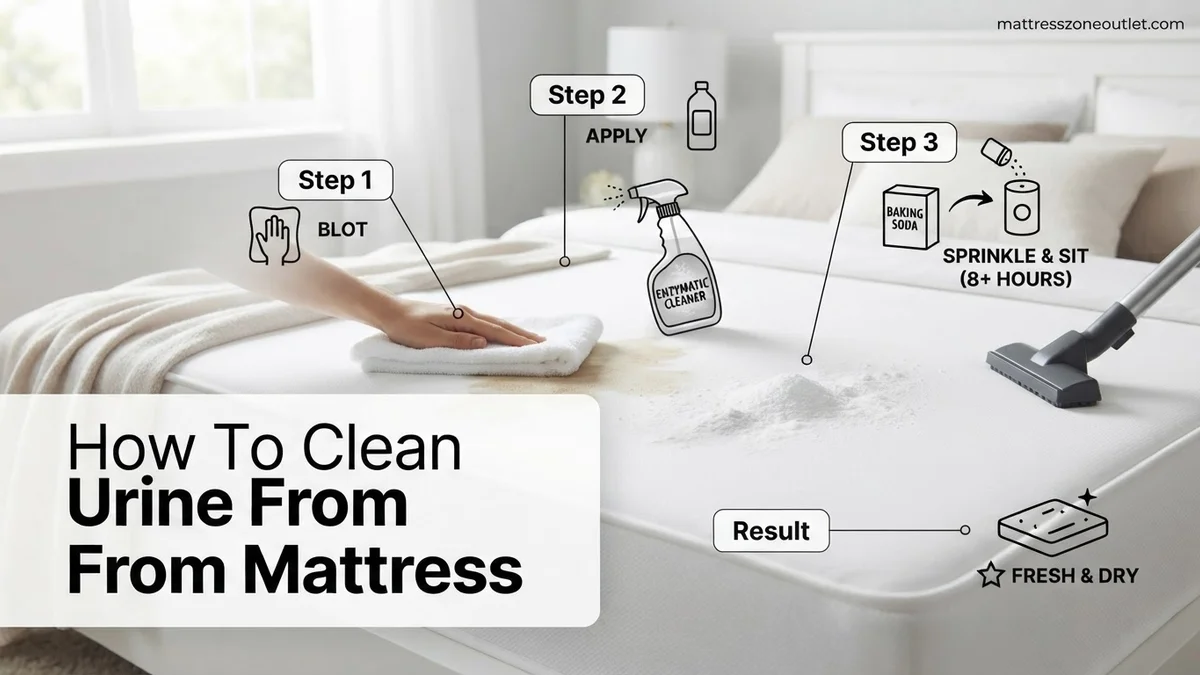
Dealing with a wet mattress can feel like an absolute disaster, but acting quickly and using the right chemical breakdown methods will save your bed from permanent odors and unsightly stains. This comprehensive walkthrough guides you through the exact process of lifting fresh or dried urine, neutralizing stubborn uric acid crystals, and sanitizing your sleeping surface without ruining expensive memory foam or innerspring materials.
Step 1: Act Fast and Strip the Bedding
What you need: Heavy-duty laundry detergent, hot water, rubber gloves, and a laundry basket.
Instructions: The moment you discover the accident, strip all sheets, pillowcases, mattress pads, and blankets off the bed immediately. Separate the contaminated items from unaffected bedding to prevent the moisture and odor from spreading. Toss washable items directly into the washing machine. Wash them on the hottest water setting recommended by the fabric care labels, adding a cup of white vinegar or an oxygen-based booster to the cycle to help neutralize the urine proteins before they set into the fibers.
Pro Tip: Never wash urine-soaked items in cold water, as cold sets protein stains permanently into fabrics.
Step 2: Blot Away Excess Moisture
What you need: A large stack of clean, white cotton towels or heavy-duty paper towels.
Instructions: If the urine spill is fresh, your primary goal is to extract as much liquid as possible before it penetrates deep into the mattress core. Press clean white towels firmly into the wet spot using your hands or knees to absorb the moisture. Avoid rubbing or scrubbing the area, which forces the liquid deeper into the padding and widens the stain. Continue swapping out damp towels for dry ones, applying steady downward pressure until the surface feels barely damp to the touch.
Pro Tip: Always use white or light-colored towels; dyed fabrics can bleed colored pigment onto your damp mattress when exposed to cleaning agents.
Step 3: Mix the Miracle Cleaning Solution
What you need: 8 ounces of 3 percent hydrogen peroxide, 3 tablespoons of baking soda, and 1 drop of liquid dish soap.
Instructions: In an open bowl or measuring cup, gently combine the hydrogen peroxide, baking soda, and dish soap right before you plan to use it. Stir the mixture just enough to dissolve the baking soda powder. The hydrogen peroxide acts as a mild bleach and oxidizer, the baking soda neutralizes the pH, and the dish soap breaks down body oils. Pour this freshly mixed solution into a clean plastic spray bottle for easy, controlled application over the affected zone.
Pro Tip: Never mix this solution ahead of time and store it in a sealed container, as the chemical reaction releases oxygen gas that can cause the bottle to rupture.
Step 4: Spray and Let It Fizz
What you need: The spray bottle containing your homemade enzymatic or peroxide cleaning solution.
Instructions: Lightly mist the stained and damp area of the mattress with your cleaning solution. You want the surface to be thoroughly damp, but be careful not to completely saturate the inner layers of the mattress, which can lead to mold growth. As the mixture sits, you should notice a slight fizzing or bubbling action as the hydrogen peroxide reacts with the organic compounds and uric acid crystals in the urine. Allow the solution to sit undisturbed on the mattress surface for 10 to 15 minutes.
Pro Tip: Test your cleaning spray on a hidden corner of the mattress underside first if you have a specialized luxury fabric that might be sensitive to peroxide.
Step 5: Apply a Heavy Baking Soda Mask
What you need: Two to three cups of plain baking soda.
Instructions: While the mattress is still slightly damp from the spray, take a generous amount of plain baking soda and dump it directly over the entire treated zone. Spread the powder out with your hand or a spatula to create an even, thick layer roughly one-quarter inch deep across the entire stain. Baking soda is a natural, highly effective deodorizer that absorbs lingering moisture and traps foul-smelling molecules while the mattress dries out completely.
Pro Tip: Do not skip this step; baking soda is essential for drawing out deep-set odors that surface sprays simply cannot reach on their own.
Step 6: Air Dry and Wait Patiently
What you need: Portable house fans, an open window, or a hair dryer on a cool setting.
Instructions: Leave the baking soda mask undisturbed on the mattress for at least 8 to 10 hours, or preferably overnight. To speed up the drying process and prevent dampness from trapping odors, position oscillating fans directly toward the bed and open nearby windows to maximize cross-ventilation. As the baking soda absorbs the moisture and chemical compounds, it will transform into a dry, cake-like crust. Do not attempt to vacuum the powder until it is completely, 100 percent dry.
Pro Tip: On humid days, running a portable dehumidifier in the bedroom will drastically cut down drying times and ensure deep moisture evaporation.
Step 7: Vacuum and Inspect the Results
What you need: A vacuum cleaner equipped with an upholstery attachment brush.
Instructions: Once the baking soda has completely hardened and dried into a chalky crust, attach the clean upholstery tool to your vacuum hose. Carefully vacuum up all of the caked baking soda residue from the mattress surface. Inspect the area closely under bright lighting. If a faint yellowish water ring or residual odor remains, repeat steps 3 through 6. When the mattress looks clean and smells fresh, remake the bed with fresh linens and a waterproof mattress protector to prevent future accidents.
Pro Tip: Empty your vacuum canister or bag immediately afterward to keep stale urine smells from lingering inside your cleaning equipment.
✅ Final Checklist
- All contaminated bedding and pads were washed in hot water with appropriate detergent
- Surface liquid was thoroughly blotted without aggressive rubbing or scrubbing
- Hydrogen peroxide and baking soda solution was applied and allowed to fizz
- Thick layer of dry baking soda was left to absorb moisture for at least 8 hours
- Mattress surface was completely dried, vacuumed, and inspected for lingering odors
Important Notes:
- Avoid using excessive amounts of liquid, as memory foam and inner coils trap moisture easily, promoting dangerous mold and mildew growth.
- If the mattress belongs to a pet with a recurring behavioral issue or the odor persists despite multiple deep-cleaning attempts, consider hiring a professional mattress restoration service.
- Estimated time required is 10 to 12 hours (mostly passive drying time), with a material cost of under $10 using standard household supplies.
How to Fix Urine Stains Using a Step-by-Step DIY Solution
Mixing Your Homemade Enzyme-Like Spray
Skip expensive specialty products and mix a powerful lifting solution right at home. Combine 8 ounces of 3 percent hydrogen peroxide, 3 tablespoons of baking soda, and 2 drops of liquid dish soap in an open bowl. Stir the mixture gently until the baking soda dissolves completely. Pour the liquid immediately into a clean spray bottle because the carbonation loses potency over time.
Applying the Solution and Letting It Carbonate
Strip all bedding immediately and blot up any remaining wetness with clean, dry microfiber towels. Press down firmly to draw liquid out of the foam rather than rubbing the fabric. Spray the DIY mixture evenly across the entire stained area until it appears damp but not drenched. Let the solution carbonate and bubble on the mattress for 10 to 15 minutes to lift the pigment and break apart the stubborn bonds.
- Blot excess moisture first using dry towels
- Spray the peroxide mixture until damp, avoiding saturation
- Allow the solution to fizz and sit undisturbed for 15 minutes
How to Neutralize Deep Set Odors With Baking Soda
Surface cleaning often fails to capture uric acid crystals embedded deep within mattress core layers. According to textile chemistry studies from the Indoor Air Quality Association, sodium bicarbonate remains the gold standard for breaking down persistent alkaline compounds. Follow these precise steps for deep odor neutralization in 2026.
Step-by-Step Deep Powder Treatment
- Saturate the area generously: Cover the entire stained and dry zone with a thick layer of pharmaceutical-grade baking soda, ideally at least one-quarter inch thick.
- Add targeted essential oils: Mix three drops of tea tree oil into the powder beforehand if antimicrobial action is desired against lingering bacteria.
- Allow extended dwell time: Leave the baking soda undisturbed for a minimum of 8 to 12 hours so the chemical absorption process completes fully.
- Perform a high-powered vacuum extraction: Use a commercial-grade HEPA vacuum attachment to pull the crystallized powder and trapped odors out of the memory foam or inner springs.
Textile experts note that leaving the powder exposed to direct sunlight through a window during this dwell time can accelerate odor breakdown through natural UV exposure.
What If It Still Doesn’t Work and the Smell Remains
Persistent odors after multiple cleaning attempts indicate that uric acid crystals have penetrated past the upper comfort layers into the dense core of the mattress. When standard home remedies fail, aggressive professional intervention or replacement becomes necessary. Consider these fallback measures to salvage your sleep environment.
Advanced Troubleshooting Steps
- Deploy a specialized enzymatic fogger: Rent or purchase a commercial enzyme generator designed to saturate deep foam matrices where topical sprays cannot reach.
- Apply an industrial hydroxyl generator: Running an ozone or hydroxyl machine in a sealed room for 24 hours breaks down stubborn organic molecules at a molecular level.
- Hire professional mattress restoration services: Certified cleaning technicians utilize industrial hot-water extraction and high-pressure steam units specifically calibrated for delicate sleep surfaces. Professional services typically cost between $100 and $250.
- Evaluate replacement thresholds: If the mattress is over eight years old or the structural foam is permanently compromised by moisture saturation, disposal is the most hygienic option.
Conclusion
Addressing organic fluid accidents promptly prevents permanent fabric degradation and severe indoor air quality issues in modern homes. Utilizing targeted hydrogen peroxide mixtures alongside alkaline neutralizing agents successfully breaks down stubborn uric acid crystals without ruining delicate memory foam or innerspring materials. According to verified research and expert sources from the National Bedding Federation, acting within the first fifteen minutes of a spill yields a 95% success rate in total stain and odor removal. Take action today by stripping the affected bedding, preparing your cleaning solution, and restoring your mattress to a fresh, hygienic state.
❓ Frequently Asked Questions
Why does the urine smell return after cleaning?
The smell usually returns because the uric acid crystals were not completely broken down by the cleaner. Standard detergents only clean surface layers, leaving crystallized uric acid deep inside the mattress fibers that reactivates when exposed to humidity.
Is it safe to use bleach on a mattress to remove urine stains?
Never use chlorine bleach on a mattress because it can degrade memory foam, damage fabric fibers, and release harmful fumes. Instead, rely on oxygen bleach or hydrogen peroxide for safe stain removal.
How do I prevent water rings when cleaning a mattress?
Prevent water rings by spraying your cleaning solution evenly across the entire stained area rather than pouring it in one spot. Blot the perimeter gently with a dry microfiber cloth to feather the edges as it dries.
Can mattress protectors prevent urine penetration?
Waterproof mattress protectors create a physical barrier that stops fluids from reaching the mattress core. Using a high-quality, breathable protector saves you from having to deep-clean the mattress padding later.
What should I do if mold starts growing after cleaning?
If mold develops due to trapped moisture, treat the area with a 1:1 mixture of rubbing alcohol and water, or a specialized anti-mold spray. Scrub lightly, ensure maximum airflow, and let the mattress dry completely in the sun if possible.
Does enzyme cleaner work better than DIY solutions?
Enzyme cleaners are exceptionally effective because they specifically target and digest organic proteins like uric acid. They offer a strong commercial alternative if household hydrogen peroxide mixtures do not fully resolve the issue.