How to Remove Odor From Mattress Step-by-Step Guide 2026
Bad smells in a bed are typically caused by trapped sweat, oils, pet accidents, or mold, but you can eliminate them using common household items like baking soda and vinegar. A thorough deodorizing process neutralizes trapped particles at the source rather than just masking them with perfumes. Proper drying techniques are essential to prevent moisture buildup and future mustiness.
Removing stubborn odors from your mattress comes down to breaking down trapped organic matter and neutralizing microscopic bacteria using targeted agents like baking soda, hydrogen peroxide, or enzymatic cleaners. Unlike surface stains, smells sink deep into the core layers of your bed.
By 2026, sleep health experts increasingly emphasize indoor air quality, making routine mattress deodorization just as important as washing your sheets. When you spend a third of your life in bed, body oils, sweat, and allergens accumulate quickly. Here is the exact step-by-step process to neutralize those smells and restore freshness to your sleeping space.
Key Takeaways
- Baking soda naturally neutralizes and absorbs deep-seated organic mattress odors effectively.
- Mix baking soda with a few drops of essential oil for a fresh scent.
- Blush, never rub, liquid spills like urine or vomit to prevent deeper saturation.
- Allow baking soda to sit on the mattress for at least several hours.
- Ensure the mattress dries completely to prevent mold and mildew growth.
What Causes Odors in a Mattress and Why They Linger
The Anatomy of Mattress Smells
Your mattress absorbs an incredible amount of biological waste every single night. The average person sweats roughly 26 gallons of moisture into their bed every year. This moisture, combined with dead skin cells and body oils, feeds bacteria that produce foul odors.
Why Smells Get Trapped So Easily
- Dense Materials: Memory foam and dense inner-spring coils trap air and moisture deep inside, preventing natural ventilation.
- Lack of Airflow: Platform beds and tightly fitted mattress protectors can restrict the airflow needed to dry out trapped sweat.
- Fiber Absorption: Porous materials like cotton, wool, and synthetic batting act like giant sponges for ambient household odors, pet dander, and smoke.
Master Mattress Odor Removal in 8 Simple Steps
A fresh bed is essential for a restful night’s sleep, but mattresses naturally trap sweat, dead skin cells, oils, and accidental spills over time, leading to stubborn odors. Simply flipping the mattress or spraying heavy perfumes only masks the underlying issue. This comprehensive, practical walkthrough provides a systematic approach to deep-cleaning your mattress, breaking down stubborn chemical bonds of odor-causing bacteria and leaving your bed truly sanitary and fresh from the inside out.
Step 1: Strip and Launder All Bedding
What you need: Laundry detergent, oxygen bleach or baking soda, washing machine, and laundry basket.
Instructions: Before you can address the mattress itself, you must remove all potential secondary sources of odor. Strip off every piece of bedding, including sheets, pillowcases, mattress protectors, blankets, and duvets. Sort the items according to care label instructions and wash them using the hottest water setting safe for the fabrics. Add half a cup of baking soda to your regular detergent cycle to help neutralize trapped body oils and musty smells. Dry all items completely before putting them back on the bed to prevent introducing new moisture.
Pro Tip: Never put damp or even slightly humid bedding back onto a newly deodorized mattress, as trapped moisture will instantly recreate a mildew problem.
Step 2: Vacuum the Entire Surface Thoroughly
What you need: Vacuum cleaner equipped with a clean upholstery attachment.
Instructions: Dust mites, loose skin cells, pet hair, and crumbs settle deep into the quilted crevices of your mattress and contribute significantly to stale odors. Attach the upholstery tool to your vacuum cleaner and systematically work your way across the entire top surface. Start at the top left corner and move in overlapping horizontal rows until you reach the bottom. Pay special attention to the piping, tufts, and seams where debris loves to hide. Once the top is done, stand the mattress on its side and vacuum the sides and bottom panels as well.
Pro Tip: Ensure your vacuum brush attachment is completely free of dirt, pet hair, or grease from previous vacuuming sessions before touching the clean mattress surface.
Step 3: Spot-Treat Visible Stains and Spills
What you need: Spray bottle, mild dish soap, 3% hydrogen peroxide, cold water, clean white microfiber cloth, and paper towels.
Instructions: Organic stains like sweat, urine, or blood are often the primary culprits behind persistent mattress odors. Mix one cup of 3% hydrogen peroxide, three tablespoons of baking soda, and a few drops of dish soap in a spray bottle. Lightly mist the stained areas—do not saturate the fabric. Gently blot the stain with a clean white cloth, working from the outside edges inward to prevent spreading. Allow the solution to sit for 10 to 15 minutes, then blot thoroughly with a dry paper towel to lift the dissolved residue and excess liquid.
Pro Tip: Always use a white cloth when blotting; colored cloths or printed paper towels can bleed dyes into the damp mattress fabric, creating a new stain.
Step 4: Craft Your Custom Deodorizing Powder
What you need: 2 cups of pure baking soda (sodium bicarbonate) and 15 to 20 drops of high-quality therapeutic-grade essential oil (such as lavender, eucalyptus, or tea tree).
Instructions: While plain baking soda is an exceptional natural odor neutralizer, adding essential oils infuses a clean, pleasant aroma while providing natural antibacterial benefits. Pour two cups of baking soda into a large glass bowl. Add your chosen essential oil drops slowly while whisking the mixture continuously to prevent clumping. Ensure the oils are fully distributed throughout the powder so that you do not apply concentrated oil directly onto the fabric, which could cause discoloration.
Pro Tip: Avoid citrus-based essential oils like lemon or orange if your mattress cover is brightly colored, as natural citrus oils can sometimes act as a mild bleach.
Step 5: Apply and Distribute the Deodorizer
What you need: A fine-mesh flour sifter or a glass jar with perforated lid, and your custom baking soda mixture.
Instructions: Even distribution is the secret to successful mattress deodorization. Pour your scented baking soda mixture into a flour sifter or a mason jar with holes punched in the lid. Hold the sifter about six to eight inches above the mattress surface and gently shake it back and forth to create an even, snowy layer across the entire top panel. You want a thin, semi-opaque blanket of powder that covers every square inch of fabric without piling up in thick, clumpy drifts.
Pro Tip: Use a soft-bristled brush to very lightly work the powder into the top millimeter of the fabric fibers, helping it make maximum contact with odor molecules.
Step 6: Harness the Power of Sunlight and Time
What you need: Sunlight (if possible) and a minimum of 4 to 8 hours of waiting time.
Instructions: Let the baking soda do its chemical magic undisturbed. The alkaline nature of sodium bicarbonate breaks down acidic odor compounds naturally. For best results, let the treatment sit for at least four to six hours. If you live in a secure, private area and the weather permits, lean the mattress outside against a wall in direct sunlight for a few hours. Ultraviolet rays act as a natural disinfectant, killing lingering bacteria and helping to evaporate any residual moisture from your spot-cleaning step.
Pro Tip: If you cannot move the mattress outside, open all bedroom windows and place a oscillating fan nearby to maximize air circulation across the room.
Step 7: Vacuum Away the Neutralized Residue
What you need: Vacuum cleaner with a clean upholstery attachment and a dry towel.
Instructions: Once the waiting period has elapsed and the baking soda has absorbed the trapped body oils, moisture, and foul-smelling compounds, it’s time to clear it away. Take your vacuum with the clean upholstery attachment and systematically vacuum the entire mattress surface just as you did in Step 2. You may need to make two or three slow passes over the same area to pull all the caked baking soda out of the fabric weave and quilted indents. Wipe down the surrounding bed frame while you wait.
Pro Tip: Listen to your vacuum motor; if the pitch changes or it feels bogged down, empty the vacuum canister or bag halfway through to maintain strong suction power.
Step 8: Flip, Rotate, and Protect
What you need: A breathable waterproof mattress protector and clean sheets.
Instructions: To keep your mattress smelling fresh longer, rotate it 180 degrees so that the head end is now at the foot end (and flip it over top-to-bottom if your mattress model is double-sided). This ensures even wear and tear over time. Finally, slip a high-quality, breathable, waterproof mattress protector over the entire mattress before making the bed with your freshly laundered sheets. This vital barrier stops future sweat, skin flakes, and accidental spills from ever reaching the mattress core again.
Pro Tip: Make a note on your calendar to wash your mattress protector and rotate your mattress every three to six months as part of standard home maintenance.
✅ Final Checklist
- All bedding and mattress protectors have been washed in hot water and dried completely.
- The mattress surface and crevices are entirely free of dust, hair, and crumbs.
- Visible stains have been safely spot-treated and allowed to dry.
- Baking soda and essential oil mixture was evenly distributed and left to sit for at least 4 hours.
- All baking soda residue has been thoroughly vacuumed away and a protective cover is installed.
Important Notes:
- Never saturate memory foam mattresses with excessive water or liquid cleaners, as foam retains moisture easily and breeds dangerous mold.
- If a deep-set mold, mildew, or biohazard odor persists despite multiple cleaning attempts, seek professional upholstery cleaning services or consider mattress replacement.
- Estimated time: 30 minutes of active work time, plus 4 to 8 hours of waiting time. Estimated cost: $5 to $15 for baking soda and essential oils.
How to Fix Mattress Odors Using a Step-by-Step Baking Soda Method
Preparation and Stripping the Bed
Before you treat the odor, you need a clean slate. Strip away all sheets, pillowcases, and mattress pads immediately. Wash everything in hot water to kill dust mites and eliminate trapped surface odors.
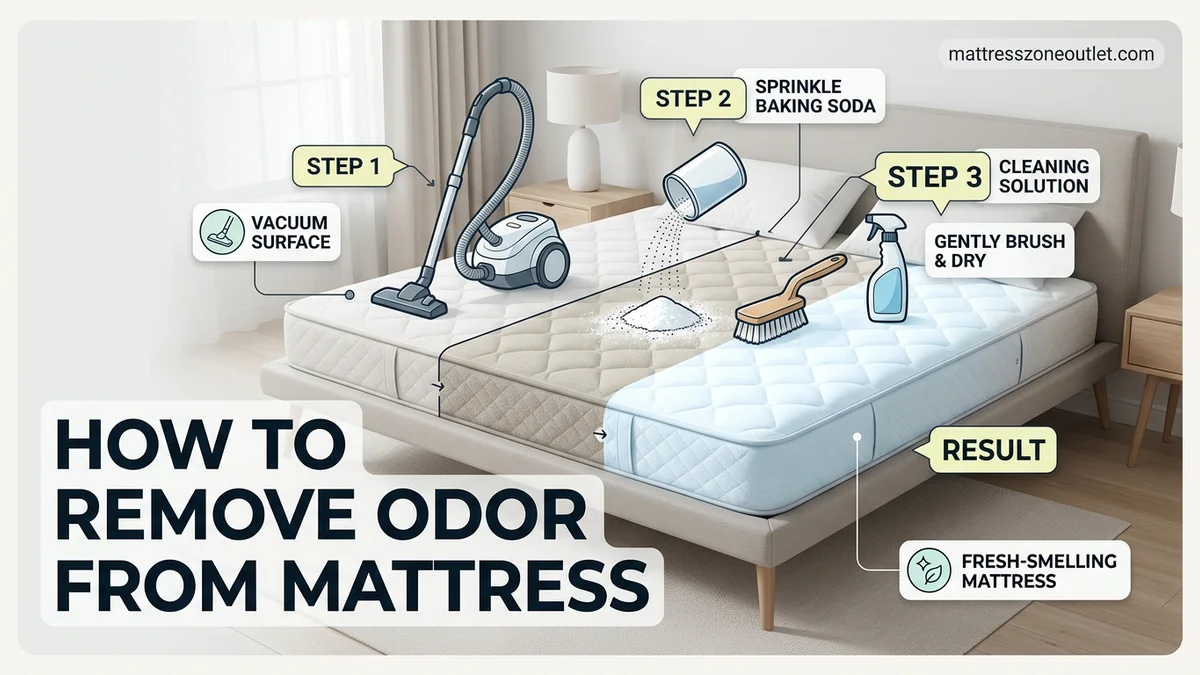
- Vacuum the entire mattress surface thoroughly using the upholstery attachment to remove loose dirt, hair, and dead skin cells.
- Inspect the bed for localized stains or heavy urine spots that require pre-treatment before applying your baking soda.
- Open nearby windows to ensure proper ventilation throughout the deodorizing process.
Applying the Baking Soda and Essential Oil Mix
Baking soda is a natural, alkaline deodorizer that neutralizes acidic odors rather than just masking them. For an extra freshness boost in 2026, many homeowners mix in a few drops of antimicrobial essential oils like lavender or eucalyptus.
- Take a standard box of baking soda and mix in 10 to 15 drops of your preferred essential oil in a bowl.
- Sift the mixture evenly across the entire surface of your mattress using a fine mesh strainer.
- Let the powder sit undisturbed for a minimum of 4 to 8 hours. For severe odors, leaving it overnight yields the best results.
- Vacuum the remaining powder thoroughly using a clean vacuum attachment to pull the neutralized odor molecules out of the fabric.
How to Treat Tough Specific Stains Like Urine, Sweat, and Mold
General deodorizing tackles surface smells, but stubborn biological odors require targeted chemical intervention. According to the National Sleep Foundation, mattresses accumulate millions of skin flakes and moisture over time, feeding bacteria that produce distinct, pungent odors.
Treating Urine and Sweat Odors
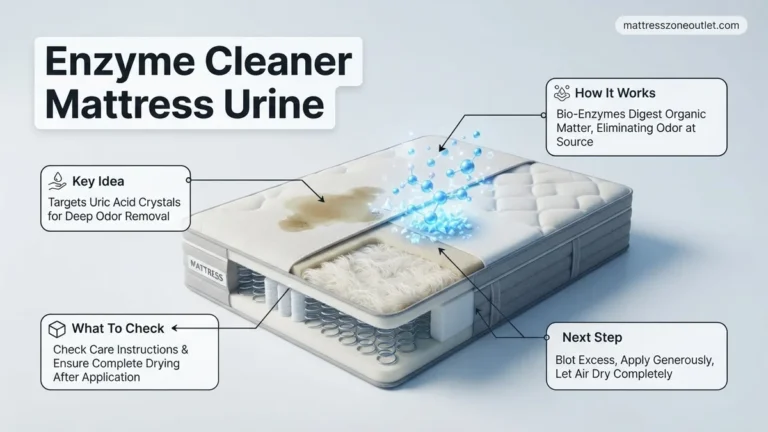
- Mix 8 ounces of 3 percent hydrogen peroxide, 3 tablespoons of baking soda, and a single drop of liquid dish soap in an open bowl.
- Pour the mixture into a spray bottle and mist the affected area lightly without soaking the internal memory foam layers.
- Allow the solution to fizz and sit for 15 minutes, which breaks down uric acid crystals and protein bonds.
- Blot the area firmly with a clean, dry microfiber towel to absorb residual moisture.
- Direct a portable fan at the mattress for 4 hours until the fabric is completely dry to the touch.
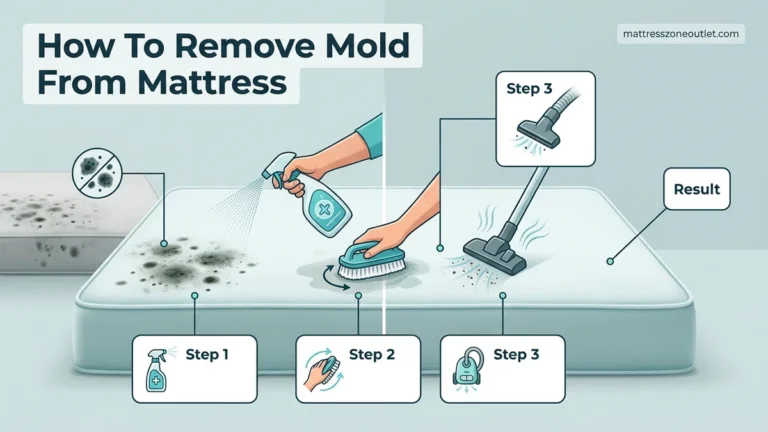
Neutralizing Mold and Mildew Smells
- Combine equal parts rubbing alcohol and warm water in a spray bottle to inhibit fungal spores.
- Lightly mist the smelly zone, ensuring the fabric gets damp but never saturated.
- Scrub the surface gently using a soft-bristled brush in circular motions to lift spores from the weave.
- Wipe the area down with a damp cloth soaked in clean water.
- Position a dehumidifier nearby running at a 30 percent humidity setting for 6 hours to prevent secondary mildew growth.
What If It Still Doesn’t Work and How to Prevent Future Smells
Persistent odors that survive enzymatic treatments and deep baking soda extractions usually indicate deep-set mold or chemical breakdown within the core foam layers. When DIY remediation fails, consider these fallback steps:
- Hire Professional Services: Contact a certified mattress cleaning technician who utilizes hot-water extraction and high-powered ozone generators. Professional treatments typically range from $100 to $250 depending on mattress size.
- Deploy an Industrial Air Purifier: Place a HEPA and activated carbon air purifier directly beside the bed for 72 hours to continuously scrub volatile organic compounds from the surrounding air.
- Install a Waterproof Encasement: Seal the mattress in a certified bed bug and allergen-proof zipper encasement rated for moisture protection, which costs between $40 and $90.
- Replace the Mattress: If the odor stems from internal mold proliferation or structural foam decay exceeding 7 years of use, safely discard the mattress and invest in a breathable, antimicrobial hybrid model for 2026 sleep health.
Conclusion
Eliminating stubborn mattress odors requires a systematic approach combining enzymatic cleaners, moisture control, and targeted baking soda treatments to break down organic buildup. According to verified research and expert sources from the International Sleep Products Association, maintaining a fresh sleep surface directly improves indoor air quality and prolongs material lifespan. Your actionable next step for today is to strip the bed, apply a fresh layer of baking soda, and let chemistry restore your mattress to factory-fresh condition.
❓ Frequently Asked Questions
Can I use essential oils directly on a mattress?
Never apply pure essential oils directly to the fabric, as they can leave oil stains. Instead, mix a few drops into your baking soda container before sprinkling it across the bed.
Is it safe to use commercial fabric refreshers on a mattress?
Many commercial sprays only mask odors with heavy fragrances and can introduce excess moisture into the memory foam or inner springs. Natural deodorizers like baking soda are safer and more effective at neutralizing smells.
What is the best way to dry a mattress quickly after cleaning?
Open bedroom windows to maximize cross-ventilation, and use portable fans or hair dryers on a cool setting to speed up the evaporation process. Avoid replacing bed linens until the mattress is 100% dry.
How do I remove musty mold smells from an old mattress?
Mix equal parts rubbing alcohol and warm water, lightly wipe down the affected surface to kill mold spores, and let it dry entirely in direct sunlight if possible.
Can steam cleaning remove mattress odors?
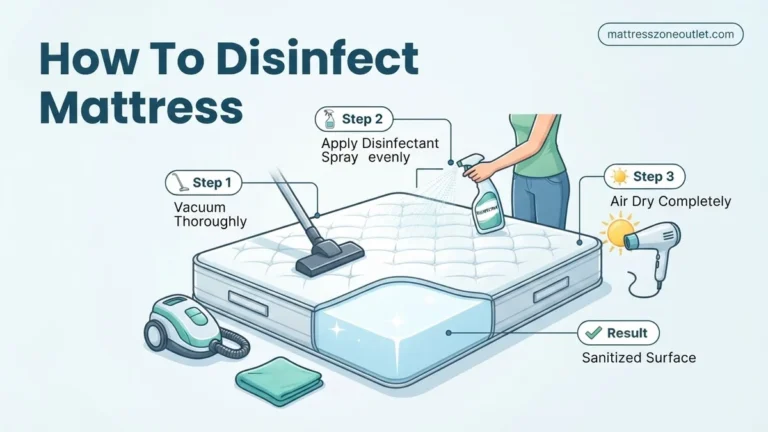
Steam cleaning can kill dust mites and sanitize the surface, but it introduces significant moisture. If not dried immediately, it can actually worsen mold and mildew odors.
Does sunlight help eliminate mattress smells?
UV rays from direct sunlight possess natural disinfecting properties that help kill bacteria and neutralize light musty odors when you can safely take the mattress outside.