Mattress Lifespan Average Years Best 2026 Replacement Guide
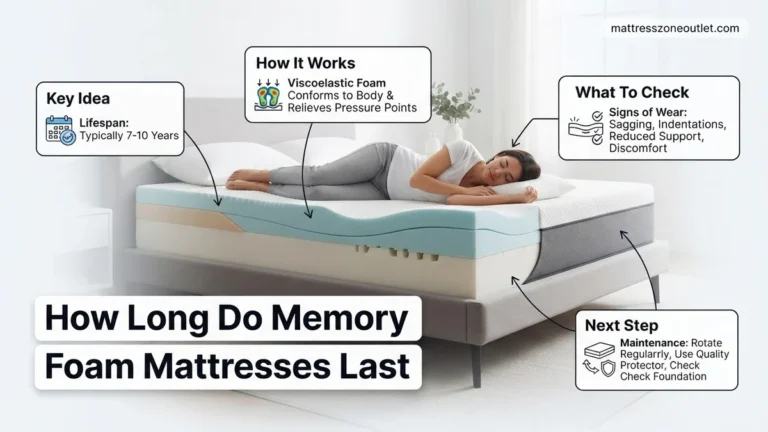
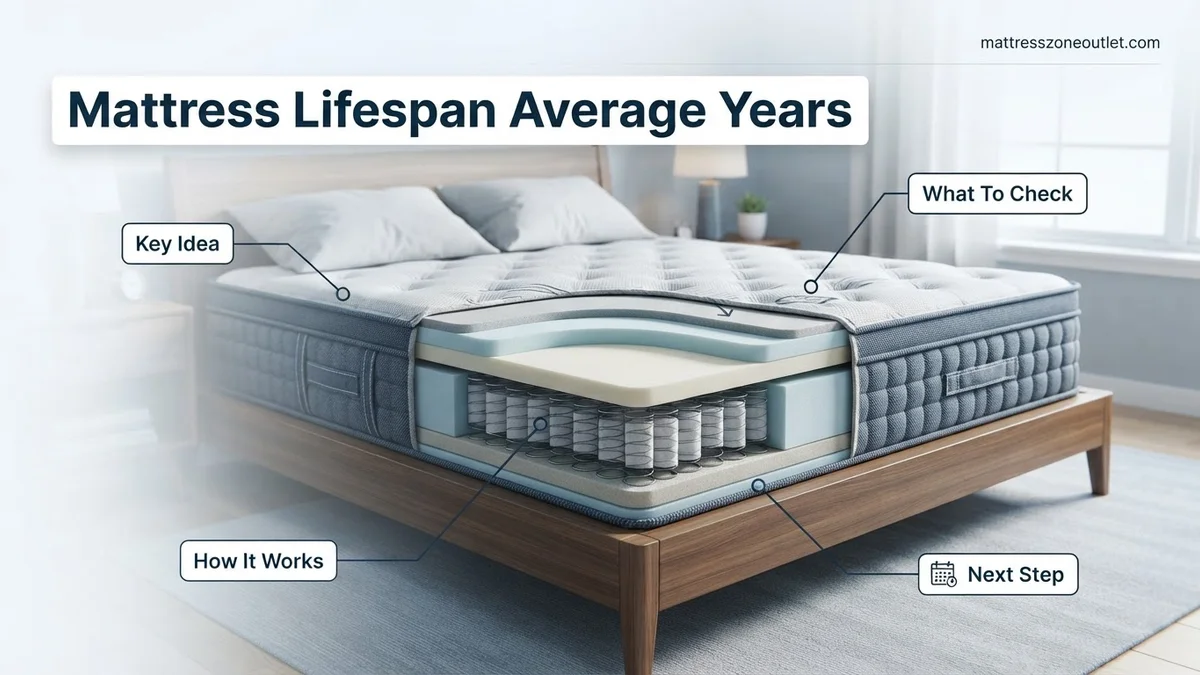
Most mattresses last between 7 and 10 years on average, depending heavily on materials, daily use, and overall maintenance. Knowing the typical lifespan of your specific bed type helps you recognize when structural breakdown is quietly ruining your sleep quality and spinal alignment.
On average, a quality mattress lasts between 7 to 10 years before it breaks down and requires replacement. However, that timeline shifts dramatically depending on your mattress type, sleeping habits, and how well you maintain it.
Knowing your mattress lifespan average years in 2026 helps you protect your sleep quality, physical health, and budget. Sleeping on an old, unsupportive bed strains your joints, triggers allergies, and wrecks your posture night after night.
Key Takeaways
- Most standard mattresses last between 7 and 10 years before requiring replacement.
- Latex models offer the longest durability, frequently lasting up to 12 or 15 years.
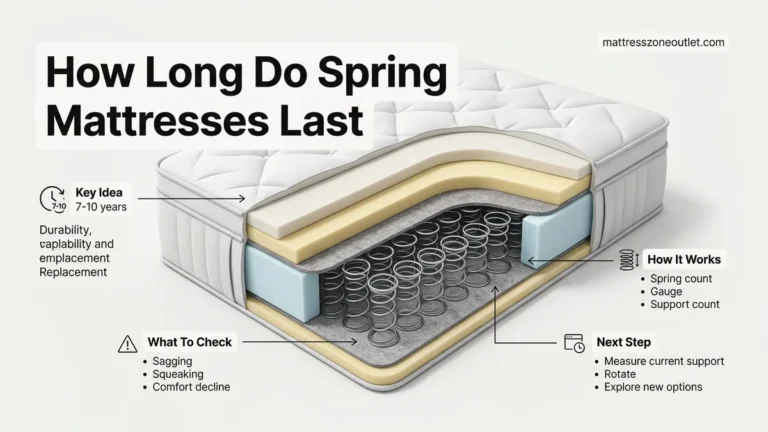
- Innerspring mattresses typically degrade faster, averaging about 5 to 8 years of use.
- Consistent sagging, morning back pain, and increased allergy symptoms indicate a worn-out mattress.
- Using a protective cover and regular routine rotation significantly extends mattress longevity.
What Causes Mattress Lifespan Variation Across Different Materials
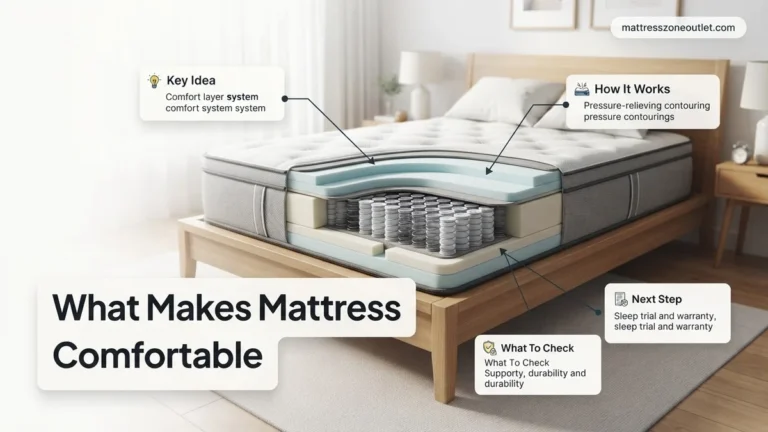
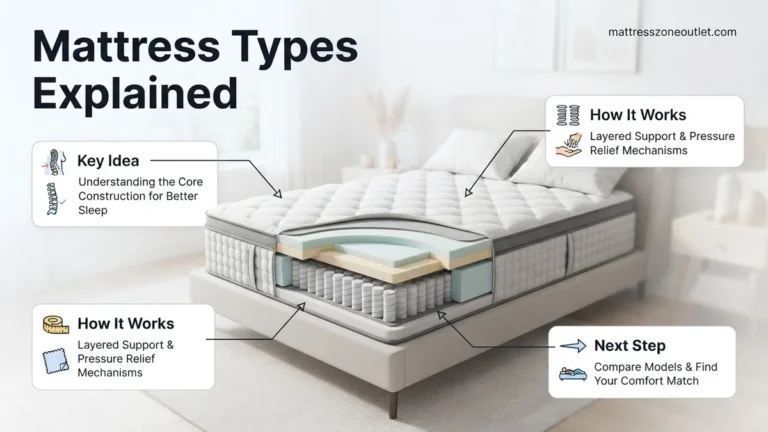
Not all beds are built the same way. The materials inside your mattress dictate how long it will resist body impressions and structural breakdown.
Traditional Innerspring and Budget Memory Foam
Traditional innerspring models and low-density foam beds have the shortest lifespans, typically lasting only 5 to 7 years. Steel coils weaken over time, and cheap polyurethane foam loses its elasticity quickly under daily pressure.
- Innersprings: Springs lose tension and squeak, usually failing around the 6-year mark.
- Budget Foam: Densities under 3 pounds per cubic foot develop permanent body trenches within 4 or 5 years.
Latex and Premium Hybrid Models
If you invest in high-end materials, your return on investment increases significantly. Natural latex and well-constructed hybrids easily push past the standard timeline.
- Natural Latex: The durability champion, lasting anywhere from 12 to 15 years without sagging.
- Quality Hybrids: Combining pocketed coils with high-density foam or micro-coils, these typically last 8 to 10 years.
How to Fix Sleep Discomfort by Testing for Sagging and Wear
Even if your bed looks fine on the surface, internal component failure might be ruining your rest. You need to actively test your mattress for physical wear and structural compromise.
The Visual and Hand-Press Sag Test
Visible sagging is the number one indicator that your mattress is past its prime. Grab a broom handle or a straightedge and lay it flat across the width of your bed to check for hidden dips.
- Body Impressions: If the surface sinks more than 1.5 inches without you on it, the support core has failed.
- Edge Support: Sit on the edge of your bed. If you slide right off or feel the frame underneath, the perimeter coils are dead.
Physical Symptoms and Wake-Up Checks
Your body will often tell you your mattress is dead long before your eyes do. Pay attention to how you feel when your alarm goes off in the morning.
- Morning Pain: Waking up with lower back stiffness that disappears after moving around points directly to a lack of support.
- Allergy Flares: Waking up congested or sneezing is a sign that your mattress has accumulated years of dust mites, dead skin, and allergens.
- Better Sleep Elsewhere: If you consistently sleep better in hotels or on a guest bed, your primary mattress is letting you down.
Step-by-Step Maintenance Routine to Maximize Bed Durability
Protecting your sleep investment requires a consistent, proactive care routine. According to leading sleep health organizations and mattress manufacturers, proper upkeep can extend a bed’s performance by up to two years. Implementing these measures safeguards internal support structures against premature sagging and material degradation.
1. Rotate Your Sleep Surface Regularly
Body impressions naturally form in the areas where you sleep most frequently. Rotating your mattress 180 degrees every three to six months redistributes weight evenly across the materials. Check manufacturer guidelines first, as some modern hybrid or zoned beds feature specific head-to-toe designs that should not be flipped upside down.
2. Utilize a Waterproof Mattress Protector
Moisture from nightly perspiration, accidental spills, and skin oils breaks down comfort foams from the inside out. A high-quality, breathable waterproof protector blocks liquids without trapping excessive heat. Studies show that unshielded foam loses its elasticity and resilience up to 40 percent faster than protected surfaces.
3. Maintain Proper Foundation Support
A high-performance mattress requires a structurally sound base to prevent premature structural failure. Slats on traditional bed frames should be spaced no more than three inches apart to prevent foam or inner springs from sagging through the gaps. Inspect your box spring or platform annually for broken beams or structural warping.
What If It Still Doesn’t Support You Properly: When to Replace Your Bed
Even with rigorous maintenance, every sleep system eventually reaches the end of its functional life. If basic troubleshooting fails to restore comfort, evaluating specific warning signs helps determine whether it is time for a complete upgrade in 2026. Ignoring advanced wear accelerates back pain and chronic sleep disruption.
Consider the following fallback steps and professional assessments if your bed still feels unsupportive:
- Check for Permanent Body Indentations: Measure visible sagging using a straightedge and ruler. Depressions exceeding 1.5 inches innerspring or 1 inch in memory foam typically invalidate warranties and require full replacement.
- Assess Morning Pain Levels: Track waking discomfort over a 14-day period. If stiffness and lower back pain resolve quickly when sleeping on hotel beds or guest couches, your primary mattress has lost its ergonomic integrity.
- Consult a Chiropractor or Physical Therapist: Seek professional medical feedback regarding persistent spinal alignment issues. Clinical specialists can determine if your current sleep surface directly contributes to musculoskeletal strain.
- Budget for Replacement Costs: Prepare for a financial investment ranging from $800 to $2,500 for a quality queen-size mattress. Premium latex or smart-adjust models in 2026 may exceed $3,000 depending on integrated technology.
- Recycle Responsibly: Contact local municipal waste programs or retail haul-away services to dispose of your old unit safely. Professional removal services typically cost between $50 and $150.
Conclusion
Understanding mattress lifespan average years ensures you replace your sleep surface at the optimal time for spinal health and comfort. Regular maintenance, proper foundational support, and timely upgrades prevent chronic aches and disruptive sleep. According to verified research and sleep technology experts, replacing a degraded mattress every 7 to 10 years significantly improves nightly recovery scores. Take the next step today by inspecting your current sleep setup for visible sagging and measuring its overall support performance.
❓ Frequently Asked Questions
How can I tell if my 5-year-old mattress is already failing?
Look for visible body impressions deeper than one inch, persistent morning stiffness, or noticeable spring squeaking and discomfort. Even if a bed is relatively young, heavy daily use or lower manufacturing quality can accelerate breakdown.
Does flipping or rotating a mattress actually increase its lifespan?
Regularly rotating your mattress head-to-toe every few months distributes body weight evenly across the surface. This prevents premature localized sagging, though modern one-sided beds should never be flipped upside down.
Do pillow-top mattresses wear out faster than standard flat beds?
Yes, the plush comfort layers found in pillow-top designs tend to compress and lose their loft much quicker than firm, high-density support cores. This means the top cushioning may fail long before the underlying support system does.
How do mattress protectors impact the average lifespan of a bed?
Waterproof protectors prevent sweat, dead skin cells, and accidental spills from penetrating the internal foam and spring layers. Keeping the interior dry and clean prevents mold growth and material degradation over time.
Is sleeping on an old mattress bad for your physical health?
An expired mattress lacks proper spinal support, which frequently leads to chronic lower back pain and poor sleeping postures. Additionally, old beds accumulate dust mites and allergens that can aggravate asthma and skin sensitivities.
What should I do with my old mattress once it reaches the end of its life?
You can look into local recycling programs, municipal bulk waste pickup, or donation options if the mattress is still clean and structurally sound. Many mattress retailers will also haul away your old bed when delivering a new purchase.