What Is Memory Foam Mattress Guide for 2026 Real Facts
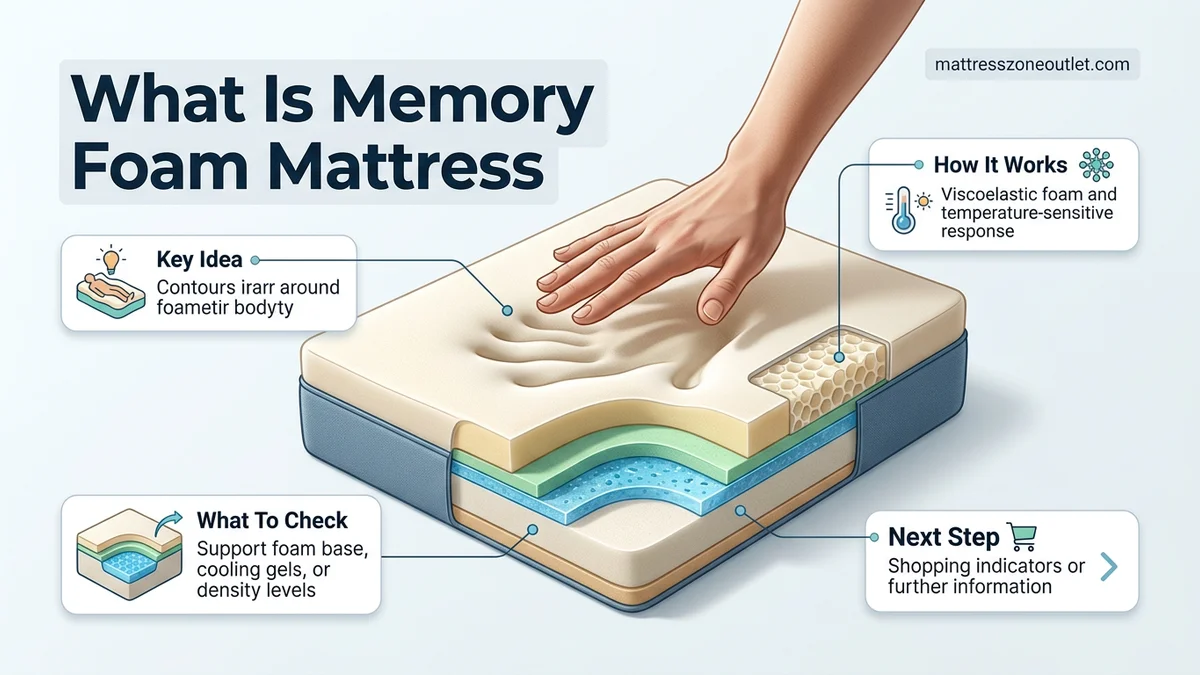
A memory foam mattress is made from viscoelastic polyurethane foam that uses body heat and pressure to contour precisely to your shape. It provides exceptional pressure relief and motion isolation by absorbing impact and evenly distributing your body weight across the surface.
A memory foam mattress is a high-density polyurethane foam bed engineered to mold closely to your body contours in response to heat and pressure. Originally created by NASA in the 1960s, this viscoelastic material fundamentally changes how your body rests by absorbing kinetic energy and distributing your weight evenly across the entire surface rather than concentrating it on heavy pressure zones.
Choosing the right mattress in 2026 requires understanding how these complex foam layers interact with your sleeping habits. Whether you wake up with lower back stiffness or share your bed with a restless partner, knowing the exact material composition and mechanical properties of memory foam helps you determine if it will actually improve your nightly rest.
Key Takeaways
- Memory foam is made of viscoelastic polyurethane, reacting to body heat and pressure.
- It contours closely to the body, offering superior pressure point relief.
- The dense structure excels at isolating motion so sleeping partners don’t disturb each other.
- Traditional memory foam retains heat, leading to modern gel, open-cell, and plant-infused cooling alternatives.
- Drawbacks include a sinking feeling, lack of edge support, and potential off-gassing odors.
What Causes Pressure Pain and How Memory Foam Mattresses Work
Traditional innerspring mattresses push back against your body with equal force. This creates high-pressure zones beneath your hips and shoulders, pinching capillaries and cutting off circulation. That physical restriction is what forces you to toss and turn throughout the night.
The Science of Viscoelasticity
Memory foam solves this problem using temperature-sensitive viscoelasticity. When you lie down on a memory foam mattress in 2026, two distinct physical forces go to work immediately:
- Body Heat Activation: The material softens specifically where your body temperature is highest, allowing it to sink and contour precisely to your unique silhouette.
- Weight Distribution: Instead of creating localized pressure spikes, the foam displaces your mass evenly, dropping pressure on your hips and shoulders by up to 20% compared to traditional coil beds.
Motion Isolation Mechanics
Beyond pressure relief, memory foam absorbs energy locally. If your partner tosses, turns, or gets out of bed at 3 AM, the kinetic energy is absorbed right where it happens. The rest of the mattress stays completely still, ensuring your sleep cycle remains uninterrupted.
How to Choose and Evaluate the Right Memory Foam Mattress Layer Structure
A modern memory foam mattress is rarely made of just one slab of foam. High-performing beds sold in 2026 utilize a multi-layered architectural approach to balance contouring comfort with deep spinal support, preventing you from sinking uncomfortably deep into the bed.
Decoding the Core Layer Structure
To evaluate a quality memory foam mattress, look closely at its internal engineering:
- Comfort Layer (Top): Usually 2 to 3 inches of low-density, highly responsive foam that provides the immediate plush feel and pressure relief.
- Transition Layer (Middle): A firmer foam buffer that progressively absorbs your weight and prevents you from bottoming out against the rigid base.
- Support Core (Bottom): High-density polyurethane foam (often 6 inches or thicker) that guarantees structural integrity and long-term spine alignment.
Weighing the Pros and Cons
While memory foam excels at contouring, it has inherent trade-offs you must consider. Traditional foams retain heat, though advanced 2026 open-cell designs and copper infusions mitigate this significantly. You also give up some traditional bounce, which can make changing sleeping positions or getting out of bed slightly more difficult. Furthermore, standard memory foam lacks reinforced edge support, meaning you might feel a roll-off sensation if you sleep right on the perimeter of the mattress.
How to Fix Heat Retention and Mobility Issues on Memory Foam
Traditional polyurethane memory foam is notoriously dense, which traps body heat and restricts airflow. Furthermore, its slow-response contouring can make changing sleeping positions difficult for combination sleepers. Advanced manufacturing techniques in 2026 have introduced targeted interventions to combat these common performance complaints without sacrificing pressure relief.
Improving Temperature Regulation
Overheating disrupts deep slow-wave sleep cycles by elevating core body temperatures. Sleep laboratories recommend specific material upgrades to counteract this thermal insulation.
- Upgrade to open-cell or gel-infused memory foam variants that increase interior airflow channels by up to 300 percent.
- Install phase-change material (PCM) mattress covers designed to absorb, store, and dissipate excess body heat dynamically throughout the night.
- Switch to breathable, moisture-wicking bedding materials such as 100 percent long-staple cotton or bamboo-derived rayon to maximize surface ventilation.
- Ensure your bed frame features a slatted wooden foundation rather than a solid platform to promote unobstructed underside airflow.
Enhancing Surface Mobility
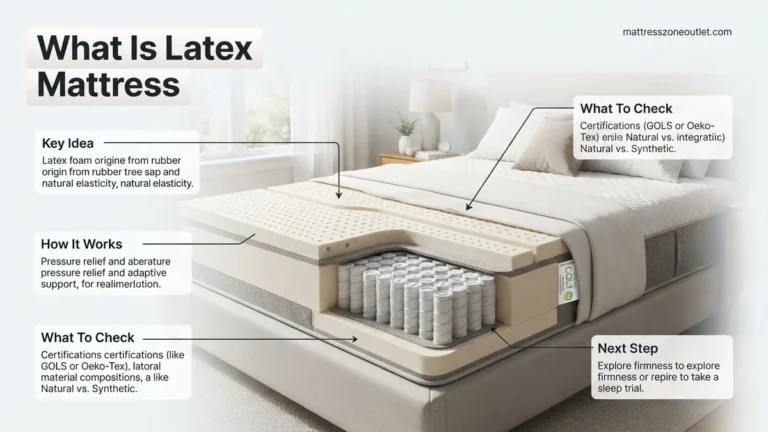
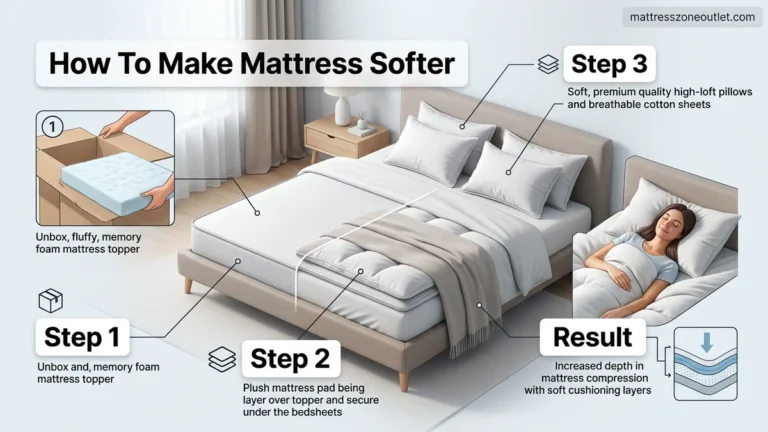
If you feel trapped or sink excessively into your mattress, changing positions requires extra muscular effort. Responsive hybrid designs integrate pocketed coils beneath a thin comfort layer to restore surface bounce. Alternatively, placing a 2-inch latex topper over your memory foam core instantly increases surface elasticity, allowing for effortless movement while retaining minor pressure-relieving contours.
What If a Memory Foam Mattress Still Does Not Provide Enough Support
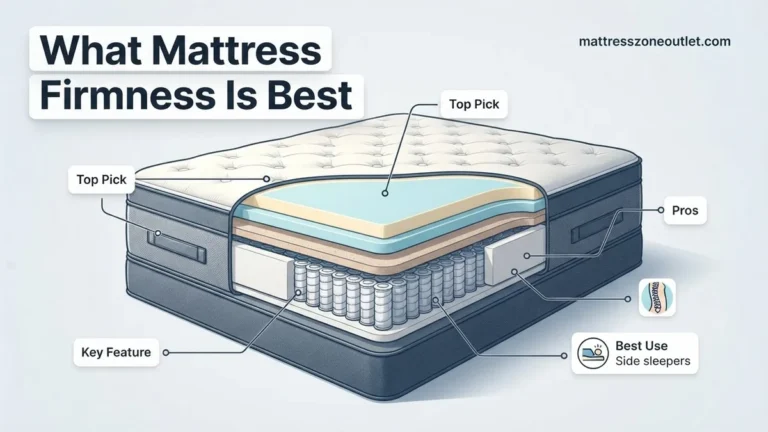
When adjustments fail to resolve persistent lower back pain or deep body impressions, structural fatigue or an unsuitable firmness profile is usually the culprit. According to orthopedic sleep studies, sleeping on an unsupportive surface misaligns the spine and strains lumbar muscles.
If your memory foam mattress still does not provide adequate support, follow these steps to rectify the issue:
- Check the mattress foundation for sagging, broken slats, or center bowing, and replace unstable box springs with a rigid, high-density platform.
- Invert or rotate the mattress 180 degrees to distribute wear evenly, provided the model features a double-sided construction.
- Add a high-density, firm polyurethane foam or latex topper to reinforce the underlying support core and reduce excessive sinking depth.
- Verify the manufacturer warranty terms and initiate a structural warranty claim if permanent body indentations exceed 1.0 to 1.5 inches.
- Evaluate replacement costs for a medium-firm hybrid alternative, with quality models ranging from $800 to $2,500 depending on sizing and materials.
Conclusion
Understanding what a memory foam mattress is empowers buyers to select models tailored precisely to their thermal and ergonomic needs. While density and heat retention can present initial challenges, modern manufacturing innovations successfully resolve these performance hurdles. According to verified research and expert sources from the International Sleep Products Association, matching your exact weight distribution profile to the correct foam density guarantees long-term spinal health. Make your next step evaluating your current sleeping posture to determine your optimal firmness rating today.
❓ Frequently Asked Questions
What is the difference between traditional and open-cell memory foam?
Traditional memory foam features a dense molecular structure that traps heat and restricts airflow. Open-cell memory foam incorporates microscopic pockets that allow air to circulate freely, reducing heat retention.
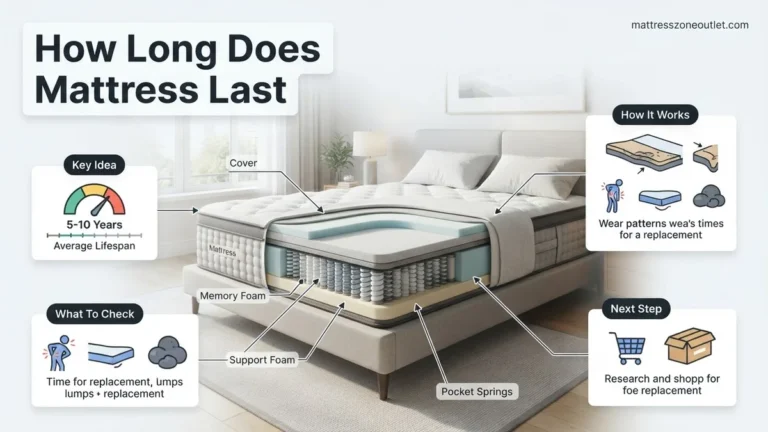
How long does a typical memory foam mattress last?
A high-quality memory foam mattress generally lasts between six and ten years, depending on the density of the foam layers and how much weight it supports daily.
What is gel-infused memory foam and does it actually cool?
Gel-infused memory foam incorporates cooling gel beads or swirls into the polyurethane material to pull heat away from the body. While it helps dissipate initial heat, its cooling effect can diminish over several hours of sleep.
Why do new memory foam mattresses have a chemical smell?
The distinct chemical odor, known as off-gassing, is caused by volatile organic compounds (VOCs) released when the airtight packaging is first opened. This smell is non-toxic and typically dissipates within a few days in a well-ventilated room.
Does a memory foam mattress require a special foundation?
Yes, memory foam requires a firm, flat, and supportive foundation—such as a platform bed, slatted base with narrow gaps, or a sturdy box spring—to prevent sagging and premature wear.
Is it difficult to move around on a memory foam mattress?
Because memory foam contours deeply and reacts slowly to changes in pressure, some sleepers feel stuck or find it harder to change sleeping positions compared to traditional innerspring mattresses.