How Long Do Hybrid Mattresses Last in 2026 Real Expert Guide
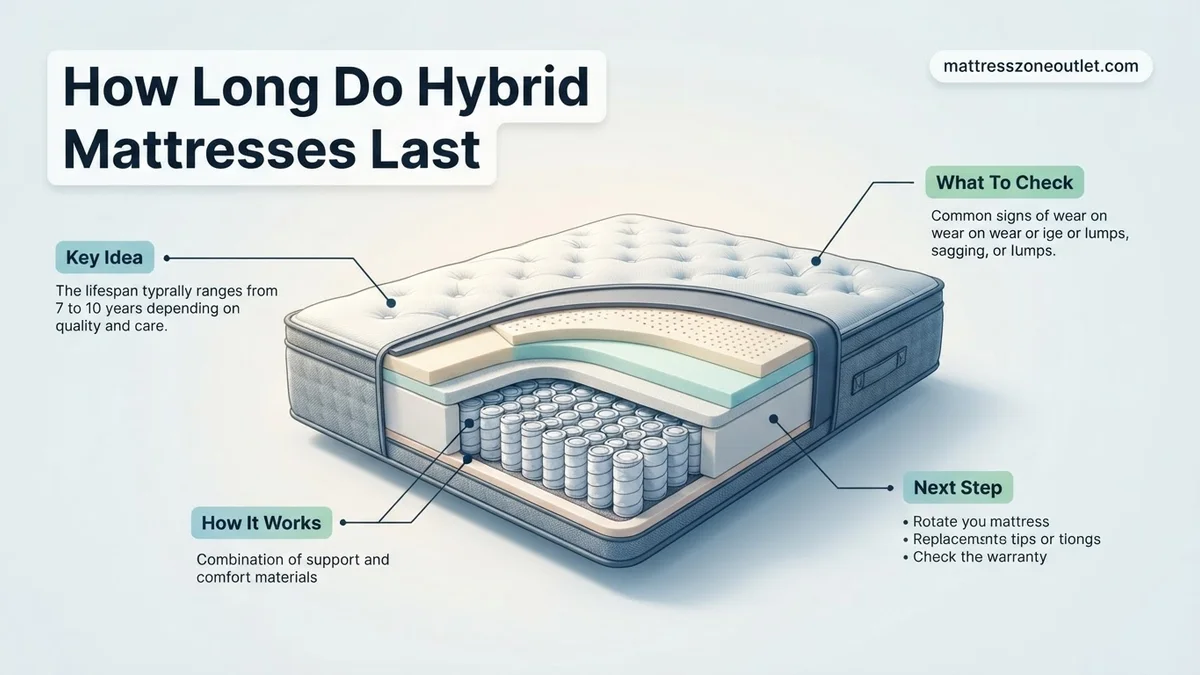
Most hybrid mattresses last between 6 to 10 years, depending heavily on material quality and daily wear. Understanding their dual construction of pocketed coils and comfort foam helps determine when support begins to fail. Knowing the key signs of degradation ensures you replace your bed before it impacts your sleep quality.
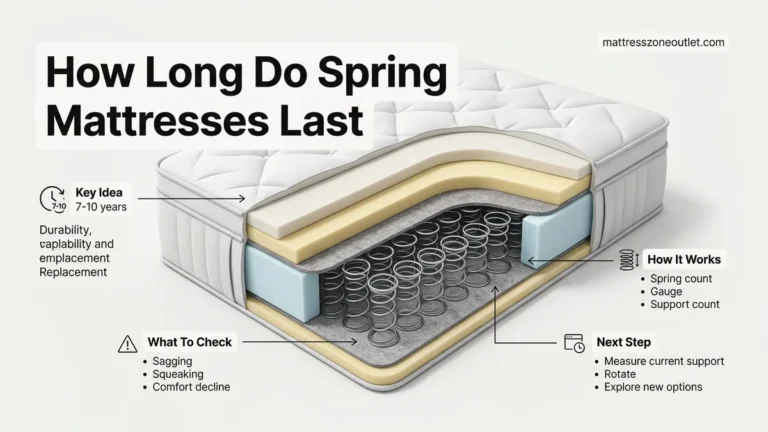
A quality hybrid mattress typically lasts between 6 and 10 years. This lifespan depends heavily on the materials used in its construction and how well you maintain it. Because hybrids combine pocketed steel coils with foam or latex layers, they face wear and tear from two entirely different structural components over time.
Replacing your mattress on schedule in 2026 prevents chronic back pain, poor sleep quality, and the hidden accumulation of dust mites and allergens. Knowing the exact timeline helps you budget for a replacement before your support system completely fails.
Key Takeaways
- Quality hybrid mattresses typically last between 6 and 10 years with proper care.
- Higher-density foam layers and thicker steel coils significantly increase overall durability.
- Rotating your mattress every 3 to 6 months prevents uneven body impressions.
- Visible sagging greater than one inch indicates structural failure requiring replacement.
- Higher body weight and sleeping habits accelerate the wear and tear of comfort layers.
What Causes Hybrid Mattresses to Wear Out Prematurely
Substandard Foam and Coil Degradation
The biggest culprit behind a dying hybrid mattress is low-density comfort foam. When manufacturers use polyurethane foam with a density under 1.8 pounds per cubic foot, it breaks down quickly under body weight. Once the foam loses its resilience, it forms permanent body impressions. Beneath those comfort layers, lower-grade steel coils can lose their tension. When the pocketed coils weaken, they stop pushing back uniformly against your body shape.
- Comfort foams with low density compress and flatten within 2 to 4 years.
- Thin transition layers let you feel the hard coils beneath, causing pressure points.
- Low-gauge wire in coils can bend or snap under heavy, concentrated pressure.
Environmental Stressors and Lack of Rotation
Your bedroom environment actively degrades mattress materials faster than you might think. High humidity softens memory foam and encourages mold growth inside the coil matrix. Furthermore, sleeping in the exact same spot every night accelerates material fatigue. If you never rotate your mattress head-to-toe, the middle support system takes 100 percent of the load.
- Body oils and sweat break down latex and foam adhesives over time.
- Failing to rotate a hybrid every 3 to 6 months leads to lopsided sagging.
- Incompatible bed frames with slats wider than 3 inches cause coils to warp.
How to Fix and Prevent Early Sagging in Hybrid Mattresses
Immediate Fixes for Minor Indentations
If your 2026 hybrid mattress is showing early signs of dipping, you can temporarily mitigate the issue without buying a brand-new bed. A high-density latex or solid foam mattress topper acts as a new comfort layer. It bridges small surface depressions and redistributes your weight evenly. However, remember that a topper only masks foam softening; it cannot fix damaged coils underneath.
- Add a 2 to 3-inch medium-firm topper to restore surface leveling.
- Flip or rotate the mattress immediately if the manufacturer permits dual-sided use.
- Slide a piece of thin plywood between the mattress and your foundation for extra rigid support.
Long-Term Prevention Strategies
Protecting your investment starts on day one with the correct foundation and protective gear. A sagging box spring or wide-slatted platform will ruin even the most expensive luxury hybrid. Always pair your mattress with a waterproof protector to block sweat and dead skin cells from seeping into the comfort layers. Moisture destroys foam elasticity faster than normal pressure.
- Use a solid platform bed or a slatted base with gaps no wider than 2 inches.
- Invest in a breathable, waterproof protector to prevent moisture degradation.
- Adhere to a strict 90-day rotation schedule to distribute wear evenly across the surface.
Step-by-Step Guide to Evaluating Your Mattress Lifespan
Determining whether your hybrid mattress has reached the end of its functional life requires a systematic evaluation. According to sleep industry standards, evaluating structural integrity prevents chronic back pain and poor spinal alignment. Follow these steps to accurately assess your mattress condition in 2026.
Step 1: Conduct a Visual and Tactile Sag Test
Remove all bedding, sheets, and protectors down to the bare mattress surface. Place a rigid, straight object like a broom handle or a long level diagonally across the width of the bed. Measure the depth of any visible depression underneath the straightedge using a ruler. Industry guidelines dictate that a body impression exceeding 1.5 inches signals structural failure in hybrid models.
Step 2: Assess Coil and Edge Support Integrity
Test the perimeter of your bed by sitting directly on the edge where you normally put on your shoes. Excessive compression or a feeling of sliding off indicates that the perimeter pocketed coils have lost their temper or tension. Next, press firmly on the center surface to feel if the inner steel coils still rebound instantly or feel sluggish and dead.
Step 3: Track Sleep Quality and Physical Symptoms
Monitor your physical comfort over a consecutive two-week testing period. Wake up and note if you experience localized lower back stiffness, shoulder tension, or unexplained fatigue. If you consistently sleep better in hotel beds or guest rooms, your primary mattress has lost its ergonomic support capacity.
What If It Still Doesn’t Work?
If routine maintenance, rotation, and deep cleaning fail to restore your hybrid mattress’s original comfort and support, immediate corrective action is necessary. When DIY fixes and toppers no longer alleviate persistent morning pain, consider these targeted fallback steps.
- Verify the Warranty Coverage: Review your manufacturer warranty documentation to check if your body indentation qualifies for a replacement claim. Most premium hybrid warranties cover structural sagging greater than 1.0 to 1.5 inches, potentially saving you the cost of a brand-new purchase.
- Invest in a High-Density Latex Topper: If the internal coils remain supportive but the comfort comfort layers have softened, place a 2-inch to 3-inch high-density latex topper over the surface. This temporary fix costs between $150 and $350 and can extend usable lifespan by 12 to 18 months.
- Consult a Professional Ergonomist: If persistent back pain continues regardless of surface adjustments, schedule an evaluation with a physical therapist or spine specialist. Sleeping on an exhausted mattress can exacerbate chronic musculoskeletal conditions requiring professional intervention.
- Budget for a 2026 Replacement: Begin researching modern hybrid models featuring zoned pocket coils and advanced phase-change cooling materials. Replacing an exhausted mattress typically ranges from $800 to $2,500 depending on sizing and material quality.
Conclusion
Hybrid mattresses typically deliver six to eight years of optimal support by combining contouring foam layers with responsive pocketed coils. Regular rotation and protective covers are essential for maximizing this lifespan. According to verified research and sleep ergonomics experts, replacing a degraded mattress is vital for maintaining proper spinal alignment and restorative sleep health. Take action today by measuring your surface for sagging and checking your original purchase date to see if an upgrade is overdue.
❓ Frequently Asked Questions
Why do hybrid mattresses eventually fail?
Failure usually occurs when the comfort foam layers lose their resilience and the steel pocket coils lose their tension. Over years of compression, body impressions become permanent and foundational support diminishes.
Does mattress thickness affect how long a hybrid mattress lasts?
Generally, thicker hybrid mattresses with high-density foams and heavy-gauge steel coils last longer than thinner budget models. More material provides a higher capacity to absorb daily pressure over time.
Can a mattress topper extend the life of an aging hybrid mattress?
A quality mattress topper can temporarily add cushioning and comfort to a hybrid bed with compressed top layers. However, it cannot fix structural sagging or a worn-out coil support core underneath.
Does a box spring or bed frame impact hybrid mattress durability?
Yes, using an incompatible or unsupportive foundation causes the mattress to sag prematurely. Hybrid beds require a solid platform or rigid slatted base with gaps no wider than three inches.
How do I know if my warranty covers a sagging hybrid mattress?
Most manufacturers cover uncompressed indentations greater than 1 to 1.5 inches deep when measured without weight. Always check specific brand warranty terms and use a compliant foundation to keep coverage valid.
Are expensive hybrid mattresses actually more durable?
Higher-priced hybrid mattresses typically use superior materials like high-density memory foam, latex, and individually wrapped tempered steel coils. These premium components resist wear much longer than cheap alternatives.