How to Clean Mattress at Home Step-by-Step DIY Guide 2026
Knowing how to clean mattress at home requires a systematic approach using common household ingredients like baking soda and hydrogen peroxide. This step-by-step DIY process effectively eliminates deep-set odors, sweat stains, and allergens without harsh chemicals.
Cleaning your mattress at home requires stripping the bed, vacuuming the surface, deodorizing with baking soda, and spot-treating stains using common household ingredients like hydrogen peroxide and dish soap. By following a structured DIY method, you can effectively lift stubborn discolorations and neutralize trapped odors without spending money on professional services.
Maintaining a clean sleeping surface is essential for your health and indoor air quality in 2026. Because you spend roughly a third of your life in bed, your mattress naturally collects dead skin cells, body oils, and allergens that degrade sleep quality over time. Taking charge of the maintenance process yourself ensures a hygienic environment using safe, non-toxic components.
Key Takeaways
- Strip all bedding and wash it in hot water to kill dust mites.
- Vacuum the entire mattress surface thoroughly using an upholstery attachment.
- Deodorize stubborn odors by generously sifting baking soda across the surface.
- Treat sweat, blood, and urine stains using targeted hydrogen peroxide mixtures.
- Ensure the mattress dries completely in well-circulated air to prevent mold growth.
What Causes Mattress Stains, Odors, and Allergen Buildup
Everyday Contaminants and Microscopic Culprits
Your mattress absorbs a surprising amount of organic matter every single night. The average person sheds millions of microscopic skin cells daily, providing a primary food source for dust mites. In addition to skin debris, your body releases roughly a pint of moisture and sweat while sleeping, which seeps deep into the fabric layers.
- Dust mites and pet dander: Trigger allergies and respiratory irritation throughout the year.
- Body oils and sweat: Create yellow discoloration and damp environments for bacteria.
- Accidental spills: Coffee, nighttime drinks, and biological fluids cause set-in stains.
Why Odors and Allergens Become Trapped
Modern mattresses feature dense memory foam or multiple layers of padding that lock in moisture and debris. Without regular intervention, these trapped elements break down and produce stale, musty odors. Surface washing alone cannot reach the deep fibers, which is why a targeted dry and liquid extraction method is necessary for total renewal.
Master Mattress Deep Cleaning in 7 Simple Steps
A clean mattress is essential for a healthy indoor environment, better sleep quality, and the longevity of your bed. Over time, mattresses accumulate dust mites, dead skin cells, sweat, and accidental stains that regular sheet washing simply cannot address. This comprehensive guide walks you through a professional-grade deep cleaning process that you can easily execute at home using everyday household items, ensuring your bed remains fresh, hygienic, and inviting.
Step 1: Strip and Launder All Bedding
What you need: Laundry detergent, oxygen-based bleach (optional), washing machine, and laundry hamper.
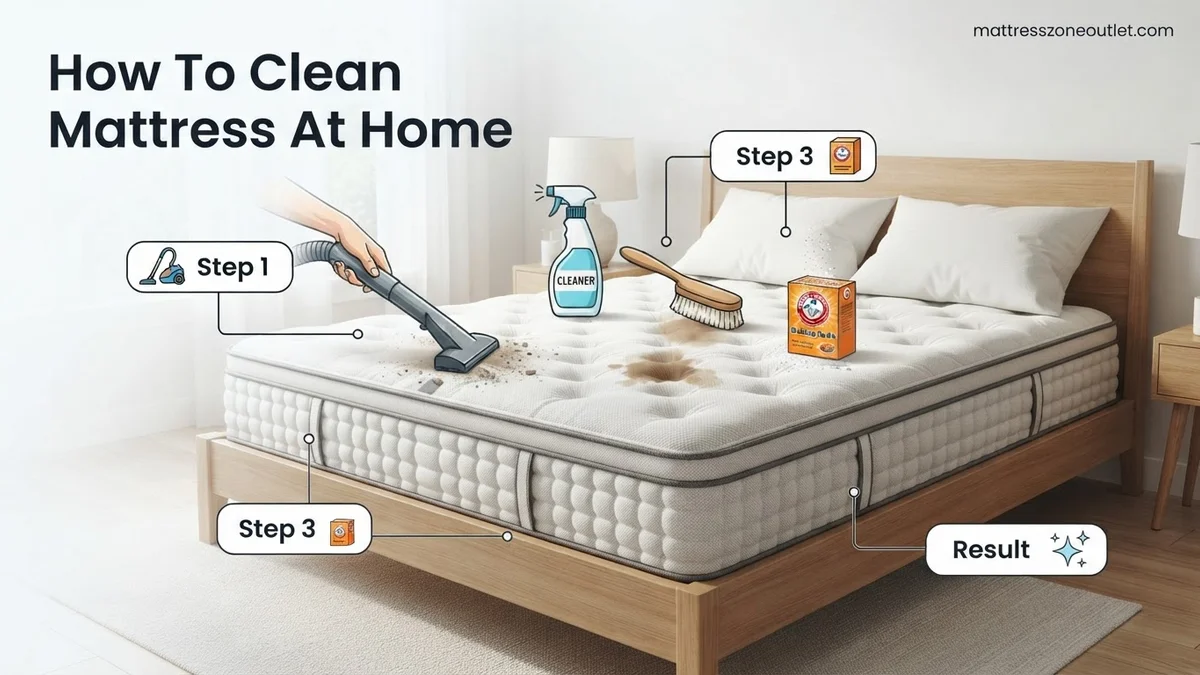
Instructions: Begin by completely stripping the bed. Remove all fitted sheets, flat sheets, pillowcases, pillow protectors, and mattress pads. Gather these items and take them to your laundry room. Wash all bedding in the hottest water temperature recommended on the fabric care labels—typically at least 130 degrees Fahrenheit—to effectively kill dust mites and eliminate trapped allergens. If your mattress protector or sheets have stubborn body oils or yellowing, add a scoop of color-safe oxygen bleach to the cycle. While the washing machine runs, you will have uninterrupted access to the bare mattress surface for the subsequent cleaning phases.
Pro Tip: Don’t forget to wash decorative throw pillows and blankets that sit on the bed, as they also trap dust and dander.
Step 2: Vacuum the Entire Surface
What you need: A vacuum cleaner equipped with a clean upholstery attachment and a crevice tool.
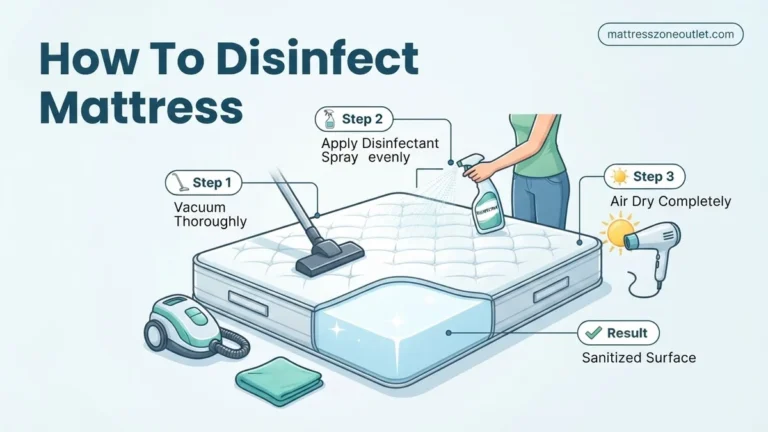
Instructions: Attach the upholstery tool to your vacuum cleaner. Starting at the top left corner of the mattress, systematically vacuum the entire top surface using overlapping strokes. Pay special attention to tufts, buttons, and quilted diamond patterns where dead skin cells and dust heavily accumulate. Once the top is done, switch to the crevice tool and thoroughly vacuum along all four side panels, the piping seams, and the bottom edges. If your mattress is double-sided, enlist a helper to carefully flip it over and repeat the vacuuming process on the reverse side to ensure zero dust mites are left behind.
Pro Tip: Always ensure your vacuum’s brush roll is turned off or clean to prevent pulling or snagging delicate mattress ticking fabrics.
Step 3: Pre-Treat and Erase Fresh Stains
What you need: 1 cup hydrogen peroxide, 3 tablespoons liquid dish soap, 3 tablespoons baking soda, an empty spray bottle, and a clean white cloth.
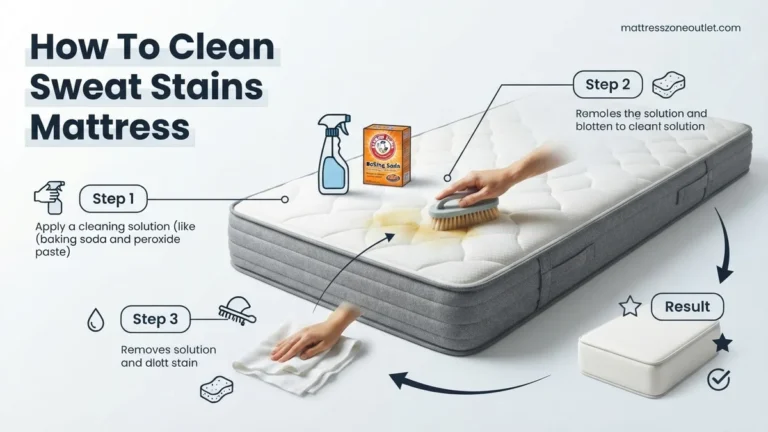
Instructions: Inspect your mattress for visible stains such as sweat rings, blood, or food spills. Mix the hydrogen peroxide, liquid dish soap, and baking soda in a bowl until the baking soda dissolves. Pour the solution into a spray bottle. Lightly mist the stained areas—do not saturate the mattress, as excess moisture encourages mold growth. Gently blot the stain using a clean white cloth, working from the outside edges inward to prevent the stain from spreading. Allow the solution to sit on the stain for 5 to 10 minutes, then blot again with a separate damp cloth to lift away the lifted residue and soapy buildup.
Pro Tip: Always use a white cloth instead of a colored towel to avoid dye transfer onto your damp mattress fabric.
Step 4: Deodorize with Baking Soda
What you need: A 16-ounce box of pure baking soda and 15 to 20 drops of your favorite essential oil (lavender or eucalyptus work wonderfully).
Instructions: In a mixing bowl, combine the entire box of baking soda with the essential oil drops, whisking thoroughly to break up any clumps and distribute the scent evenly. Sift the scented baking soda generously across the entire top surface of the mattress using a fine-mesh sieve or by hand. Ensure you create a visible, uniform white layer across the fabric. Baking soda is a natural, powerful deodorizer that neutralizes acidic odors caused by body oils, sweat, and pet accidents while drawing out residual moisture left over from your stain-removal step.
Pro Tip: If possible, position a floor fan in the bedroom to circulate air, which accelerates the deodorization and drying process.
Step 5: Harness Natural Sunlight and UV Power
What you need: Sunlight (if mattress is portable) or open bedroom windows and bright natural light.
Instructions: Allow the baking soda to sit undisturbed on the mattress for a minimum of 4 to 8 hours. If you have a lightweight foam or hybrid mattress and live in a private home with a secure yard, carefully carry the mattress outside and let it rest in direct sunlight for a few hours. Ultraviolet (UV) rays from the sun act as a natural disinfectant, killing lingering bacteria and helping to break down stubborn organic odors. If you live in an apartment or the mattress is too heavy to move, simply open all bedroom curtains and blinds wide to flood the room with direct sunlight.
Pro Tip: Never leave a mattress outside overnight, as evening dew and humidity will introduce unwanted moisture and ruin your cleaning efforts.
Step 6: Vacuum Away the Deodorizing Residue
What you need: Your vacuum cleaner with a clean upholstery brush attachment.
Instructions: Once the resting time has elapsed and the baking soda has absorbed odors and oils, it is time to remove it completely. Reattach the upholstery tool to your vacuum cleaner. Systematically vacuum the entire top surface of the mattress again, using slow, deliberate passes. You may need to empty your vacuum canister or bag halfway through if your mattress was particularly dirty. Make sure no powdery white residue remains in the quilted crevices or along the edges, as leftover baking soda can dry out skin or attract fresh dust.
Pro Tip: Wipe down your vacuum wheels before bringing it onto the freshly cleaned mattress surface to avoid transferring floor dirt.
Step 7: Protect and Dress the Bed
What you need: A waterproof, breathable mattress protector and freshly laundered sheets.
Instructions: To lock in your hard work and prevent future stains, immediately encase your mattress in a high-quality, breathable, waterproof mattress protector. This barrier stops sweat, dead skin, spills, and dust mites from penetrating the fabric core in the future. Once the protector is securely zipped or fitted over the mattress, remake your bed using the freshly laundered sheets, pillowcases, and comforter. Your sleeping environment is now completely refreshed, sanitized, and ready to provide clean, allergen-free comfort for months to come.
Pro Tip: Wash your mattress protector every month along with your regular bedsheets to maintain optimal hygiene.
✅ Final Checklist
- All sheets, pillowcases, and mattress pads washed in hot water and thoroughly dried
- Entire mattress surface and side panels meticulously vacuumed for dust and debris
- All visible sweat, food, or bodily fluid stains successfully pre-treated and removed
- Baking soda and essential oil mixture applied and left to sit for at least 4 hours
- All baking soda residue completely vacuumed from the top and sides of the mattress
- Waterproof and breathable mattress protector installed before remaking the bed
Important Notes:
- Never saturate memory foam or inner-spring mattresses with excessive water or liquid cleaners, as trapped moisture creates a breeding ground for black mold.
- Seek professional mattress cleaning services if your mattress has severe biological biohazard contamination, severe mold growth, or deep-set stubborn commercial ink or dye stains.
- Estimated time investment is 30 minutes of active labor plus 4 to 8 hours of passive drying time, with a total cost of under $15 for supplies.
How to Strip, Vacuum, and Deodorize Your Mattress
Step 1: Strip the Bed and Launder Linens
Begin by removing all sheets, pillowcases, mattress protectors, and blankets from the bed. Wash every piece of bedding in the hottest water temperature recommended on the care labels to eliminate dust mites and bacteria. Leaving the bare mattress exposed to air while you work is critical for the drying phases.
Step 2: Thoroughly Vacuum the Entire Surface
Attach the upholstery tool to your vacuum cleaner to prevent introducing new dirt to the fabric. Vacuum the top surface meticulously, paying close attention to seams, tufts, and piping where dust and dead skin cells accumulate. Switch to the crevice tool to reach deep into the corners and along the box spring edges.
- Move the vacuum in slow, overlapping grid patterns across the entire bed.
- Vacuum both sides if your mattress is dual-sided and flippable.
- Empty the vacuum canister beforehand to maximize suction power.
Step 3: Deodorize with Baking Soda
Sprinkle a generous, even layer of plain baking soda across the entire top surface of the mattress. For enhanced freshness, mix ten drops of lavender or eucalyptus essential oil directly into the baking soda before application. Allow the powder to sit undisturbed for at least four to six hours, or ideally in direct sunlight if you can position the bed near a bright window.
Step-by-Step Guide to Removing Sweat, Blood, and Urine Stains
Different stains require specific chemical reactions to lift them out of high-density memory foam or inner-spring fibers without damaging the material. Dermatologists and textile experts recommend treating stains immediately to prevent deep-set discoloration and bacterial proliferation.
Treating Yellow Sweat Stains
- Mix equal parts hydrogen peroxide, liquid dish soap, and warm water in a spray bottle.
- Mist the yellowed areas lightly, ensuring the liquid does not soak completely through the core.
- Let the solution sit for 30 minutes to break down oxidized body oils.
- Blot the area firmly with a clean, dry microfiber cloth to lift the dissolved residue.
Lifting Blood Stains
- Combine one part cold water with two parts cornstarch or baking soda to form a thick paste.
- Apply the paste directly to the fresh or dried blood stain.
- Allow the mixture to dry completely for 30 to 45 minutes as it draws out the iron proteins.
- Scrape away the dried crust and vacuum the residue using an upholstery attachment.
Neutralizing Urine Stains and Odors
- Mix 8 ounces of 3 percent hydrogen peroxide, 3 tablespoons of baking soda, and a single drop of liquid dish soap.
- Pour the solution into a spray bottle and saturate the affected zone gently.
- Allow the chemical reaction to fizz and neutralize uric acid crystals for 20 minutes.
- Press dry towels firmly onto the surface to extract remaining moisture before air-drying.
What If It Still Doesn’t Work?
Stubborn stains or deeply embedded odors can persist despite rigorous DIY treatments, particularly on older models. If standard home remedies fail to restore the sleeping surface, consider these professional fallback steps:
- Repeat the enzymatic treatment: Stubborn organic proteins often require a second application of commercial enzymatic cleaner to fully break down.
- Use an industrial hot-water extractor: Renting a commercial-grade upholstery extractor from a local hardware store costs approximately $30 to $50 per day.
- Hire professional cleaning services: Certified upholstery and mattress restoration specialists charge between $70 and $150 to deep-clean and sanitize a standard queen mattress.
- Evaluate replacement age: According to sleep foundation guidelines, mattresses older than 8 years or those with structural sagging should be replaced entirely for optimal spinal health and hygiene.
Conclusion
Maintaining a clean sleeping environment requires routine vacuuming, prompt stain treatment, and biannual deodorizing with baking soda. By targeting sweat, blood, and organic fluids with the correct chemical agents, you can significantly extend the lifespan of your bed. According to verified research and expert sources from the International Sleep Products Association, regular hygiene maintenance also dramatically reduces indoor allergen loads. Take action today by stripping your linens and applying a fresh baking soda treatment to protect your investment through 2026 and beyond.
❓ Frequently Asked Questions
What is the best way to clean a mattress at home naturally?
The most effective natural method involves vacuuming the surface, applying a generous layer of baking soda to absorb odors, and spot-treating any visible stains with a mixture of hydrogen peroxide and mild dish soap.
How do you remove old yellow sweat stains from a mattress?
Mix equal parts hydrogen peroxide and warm water with a few drops of dish soap, spray the solution onto the stain, let it sit for 30 minutes, and blot it dry with a clean, damp towel.
How long does it take for a mattress to dry after cleaning?
Depending on the amount of moisture used for spot treatments, a mattress typically takes between 2 to 6 hours to dry completely. Use fans and open windows to speed up the drying process.
Can baking soda damage a mattress?
No, baking soda is completely safe for standard mattress fabrics and will not harm the structural integrity of your bed when vacuumed off properly.
How do you get urine out of a mattress completely?
Blot up excess liquid, apply a mixture of hydrogen peroxide, baking soda, and a drop of dish soap to the affected area, let it dry into a powder, and vacuum the residue away.
How can I prevent future stains on my mattress?
The best preventative measure is to use a high-quality, waterproof mattress protector that can be easily removed and washed regularly.