How to Remove Stains Mattress Naturally Step-by-Step 2026
Learning how to remove stains mattress naturally is essential for keeping your sleeping environment fresh without harsh chemicals. Using simple household items like baking soda, hydrogen peroxide, and mild dish soap safely lifts tough spots while protecting fabric integrity. Proper drying techniques are critical to prevent mold and mildew growth after treatment.
You can effectively remove stubborn mattress stains using simple household ingredients like baking soda, hydrogen peroxide, and liquid dish soap without relying on harsh chemical bleaches. Because mattresses absorb sweat, dead skin, and accidental spills over time, treating them with natural, eco-friendly DIY methods ensures a deep clean without exposing your sleeping environment to toxic residues.
By targeting specific stain types with the right natural mixtures and proper drying techniques in 2026, you will instantly lift discoloration and neutralize odors safely. The secret lies in letting natural enzymes and mild abrasives break down the organic compounds before moisture can seep deeper into the inner padding.
Key Takeaways
- Blot spills immediately instead of rubbing to prevent stains from penetrating deeper into fibers.
- Always use cold water with protein-based stains like blood to avoid setting the stain.
- Apply baking soda liberally to absorb residual moisture, odors, and surface oils.
- Ensure the mattress dries completely using fans or open windows before making the bed.
- Use a washable mattress protector to prevent future stains and extend mattress lifespan.
What Causes Common Mattress Stains and Why Natural Cleaning Matters
Every night, your body sheds roughly 15 million dead skin cells and produces up to a pint of sweat, which slowly filters right through your sheets and into the mattress fibers. Understanding the source of your mattress discoloration helps you pick the correct natural treatment, protecting both your investment and your indoor air quality.
The Anatomy of Everyday Mattress Discoloration
Yellow rings and dull patches usually stem from a combination of body oils, perspiration, and dust mite accumulation. Treating these blemishes naturally protects delicate memory foam and latex layers from the degrading effects of commercial chemical solvents.
Benefits of Eco-Friendly DIY Stain Removal
- Safe for your lungs: Avoids harsh synthetic fumes that can trigger allergies or asthma while you sleep.
- Material preservation: Prevents aggressive bleaching agents from breaking down structural foam and specialized fabric stitching.
- Cost-effective: Utilizes pantry staples you likely already own instead of expensive specialty cleaners.
Master Natural Mattress Stain Removal in 7 Simple Steps
Your mattress is one of the most heavily used items in your home, yet it is rarely washed, making it a magnet for sweat, body oils, accidental spills, and everyday grime. Harsh chemical cleaners can leave behind toxic residues and overpowering odors that disrupt your sleep. This practical walkthrough teaches you how to safely and effectively lift stubborn blemishes using common household ingredients like baking soda, hydrogen peroxide, and mild dish soap. By following these proven methods, you will restore your sleeping surface to a fresh, hygienic state without exposing yourself to harsh synthetic chemicals.
Step 1: Strip and Vacuum the Entire Surface
What you need: Vacuum cleaner with an upholstery attachment, laundry detergent for bedding.
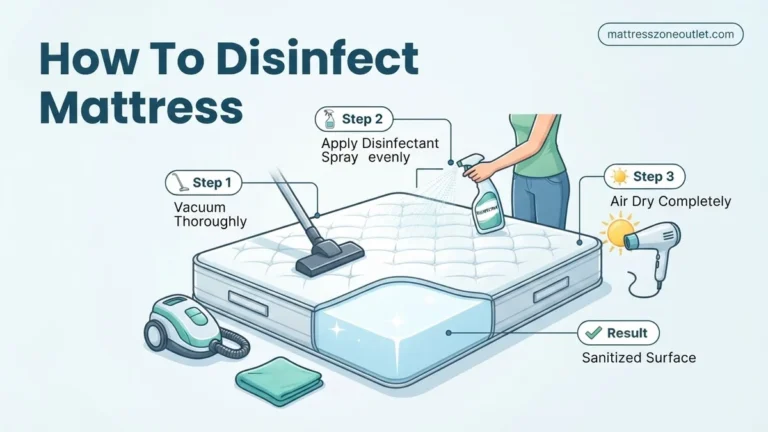
Instructions: Begin by completely stripping away all sheets, pillowcases, mattress protectors, and blankets. Throw your bedding into the washing machine on a hot cycle to eliminate dust mites and allergens. Next, attach the upholstery tool to your vacuum cleaner. Meticulously vacuum the entire surface of the mattress, paying special attention to seams, tufts, and crevices where dead skin cells, pet hair, and dust love to hide. Make overlapping passes horizontally and vertically to ensure zero missed spots.
Pro Tip: Never skip the vacuuming step, as rubbing liquid cleaners into a dusty mattress will only create stubborn mud spots that are much harder to remove.
Step 2: Identify and Map Your Stains
What you need: Good lighting, a notepad or phone to take reference photos.
Instructions: Examine your mattress under bright natural light or a flashlight to identify the exact types of discoloration you are dealing with. Different blemishes require tailored natural solutions; for instance, yellow sweat rings respond differently than protein-based blood or food spills. Map out the location of each blemish so you can treat them individually rather than soaking the entire mattress uniformly, which can lead to mold growth from trapped moisture.
Pro Tip: Take a photo of the mattress before you begin treating it so you can accurately track your progress and locate faint spots after the surface dries.
Step 3: Mix the Miracle Enzyme Spray
What you need: 8 ounces of 3 percent hydrogen peroxide, 3 tablespoons of baking soda, 1 drop of liquid dish soap, and a clean spray bottle.
Instructions: Pour the hydrogen peroxide into the clean spray bottle first. Carefully add the 3 tablespoons of baking soda and swirl the bottle gently until the powder completely dissolves into the liquid. Finally, add a single drop of liquid dish soap to help break down grease and surface tension. Do not shake the bottle too violently, as the chemical reaction between the peroxide and baking soda creates gentle effervescence that needs room to breathe.
Pro Tip: Mix this solution right before you plan to use it, because hydrogen peroxide loses its potency and effectiveness quickly when exposed to light and air.
Step 4: Target Sweat Rings and General Discoloration
What you need: Your freshly mixed hydrogen peroxide spray, a clean white microfiber cloth.
Instructions: Lightly mist the DIY cleaning spray directly over yellow sweat stains and overall discoloration. Avoid drenching the fabric; you want the surface damp, not soaked through to the internal padding. Let the solution sit undisturbed for 5 to 10 minutes. You will notice gentle bubbling as it lifts organic compounds from the fabric fibers. Take your clean white microfiber cloth and gently blot the area—never rub—to lift the dissolved grime away from the mattress surface.
Pro Tip: Always use a plain white cloth so you do not accidentally transfer colorful dyes from a patterned rag onto your damp mattress fabric.
Step 5: Erase Protein Stains Like Blood and Urine
What you need: A paste made from 2 tablespoons of baking soda and 1 tablespoon of cold water, a soft-bristled toothbrush.
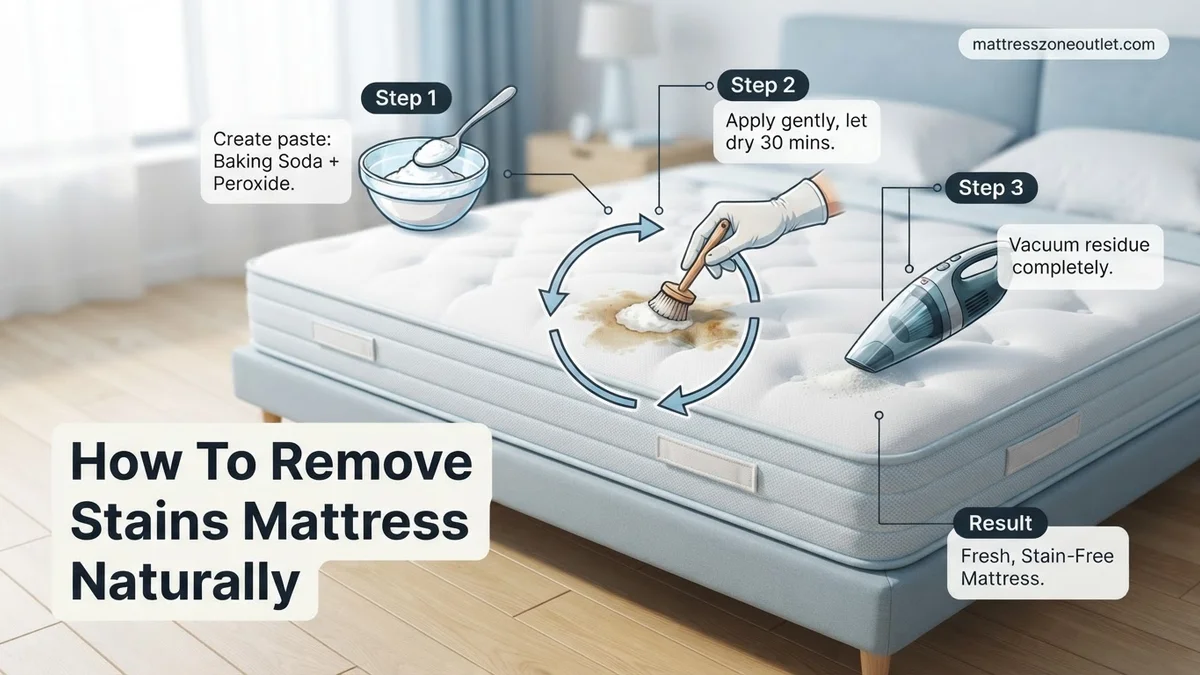
Instructions: For stubborn protein-based blemishes such as blood, urine, or vomit, mix a thick paste using baking soda and cold water. Apply a generous layer of this paste directly over the problem area. Using a soft-bristled toothbrush, gently massage the paste into the fabric fibers using circular motions. Let the treatment sit for 30 minutes. The baking soda will absorb the organic matter and naturally deodorize the spot.
Pro Tip: Always use cold water for protein stains. Warm or hot water will actually cook the proteins, permanently bonding them to the mattress fibers.
Step 6: Apply the Whole-Bed Deodorizing Baking Soda Bath
What you need: 1 to 2 boxes of plain baking soda, optional 10 to 15 drops of your favorite essential oil (like lavender or eucalyptus).
Instructions: If you are using essential oils for fragrance, mix them into the dry baking soda in a bowl first. Next, liberally sift the baking soda across the entire top surface of the mattress. Use a fine-mesh sieve or flour sifter to distribute it evenly. Gently work the powder into the fabric using a soft brush or your gloved hand. Leave the baking soda blanket on the mattress for a minimum of 4 to 8 hours—or ideally, let it sit out all day while you are away.
Pro Tip: Position your mattress near a sunny, open window or place a standing fan blowing across the room to accelerate the deodorizing and drying process.
Step 7: Final Vacuuming and Sun Exposure
What you need: Vacuum cleaner with a clean brush attachment.
Instructions: Once the baking soda has had ample time to absorb remaining moisture, body oils, and trapped odors, take your vacuum cleaner and meticulously sweep up every trace of powder. Make multiple slow passes across the top and sides of the mattress until the fabric feels completely dry and clean to the touch. If weather permits, let sunlight stream onto the bed for a couple of hours, as UV rays offer natural antibacterial and disinfecting properties.
Pro Tip: Consider investing in a breathable, waterproof mattress protector after this deep clean to prevent future spills from penetrating the fabric.
✅ Final Checklist
- All bedding has been thoroughly washed in hot water and dried.
- Every individual stain has been successfully treated and blotted away.
- The entire mattress surface has been vacuumed free of all baking soda residue.
- The mattress is 100 percent dry to the touch before remaking the bed.
- A clean, protective mattress cover has been fitted over the fresh surface.
Important Notes:
- Never saturate a memory foam mattress with excessive liquid, as trapped moisture inside dense foam takes days to dry and invites mold growth.
- Seek professional upholstery cleaning services if you encounter extensive mold infestations or persistent biohazard contamination.
- Estimated time: 30 minutes of active work time, plus 4 to 8 hours of drying and resting time. Estimated cost: Under $10 using common household ingredients.
How to Fix Sweat and General Discoloration Using Baking Soda
Yellow sweat stains and general dinginess are the most common issues you will face when refreshing an older mattress. Baking soda acts as a powerful, natural deodorizer and mild abrasive that gently lifts deep-seated body oils from fabric surfaces without soaking the core.
The Dry Baking Soda Refresh Method
- Strip all bedding and wash your sheets in hot water to eliminate trapped allergens.
- Generously sprinkle a full box of plain baking soda evenly across the entire surface of your mattress.
- Allow the powder to sit undisturbed for a minimum of 4 to 8 hours, or ideally overnight, to absorb trapped moisture and odors.
- Vacuum the residue thoroughly using the upholstery attachment of your vacuum cleaner.
Targeting Persistent Yellow Sweat Rings
If stubborn yellow sweat rings remain after the dry powder treatment, mix a paste of one-part baking soda, one-part hydrogen peroxide, and a few drops of liquid dish soap. Dab the mixture lightly onto the discolored ring, let it sit for 30 minutes, and blot away the residue with a clean, damp microfiber cloth.
Step-by-Step Guide to Removing Tough Urine, Blood, and Food Stains Naturally
Different stains require targeted natural solutions to break down proteins and oils without damaging delicate memory foam or innerspring fibers. According to textile conservation experts, treating specific stains incorrectly can permanently set them into the fabric.
Urine and Pet Stains
Urine stains require an enzymatic breakdown approach to neutralize uric acid crystals. Follow these steps for best results:
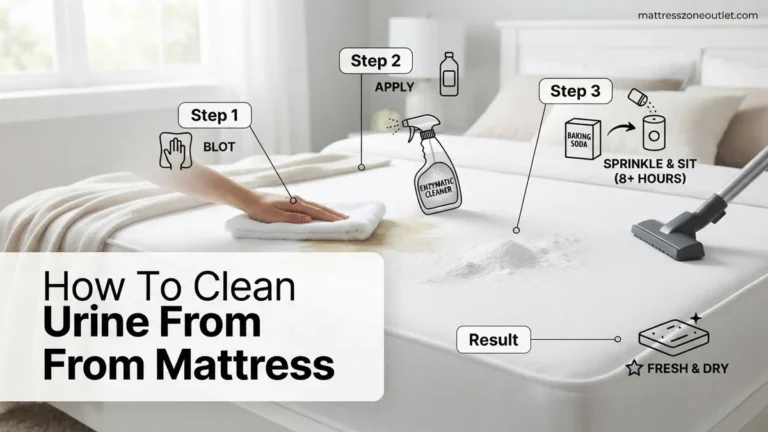
- Blot up any excess liquid immediately using clean, dry microfiber towels, avoiding rubbing which pushes moisture deeper.
- Mix a solution of 8 ounces of 3% hydrogen peroxide, 3 tablespoons of baking soda, and a single drop of liquid dish soap.
- Pour the mixture into a spray bottle and lightly mist the affected area until damp, ensuring the liquid does not soak through to the inner coils.
- Allow the solution to sit and fizz for 10 to 15 minutes as it lifts the proteins and organic compounds.
- Blot the area firmly with a dry towel to extract the dissolved residue and air dry completely.
Blood Stains
Blood is a protein-based stain that cooks and sets permanently when exposed to hot water. Use this cold-temperature method instead:
- Combine 1/2 cup of cornstarch, 1 tablespoon of baking soda, and 1/4 cup of cold hydrogen peroxide to form a thick paste.
- Apply the paste directly to the blood stain using a soft-bristled brush, working it gently into the surface fibers.
- Leave the paste on the mattress for 30 minutes to let the peroxide oxidize the hemoglobin.
- Scrape away the dried crust with a plastic spatula or spoon.
- Vacuum the remaining powder and wipe the spot with a cold, damp cloth.
Food and Drink Stains
Coffee, wine, and food spills introduce tannins and oils that respond best to acid-neutralization techniques:
- Blot the liquid spill thoroughly to remove as much surface pigment as possible.
- Create a 1:1 solution of white vinegar and cold water in a clean spray bottle.
- Mist the stain lightly and blot from the outer edges inward to prevent the ring from spreading.
- Cover the damp area with a thick layer of plain baking soda to absorb residual moisture and odors overnight.
- Vacuum the area thoroughly the next morning using an upholstery attachment.
What If It Still Doesn’t Work and How to Properly Dry Your Mattress
Stubborn stains sometimes require secondary treatments or professional intervention if they penetrate deep into the core layers. Consider these fallback steps if your initial natural cleaning attempt falls short:
- Repeat the targeted spot treatment using a slightly higher concentration of hydrogen peroxide, but limit dwell time to 5 minutes to prevent fabric bleaching.
- Accelerate the drying process by pointing a oscillating fan directly at the mattress or using a hair dryer on a cool setting. Proper drying prevents mold growth, which thrives in damp foam environments within 24 to 48 hours.
- Apply a specialized commercial bio-enzymatic cleaner if organic odors persist after natural treatment.
- Hire a certified professional mattress cleaning service for deep extraction if stains cover more than 25 percent of the surface area. Professional cleaning typically ranges from $100 to $250 depending on mattress size.
Conclusion
Removing mattress stains naturally protects both your indoor air quality and the structural integrity of your sleep surface. By targeting specific spills with appropriate natural agents like baking soda, hydrogen peroxide, and vinegar, you can restore your bed efficiently. According to verified research and textile care experts from the International Sleep Products Association, regular preventative maintenance and immediate spill response remain the most effective ways to extend mattress lifespan in 2026. As an actionable next step, invest in a waterproof, breathable mattress protector today to shield your cleaned surface from future accidents.
❓ Frequently Asked Questions
What is the best natural cleaner for a yellow sweat stain on a mattress?
A mixture of hydrogen peroxide, baking soda, and a drop of liquid dish soap works exceptionally well. Spray the solution onto the stain, let it fizz for 10 minutes, and blot with a clean damp cloth.
How do you get old blood stains out of a mattress naturally?
Combine one-half cup of cornstarch or baking soda, one-fourth cup of hydrogen peroxide, and a tablespoon of salt into a paste. Apply it to the dried blood stain, let it dry completely, and then scrape or vacuum the residue away.
Can vinegar ruin a memory foam mattress?
Excessive moisture can damage memory foam core materials. While white vinegar is great for spot-cleaning fabric covers, you should apply it sparingly using a cloth rather than soaking the foam.
How do you remove urine odor and stains naturally?
Spray the affected area with a 1:1 mixture of white water and vinegar, blot dry, and then cover the damp spot generously with baking soda. Vacuum up the dried baking soda after several hours to neutralize remaining odors.
Is it safe to vacuum baking soda off a mattress?
Yes, using the upholstery attachment on your vacuum cleaner is the safest and most efficient way to remove dried baking soda after a treatment.
How long does a mattress take to dry after natural cleaning?
Depending on the humidity and amount of liquid used, a mattress typically takes between 2 to 6 hours to dry completely. Always confirm it is fully dry before putting sheets back on.