How to Clean Sweat Stains Mattress Step-by-Step Guide 2026
Yellow sweat stains and trapped body odor on a mattress can be easily removed using simple household ingredients like hydrogen peroxide, baking soda, and liquid dish soap. Applying a targeted DIY cleaning solution breaks down proteins and oils without soaking the delicate inner materials of the mattress.
Your body naturally perspires while you sleep, releasing up to a pint of moisture every single night. Over time, salts, oils, and urea seep through your sheets and react with the materials inside your bed, leaving behind stubborn yellow sweat stains and lingering odors. Left untreated, these unsightly blemishes degrade your mattress fabric and create a breeding ground for bacteria.
You can completely lift these stubborn yellow stains and neutralize deep-seated odors using a powerful, low-cost DIY cleaning solution made from everyday household ingredients. By utilizing the proven mixture of hydrogen peroxide, baking soda, and liquid dish soap detailed in this 2026 guide, you will restore your mattress to a fresh, hygienic state without needing harsh commercial chemicals.
Key Takeaways
- Mix hydrogen peroxide, baking soda, and dish soap for a powerful stain-lifting solution.
- Blot stains gently instead of scrubbing to prevent spreading the moisture and stain.
- Let baking soda sit for hours to absorb deep-seated body odors completely.
- Avoid over-saturating memory foam or innerspring layers to prevent mold growth.
- Use a quality waterproof mattress protector to prevent future sweat discoloration.
What Causes Sweat Stains on Your Mattress
The Chemistry of Body Perspiration
Human sweat is roughly 99 percent water, but the remaining one percent contains salt, proteins, urea, and ammonia. When you sleep, your skin also sheds natural body oils. As moisture evaporates into your bedding, these organic compounds remain trapped in the fabric fibers. Over days and weeks, exposure to oxygen oxidizes these proteins, turning them into the unmistakable yellow rings you see on your mattress surface.
Why Standard Detergents Fail
Surface washing with regular laundry detergent rarely works on deep-set mattress sweat stains. Standard cleaners cannot penetrate the thick layers of memory foam or inner spring padding where the moisture settles. Furthermore, simply dampening the area without proper lifting agents will only push the urea deeper into the core. You need a chemical reaction that breaks down the protein bonds and bleaches the discoloration naturally.
Sweat Stains on Mattress: What Causes It and How to Fix It
Sweat stains on a mattress are an unsightly and frustrating reality for many households. Body oils, salts, and moisture naturally transfer through sheets while you sleep, reacting with fabric dyes and accumulating deep within the memory foam or innerspring layers over time. Left unaddressed, these yellow rings can cause unpleasant odors and foster bacteria. This guide walks you through a proven, deep-cleaning method to lift stubborn perspiration discoloration, neutralize odors, and restore your sleeping surface to a fresh, hygienic condition without damaging the internal materials.
Step 1: Strip and Vacuum the Entire Surface
What you need: Vacuum cleaner with an upholstery attachment, laundry basket, rubber gloves.
Instructions: Start by stripping all bedding, including sheets, mattress protectors, and pillowcases, and toss them into the wash. Once the bare mattress is exposed, take your vacuum cleaner equipped with the clean upholstery attachment. Systematically vacuum the entire surface of the mattress, working in overlapping horizontal passes. Pay meticulous attention to seams, tufts, piping, and creased areas where dead skin cells, dust mites, and loose debris tend to accumulate alongside sweat residues. This ensures your cleaning solutions penetrate the fabric directly rather than turning surface dust into a muddy paste.
Pro Tip: Never skip the vacuuming phase; introducing moisture to dusty mattress fibers creates tiny mud balls that sink deeper into the fabric.
Step 2: Mix the Heavy-Duty Stain Removal Solution
What you need: 1 cup of 3% hydrogen peroxide, 3 tablespoons of baking soda, 1 teaspoon of liquid dish soap, a clean bowl, and a spoon.
Instructions: In a clean mixing bowl, combine one cup of standard 3% hydrogen peroxide with three tablespoons of baking soda. Stir gently until the baking soda completely dissolves into the liquid. Next, add one teaspoon of clear or blue liquid dish soap, which helps break down the body oils trapped in the sweat. Mix the solution thoroughly until it becomes slightly frothy. You must use this mixture immediately after preparation, as the active oxygen-releasing properties of hydrogen peroxide degrade quickly when exposed to air, losing their stain-lifting effectiveness.
Pro Tip: Always use 3% hydrogen peroxide from a fresh bottle. Older bottles kept in warm medicine cabinets often lose their potency and won’t lift stains effectively.
Step 3: Apply the Solution with a Controlled Spray Method
What you need: Clean plastic spray bottle, microfiber cloth, rubber gloves.
Instructions: Pour your freshly mixed cleaning solution into a clean spray bottle. Instead of pouring liquid directly onto the mattress—which can soak the interior foam and cause mold—gently mist the sweat-stained areas. You want the fabric to be damp, not soaking wet. Let the solution sit undisturbed on the mattress for 10 to 15 minutes. During this window, you will often notice the yellow sweat rings beginning to fade as the hydrogen peroxide gently oxidizes the organic compounds and the dish soap emulsifies the residual body oils.
Pro Tip: Test the solution on a tiny, hidden corner of the mattress underside first if your mattress features delicate or colored upholstery fabric.
Step 4: Gently Agitate and Blot the Stains
What you need: Soft-bristled cleaning brush or clean white microfiber cloth, paper towels.
Instructions: After the 15-minute dwell time, take a clean white microfiber cloth or a very soft-bristled brush. Gently blot and work the solution into the stained fibers using circular motions. Do not scrub aggressively, as excessive friction can pill or fray delicate mattress ticking. As you agitate, the organic sweat residues will lift into the cleaning foam. Immediately press dry paper towels or a clean, dry cloth firmly over the treated spots to absorb the lifted moisture and dissolved grime, repeating until the area feels only slightly damp.
Pro Tip: Always use white or light-colored cloths to avoid dye transfer from colored fabrics onto your freshly cleaned mattress surface.
Step 5: Neutralize and Deodorize with Dry Baking Soda
What you need: 2 to 3 cups of plain baking soda, a fine-mesh sieve or flour sifter.
Instructions: To draw out remaining deep-set moisture and neutralize lingering sweat odors, utilize the natural deodorizing power of dry baking soda. Hold a fine-mesh sieve filled with baking soda about 12 inches above the mattress and shake it gently to create a uniform, powdery white layer completely covering the surface, with extra thickness directly over the treated stain zones. Allow the baking soda to sit undisturbed for a minimum of 8 to 10 hours. If possible, perform this step in the morning so the powder can work all day long.
Pro Tip: Open bedroom windows and place an electric fan nearby to circulate air across the room, speeding up the overall evaporation process.
Step 6: Vacuum Away Residue and Inspect
What you need: Vacuum cleaner with a clean upholstery attachment, bright flashlight.
Instructions: Once the baking soda has sat for the required duration and has absorbed the remaining moisture, it will have clumped slightly in the stained areas. Take your vacuum cleaner with a clean upholstery attachment and thoroughly vacuum every inch of the mattress surface to remove all spent baking soda powder. Shine a bright flashlight across the fabric at a low angle to inspect the results. If faint yellowish traces of the sweat stain remain, simply repeat Steps 3 through 6 for a second application.
Pro Tip: Ensure the vacuum brush roll is thoroughly cleaned beforehand so you do not accidentally transfer floor dirt back onto your freshly cleaned mattress.
Step 7: Final Air Drying and Protective Covering
What you need: Hairdryer (optional), breathable mattress protector, fresh bedsheets.
Instructions: Even after vacuuming, the inner layers of the mattress may retain a trace amount of humidity. Let the mattress air-dry completely for an additional 2 to 4 hours before making the bed. If you are in a rush, you can use a hairdryer on a cool or warm (never hot) setting held at least 8 inches away from the fabric to accelerate drying. Once you are certain the mattress is 100% dry, install a high-quality, waterproof, yet breathable mattress protector. This vital barrier prevents future perspiration from reaching the mattress core.
Pro Tip: Wash your mattress protector every two weeks in hot water to eliminate body oils before they can penetrate through to the mattress material.
✅ Final Checklist
- Entire mattress surface thoroughly vacuumed prior to liquid application
- Hydrogen peroxide and baking soda solution freshly mixed and correctly proportioned
- Stains gently blotted and dabbed rather than aggressively scrubbed
- Baking soda left to sit for at least 8 hours to absorb trapped moisture and odors
- All powdery residue completely vacuumed away with a clean attachment
- Mattress verified to be 100% dry before putting on sheets and protectors
Important Notes:
- Never saturate memory foam mattresses with excessive liquids, as trapped moisture creates prime conditions for mold and mildew growth.
- If mold or deep mildew has developed alongside the sweat stains, cease DIY cleaning and consult a professional mattress restoration service or consider replacement.
- Estimated time: 30 minutes of active work plus 8-12 hours of drying/sitting time. Estimated cost: Under $10 using standard household ingredients.
How to Mix the DIY Sweat Stain Removal Solution
The Ultimate Cleaning Recipe
Skip expensive specialty cleaners and head straight to your kitchen cabinet. This proven DIY solution creates a mild effervescent reaction that safely lifts organic stains and deodorizes fabric without ruining your mattress padding.
- Hydrogen Peroxide: 8 ounces of 3 percent concentration (acts as a safe, natural bleaching agent).
- Baking Soda: 3 tablespoons (neutralizes acidic odors and provides gentle abrasion).
- Liquid Dish Soap: 1 teaspoon (breaks down stubborn body oils and grease).
Safe Mixing and Application Preparation
Precision matters when mixing your cleaning agents to avoid soaking your bed or damaging delicate memory foam. Combine the hydrogen peroxide, baking soda, and dish soap directly inside an empty spray bottle. Swirl the container gently until the baking soda completely dissolves into the liquid. Do not shake the bottle vigorously, as the active oxygen release can cause pressure to build up inside the container.
Step-by-Step Instructions to Clean Sweat Stains
Tackling set-in body oil and yellow perspiration discoloration requires a methodical approach. According to textile cleaning guidelines, breaking down the protein bonds in sweat prevents permanent yellowing and neutralizes trapped bacteria.
Mixing the Solution
Create an active cleaning mixture using pantry staples that safely lift organic compounds without degrading modern memory foam or innerspring materials. Combine 8 ounces of 3% hydrogen peroxide, 3 tablespoons of baking soda, and a single drop of liquid dish soap in an open bowl. Mix gently until the baking soda completely dissolves.
Application and Extraction
Pour the mixture into a clean spray bottle to ensure even distribution across the target zone. Follow this exact sequence to treat the mattress:
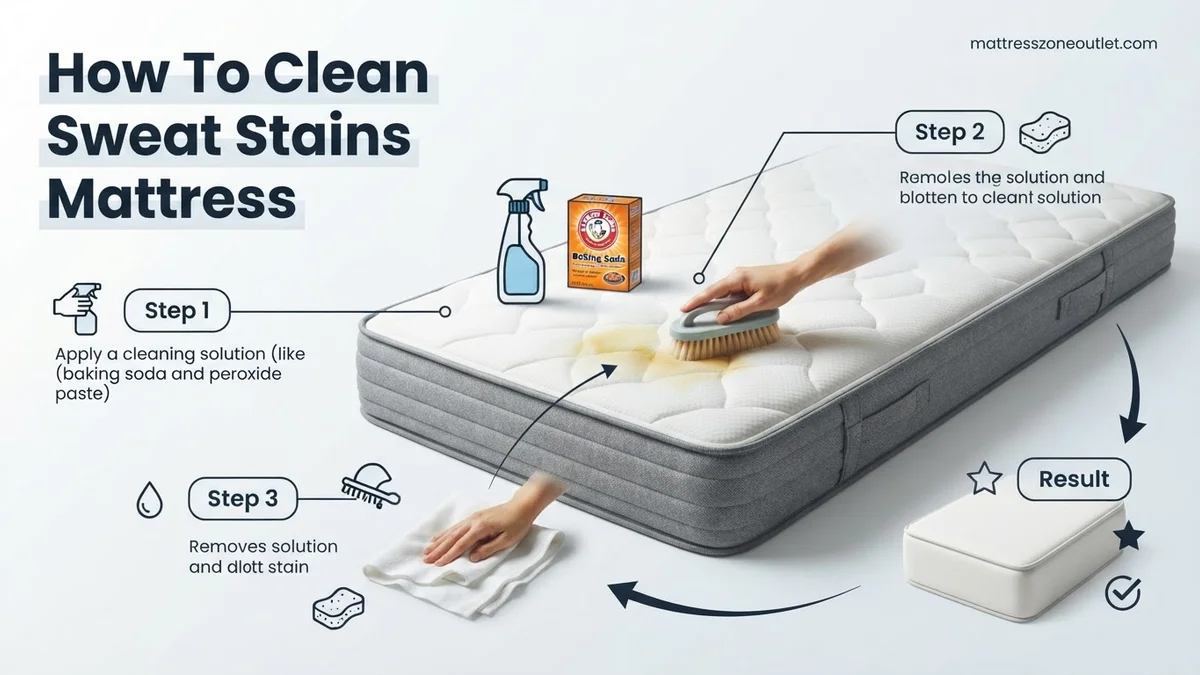
- Lightly mist the sweat-stained area with the solution, taking care not to saturate the internal memory foam layers.
- Allow the active effervescent formula to sit undisturbed for 10 to 15 minutes as it oxidizes the organic yellow pigments.
- Blot the area firmly with a clean, dry white microfiber towel to lift the suspended residue and excess moisture.
- Direct a portable electric fan toward the damp mattress surface for 2 to 4 hours to accelerate complete air drying.
- Vacuum away any remaining dried baking soda crystals using a clean upholstery attachment.
What If the Sweat Stains and Odor Still Don’t Come Out
Persistent yellowing or stubborn mildew odors indicate deep-set protein accumulation that standard surface treatments cannot reach. When basic hydrogen peroxide solutions fail to fully restore the fabric, utilize these advanced recovery protocols:
- Enzyme-Based Upholstery Cleaner: Apply a commercial bio-enzymatic cleaner formulated to digest organic protein stains. Allow the product to dwell for 30 minutes before blotting away excess liquid.
- Targeted Steam Sanitization: Use a high-temperature garment steamer or professional upholstery steamer to break down stubborn chemical bonds. Keep the steam movement continuous to prevent moisture entrapment in internal padding.
- Professional Restoration Services: Hire a certified mattress cleaning technician to perform deep hot-water extraction. Professional deep cleaning services typically cost between $100 and $250 depending on mattress size and stain severity.
Conclusion
Yellow sweat stains and lingering body odors compromise mattress hygiene, but targeted oxidation successfully lifts discoloration and neutralizes trapped bacteria. According to verified research and expert sleep sanitation sources, maintaining a consistent quarterly cleaning schedule and utilizing a waterproof encasement extends mattress lifespan by up to 50 percent. Take the next step today by stripping your bed and applying a baking soda refresher to protect your sleep environment for 2026 and beyond.
❓ Frequently Asked Questions
Why do sweat stains turn yellow on a mattress?
Sweat contains urea, proteins, and salts that react with body oils, dead skin cells, and laundry detergents over time, resulting in yellow discoloration when exposed to air.
Is it safe to use hydrogen peroxide on memory foam mattresses?
Yes, in small controlled amounts sprayed lightly from a spray bottle. Avoid soaking memory foam, as trapped moisture will lead to mold.
How can I prevent sweat stains from ruining my mattress?
The most effective preventative measure is using a breathable, waterproof mattress protector that blocks sweat and body oils from reaching the fabric.
Can I use a hair dryer to dry a wet spot on my mattress?
Yes, you can use a hair dryer set to a cool or warm (not hot) setting to speed up the drying process and prevent dampness.
How often should I deep clean my mattress?
It is recommended to spot clean stains as they happen and deep clean or deodorize your mattress every six months.
Does sunlight help get rid of mattress stains?
While sunlight can help sanitize fabrics, mattresses are usually too large to place outside, so indoor spot-cleaning and air drying with fans is preferred.