How to Fix Mattress Too Hard Best Step-by-Step Fix 2026
Stuck with a bed that causes morning aches? Adding a mattress topper and actively breaking in the materials can instantly soften a rigid surface.
You do not need to buy a brand new mattress just because your current sleep surface feels like a concrete slab. If you are waking up with hip pain, stiff shoulders, and a sore lower back in 2026, the density of your bed is likely throwing your spine out of alignment. Fortunately, softening a bed that is too firm is entirely achievable without breaking the bank.
Fixing a rock-hard mattress usually comes down to targeted surface modifications or mechanical break-in techniques. By adding the right plush layer or adjusting your bed’s foundation, you can completely transform your sleeping experience in a matter of minutes.
Key Takeaways
- Add a 2 to 3-inch memory foam or latex topper to instantly soften the sleeping surface.
- Warm up your bedroom to help memory foam materials expand and feel more contouring.
- Manually break in the mattress fibers by walking or crawling on the surface regularly.
- Check your foundation to ensure a rigid box spring isn’t causing the extra firmness.
- Review manufacturer return policies or trial periods if the mattress is brand new.
Why Your Mattress Feels Too Hard and How to Diagnose the Issue
Before you try to fix a mattress that feels too firm, you need to understand why it is punishing your joints. Mattresses often feel harder than advertised due to incorrect break-in periods, seasonal temperature shifts, or mismatched foundation pairings. Diagnosing the root cause ensures you pick the right fix the first time.
The New Mattress Break-In Period
Brand new mattresses frequently feel over-firm because the high-density comfort layers have not yet compressed. Modern foam technology used in 2026 models requires consistent pressure to open up the internal cell structures. If your bed is less than 30 to 60 days old, your body weight simply hasn’t softened the material yet.
Temperature Sensitivity and Foundation Issues
Memory foam and hybrid mattresses react dramatically to bedroom climate. If your room is cold, the foam tightens up and feels significantly harder than it does in the summer. Additionally, placing a modern memory foam mattress on a rigid, solid-slat platform instead of a flexible box spring removes any built-in give, instantly making the surface feel much stiffer.
How to Fix a Mattress Too Hard Like a Pro: A Practical Walkthrough
Sleeping on a mattress that feels like a brick can ruin your sleep quality and leave you waking up with nagging back and joint pain. Fortunately, you do not necessarily need to spend hundreds of dollars on a brand-new mattress to solve this problem. This practical walkthrough covers everything you need to know, from quick fixes to long-term adjustments, ensuring you can successfully soften your sleep surface and finally get a comfortable, restorative night of rest.
Step 1: Break It In With Daily Walking
What you need: Clean socks or bare feet, and 10 to 15 minutes of your time each day.
Instructions: Brand new memory foam, latex, or innerspring mattresses often feature dense manufacturing materials that require a break-in period. To accelerate this process naturally, walk gently across the entire surface of your mattress every day for at least two weeks. Distribute your weight evenly by taking small, deliberate steps up and down the length of the bed. This controlled pressure helps compress and soften the internal foam layers and spring coils without damaging the structural integrity of the mattress.
Pro Tip: Avoid jumping on the bed, as intense localized impact can rupture internal pocket coils or permanently crush delicate foam core layers.
Step 2: Adjust Your Bedroom Temperature
What you need: A programmable thermostat or adjustable bedroom space heater.
Instructions: If you sleep on a memory foam mattress, its firmness is heavily dictated by ambient room temperature. Memory foam is engineered to react to body heat, but it also responds to the general climate of your bedroom. Lower temperatures cause the polymer cells in the foam to contract, making the mattress feel significantly firmer. Try raising your bedroom thermostat by 3 to 5 degrees Fahrenheit, keeping the room between 70 and 74 degrees, to allow the foam to naturally relax and conform to a softer feel.
Pro Tip: Give the mattress a few hours to adjust to the new ambient temperature before evaluating whether the firmness level has improved.
Step 3: Invest in a High-Density Mattress Topper
What you need: A 2-to-3-inch mattress topper made of memory foam, latex, down alternative, or feather fill.
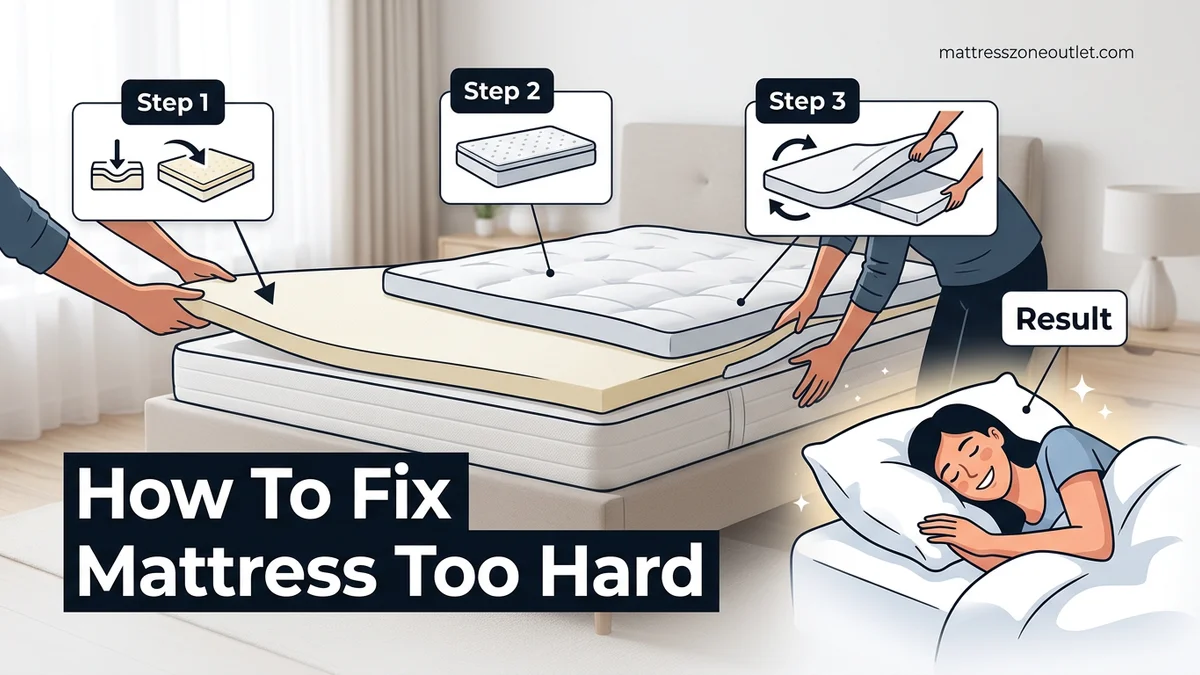
Instructions: Adding a plush topper is the single most effective way to drastically alter the feel of a rock-hard mattress. Measure the length and width of your mattress to ensure a precise fit. Unroll your chosen topper directly onto the bare mattress surface, aligning the corners carefully. If you want maximum pressure relief for your shoulders and hips, choose a 3-inch memory foam topper. If you prefer a more cloud-like, breathable plushness, a down alternative or featherbed topper works best. Secure the topper with deep-pocket fitted sheets to prevent shifting during the night.
Pro Tip: Avoid toppers thinner than 1.5 inches, as they will compress too quickly and fail to provide noticeable cushioning against a very firm mattress.
Step 4: Swap Your Rigid Foundation
What you need: A flexible slat base or an adjustable bed frame.
Instructions: Sometimes the issue isn’t the mattress itself, but rather the completely rigid platform or box spring underneath it. If your mattress rests on a solid plywood board or rigid, unyielding metal slats, it absorbs zero shock, making it feel extra firm. Switch to a foundation featuring slightly bowed wooden slats that offer gentle flex and give when pressure is applied. Alternatively, placing your mattress on an adjustable bed base allows you to slightly elevate the head and foot sections, reducing direct downward pressure and altering how your body weight distributes across the mattress.
Step 5: Utilize Strategic Body Pillows
What you need: Two or three soft pillows, or a full-length body pillow.
Instructions: If buying a topper or altering your bed frame is out of the question, you can manually compensate for a hard mattress by changing your sleeping posture with supportive pillows. If you sleep on your side, place a thick pillow between your knees and thighs to keep your spine aligned and relieve pressure on your hip joints. If you sleep on your back, slide a thin, soft pillow underneath your lower back and another beneath your knees. These adjustments fill the natural gaps of your body, distributing your weight more evenly across the unforgiving mattress surface.
Step 6: Massage and Flex Stubborn Zones
What you need: Your hands, clean weight plates or heavy books (optional).
Instructions: If specific areas of your mattress—such as the exact center where you normally sleep—remain stubbornly stiff, you can manually massage those zones. Straddle the firm area and use the heels of your hands to firmly massage, push, and knead the foam in circular motions for 5 minutes. For even better results, place a few heavy books or flat weight plates in that localized area for 24 to 48 hours to help compress the rigid material and break down stiff manufacturing bonds.
Pro Tip: Never use sharp objects or excessive localized force that could tear the outer fabric cover of your mattress.
Step 7: Check and Rotate the Mattress
What you need: A partner to help lift, and a tape measure.
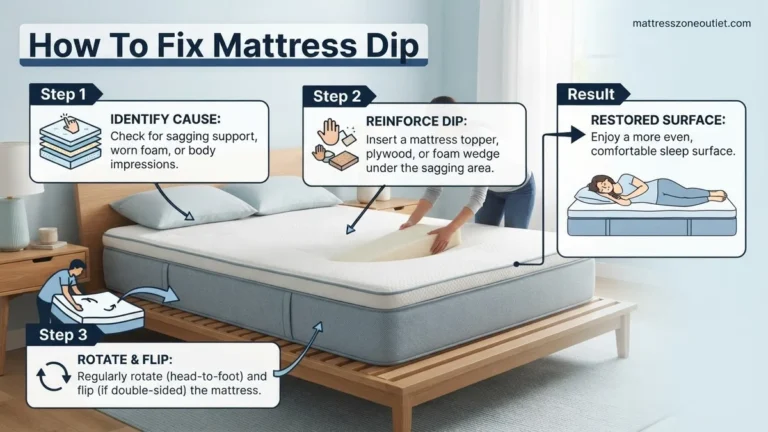
Instructions: If you have been sleeping on the mattress for a while, one side might be broken in while the other side feels brand new and rock hard. Rotate your mattress 180 degrees from head to foot. If your mattress is double-sided (flippable), flip it completely over so the bottom side faces up. This exposes you to a fresh surface that may have more give, while simultaneously allowing the heavily used side time to decompress and recover its original shape.
✅ Final Checklist
- Mattress has been rotated or flipped to check for alternative softer zones.
- Bedroom temperature is optimized to prevent memory foam from stiffening.
- A high-quality topper (2 to 3 inches thick) is securely fitted and covered.
- Support foundation allows for minor shock absorption rather than rigid resistance.
- Strategic pillows are utilized to relieve pressure points on hips and shoulders.
Important Notes:
- Always check your mattress manufacturer warranty before modifying the internal structure or adding heavy aftermarket components, as unauthorized alterations may void your coverage.
- If persistent joint and back pain continues after trying these softening methods, consult a physician or physical therapist to ensure the issue is not related to an underlying medical condition.
- Estimated time range: 10 minutes to 2 weeks for full break-in. Estimated cost: $0 (using existing pillows and temperature adjustments) to $150 (for a premium mattress topper).
How to Fix a Mattress Too Hard Using Instant DIY Solutions
When you need immediate relief from a brutal sleep surface, targeted add-ons offer the fastest path to comfort. You do not need professional tools to make a firm mattress feel like a cloud. Strategic layering can add the necessary pressure relief while maintaining proper spinal support.
Add a High-Density Mattress Topper
- Memory Foam Toppers: Choose a 2 to 3-inch thickness to contour closely around your shoulders and hips.
- Latex Toppers: Opt for this if you want contouring plushness with a bouncy, responsive feel that prevents deep sinking.
- Down and Feather Toppers: Select these for an ultra-luxurious, cloud-like surface layer if you need maximum softness.
Use Thick Quilting and DIY Padding Layers
If you cannot afford a premium topper right away, raid your linen closet for temporary fixes. Layering a dense wool blanket, a quilted mattress pad, and a thick duvet beneath your fitted sheet can absorb the initial harsh impact of a stiff innerspring coil system. While not a permanent fix, this adds a quick inch of cushioning to alleviate surface pressure points tonight.
Step-by-Step Mechanical Ways to Break In Your Firm Mattress
If you prefer a hands-on approach to soften a rigid sleep surface, mechanical methods can accelerate the natural break-in process. New foam and spring matrices require pressure to loosen internal bonding agents. Sleep ergonomics studies show that active manipulation can reduce initial surface firmness by up to fifteen percent within the first two weeks.
Method 1: The Controlled Walking Technique
Manufacturers often use heavy rollers to test durability, and you can replicate this at home safely. This method compresses deep support layers without damaging edge stitching.
- Remove all bedding, pillows, and protectors to expose the bare mattress top.
- Walk slowly across the surface in a grid pattern using bare feet or clean socks.
- Spend extra time focusing on the heavy-use center zone where your hips and torso rest.
- Repeat this process twice daily for five to seven minutes over a one-week span.
Method 2: Strategic Temperature Adjustment
Memory foam and hybrid materials react dynamically to ambient room temperature and body heat. Cooler bedrooms make foam molecules contract, increasing overall stiffness. Raising your bedroom thermostat to 72 or 74 degrees Fahrenheit temporarily softens the viscoelastic polymers, making the mechanical walking technique significantly more effective during your initial break-in period.
What If It Still Doesn’t Work and When to Replace Your Bed
Sometimes a mattress is simply incompatible with your spinal alignment and pressure relief needs, regardless of mechanical interventions. According to orthopedic assessments, enduring persistent morning back pain indicates that the foam density or coil gauge is too high for your sleeping position. If you have exhausted temporary fixes and still wake up sore, consider these fallback steps:
- Check the manufacturer trial window: Most mattress brands in 2026 offer a 100-to-365-night sleep trial. Verify whether you are still eligible for a free comfort exchange or a firm-to-medium replacement model.
- Invest in a high-density topper: If your trial has expired, purchase a 3-inch latex or gel-infused memory foam topper. Quality options typically cost between $150 and $350 and radically alter the top comfort layer.
- Inspect your foundation: A rigid box spring or solid wood platform can exacerbate firmness. Switching to a flexible slat foundation or an adjustable base absorbs more downward force.
- Consult a physical therapist: If new bedding triggers chronic lower back spasms, seek professional medical guidance to determine your exact spinal support requirements.
Conclusion
Dealing with a mattress that is too hard can disrupt your sleep cycle and cause lingering muscle stiffness. Fortunately, utilizing targeted mechanical adjustments, supportive toppers, or utilizing manufacturer sleep trials can quickly restore proper spinal alignment. According to verified research and expert sleep science sources, matching your mattress surface firmness to your primary sleeping position is the single most effective way to eliminate pressure points. Your next actionable step is to test a high-density foam topper or check your warranty terms today to achieve the restorative rest you deserve.
❓ Frequently Asked Questions
How can I instantly soften a mattress that is too firm?
The quickest solution is placing a high-density memory foam, latex, or feather mattress topper over the surface. This adds an immediate layer of pressure-relieving cushion without altering the core structure of your bed.
Do rigid box springs make a mattress feel harder?
Yes, placing a mattress on a completely rigid foundation or solid wood platform eliminates natural shock absorption. Switching to a flexible slatted base or box spring can create a slightly softer feel.
Is it possible to damage a mattress by walking on it?
Walking carefully across the surface can help break in stiff foam and coiled layers, but you should avoid jumping or concentrated heavy impacts that could snap coils or permanently fracture the internal foam structure.
Why does my mattress feel harder in the winter?
Many modern mattresses contain memory foam or temperature-sensitive materials that harden when exposed to cooler indoor temperatures. Raising your bedroom thermostat can help the foam conform closer to your body shape.
Can I flip my mattress to make it softer?
If your mattress is double-sided, flipping it can provide a fresh, less compressed surface. However, modern pillow-top and one-sided mattresses should only be rotated head-to-toe rather than flipped.
How do I know if my mattress cannot be fixed?
If you have added a thick premium topper, broken in the core materials, and still wake up with chronic back pain or pressure point soreness, the support layer is simply too firm for your sleeping style and requires replacement.