How to Clean Vomit Mattress Step-by-Step Guide 2026
Dealing with vomit on a mattress requires immediate action to prevent deep-seated stains and permanent odors. By scraping away solids and applying natural cleaning agents like baking soda and vinegar, you can completely sanitize the surface.
Cleaning vomit out of a mattress requires immediate action to prevent deep staining and permanent foul odors. You need to remove excess moisture, lift solid matter without pushing it deeper into the fabric, and neutralize stomach acids before they set.
By 2026, modern households have access to advanced enzymatic cleaners and reliable DIY mixtures that break down organic proteins effectively. Tackling this messy job right away saves your mattress from becoming a breeding ground for bacteria and lingering smells.
Key Takeaways
- Act quickly to prevent fluids from soaking into the inner layers.
- Scrape away solid waste gently without pushing it deeper.
- Blot excess liquid instead of rubbing to avoid spreading the stain.
- Use baking soda to effectively draw out strong lingering odors.
- Ensure the mattress dries completely to prevent mold growth.
What Causes Deep Stains and Persistent Odors in a Vomit Mattress
The Chemistry of Stomach Acid and Porous Materials
Stomach acid has a very low pH, typically ranging between 1.5 and 3.5. When vomit hits a mattress, this harsh acid instantly attacks foam, memory foam, or innerspring padding. The liquid quickly seeps through the top fabric layers into the dense core below. As the moisture evaporates, it leaves behind proteins, fats, and color pigments that bond tightly with textile fibers. If you only clean the surface, trapped organic matter decomposes inside the mattress over time, creating that sickening, persistent odor.
Why Standard Detergents Often Fail
Many people reach for standard laundry detergent or hot water to scrub the mess. This approach usually backfires. Hot water actually cooks the proteins in the vomit, causing them to bind permanently to the mattress fibers. Furthermore, using too much water pushes the liquid further down into the memory foam core, making it nearly impossible to dry completely. Without the right enzymatic or acid-neutralizing agents, standard soaps simply mask the smell temporarily instead of breaking down the source.
Mattress Vomit Cleanup Made Easy: Your Essential Action Plan
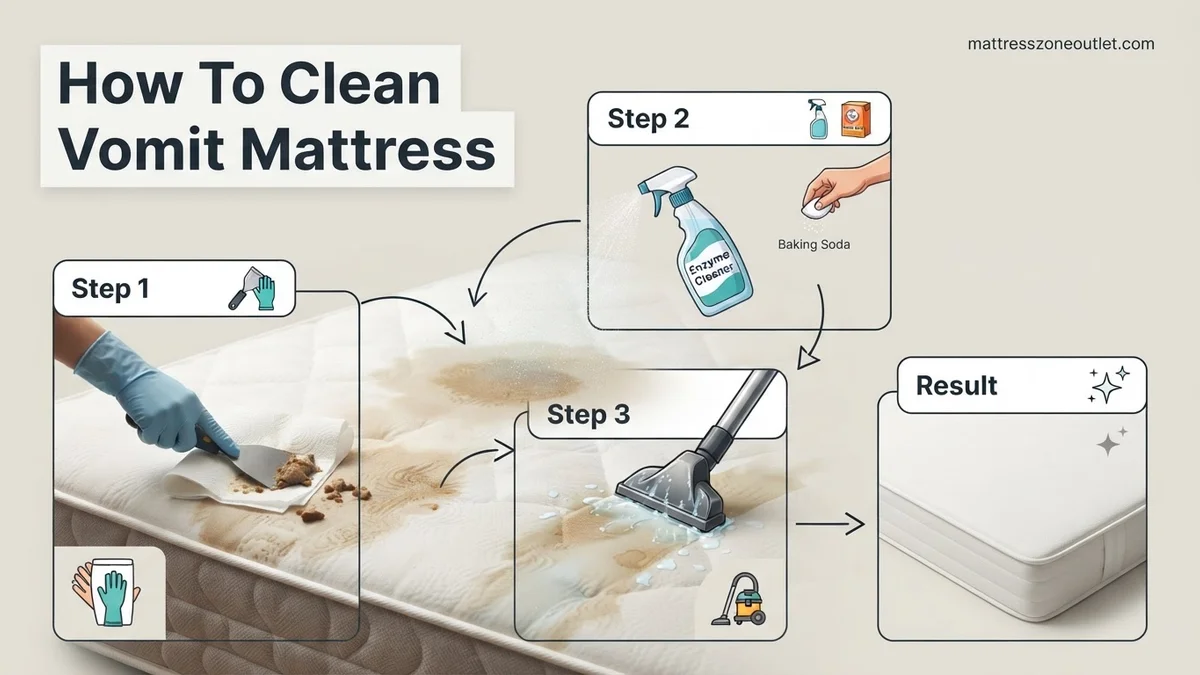
Dealing with vomit on a mattress can feel overwhelming, but acting quickly and methodically will save your mattress and eliminate lingering odors. This comprehensive walkthrough provides a foolproof, multi-stage restoration process using household ingredients to sanitize, deodorize, and dry your mattress safely without causing water damage.
Step 1: Gear Up and Scrape Away Solids
What you need: Heavy-duty rubber gloves, a stiff-bristled brush, a spatula or stiff piece of cardboard, and sealable plastic bags.
Instructions: Put on your rubber gloves immediately to maintain hygiene. Before applying any liquids—which can push moisture deeper into the mattress layers—you must remove all solid matter. Hold a spatula or piece of cardboard at a 45-degree angle and gently scrape the vomit away from the center toward the edge, lifting it off the surface. Carefully deposit the waste into a plastic bag, seal it tightly, and discard it in an outdoor trash bin. Use a dry paper towel to dab up any remaining loose, wet residue without rubbing it into the fabric.
Pro Tip: Never use a vacuum cleaner at this stage, as wet organic matter will ruin the motor and create a terrible, permanent smell inside the vacuum housing.
Step 2: Blot Excess Moisture
What you need: A roll of thick, highly absorbent paper towels or a stack of clean, old white cotton rags.
Instructions: Cover the damp area entirely with a layer of paper towels or rags. Press down firmly with the palms of your hands to absorb as much liquid as possible from the inner foam and batting. Do not scrub or wipe, as this spreads the stain over a wider surface area. Lift the saturated towels, discard them, and repeat this blotting process with fresh towels until pressing down yields virtually no more moisture. Removing excess liquid now drastically shortens the overall drying time and prevents mold growth.
Pro Tip: Always use white or un-dyed paper towels or rags. Colored fabrics can bleed their dyes into the damp mattress fibers, creating an entirely new stain.
Step 3: Apply the Neutralizing Solution
What you need: A spray bottle, 1 cup of white vinegar, 1 cup of warm water, and 1 teaspoon of liquid dish soap.
Instructions: Pour the warm water, white vinegar, and dish soap into the spray bottle and shake gently to combine. Mist the affected area lightly; you want the surface damp, but not soaking wet. The acetic acid in the vinegar neutralizes the alkaline components of the stomach acid, effectively killing bacteria and breaking down protein-based odors. Let the solution sit undisturbed on the mattress surface for 10 to 15 minutes to work its chemical magic.
Pro Tip: Avoid soaking memory foam mattresses. Memory foam retains water like a sponge and takes days to dry, which heavily promotes mold. Use the absolute minimum amount of liquid necessary.
Step 4: Extract the Vinegar Solution
What you need: Clean, dry white towels and a heavy book or weighted object.
Instructions: Take fresh, dry white towels and press them firmly over the treated area to absorb the vinegar mixture and dissolved residue. For deeper extraction, lay a dry towel flat over the spot, place a heavy book on top of it, and step away for 10 minutes to let the weight press the moisture out of the deeper padding layers. Remove the weight and check the towel; if it is damp, repeat with a fresh dry towel until the mattress surface feels only mildly damp to the touch.
Pro Tip: Standing on the towel-covered mattress can help apply even body weight, but ensure your shoes are off and the floor beneath is completely clean.
Step 5: Execute the Baking Soda Deodorizing Treatment
What you need: A full 16-ounce box of plain baking soda and a fine-mesh flour sifter.
Instructions: Pour the baking soda into the sifter and distribute a thick, even layer—about 1/4 inch deep—across the entire affected area and slightly beyond its borders. Baking soda is a natural, highly effective amphoteric compound that neutralizes both acidic and basic odor molecules. Gently pat the baking soda down so it makes maximum contact with the damp mattress fabric. Leave the baking soda undisturbed for a minimum of 8 to 10 hours, or ideally overnight, allowing it to draw out remaining moisture and deep-seated odors.
Pro Tip: Keep pets and children completely away from the bedroom during this phase, as curious pets may try to eat the baking soda or track it through your home.
Step 6: Vacuum and Inspect the Surface
What you need: A vacuum cleaner with a clean upholstery attachment and a soft-bristled brush.
Instructions: Once the baking soda has dried completely and turned into a chalky crust, attach the clean upholstery tool to your vacuum. Slowly vacuum up every trace of the baking soda, working in overlapping grid patterns. After the powder is completely removed, inspect the fabric under bright lighting. Smell the area closely; if a faint sour odor remains, lightly mist the spot with a 50/50 mixture of rubbing alcohol and water, which evaporates quickly and kills lingering odor-causing bacteria without adding deep moisture.
Pro Tip: Wipe down your vacuum’s brush roll and attachment immediately afterward with a disinfectant wipe to prevent lingering bacterial growth inside your vacuum.
Step 7: Accelerate Drying and Air Circulation
What you need: A household electric fan, a hairdryer (set to cool), or a portable dehumidifier.
Instructions: Position an oscillating fan directly facing the cleaned mattress area, running it on high speed. If you have a portable dehumidifier, place it in the bedroom and close the door to draw moisture out of the air and the mattress core simultaneously. Keep the room well-ventilated by cracking a window if weather permits. Ensure the mattress is 100% dry to the touch before you even consider making the bed with sheets, as trapped ambient moisture is an open invitation for black mold.
Pro Tip: Never use a hairdryer on a hot setting for memory foam or synthetic mattress materials, as high heat can melt or permanently warp the foam structure.
✅ Final Checklist
- All solid matter and moisture have been completely removed without rubbing.
- The vinegar treatment successfully neutralized stomach acids and bacteria.
- Baking soda sat for at least 8 hours and was thoroughly vacuumed away.
- The mattress is completely dry throughout its internal padding and surface.
- No lingering odors or visible stains remain on the fabric.
Important Notes:
- Never use harsh chemical bleaches or ammonia on a mattress, as they destroy foam materials and release toxic fumes when mixed with organic waste.
- If the stain covers a massive area, has penetrated deep into a high-end latex or memory foam core, or produces a persistent biological odor after multiple treatments, seek professional mattress cleaning services.
- Estimated time: 30 minutes of active work, plus 8-12 hours of passive drying time. Cost: Under $5 using household supplies.
How to Fix a Vomit Mattress: Step-by-Step Cleaning and Disinfecting
Scraping Solids and Blotting Liquids Safely
Put on rubber gloves immediately before starting the cleanup process.
- Take a stiff piece of cardboard or a blunt spatula to gently lift away any solid matter.
- Work from the outside edges of the mess toward the center to avoid spreading the stain.
- Press dry paper towels or old microfiber cloths firmly onto the wet area to absorb as much liquid as possible.
- Never rub or scrub the spot, because rubbing forces the stomach acid and debris deeper into the padding.
Applying the DIY Cleaning Solution
Once you remove the surface mess, treat the stain with a targeted cleaning mixture. Mix two cups of warm water, one tablespoon of liquid dish soap, and two tablespoons of white vinegar in a spray bottle. Lightly mist the stained area without soaking the mattress. The vinegar neutralizes the acid and breaks down odors, while the dish soap lifts surface oils. Alternatively, for stubborn stains in 2026, use a commercial pet-safe enzymatic cleaner, as these formulas target organic vomit proteins directly.
How to Dry Your Mattress Thoroughly and Prevent Future Damage
Drying a mattress completely is critical to prevent mold growth, which thrives in damp foam and fabric. According to the Environmental Protection Agency (EPA), mold spores can begin colonizing damp indoor surfaces within 24 to 48 hours. Proper airflow and targeted heat acceleration will protect your mattress investment throughout 2026 and beyond.
Accelerating the Drying Process
To speed up evaporation without damaging synthetic or memory foam materials, follow these systematic drying steps:
- Position a portable box fan or oscillating fan directly facing the treated mattress area on its highest speed setting.
- Open nearby windows to cross-ventilate the room and decrease ambient humidity levels.
- Run a dehumidifier in the bedroom to actively pull moisture out of the air and accelerate the mattress drying cycle.
- Use a handheld hair dryer set to the cool or lowest warm setting, keeping it at least 12 inches away from the fabric to prevent scorching synthetic fibers.
Preventing Future Damage
Mattress manufacturers strongly recommend installing a waterproof, breathable mattress protector. Modern 2026 mattress encasements use advanced microscopic pore technology that blocks fluids while allowing air circulation. This physical barrier ensures that future accidents never penetrate the core foam layers, extending the lifespan of your mattress by up to five years.
What If It Still Doesn’t Work: Advanced Odor Removal and Professional Help
If lingering stomach acid odors or deep-set stains persist after standard cleaning, stronger interventions are required. Residual organic matter trapped deep within inner springs or dense memory foam can continue to emit foul odors as it breaks down.
Try these advanced fallback steps if the primary cleaning method fails:
- Apply a specialized enzymatic upholstery cleaner designed to break down remaining organic proteins rather than just masking the scent.
- Rent or purchase a dedicated upholstery steam cleaner with high-heat extraction capabilities to flush out deep-seated residues.
- Hire a certified professional mattress cleaning service. Professional hot-water extraction typically costs between $80 and $150 per mattress and utilizes industrial-grade sanitization equipment.
- Evaluate the mattress age and damage extent; if the structural foam remains saturated and odorous after professional treatment, replacement is the safest health choice.
Conclusion
Cleaning vomit from a mattress requires immediate action, chemical neutralization, and thorough drying to prevent permanent fiber damage and hazardous mold growth. Acting quickly with hydrogen peroxide, baking soda, and strategic ventilation restores a hygienic sleeping surface. According to verified research and expert textile sources, utilizing a waterproof protector remains the single most effective safeguard for long-term mattress maintenance in 2026. Take the next step today by purchasing a high-grade, waterproof mattress encasement to protect your investment permanently.
❓ Frequently Asked Questions
What is the very first thing I should do when cleaning vomit off a mattress?
Remove any solid matter immediately using a spatula or stiff piece of cardboard, being careful not to press the mess further into the mattress fabric. Blot any remaining liquid gently with paper towels.
Can I use dish soap and vinegar to clean a mattress?
Yes, mixing a few drops of mild dish soap, white vinegar, and cool water creates an effective cleaning solution. Lightly mist the stain, blot with a clean cloth, and avoid soaking the mattress.
Why is baking soda so effective for vomit odors?
Baking soda is a natural alkaline substance that neutralizes the acidic components causing the foul smell. Leaving it on the mattress for several hours allows it to absorb trapped moisture and odor molecules.
How do I prevent mold from growing after cleaning?
Moisture trapped inside the mattress can lead to mold, so use fans, open windows, or a hairdryer on a cool setting to dry the area completely. Never put sheets back on until the mattress feels entirely dry.
Should I use an enzymatic cleaner?
Enzymatic cleaners are highly recommended because they break down organic matter and proteins at a chemical level, eliminating both the stain and the source of the odor rather than just masking it.
How can I protect my mattress from future accidents?
Investing in a waterproof, breathable mattress protector creates a reliable barrier against spills, sweat, and vomit, making future cleanups as simple as washing the cover in the laundry.