How Long Do Latex Mattresses Last 2026 Real Lifespan Guide
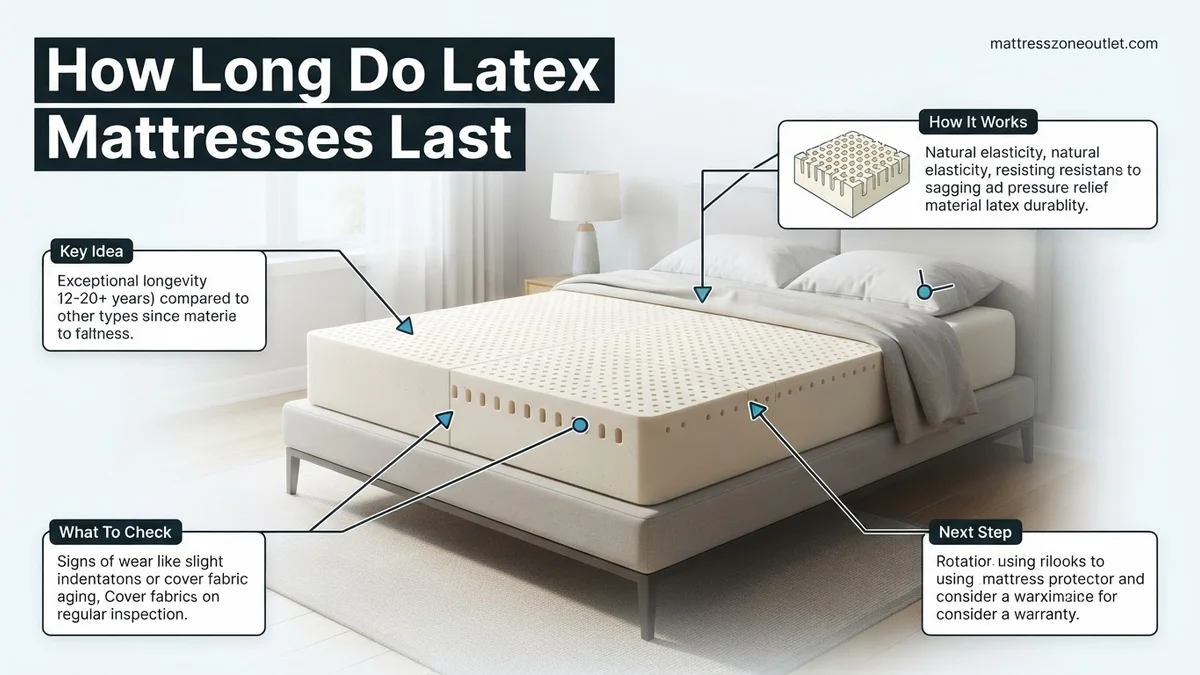
High-quality natural latex mattresses typically last between 12 to 20 years, significantly outperforming traditional memory foam and innerspring models. Their exceptional longevity comes from the inherent density and elasticity of natural rubber sap, which resists permanent body impressions.
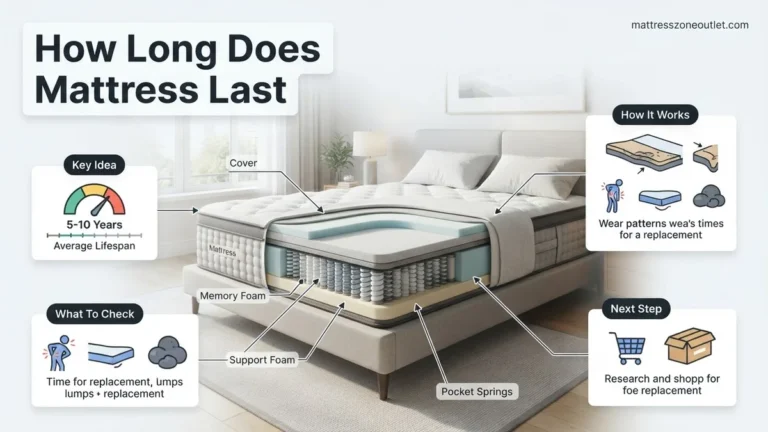
A high-quality natural latex mattress typically lasts between 12 to 20 years, making it the most durable mattress material available on the market today in 2026. While traditional innerspring beds usually require replacement after 7 to 8 years and standard memory foam compresses within 8 to 10 years, latex maintains its supportive structure and bounce for over a decade. The exact lifespan depends heavily on whether you choose natural Dunlop, natural Talalay, or synthetic blends, as well as how well you maintain the bed.
Investing in a mattress is a significant financial commitment for your home. Knowing exactly how long your sleep surface will last helps you calculate your true cost per year and lets you plan your budget accordingly. Understanding the specific material grades and wear factors ensures you get the absolute maximum return on your investment.
Key Takeaways
- Natural Dunlop latex offers the longest lifespan, often exceeding 15 to 20 years.
- Talalay latex is softer and slightly less durable, lasting around 10 to 15 years.
- Blended or synthetic latex usually degrades faster, averaging 8 to 12 years of use.
- Using a breathable mattress protector prevents moisture buildup and material breakdown.
- Regularly rotating the mattress ensures even wear and tear across the surface.
What Causes Latex Mattresses to Wear Out Over Time
Even though natural latex is remarkably resilient, it is still subject to gradual physical breakdown. Several distinct elements contribute to the eventual degradation of the material over its 15-to-20-year lifespan.
Oxidation and Environmental Exposure
Natural rubber is an organic substance that reacts to environmental stressors over time. Oxygen and ozone exposure cause the cellular walls of the foam to slowly break down, leading to a loss of elasticity. While modern latex manufacturing includes anti-oxidant compounds to slow this process, prolonged exposure to heat and direct sunlight will accelerate the aging of the rubber.
Core Material Breakdown and Fatigue
Every time you lie down, roll over, or sit on your bed, the millions of microscopic air bubbles inside the latex foam compress and rebound. Over years of daily use, this constant mechanical stress weakens the cell walls. Unlike memory foam, which takes a set impression, latex fights back with high resilience, but eventually, the material loses a fraction of its original push-back force.
How to Test Your Latex Mattress for Sagging and Wear
Because latex degrades differently than other foam types, sagging does not always look like a deep, visible crater. You need specific diagnostic methods to determine if your mattress has reached the end of its useful life in 2026.
The Straight-Edge and Ruler Test
To check for structural body impressions, strip all bedding down to the bare mattress surface. Take a long, rigid straight edge—such as a yardstick or a level—and lay it flat across the width of the bed over your usual sleeping spot. Use a ruler to measure the gap between the bottom of the straight edge and the surface of the mattress.
- Under 1 inch of indentation: The mattress is structurally sound and providing proper spinal alignment.
- 1 to 1.5 inches of indentation: Moderate wear; you may notice a slight loss of support if you are a strict stomach or back sleeper.
- Over 1.5 inches of indentation: The core support has failed, and it is time to replace the mattress to prevent lower back pain.
The Tactile and Sleep Quality Audit
Physical measurement is only part of the equation; your body will tell you when the mattress has worn out. Pay close attention to how you feel when you wake up.
- Morning stiffness: Waking up with persistent lower back or hip pain that fades after you leave the bed indicates lost support layers.
- Surface feel changes: Check if the latex feels noticeably crumbly, overly soft in high-pressure areas, or stiff and rigid in unused sections of the bed.
- Motion isolation drop: If you feel your partner moving much more than you used to, the internal cell structure may have collapsed.
Step-by-Step Guide to Extending the Lifespan of Your Mattress
Even though natural latex is naturally durable, proactive maintenance is essential to reach that maximum 15-year threshold. According to sleep ergonomics research, proper care prevents premature oxidation and structural breakdown of the foam matrix.
1. Invest in a High-Quality Breathable Cover
Protecting your latex investment from moisture, dead skin cells, and body oils is paramount. Always use a waterproof yet breathable mattress protector to prevent moisture from degrading the foam.
2. Rotate Your Mattress Regularly
Because humans sleep in consistent zones, body weight creates localized compression over time. Rotate your mattress 180 degrees every six months to ensure even wear across the entire surface.
3. Use a Supportive Foundation
Latex is heavy and flexible, requiring a sturdy foundation with slats spaced no more than 3 inches apart. Using an improper base causes the foam to sag between gaps, drastically shortening its lifespan.
What If Your Latex Mattress Still Sags and Needs Replacement
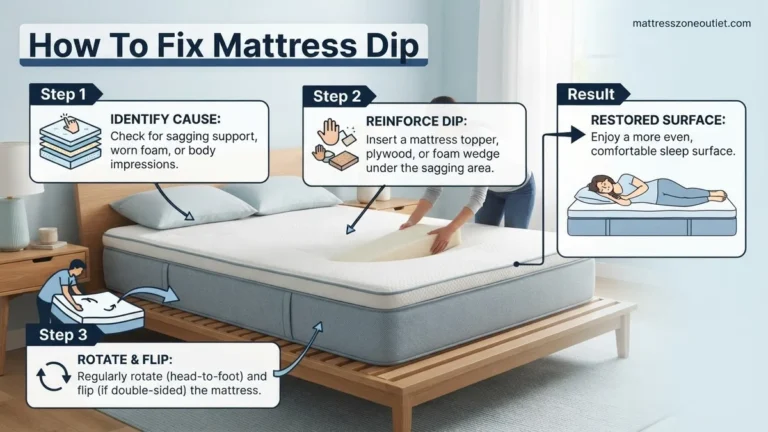
If your latex mattress has developed noticeable indentations or lost its supportive properties despite proper maintenance, targeted intervention is required. Sleep science data shows that sleeping on a compromised mattress directly contributes to chronic lower back pain and spinal misalignment.
- Check the Warranty Terms: Review your manufacturer warranty, which typically covers physical indentations exceeding 1 to 1.5 inches. Contact customer support to initiate a warranty claim if the defect is structural and falls within the coverage window.
- Replace the Comfort Layer: If you purchased a modular latex mattress with zippered compartments, identify which specific layer has softened. Purchasing a single replacement latex core typically costs between $200 and $450, saving you from buying a completely new bed.
- Utilize a High-Density Latex Topper: For minor surface impressions under 1 inch, place a 2-inch Dunlop latex topper over the bed to rebalance surface firmness. Quality toppers range from $150 to $300 depending on queen or king sizing.
- Consult a Bedding Professional: Take measurements and photographs of the sagging areas and consult a local sleep specialty store or mattress manufacturer technician for a formal structural assessment. Professional inspection fees generally range from $50 to $150, though many retailers offer this evaluation for free.
Conclusion
Maximizing the lifespan of a latex mattress requires understanding material degradation factors, practicing routine maintenance like biannual rotation, and utilizing proper foundational support. According to verified research and sleep industry standards, proper care allows natural latex to reliably outperform traditional memory foam by a factor of two or three. Your next actionable step is to inspect your current mattress foundation today to ensure your slat spacing meets the manufacturer’s warranty requirements for 2026.
❓ Frequently Asked Questions
How do natural latex mattresses compare to memory foam in longevity?
Natural latex mattresses easily double the lifespan of standard memory foam, which typically lasts 6 to 8 years before significant sagging occurs. The resilient cellular structure of rubber foam resists fatigue much better than petroleum-based polyurethane foam.
Can I flip a latex mattress to make it last longer?
Whether you can flip a latex mattress depends on its construction. Many modern latex beds are single-sided with a designated support base and softer comfort layers on top, meaning you can only rotate them rather than flip them over.
What signs indicate that my latex mattress is failing?
Common indicators include visible sagging deeper than one inch, persistent lower back pain upon waking, or a noticeable breakdown of the foam core. If the mattress no longer provides proper spinal alignment, it is time for a replacement.
Does exposure to sunlight ruin a latex mattress?
Yes, natural latex is sensitive to ultraviolet (UV) light and direct sunlight, which can cause the rubber material to dry out, harden, and crumble prematurely. Always keep your mattress covered with a fitted sheet and protector.
How does bed frame selection impact latex mattress durability?
Latex mattresses are extremely heavy and require a sturdy, supportive foundation with slat spacing no wider than 3 inches. Inadequate support from a sagging box spring or wide slats can cause the mattress to bend and degrade ahead of schedule.
Are synthetic latex blends worth buying for durability?
Blended latex, which mixes natural rubber with petroleum-based Styrene-Butadiene Rubber (SBR), is more affordable but less durable than 100% natural latex. While pure natural latex lasts up to 20 years, synthetic blends usually max out around 8 to 12 years.