Mattress Firmness Scale Explained 2026 A Step-by-Step Guide
The mattress firmness scale typically ranges from 1 to 10, helping shoppers understand how soft or hard a bed will feel. Body weight and sleeping position dictate which number on this scale will provide optimal spinal alignment and pressure relief. Choosing the wrong firmness level can lead to chronic lower back pain and poor sleep quality.
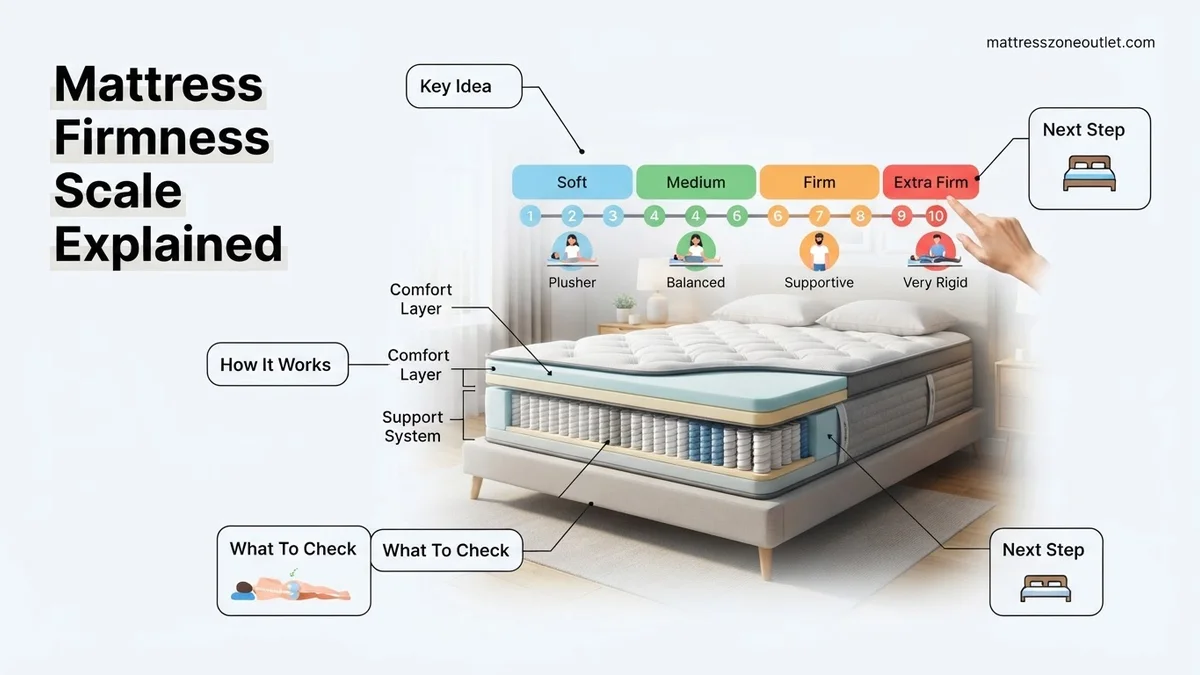
Buying a mattress in 2026 comes with one major point of confusion: the 1-10 firmness scale. Simply put, this numerical ranking measures how hard or soft a mattress feels when you lie down on it, with 1 being an ultra-plush cloud and 10 being an unyielding, rock-hard surface. Most mattresses on the market fall between a 3 and an 8, giving you plenty of room to fine-tune your comfort.
Understanding this scale prevents you from waking up with chronic lower back pain, numb shoulders, or a misaligned spine. Because comfort is entirely subjective, knowing how these numbers translate to actual physical support is the single most important step in finding a bed that lets you sleep soundly through the night.
Key Takeaways
- The standard mattress firmness scale ranges from 1 (ultra-soft) to 10 (rock-hard).
- Most mainstream mattresses fall between a 3 (soft) and 8 (firm).
- Side sleepers generally require softer surfaces (4-6) to cushion shoulders and hips.
- Back and stomach sleepers need firmer support (6-8) to prevent lower back sinking.
- Heavier individuals sink deeper, requiring higher firmness numbers to maintain proper spinal alignment.
What Causes Incorrect Mattress Firmness Selection and Sleep Discomfort
Choosing the wrong mattress firmness usually stems from relying on marketing terms rather than actual data. Manufacturers frequently label a mattress as “medium-firm” just because it is their best-seller, ignoring the fact that a medium-firm feel to a 250-pound sleeper translates to a very different sensation for a 130-pound sleeper. Without understanding the 1-10 scale, buyers often guess based on showroom tests that last barely five minutes.
Misunderstanding Body Weight and Sinkage
Your body weight dictates how your pressure points interact with the foam or coils beneath you. A common mistake is buying a soft mattress (levels 2-3) because it feels luxurious in the showroom, only to experience severe back pain a month later. When heavy areas of your body sink too deeply into a soft surface, your spine curves unnaturally out of alignment. Conversely, lightweight sleepers often buy ultra-firm mattresses (levels 8-10) thinking they need maximum support, but they lack enough body mass to compress the top layers, resulting in painful pressure points on the hips and shoulders.
Ignoring the Importance of Transition Layers
Many buyers focus exclusively on the top comfort layer while ignoring how the core support layers function. Key factors that cause discomfort include:
- Choosing all-foam beds that trap heat and soften excessively over time.
- Failing to account for partner differences in weight, leading to a compromised firmness level that suits neither person.
- Buying based on a rigid firmness rating rather than checking the progressive sinkage curve of modern 2026 hybrid models.
How to Match Your Sleeping Position to the Right Firmness Level
Your primary sleeping position determines how much contouring your body requires to keep your spine in a neutral alignment. Side, back, and stomach sleepers distribute their weight completely differently, meaning the ideal firmness score on the 1-10 scale shifts dramatically depending on how you lie down at night.
Side Sleepers and Pressure Relief
If you sleep on your side, you need a mattress that falls between a 3 (Soft) and a 6 (Medium) on the scale. Your shoulders and hips press heavily into the mattress surface. If the bed is too firm, your joints will jam into the material, cutting off circulation and causing sharp shoulder pain. A softer surface lets those heavy points sink in just enough to keep your spine straight.
Back and Stomach Sleepers and Spinal Support
Back and stomach sleepers require a higher number on the 1-10 scale, typically landing between a 6 (Medium-Firm) and an 8 (Firm). Optimal firmness ranges by position include:
- Back Sleepers: Need a 6 to 7 to support the natural curve of the lower back without letting the hips sink too far.
- Stomach Sleepers: Require a 7 to 8 to prevent the midsection from dipping, which forces an unnatural arch in the spine.
- Combination Sleepers: Generally benefit from a versatile 6 to 6.5 that accommodates shifting positions without trapping you in place.
How to Factor in Body Weight When Choosing a Mattress
A mattress firmness scale rating means nothing without considering your body weight. According to sleep science and orthopedic research from 2026, sleeper mass directly dictates how deeply you compress the comfort layers. A bed that feels firm to a heavyweight sleeper will often feel like a concrete slab to a lightweight sleeper.
Lightweight Sleepers (Under 130 Pounds)
Lightweight sleepers do not sink deeply into comfort layers. They require softer surfaces to activate pressure relief. A mattress rated 3 to 4 out of 10 provides adequate contouring for side sleepers in this weight class. Anything above a 7 will likely cause pressure points in the shoulders and hips.
Average-Weight Sleepers (130 to 230 Pounds)
Average-weight sleepers align best with the standard industry firmness scale. A mattress rated 5 to 7 out of 10 delivers the optimal balance of contouring and spinal support. Back and stomach sleepers in this range should lean toward the 6 to 7 range to prevent lower back sagging.
Heavyweight Sleepers (Over 230 Pounds)
Heavyweight sleepers compress comfort layers exponentially faster, leading to premature bottoming out. Sleep ergonomics experts recommend a firmness rating of 7 to 9 out of 10, combined with high-density foam or thick pocketed coils. This prevents spinal misalignment and ensures proper weight distribution across the sleep surface.
What If It Still Doesn’t Work?
If you purchased a mattress based on the firmness scale and still wake up with chronic pain or discomfort, do not panic. Most sleep brands in 2026 offer trial periods ranging from 100 to 365 nights. If your adjustment period has expired or you bought a final-sale model, execute these fallback steps:
- Evaluate your foundation: Ensure your bed frame or box spring is not sagging. A faulty foundation can make a medium-firm mattress feel like an ultra-plush hammock, destroying lumbar support.
- Modify with a mattress topper: If your bed is too firm, add a 2-to-3-inch memory foam or latex topper ($100 to $250) to soften the surface pressure points.
- Switch your pillows: Cervical and spinal alignment starts at the neck. Upgrading to an adjustable loft pillow ($50 to $120) often resolves lingering upper-back and shoulder tension.
- Consult an orthopedic specialist: If physical discomfort persists after addressing your sleep setup, seek professional medical guidance from a physical therapist to rule out underlying musculoskeletal issues.
Conclusion
Navigating the mattress firmness scale is essential for achieving restorative, pain-free sleep, but comfort ultimately depends on your unique sleeping position and body weight. According to verified research and sleep medicine experts, matching your ergonomic profile to the correct 1-to-10 firmness rating significantly reduces spinal misalignment. Your actionable next step is to assess your current sleep posture today, measure your body weight category, and shop exclusively within your scientifically recommended firmness bracket for 2026.
❓ Frequently Asked Questions
How do mattress brands determine their placement on the firmness scale?
Brands typically rely on internal testing, consumer feedback, and mechanical compression tests. Because there is no universal industry standard, a 7 from one brand might feel slightly different than a 7 from another.
Why do side sleepers need a softer mattress on the 1-10 scale?
Side sleepers concentrate their body weight into two main contact points: the shoulders and hips. A softer mattress (levels 4 to 6) allows these joints to sink in comfortably, preventing numbness and shoulder pain.
Can mattress toppers change where a bed falls on the firmness scale?
Yes, adding a plush mattress topper can soften a firm mattress by 1 to 2 points on the scale. However, toppers cannot make a soft mattress firmer or provide underlying deep support.
What firmness level is best for combination sleepers?
Combination sleepers who switch positions throughout the night generally benefit from a medium to medium-firm mattress (levels 5 to 7). This provides enough contouring for side sleeping and enough support for back sleeping.
How long does it take for a new mattress to reach its true firmness?
Most new mattresses require a break-in period of 30 to 60 days. Foam layers soften slightly and internal materials settle as you sleep on the bed regularly.
Do stomach sleepers require the firmest possible mattress?
Stomach sleepers generally need a firm surface (7 to 9) to keep their hips from sinking out of alignment with the spine. Sinking too deeply into a soft stomach-sleeping mattress hyperextends the lower back and causes pain.