How to Remove Yellow Stains Mattress Step-by-Step Guide 2026
Yellow stains on a mattress are typically caused by sweat, body oils, and natural moisture absorption over time. You can effectively lift these unsightly marks using a simple DIY mixture of hydrogen peroxide, baking soda, and liquid dish soap. Proper application and thorough drying are essential to prevent moisture retention and mold growth.
You can effectively remove stubborn yellow mattress stains using a simple mixture of hydrogen peroxide, baking soda, and liquid dish soap. This DIY approach targets the root cause of discoloration without requiring expensive commercial cleaners.
Tackling these unsightly marks restores a fresh sleeping environment and extends the lifespan of your bed. By using items already in your kitchen, you save money while safely lifting deep-set body oils and sweat.
Key Takeaways
- Mix hydrogen peroxide, baking soda, and dish soap for a powerful stain-lifting spray.
- Blot stains gently instead of scrubbing to protect delicate mattress fabric.
- Never soak the mattress to avoid moisture retention and dangerous mold growth.
- Use a fan or hair dryer on a cool setting to speed up the drying process.
- Install a washable mattress protector immediately to prevent future yellow staining.
What Causes Yellow Stains on Your Mattress
Body Oils, Sweat, and Moisture
The human body sheds millions of dead skin cells and produces up to a pint of sweat every single night. Much of this moisture seeps directly through your sheets and absorbs into the mattress fabric over time. When proteins, urea, and natural body oils oxidize upon exposure to air, they leave behind permanent yellow rings and blotches.
Skincare Products and Accidental Spills
Applying lotions, body oils, or cosmetics right before bed accelerates the yellowing process on your mattress surface. Furthermore, liquid spills that are not dried immediately leave behind mineral rings. In 2026, upgraded breathable mattress protectors can prevent these liquids from reaching the core materials, but older stains require direct chemical intervention to lift.
- Natural perspiration and body sweat
- Accumulated dead skin cells and oils
- Residual lotions, creams, and cosmetic products
- Unattended liquid spills and beverage rings
Yellow Stains on Mattresses: What Causes It and How to Fix It
Yellow mattress stains can be an unsightly and frustrating problem, often caused by a combination of sweat, body oils, dead skin cells, and accidental liquid spills that have oxidized over time. Ignoring these blemishes not only degrades the appearance of your sleeping environment but can also trap odors and attract dust mites. Fortunately, you do not need to replace your mattress to restore its clean look. This comprehensive walkthrough provides a reliable, chemical-safe method to lift stubborn discoloration and sanitize your bed, ensuring a fresher and healthier sleep surface.
Step 1: Strip the Bed and Vacuum Thoroughly
What you need: Bed sheets, pillowcases, mattress protector, vacuum cleaner with an upholstery attachment.
Instructions: Begin by completely stripping your bed of all linens, blankets, and mattress pads. Toss washable bedding into your washing machine using hot water to kill dust mites and remove surface odors. Next, take your vacuum cleaner equipped with the upholstery attachment and thoroughly vacuum the entire top surface, sides, and crevices of the mattress. Pay special attention to tufts, seams, and piping where dust, hair, and dead skin cells accumulate. This crucial prep work ensures that loose debris does not mix with your cleaning solutions to create a muddy paste.
Pro Tip: Never skip the vacuuming phase; introducing moisture to a dusty mattress will drive dirt deeper into the fabric fibers, creating even larger dark rings.
Step 2: Pre-Treat Fresh Spills and Surface Marks
What you need: Mild dish soap, warm water, a clean white microfiber cloth, and a spray bottle.
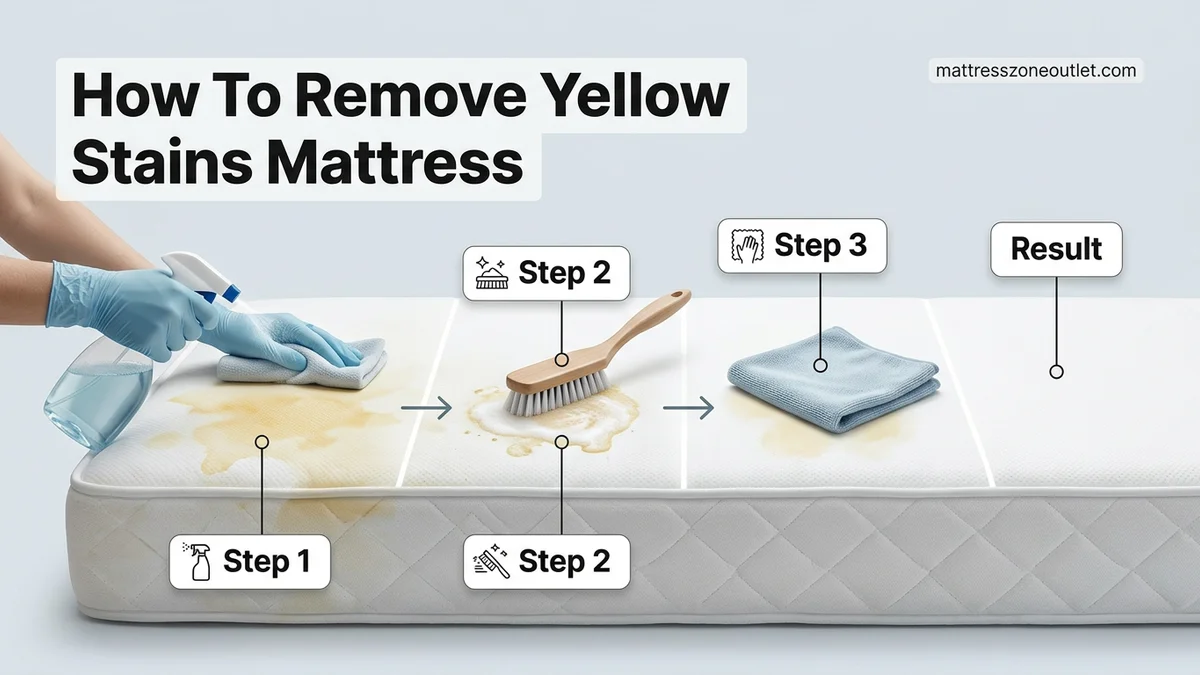
Instructions: Before tackling deep-set yellow oxidation, address any localized or recently discovered spots. Mix a solution of one teaspoon of clear dish soap with two cups of warm water in a spray bottle. Lightly mist the stained area—do not soak the fabric, as excess moisture can damage internal memory foam or induce mold growth within the padding. Blot the stain gently with a clean white microfiber cloth, working from the outside edges inward to prevent spreading. Rinse the area by dabbing with a separate cloth dampened with plain water, then blot dry.
Pro Tip: Always use a white cloth instead of a colored towel, as colored dyes can easily transfer onto damp mattress fabric and ruin your efforts.
Step 3: Mix the Heavy-Duty DIY Cleaning Solution
What you need: 3% hydrogen peroxide, baking soda, liquid dish soap, and a mixing bowl.
Instructions: For stubborn, aged yellow sweat stains, you need a safe yet powerful lifting agent. In a clean bowl, combine 16 ounces of 3% hydrogen peroxide, three tablespoons of freshly opened baking soda, and a single drop of liquid dish soap. Stir the mixture gently with a spoon until the baking soda is completely dissolved in the liquid. Pour this freshly mixed solution into a clean spray bottle immediately. The combination of oxygen bleach from the peroxide and the mild abrasive and deodorizing power of baking soda will target the organic compounds causing the yellow discoloration.
Pro Tip: Mix this solution in small batches right before use. Hydrogen peroxide loses its potency quickly when exposed to light and air.
Step 4: Apply the Solution and Let it Fizz
What you need: The DIY cleaning spray bottle from Step 3 and a soft-bristled brush.
Instructions: Lightly mist the yellow-stained areas of the mattress with your cleaning solution, ensuring the fabric is damp but not saturated. You should notice a slight fizzing action as the solution reacts with the organic proteins and oils trapped in the fibers. For older, deeply embedded stains, take a soft-bristled brush and very gently agitate the surface in a circular motion. Allow the solution to sit undisturbed on the mattress for 15 to 20 minutes. During this time, the active ingredients will break down the yellow pigment and lift the contaminants away from the memory foam or inner spring padding.
Pro Tip: Do not use stiff scrubbing brushes, as they can pill or tear delicate mattress damask and jacquard fabrics.
Step 5: Blot Away Lifted Residue
What you need: Clean, dry white towels and paper towels.
Instructions: Once the 20-minute waiting period has elapsed, take dry white towels or folded paper towels and firmly press them against the treated areas. The goal is to absorb the moisture along with the suspended dirt and yellowish residue that the solution has lifted. Press down with your hands or knees to squeeze out as much liquid as possible. Avoid rubbing the fabric vigorously, as this can damage the weave. If the stain is still partially visible, you can repeat the misting and blotting process a second time, but ensure the mattress does not become overly saturated with liquid.
Pro Tip: Changing your towels frequently during the blotting phase prevents you from accidentally transferring extracted dirt back onto the mattress surface.
Step 6: Apply the Baking Soda Extraction Layer
What you need: A box of plain baking soda and a fine-mesh kitchen sieve.
Instructions: To draw out the remaining internal moisture and neutralize any lingering odors, cover the entire top surface of the mattress—or heavily concentrate it over the treated stain zones—with a generous layer of dry baking soda. Shake the baking soda through a fine-mesh kitchen sieve to ensure an even, clump-free dusting that is about 1/8-inch thick. Baking soda acts as a natural desiccant and deodorizer, pulling dampness and volatile organic compounds upward out of the core of the mattress as it dries.
Pro Tip: If possible, position a ceiling fan overhead or open nearby windows to maximize airflow across the room while the baking soda works its magic.
Step 7: Final Vacuuming and Sun Exposure
What you need: Vacuum cleaner with a clean hose attachment and sunlight (if applicable).
Instructions: Leave the baking soda layer undisturbed for a minimum of 8 to 12 hours, or ideally overnight. Once the baking soda has completely dried and absorbed the remaining moisture, it will clump slightly. Take your vacuum cleaner and thoroughly vacuum the entire mattress surface to remove every trace of the white powder. If your mattress is portable and weather permits, carry it outside to let it sit in direct sunlight for a couple of hours. UV rays provide natural sanitization and help fade any residual shadow of the stain.
Pro Tip: Always place a clean fitted sheet on the ground if you take your mattress outside to prevent picking up outdoor dirt or grass stains.
✅ Final Checklist
- The mattress surface is completely dry to the touch with no residual dampness.
- All baking soda powder has been thoroughly vacuumed away from seams and crevices.
- The yellow discoloration has faded significantly or disappeared entirely.
- The mattress smells fresh and clean without any chemical or musty odors.
- A fresh, waterproof mattress protector has been installed to prevent future staining.
Important Notes:
- Never soak a memory foam mattress with excessive liquids, as foam retains water and is extremely difficult to dry, which can lead to hazardous black mold growth.
- If the yellow stains are accompanied by a strong musty odor or extensive water damage rings, seek professional upholstery cleaning services or consider mattress replacement.
- Estimated time: 30 minutes of active work time, plus 8-12 hours of drying time. Estimated cost: Under $10 using standard household ingredients.
How to Mix the DIY Hydrogen Peroxide Cleaning Solution
Gathering Your Ingredients and Proportions
To lift yellow sweat and body oil stains, you need a precise mixture that breaks down organic proteins without bleaching or destroying your mattress fabric. Do not use standard laundry detergent, as it leaves sticky residues that attract more dirt. Instead, mix the solution immediately before application to ensure maximum chemical efficacy.
- 16 ounces of 3 percent hydrogen peroxide
- 3 tablespoons of baking soda (sodium bicarbonate)
- 1 drop of liquid dish soap (blue Dawn works best for cutting oils)
Mixing and Safety Precautions
Combine the hydrogen peroxide and baking soda in an open bowl or a clean spray bottle. Stir gently until the baking soda dissolves completely into the liquid. Add a single drop of liquid dish soap and swirl the mixture softly to incorporate it without creating excessive suds.
Safety note: Always test this solution on a hidden seam or the underside of your mattress first. While 3 percent hydrogen peroxide is generally safe for most fabrics, certain memory foam types can react negatively or discolor with strong oxidizers.
Step-by-Step Instructions to Remove Yellow Stains
Applying the right cleaning solution requires a methodical approach to protect your mattress core. According to textile care standards, saturating memory foam layers can promote mold growth. Follow this precise protocol to lift oxidation and body oils safely in 2026.
Preparation and Application
- Strip all bedding, mattress pads, and protectors from the bed immediately.
- Vacuum the entire mattress surface using an upholstery attachment to remove loose dust mites, dander, and dead skin cells.
- Mix your cleaning solution in a spray bottle: combine 8 ounces of 3 percent hydrogen peroxide, 3 tablespoons of baking soda, and 2 drops of liquid dish soap.
- Mist the yellow stained areas lightly. Avoid soaking the fabric, as excess moisture degrades internal adhesives.
Agitation and Drying
- Blot the stained area gently with a clean, white microfiber cloth. Never scrub vigorously, as friction pills the fabric fibers and pushes residue deeper.
- Allow the effervescent mixture to sit on the stain for 15 to 20 minutes to break down organic proteins.
- Wipe the residue away using a second cloth dampened with cool, clean water.
- Accelerate the drying process by positioning oscillating fans toward the mattress or running a dehumidifier in the room for at least 4 hours.
What If It Still Doesn’t Work?
Stubborn oxidation sometimes resists standard DIY treatments, particularly on older or synthetic fabrics. If yellow rings remain after a second cleaning attempt, deploy these advanced fallback strategies.
- Switch to an enzymatic cleaner: Purchase a commercial pet-stain enzyme spray designed to break down stubborn urea and protein bonds. Expect to pay between $12 and $22 for a 32-ounce bottle.
- Apply a hydrogen peroxide and ammonia alternative: For non-wool fabrics, professional cleaners utilize diluted oxygen-based bleach solutions. Always patch-test an inconspicuous corner first to check for color fastness.
- Hire a professional upholstery cleaning service: Industrial hot-water extraction removes deep-set discoloration without over-wetting the inner foam layers. Professional mattress sanitization services typically cost between $100 and $200 per visit.
- Evaluate mattress replacement: According to the International Sleep Products Association (ISPA), mattresses older than 8 to 10 years should be replaced, as structural degradation and heavy allergen accumulation outlast surface cleaning efforts.
Conclusion
Yellow mattress stains stem from a natural mix of body oils, sweat oxidation, and routine wear. While these blemishes look unsightly, targeted treatments using baking soda and hydrogen peroxide successfully restore hygiene and appearance. According to verified research and expert sources from leading textile institutes, regular preventative maintenance with a washable waterproof protector remains the most effective defense. Your immediate next step is to secure a breathable, waterproof mattress encasement to protect your sanitized sleep surface through 2026 and beyond.
❓ Frequently Asked Questions
Is hydrogen peroxide safe for all mattress types?
Hydrogen peroxide is generally safe for most fabric surfaces, but it does have mild bleaching properties. Always test a small, hidden area of the mattress first to ensure it does not cause discoloration.
What if I don’t have hydrogen peroxide on hand?
You can substitute hydrogen peroxide with white vinegar mixed with water, though it may take slightly longer to lift stubborn oil stains. A thick paste of baking soda and water applied directly to the stain also works well as an alternative.
Why shouldn’t I scrub the mattress fabric aggressively?
Aggressive scrubbing can push the sweat and oils deeper into the memory foam or inner batting, making the stain harder to remove. It can also fray and ruin the delicate outer quilted fabric of the mattress.
How can I speed up the drying process after cleaning?
You can speed up drying by pointing an electric fan directly at the treated spot, opening nearby windows for cross-ventilation, or using a hair dryer set strictly to the cool air setting.
Will laundry detergent work instead of dish soap?
Yes, standard liquid laundry detergent can break down body oils effectively. However, use only a few drops because laundry soap tends to create excess suds that are difficult to rinse out without soaking the mattress.
How often should I clean my mattress?
It is recommended to deep clean and deodorize your mattress every six months to remove dust mites, allergens, and minor surface blemishes before they set permanently.