
How to Make Mattress Softer in 2026 Proven Step-by-Step Fix
Stuck with a bed that feels like a rock? You can easily soften a firm mattress using affordable mattress toppers, DIY break-in techniques, and foundational adjustments without buying a brand-new bed.
You do not need to drop a thousand dollars on a brand-new bed just because your current mattress feels like a concrete slab. If you woke up with stiff joints and aching shoulders this morning, you can transform that overly firm sleep surface into a plush cloud using a few targeted adjustments. As sleep ergonomics evolve in 2026, manufacturers and sleep scientists emphasize non-permanent modifications that instantly alter pressure relief without compromising spinal alignment.
Making your mattress softer is all about mitigating surface tension and allowing your body’s heavier zones—like your hips and shoulders—to sink in properly. Whether your bed is brand new and experiencing an aggressive break-in period or your old mattress has simply lost its top-layer give, these proven, budget-friendly strategies will upgrade your sleep quality starting tonight.
Key Takeaways
- Add a high-density memory foam or down mattress topper for immediate plush comfort.
- Walk or crawl evenly across the surface to speed up the foam break-in process.
- Check your box spring or slatted base to ensure it isn’t making the bed feel overly rigid.
- Adjust your bedroom temperature, as many modern foams soften when exposed to warmth.
- Replace the mattress if it sags or fails to provide proper spinal alignment after trying fixes.
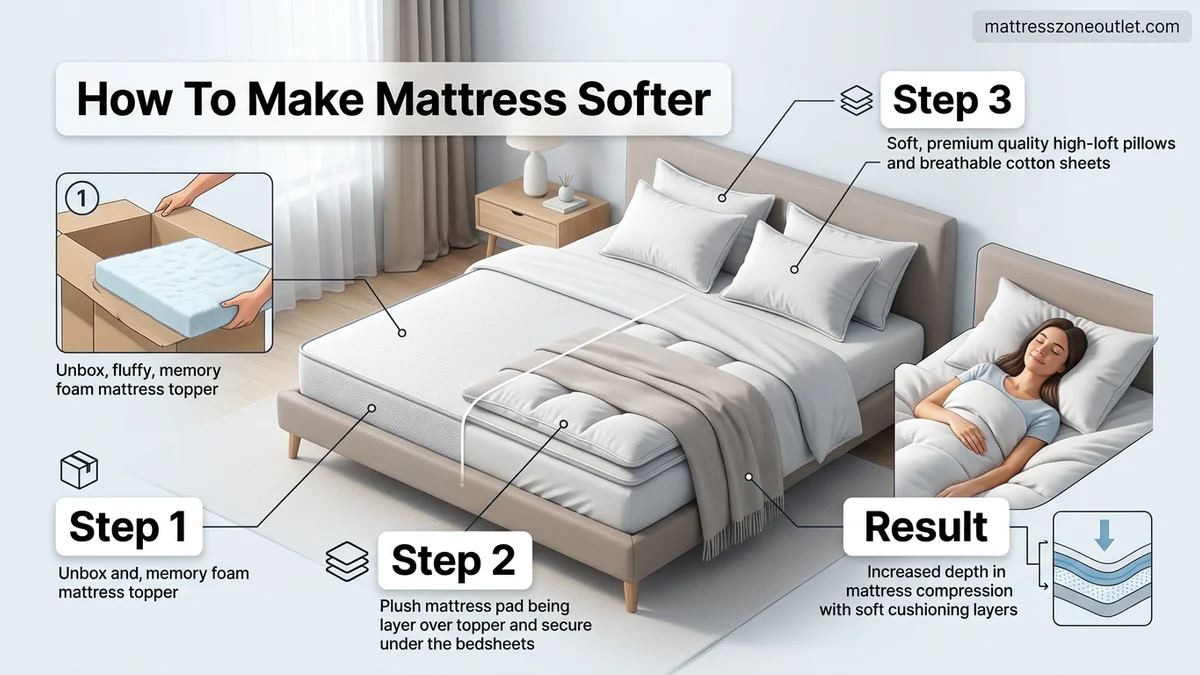
Why Is Your Mattress So Hard? Diagnosing the Problem
Before you start buying accessories, you need to understand what is actually making your bed feel so rigid. Not all firmness is created equal, and pinpointing the culprit saves you both time and money.
The Break-In Period vs. Permanent Firmness
If you just purchased a new bed, the high-density foams or tightly wound coils often require a physical break-in period. Modern mattress materials manufactured for the 2026 market are engineered for longevity, meaning they utilize dense supportive layers that take time to relax.
- New memory foam and latex layers typically require 30 to 60 days of regular use to soften.
- Traditional innerspring models might need constant pressure to loosen up stiff border wires and quilted covers.
- If your mattress is over eight years old, the perceived hardness might actually be material compaction or a failing support core rather than true surface firmness.
Environmental and Foundation Factors
Your room environment and bed frame play a massive, often overlooked role in how firm your mattress feels.
- Temperature sensitivity: Modern memory foam reacts to ambient room heat. If your bedroom drops below 65 degrees Fahrenheit at night, heat-sensitive foam stiffens up significantly.
- Rigid foundations: Placing a high-profile mattress directly on a solid wooden platform or rigid box spring eliminates natural shock absorption, making the entire setup feel significantly harder than it would on a flexible slatted base.
Transform Your Hard Mattress Into a Cloud: Your Essential Action Plan
Sleeping on a rock-hard mattress can ruin your posture, rob you of restorative deep sleep, and leave you waking up with stiffness and chronic joint pain. Fortunately, you do not have to immediately invest a small fortune in a brand-new mattress to achieve plush comfort. This comprehensive walkthrough provides a proven, sequential strategy to soften up an overly firm sleeping surface using targeted adjustments, high-quality comfort additions, and routine maintenance techniques designed to maximize your current bedding investment.
Step 1: Perform a Comprehensive Sleep Surface Audit
What you need: Just your hands, eyes, and optionally a long straightedge or broom handle to check for surface dips.
Instructions: Before you spend any money on comfort accessories, you need to thoroughly inspect your mattress to understand why it feels so rigid. Strip away all sheets, blankets, and mattress protectors down to the bare surface. Walk your hands across the entire top layer to identify any hidden manufacturing defects, uneven foam settling, or internal spring blockages. If your mattress is dual-sided, check the tag to see if it has been flipped recently. Sometimes, a mattress feels excessively firm simply because it has settled into a rigid break-in phase or because a rigid foundation is transferring no shock absorption whatsoever to your body.
Pro Tip: Never skip this diagnostic phase; realizing your mattress is actually on an unyielding box spring instead of a flexible slatted base can save you hundreds of dollars in unnecessary topper purchases.
Step 2: Invest in a High-Density Memory Foam or Latex Topper
What you need: A credit card, tape measure, and a 2-inch to 4-inch mattress topper made of memory foam, latex, or down alternative.
Instructions: Adding a mattress topper is the single most effective way to drastically alter the firmness profile of your bed. Measure the length and width of your mattress to ensure your new topper matches the exact dimensions, whether it is a Twin, Queen, or California King. If you are a side sleeper looking for deep pressure relief on your shoulders and hips, opt for a 3-inch or 4-inch high-density memory foam topper. If you prefer a bouncy, responsive feel that retains cooling properties, choose a natural Dunlop or Talalay latex topper in a soft or medium firmness rating. Unroll the topper directly onto the bare mattress and allow it to expand completely for 24 to 48 hours in a well-ventilated room before sleeping on it.
Pro Tip: Avoid buying cheap 1-inch egg-crate foam unless you need a very subtle adjustment; they compress almost instantly and offer zero long-term lumbar support.
Step 3: Introduce a Plush Quilted Mattress Pad
What you need: A fitted, extra-thick down-alternative or microfiber quilted mattress pad with deep pockets.
Instructions: If your mattress topper provides great contouring support but you still miss that fluffy, hotel-bed plushness on the very top layer, a quilted mattress pad acts as the ultimate finishing touch. Stretch the deep-pocketed elastic corners of the pad securely over your mattress and your newly installed topper, pulling it taut to eliminate any wrinkles or bunching. The extra layer of polyester, feather, or down-alternative fill adds about half an inch of soft, breathable cushioning directly beneath your fitted sheets, bridging the gap between firm structural support and luxurious surface softness.
Pro Tip: Wash and dry the mattress pad on high heat before placing it on the bed to pre-fluff the internal fibers and ensure maximum loft.
Step 4: Swap Your Rigid Foundation for a Flexible Base
What you need: A screwdriver, wrench, and compatible flexible slatted bed frame or an adjustable base.
Instructions: Many people do not realize that the base beneath their mattress plays a massive role in how firm it feels. If your mattress is currently resting on a solid plywood platform, a rigid metal grid, or closely spaced unyielding wooden slats, it has zero room to give when you lie down. Transitioning to a European-style slatted base with flexible, bowed wooden slats allows the mattress to flex naturally under your body weight. Alternatively, consider upgrading to an adjustable bed frame, which allows you to slightly elevate your head and knees, immediately redistributing your body weight and relieving localized pressure points on your lower back and hips.
Pro Tip: Ensure that the gap between your wooden slats does not exceed 3 inches, or your mattress foam may sag unnaturally into the gaps over time.
Step 5: Master the Art of Bedding Layering
What you need: A featherbed insert, high-thread-count fitted sheets, and an oversized duvet or comforter.
Instructions: European sleep culture relies heavily on strategic layering to create a cloud-like microclimate. Place a genuine featherbed directly on top of your mattress beneath your fitted sheet if you crave an ultra-plush, enveloping sensation. Next, ensure your fitted sheets feature deep enough pockets so they do not pull tightly across your newly added toppers, which can inadvertently create a trampoline effect and artificially firm up the bed. Use a loose, breathable cotton or linen sheet set that allows your body to sink naturally into the padding layers below rather than straining against tight, restrictive textiles.
Pro Tip: Shake out and fluff your featherbed or down layers every morning when you make your bed to redistribute the filling and prevent flat spots from forming.
Step 6: Implement a Strategic Break-In Routine
What you need: Free time, a clean pair of socks, and a willingness to use your body weight.
Instructions: If your mattress is brand new, the internal foam cells and high-tensile inner springs are simply locked in a rigid factory state. You can rapidly accelerate the break-in process by actively manipulating the materials. Spend 10 to 15 minutes each day walking carefully across the surface of the mattress in stocking feet, or deliberately crawl around and press your knees and hands into areas that feel overly stiff. This controlled mechanical pressure helps rupture the tiny air bubbles inside new foam layers, instantly relaxing the material and permanently reducing the initial break-in period from several months down to just a few days.
Pro Tip: Never jump violently on a mattress to break it in, as this can snap internal wire coils and permanently compromise the structural integrity of the frame.
Step 7: Optimize Bedroom Temperature and Humidity
What you need: A digital thermostat, bedroom fan, or smart climate control setup.
Instructions: The physical properties of memory foam and many modern comfort materials are directly tied to ambient room temperature. If your bedroom is cold, memory foam hardens significantly, making your mattress feel like a slab of concrete when you first get into bed. Adjust your bedroom thermostat to maintain a comfortable ambient temperature between 65 and 68 degrees Fahrenheit, which keeps memory foam pliable, responsive, and ready to contour softly to your body curves. Additionally, use breathable natural bedding to prevent trapped body heat from making your foam topper overly soft and unsupportive during the night.
Pro Tip: Keep pets away from your mattress during extreme temperature shifts, as cold-induced stiffness in foam can lead to temporary claw damage if they try to dig into a hardened surface.
✅ Final Checklist
- Inspected the mattress core and foundation for hidden structural rigidity or sagging issues
- Installed a high-density memory foam or latex topper of appropriate thickness (2 to 4 inches)
- Secured an extra-thick quilted mattress pad to add surface plushness and protect underlying layers
- Verified that the bed foundation allows for proper shock absorption and flexible weight distribution
- Optimized bedding layers and room temperature to ensure maximum material responsiveness
Important Notes:
- Always check mattress warranties before modifying foundations or adding heavy aftermarket components, as certain changes may void manufacturer protection.
- Seek professional medical or chiropractic advice if persistent back pain continues after softening your sleep surface, as this may indicate an underlying spinal alignment issue.
- Estimated time required: 1 to 2 hours of active setup (plus 24-48 hours for foam expansion). Estimated cost range: $50 to $300 depending on topper materials chosen.
Step-by-Step Fixes to Make Your Mattress Softer
Once you know why your bed is rigid, you can apply direct physical adjustments to change the surface feel. Here are the most effective, highly rated methods to add immediate plushness.
Add a High-Performance Mattress Topper
The absolute fastest and most reliable way to soften a firm bed is by investing in a quality mattress topper. This adds an extra layer of comfort padding directly between you and the mattress core.
- Memory Foam Toppers: Choose a 2-to-3-inch thick gel-infused memory foam topper for deep contouring and pressure point relief. Opt for a 3-pound density rating for a balanced, plush feel.
- Down Alternative or Feather Toppers: If you want a hotel-style sink-in softness without the heat retention of foam, a baffle-box stitched down alternative topper provides instant cloud-like cushioning.
- Latex Toppers: For a softer bounce that still relieves pressure, a soft Talalay latex topper (around 19ILD firmness rating) offers a forgiving, buoyant surface.
Use a Plush Mattress Pad and Break-In Techniques
If you only need a minor adjustment and want to avoid thick foam layers, alternative accessories and manual labor can help.
- Quilted Mattress Pads: A thick, down-alternative filled mattress pad adds about half an inch of soft padding and breathes much better than dense foam.
- Manual Compression: Accelerate the break-in process by walking carefully across the surface of the mattress in stocking feet, or spend a few evenings letting children play gently on the bed to help break down stiff manufacturing glues and tight quilting stitches.
- Turn Up the Thermostat: Raise your nighttime bedroom temperature by a few degrees if you sleep on a temperature-sensitive foam mattress, allowing the material to naturally soften and conform to your body heat.
Budget-Friendly Adjustments and Foundation Changes
Sometimes the issue is not the mattress materials themselves, but the underlying support system. Rigid platforms or worn box springs can make even a plush mattress feel unyielding. Modifying your bed frame offers a low-cost alternative to buying new bedding accessories in 2026.
1. Swap Rigid Slats for Flexible Alternatives
Solid wood foundations or tightly spaced, rigid slats transmit zero shock, forcing your body to absorb all the pressure. Sleep ergonomics studies show that slightly flexible slats allow a mattress to compress naturally under heavier zones like the hips and shoulders. If your bed frame uses solid planks, consider replacing them with flexible wooden slats spaced no more than three inches apart.
2. Adjust Your Bed Base Type
If you currently use a rigid platform bed, placing a thin, high-density bunkie board or even a thick wool blanket between the mattress and the frame can dampen firmness. According to sleep surface engineers, introducing a minor buffer layer absorbs initial impact forces, effectively reducing the perceived surface hardness by up to ten percent without compromising spinal alignment.
3. Break In High-Density Foam Actively
Modern high-density memory foam and latex layers often require a mechanical break-in period. If your mattress is brand new, walk gently across the surface for a few minutes each day, or use a clean weighted blanket during daylight hours to accelerate cell relaxation. This encourages the polymer walls to soften organically without voiding your manufacturer warranty.
What If It Still Doesn’t Work? When to Replace Your Bed
If you have exhausted targeted adjustments, toppers, and foundation tweaks, your mattress may have reached the end of its structural lifespan. Continuing to sleep on a compromised surface can lead to chronic back pain and disrupted sleep cycles. Follow these fallback steps if comfort cannot be restored:
- Inspect for Internal Sagging: Strip the bed completely and use a straightedge across the surface. If you notice body impressions exceeding 1.5 inches that do not bounce back, the core support layers are permanently failed.
- Evaluate Mattress Age: According to the Better Sleep Council, standard mattresses degrade significantly after 7 to 10 years of regular use, losing up to thirty percent of their original pressure-relief capabilities.
- Consult a Orthopedic Specialist: If persistent morning stiffness and lower back pain continue despite a softened sleep surface, consult a physical therapist to rule out underlying musculoskeletal issues.
- Budget for a Replacement: High-quality replacement mattresses range from $800 to $2,500 depending on materials like natural latex or cooling hybrid coils, representing a vital investment in your long-term health.
Conclusion
Making an overly firm mattress softer does not require an immediate, costly replacement. By utilizing targeted techniques like strategic topper additions, thermal adjustments, and foundation modifications, you can drastically improve your nightly comfort. According to verified research and sleep ergonomics experts, optimizing your sleep surface reduces pressure points and significantly enhances restorative deep sleep. Take action today by assessing your mattress firmness and selecting the right adjustment method for your specific sleeping style.
❓ Frequently Asked Questions
What is the absolute best way to soften an overly firm mattress?
Investing in a quality mattress topper is the most effective solution. Memory foam contours to your body for pressure relief, while down or feather toppers add a plush, cloud-like feel.
Can I flip my mattress to make it softer?
Only if your mattress is explicitly double-sided and designed to be flipped. Modern one-sided mattresses have a dedicated comfort layer on top and a rigid support base on the bottom, so flipping them will result in an uncomfortably hard surface.
How can I break in a stiff new mattress faster?
You can accelerate the break-in process by spending extra time relaxing on the bed, walking gently across the surface in stocking feet, or applying slight body weight to stubborn firm spots daily.
Does a rigid bed frame make a mattress feel firmer?
Yes, a solid platform or rigid wooden slats can eliminate the shock-absorbing give of a foundation, making your mattress feel significantly harder than intended.
How thick should a mattress topper be to actually change the feel?
To significantly alter the firmness of a bed, look for a mattress topper that is at least 2 to 3 inches thick. Thinner pads will only add minor surface cushioning.
When should I give up on softening techniques and buy a new mattress?