How to Make Mattress Firmer in 2026 Step-by-Step Fix
If your bed feels too soft, you can easily make your mattress firmer using practical DIY adjustments and affordable support additions. This guide covers actionable methods ranging from adding plywood boards to upgrading your foundation without buying a brand-new bed.
You can make your current mattress feel significantly firmer without spending a fortune on a brand-new replacement in 2026. Whether your bed has naturally softened over time or you simply made a miscalculation when buying it online, you do not have to live with morning back pain and restless nights.
Implementing targeted structural adjustments and budget-friendly layering techniques can drastically improve your spinal alignment. Read on to discover the exact step-by-step fixes that will transform a sinking bed into a supportive sleeping surface.
Key Takeaways
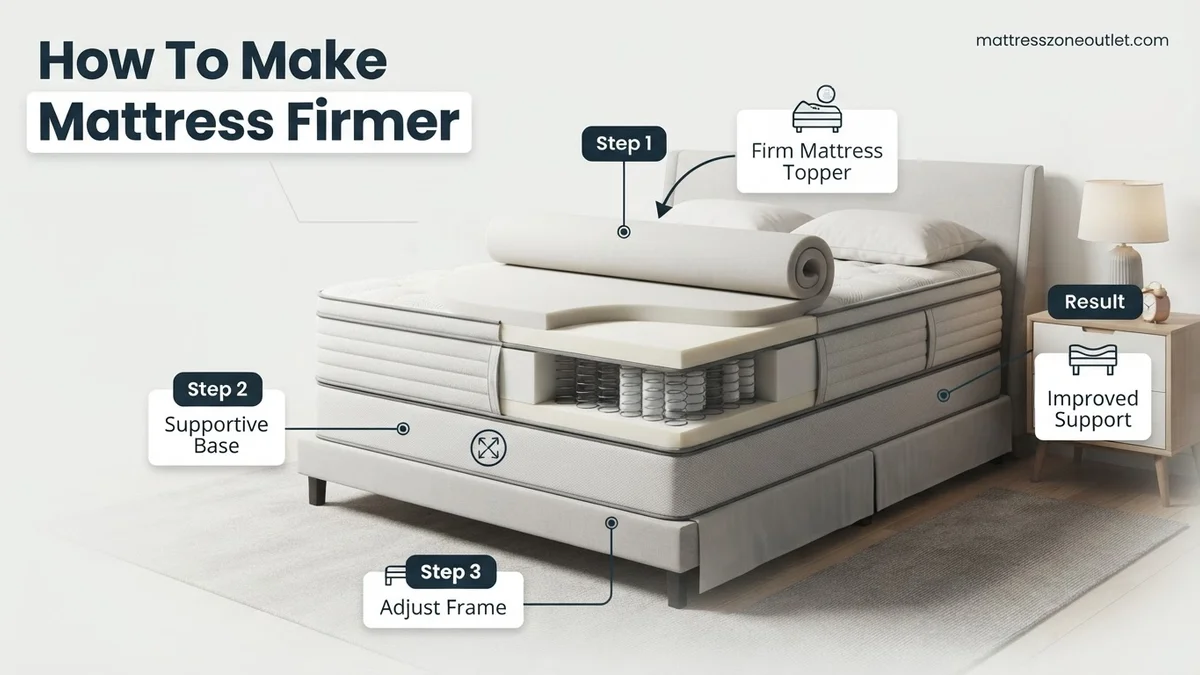
- Place a 3/4-inch piece of plywood directly under your mattress for an instant firm foundation.
- Add a high-density latex or firm foam mattress topper to create a supportive top layer.
- Rotate or flip your mattress to eliminate body impressions and uneven wear.
- Swap out a sagging, worn-out box spring for a solid wooden or metal platform base.
- Assess whether the mattress core is permanently broken down and requires replacement.
What Causes Your Mattress to Feel Too Soft and Saggy
The Breakdown of Internal Support Coils and Foam
Over time, the core materials inside your mattress lose their structural integrity. Memory foam loses its elastic recovery, while innerspring coils weaken under nightly pressure. By 2026, standard polyurethane foams have likely developed permanent body impressions, especially in high-weight areas like the hips and shoulders. When these core layers fail, your body sinks too deeply, pulling your spine out of alignment and creating a perceived lack of firmness.
Foundation and Base Failures
Sometimes the problem is not your mattress itself, but what is sitting underneath it. Old wooden slats can bow, and traditional box springs lose their springiness after 5 to 10 years of use. If your bed frame lacks proper center support, the entire mattress will sag toward the middle. This creates a false sensation of softness because the bed is actually collapsing under your weight rather than resisting it.
- Slat spacing: Slats spaced wider than 3 inches allow soft foam to dip between them.
- Center support: Missing or weak center legs cause the entire foundation to dip.
- Box spring fatigue: Aging internal grids fail to push back against downward pressure.
Transform Your Sleep Surface: Your Essential Action Plan
Sleeping on a mattress that has lost its support can lead to chronic back pain, restless nights, and groggy mornings. Whether your bed is aging prematurely, came from the factory too plush, or your personal firmness preferences have evolved, replacing it isn’t your only option. This comprehensive guide walks you through proven, budget-friendly methods to reclaim a supportive sleep foundation. Follow these actionable steps to transform a sagging or overly soft mattress into an orthopedic-friendly surface, improving your spinal alignment and overall sleep quality without breaking the bank.
Step 1: Inspect Your Foundation and Bed Frame
What you need: A flashlight, a tape measure, and a helper to remove the mattress.
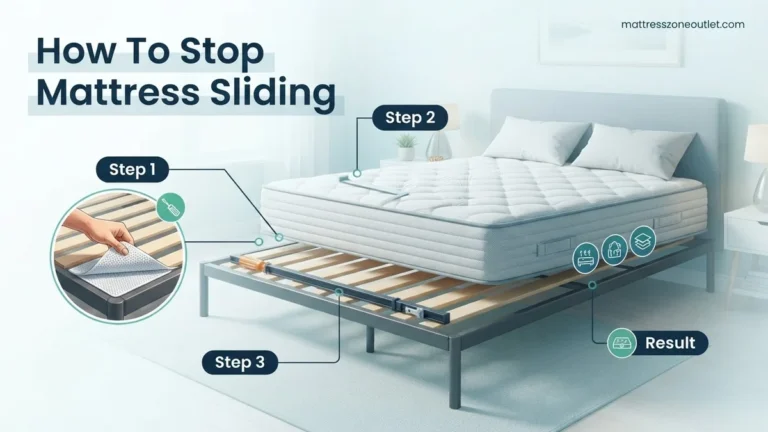
Instructions: Before modifying the mattress itself, examine what is holding it up. Strip all bedding off the bed and lift the mattress entirely off the frame. Inspect your box spring, slats, or platform base for cracks, bowing, or broken components. If you are using wooden slats, ensure they are spaced no more than 3 inches apart; wider gaps allow mattresses to sag significantly in the middle. Tighten all bolts and screws on metal or wooden frames. If your box spring has lost its internal spring tension, replace it with a solid plywood bunkie board or a sturdy platform insert to immediately restore a firmer feel to the entire sleep system.
Pro Tip: Never place a heavy foam mattress directly on a wire frame with wide gaps, as this forces the material to conform to the empty spaces, destroying spinal support.
Step 2: Flip or Rotate Your Mattress
What you need: A partner for heavy lifting, and clean hands or protective gloves.
Instructions: Check the tag on your mattress to determine if it is designed to be dual-sided (flippable) or single-sided (no-flip). If you have a traditional flippable mattress, rotate it 180 degrees and flip it completely upside down so the heavily compressed top side is now on the bottom. If you have a modern pillow-top or hybrid mattress that cannot be flipped, simply rotate it 180 degrees from head to foot. This shifts your body weight to an area of the mattress that has experienced less compression, instantly providing a noticeably firmer and more supportive feel beneath your primary pressure points.
Pro Tip: Make a habit of rotating your mattress every 3 to 6 months to ensure even wear and extend its lifespan significantly.
Step 3: Add a High-Density Latex or Foam Topper
What you need: A 2-to-3-inch high-density firm latex or high-Barcol hardness polyurethane topper.
Instructions: Counterintuitively, adding a layer can fix softness if you choose the right material. Avoid memory foam, which hugs and softens; instead, purchase a firm Talalay or Dunlop latex topper or a high-density polyfoam topper with a high Indentation Load Deflection (ILD) rating of 36 or higher. Unroll the topper directly onto your mattress surface and secure it with deep-pocket fitted sheets. The dense, resilient nature of firm latex pushes back against your body weight, keeping your hips and shoulders elevated while still offering a comfortable top cushioning layer.
Pro Tip: Look for organic latex if you sleep hot, as latex naturally promotes airflow unlike heat-trapping high-density conventional polyurethane foams.
Step 4: Install a Plywood Insertion Layer
What you need: A 3/4-inch thick sheet of cabinet-grade plywood cut to the exact dimensions of your mattress, and sandpaper.
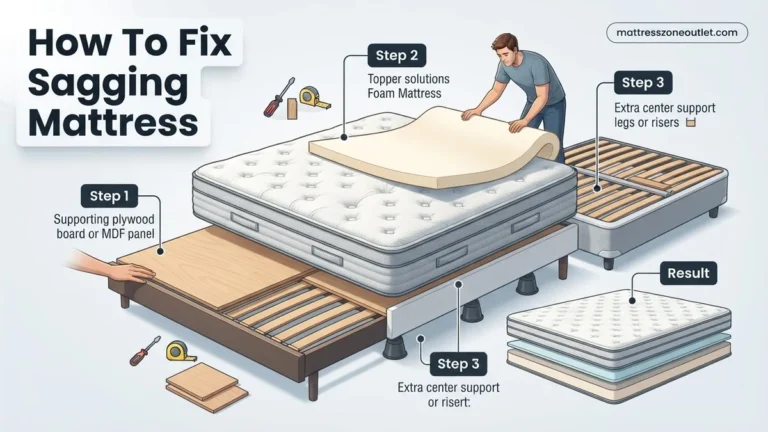
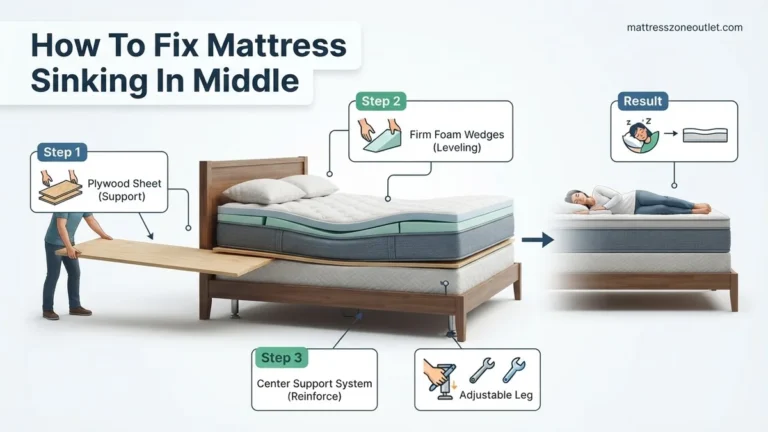
Instructions: If your mattress sags deeply in the middle due to weak internal coils, you can create a rigid sub-surface. Measure the interior dimensions of your bed frame. Have a hardware store cut a 3/4-inch thick piece of plywood to these exact measurements. Sand the edges thoroughly to prevent any splinters that could tear your mattress fabric. Place this plywood board directly underneath your mattress—either between the box spring and the mattress, or directly on top of your bed slats. This completely eliminates flexibility in the base, forcing the mattress above it to remain flat and substantially firmer.
Pro Tip: Drill a few two-inch ventilation holes into the plywood board to allow air circulation and prevent moisture and mold buildup underneath the mattress.
Step 5: Utilize High-Density Foam Wedges for Sagging Zones
What you need: High-density foam mattress wedges or furniture-grade foam inserts, and upholstery glue if needed.
Instructions: Target specific body impressions that ruin your sleep posture. If your hips have created a permanent crater in the mattress, unzip the outer cover (if removable) or gently slide a high-density foam wedge directly underneath the mattress core in that specific target zone. This acts as an interior shim, pushing the sagging top surface back upward to match the surrounding flat areas. For pillow-top mattresses without removable covers, place the wedge between the mattress and your foundation directly beneath the sagging area to provide localized upward pressure.
Pro Tip: Start with a thinner 1-inch shim and work your way up; over-correcting with too thick a wedge can create an uncomfortable bump that strains your lower back.
Step 6: Secure with a Compression Mattress Pad or Straps
What you need: An industrial compression mattress protector or heavy-duty mattress retention straps.
Instructions: Sometimes a mattress feels too soft simply because the comfort layers are expanding outward without resistance. Wrap your entire mattress in a heavy-duty, tightly woven mattress encasement or use heavy-duty vertical tension straps that wrap around the perimeter of the mattress. Tighten these straps securely (without crushing the internal structure). This cinches the outer materials together, compressing the loose padding and creating a tighter, denser surface tension that translates to a firmer feel when you lie down.
Pro Tip: Ensure straps are positioned near the head and foot rather than directly across your hip zone to avoid feeling the hardware beneath you while sleeping.
✅ Final Checklist
- Bed frame and slats are structurally sound, tightly bolted, and spaced under 3 inches apart.
- Mattress has been successfully flipped or rotated 180 degrees.
- Firm latex topper or plywood board has been properly installed and secured.
- Sagging areas are neutralized with targeted support shims or inserts.
- Bedding and sheets fit securely over any newly added modifications without slipping.
Important Notes:
- Always check if DIY modifications void your mattress manufacturer warranty before opening internal covers or adding rigid boards.
- If you experience worsening lower back pain or numbness after implementing these fixes, discontinue use and consult a medical professional or chiropractician.
- Estimated time to complete all steps is 1 to 2 hours, with a total cost range between $30 for plywood/straps to $150 for a high-density latex topper.
How to Fix a Soft Mattress with Practical DIY Adjustments
Reinforcing the Foundation with Plywood
One of the fastest, cheapest ways to instantly firm up a sagging mattress is placing a piece of plywood directly underneath it. If your bed sits on a slatted frame or an aging box spring, a 3/4-inch thick sheet of CDX plywood creates an unyielding, flat plane. This stops the mattress from bowing downward and forces the surface materials to resist your body weight.
- Measure the interior dimensions of your bed frame accurately before buying wood.
- Have the hardware store cut a 3/4-inch plywood sheet to fit your exact mattress size.
- Sand the edges of the plywood to prevent splinters from snagging your mattress fabric.
- Drill a few small ventilation holes in the wood to prevent trapped moisture and mold growth.
Flipping and Rotating Your Mattress
If you have not flipped or rotated your mattress recently, you are missing out on easy structural firmness. Many modern mattresses are single-sided and cannot be flipped top-to-bottom, but almost all can be rotated 180 degrees. Rotating shifts the heavier hip section of your body onto the firmer, less-used foot portion of the bed.
- Check your manufacturer label to confirm if your mattress is dual-sided or single-sided.
- Rotate your mattress head-to-toe every 3 to 6 months to distribute wear evenly.
- If you own an older double-sided model, flip it completely over to access a fresh, uncompressed surface.
Step-by-Step Guide to Adding Support Layers and Foundation Upgrades
If surface adjustments and mattress toppers do not provide enough resistance, restructuring your bed foundation is a necessary 2026 upgrade. According to structural sleep engineering studies, a sagging or flexible base accounts for nearly 40 percent of premature mattress softening. Upgrading your support layers ensures optimal spinal alignment and restores proper counter-pressure.
Step-by-Step Foundation Reinforcement
- Inspect the center support: Check your bed frame for a center support leg. Without one, slats inevitably bow under body weight, creating a false sense of a soft mattress.
- Install solid plywood boards: Place a 3/4-inch cut-to-size sheet of exterior-grade plywood directly between your mattress and your slatted frame. This eliminates flex and instantly creates a rock-solid, uniform surface.
- Reduce slat gaps: Ensure your bed frame slats are spaced no more than 2 to 3 inches apart. Wider gaps allow foam to sink, destroying the intended firmness profile.
- Upgrade to a high-density box spring: Replace old, flexible traditional box springs with a modern semi-flex foundation or a solid-deck wood foundation built for modern high-density foam mattresses.
Implementing these structural changes typically costs between $40 and $150 depending on whether you purchase custom plywood sheets or a heavy-duty steel foundation replacement.
What If It Still Doesn’t Work and You Need a Replacement
When physical modifications, high-density toppers, and foundation upgrades fail to deliver proper support, the internal core materials of your mattress have likely degraded beyond repair. If you wake up with persistent lower back pain despite these adjustments, it is time to evaluate replacement options for your 2026 sleep setup.
- Check your warranty terms: Review manufacturer documentation to see if permanent body indentations exceed the standard 1.0 to 1.5-inch threshold required for warranty claims.
- Calculate cost versus longevity: Spending $150 on temporary fixes for a mattress older than 8 years is counterproductive when high-density replacement models start around $600.
- Consult ergonomic specialists: If back pain persists across multiple sleeping surfaces, consult a physical therapist or chiropractor to rule out underlying musculoskeletal issues.
- Shop for certified high-support models: Look for hybrid or latex mattresses specifically rated “Firm” (8 to 9 out of 10 on the firmness scale) backed by third-party certifications like CertiPUR-US.
Conclusion
Making a mattress firmer involves targeted interventions ranging from high-density latex toppers to solid plywood foundation upgrades. According to verified research and sleep ergonomics experts, optimizing your bed surface immediately reduces spinal strain and improves sleep quality. Take action today by measuring your foundation slat gaps and testing a firm topper to permanently restore your sleep environment.
❓ Frequently Asked Questions
How can I test if my mattress is simply sagging or inherently too soft?
Check the surface with a straightedge and tape measure; any indentation deeper than 1.5 inches indicates structural breakdown rather than surface softness. If the surface is level but plush, adding a firm topper will solve the issue, whereas deep sagging requires physical support beneath or mattress replacement.
Will adding a piece of plywood damage my memory foam mattress?
Plywood will not damage a memory foam mattress, provided the board is smooth and free of splinters. In fact, memory foam requires a solid, flat foundation to perform correctly and prevent premature sagging.
What type of mattress topper is best for increasing firmness?
High-density polyfoam or natural latex toppers are the most effective options for adding firmness. Avoid memory foam toppers, as they conform to body heat and tend to make a bed feel even softer.
How often should I rotate my mattress to maintain firmness?
You should rotate your mattress 180 degrees every three to six months. This distributes body weight evenly across the entire surface, preventing permanent soft spots from forming in your primary sleeping zones.
Can a bad box spring make a good mattress feel soft?
An old or broken box spring lacks the structural integrity needed to support a modern mattress, causing the entire bed to sag and feel overly soft. Upgrading to a rigid platform or slatted base with tight spacing will instantly restore proper firmness.
At what point is a DIY firming fix no longer enough?
If you have tried plywood, base upgrades, and firm toppers, yet you still wake up with lower back pain, the internal coils or support core have failed. At this stage, DIY fixes are only masking the problem, and purchasing a new mattress is necessary.