How Long Do Spring Mattresses Last Real 2026 Guide
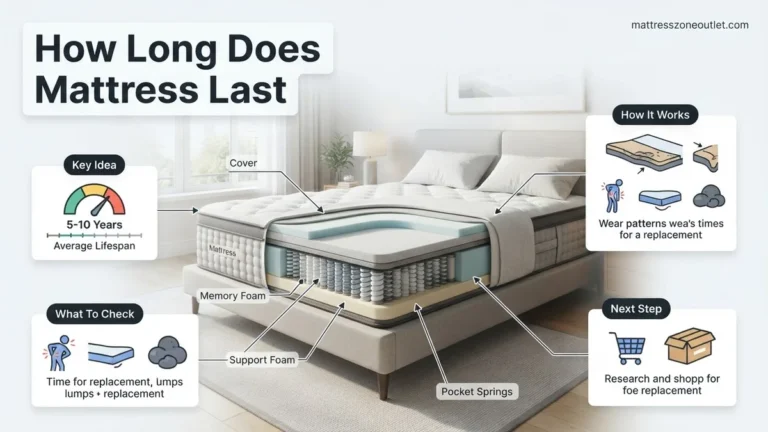
Standard spring mattresses typically last between 5 to 8 years before structural integrity and coil support significantly degrade. The primary reason for breakdown is metal fatigue in the inner steel coils combined with flattening comfort layers. Regular maintenance and proper foundations can maximize this lifespan, but everyday wear inevitably leads to sagging.
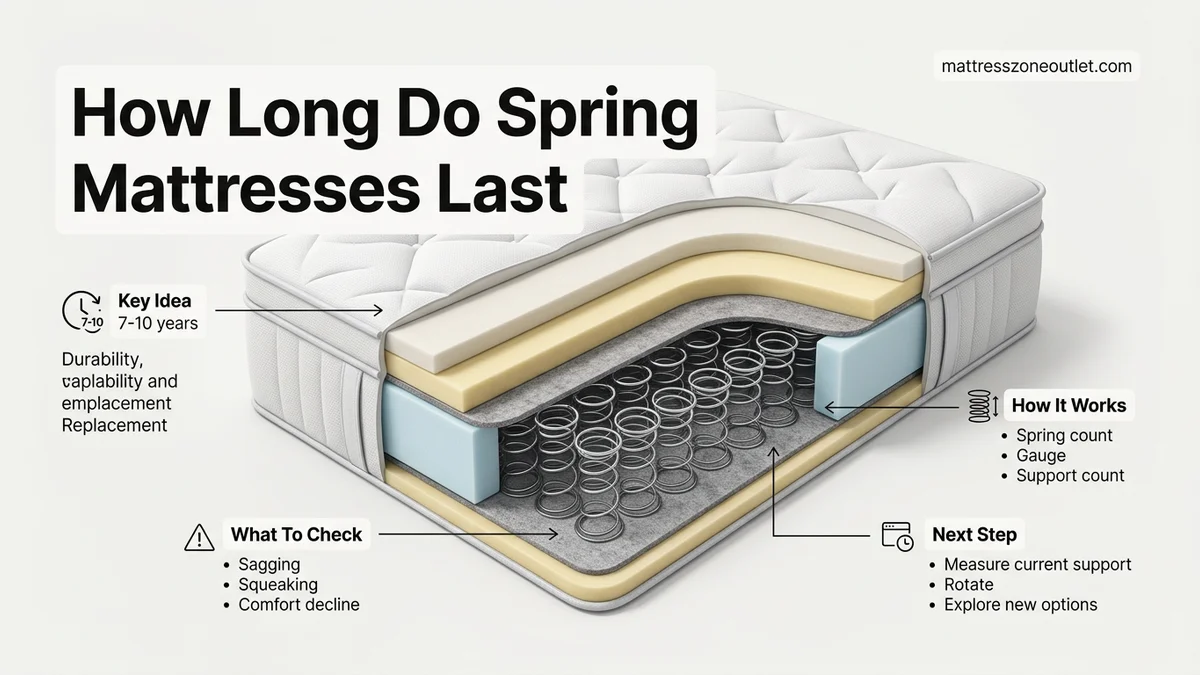
A standard spring mattress generally lasts between 7 to 10 years before it begins to lose vital support and develop body impressions. If you bought a traditional innerspring bed back in 2016, you are likely feeling the effects of fatigued steel coils right now in 2026.
Understanding this timeline prevents you from waking up with chronic lower back pain. Knowing the exact lifespan helps you budget for a replacement before your mattress completely breaks down.
As you navigate your sleep health this year, knowing how and why these beds degrade keeps you informed. Let us look at the mechanics behind spring fatigue and how to test your current setup.
Key Takeaways
- Spring mattresses generally last 5 to 8 years depending on build quality.
- Metal fatigue in steel coils causes eventual loss of support and sagging.
- Higher coil counts and thicker gauge wire improve overall mattress durability.
- Using a supportive, sturdy box spring or foundation prevents premature spring damage.
- Waking up with back pain or visible body impressions indicates a needed replacement.
What Causes Spring Mattresses to Sag and Fail Over Time
Steel coils are the backbone of your bed, but they do not last forever. Metal fatigue is the primary reason spring mattresses fail after years of heavy compression.
Metal Fatigue and Coil Degradation
Every time you lie down, your weight applies constant pressure to the steel coils. Over hundreds of nights, this repetitive stress alters the crystalline structure of the metal. The coils lose their elastic memory and fail to spring back to their original height. Low-quality steel alloy accelerates this process, leading to premature sagging within just 3 to 5 years.
Breakdown of Comfort Layers
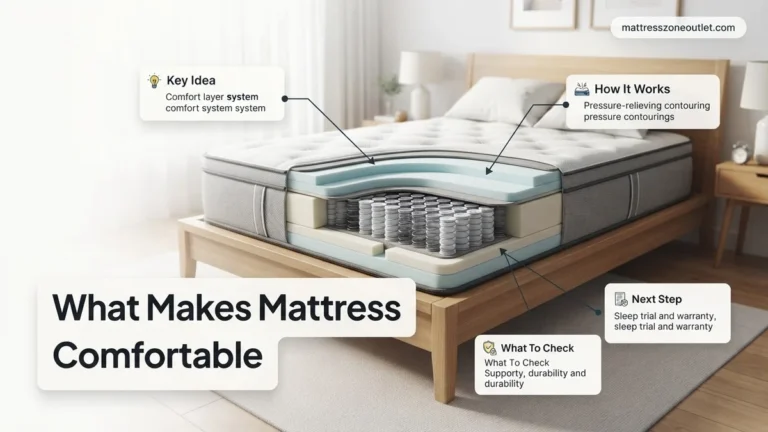
Beneath the quilted cover, comfort layers made of low-density polyurethane foam sit directly on top of the coils. These foams crush down permanently under body weight long before the steel breaks. Once this padding flattens out, you feel the hard coils beneath you, rendering the mattress uncomfortably stiff even if the spring unit is technically intact.
- Constant downward force breaks down steel elasticity over time.
- Low-density comfort foam compresses and loses rebound capacity quickly.
- Lack of edge support causes perimeter coils to bend outward permanently.
- Humidity and body moisture can rust internal steel components, weakening structural integrity.
Step-by-Step Guide to Testing Your Current Spring Mattress Lifespan
You do not have to guess whether your mattress is past its prime. Simple diagnostic checks reveal the true internal condition of your sleeping surface.
The Visual and Hand-Pressure Test
Strip all sheets and blankets off your bed to expose the bare surface. Stand back and look across the length of the mattress to spot visible dips where you normally sleep. Press your hands firmly into the center of the mattress and release them quickly to see how fast the surface rebounds.
The Sleep Quality and Pain Audit
Pay attention to how your body feels when you wake up in the morning. If you consistently toss and turn or wake up with stiffness that disappears an hour after getting up, your mattress is failing to support your spine. Comparing your sleep quality in a hotel bed to your bed at home provides a clear baseline.
- Inspect the surface visually for permanent indentations exceeding one inch in depth.
- Perform the hand-press test to check if the coils bounce back instantly.
- Evaluate your morning aches and pains over a consistent two-week period.
- Check the box spring or foundation for wobbling or broken internal wooden slats.
How to Fix Mattress Wear and Extend Your Spring Bed Durability
Maximizing the lifespan of an innerspring mattress requires proactive maintenance. According to sleep ergonomics researchers, minor structural shifts can cascade into permanent coil damage if left unaddressed. Implementing a strict care routine in 2026 can easily add two to three functional years to your bed.
1. Rotate and Flip Strategically
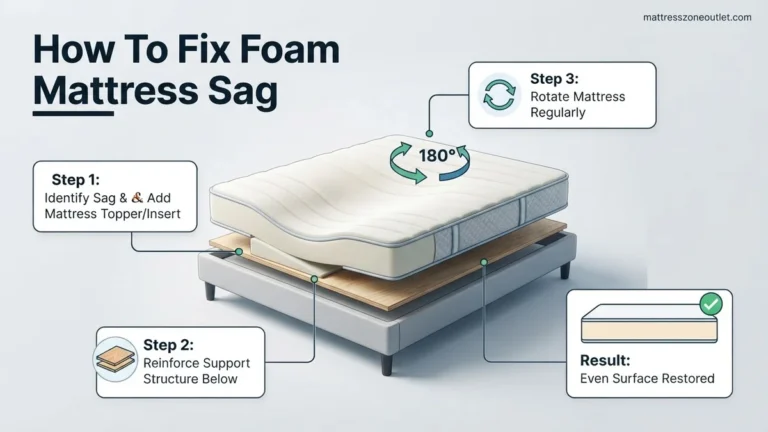
Uneven weight distribution causes localized coil fatigue and sagging. Most modern continuous-coil and pocketed-coil beds require regular rotation to distribute wear evenly. Follow these structured steps every three to six months:
- Strip all bedding, pillows, and mattress protectors down to the bare surface.
- Grab the reinforced side handles with a partner to avoid tearing the fabric seams.
- Rotate the mattress 180 degrees so the head section faces the foot of the bed.
- Check the product label; if your spring bed is double-sided, flip it completely over.
2. Reinforce Foundation Support
A failing foundation accelerates spring degradation by forcing coils to absorb uneven stress. Ensure your box spring or slatted base meets modern manufacturing standards. Slats must be no more than two to three inches apart to prevent individual springs from dipping into the gaps.
What If Your Spring Mattress Still Fails and Needs Replacement
If you have rotated your bed, upgraded the foundation, and still wake up with persistent lower back pain, the internal steel coils have likely reached structural fatigue. When standard troubleshooting fails, consider these final escalation steps to resolve your sleep setup:
- Evaluate the severity of the body impressions using a strict depth test. Place a straight edge across the mattress surface and measure any sag exceeding 1.5 inches.
- Consult a certified mattress technician or inspect the manufacturer warranty terms for structural defect coverage.
- Budget for a full mattress replacement if the internal steel framework is compromised. Premium hybrid and traditional spring replacements typically cost between $800 and $2,500 depending on sizing and coil count.
- Recycle your old spring mattress responsibly through municipal bulk pickup or specialized metal reclamation programs to keep steel out of local landfills.
Conclusion
Understanding how long spring mattresses last ensures you never compromise your spinal health on a degraded sleep surface. While routine rotation and proper foundations stretch durability up to the eight-year mark, internal steel fatigue remains inevitable. According to verified research and sleep industry standards, replacing an expired mattress is critical for maintaining proper alignment and restorative rest. Take action today by measuring any surface sagging and planning your upgrade if your bed exceeds its functional window.
❓ Frequently Asked Questions
What is the typical lifespan of a budget innerspring mattress?
Budget-friendly innerspring models usually last between 3 to 5 years. They utilize thinner steel gauges and lower-density foams that compress and break down much faster under daily weight.
How does body weight impact how long a spring mattress lasts?
Heavier sleepers exert more force on the internal steel coils, accelerating metal fatigue and foam breakdown. Consequently, sleepers over 230 pounds may need to replace standard spring mattresses sooner than the 5-year mark.
Can a sagging spring mattress be repaired at home?
You cannot repair broken or fatigued internal steel coils at home. While mattress toppers can temporarily mask minor surface dips, a structurally compromised spring system requires full mattress replacement.
What role does the bed foundation play in mattress durability?
A solid, unyielding foundation or box spring prevents the inner coils from absorbing uneven pressure. Placing a spring mattress on a weak or broken frame will cause premature sagging and structural failure.
Are modern pocketed coil mattresses more durable than traditional bonnell coils?
Pocketed coils operate independently, reducing motion transfer and distributing pressure more evenly across the bed. This independent movement often translates to slightly better longevity compared to interconnected bonnell coil systems.
What are the health risks of sleeping on an expired spring mattress?
An old, sagging spring mattress fails to support proper spinal alignment, leading to chronic back pain and muscle stiffness. Additionally, older mattresses accumulate dead skin cells, dust mites, and allergens that can trigger respiratory issues.