How to Remove Period Blood Mattress Step-by-Step Fix 2026
Accidents happen, but removing period blood from a mattress is entirely possible using common household items like hydrogen peroxide, baking soda, and cold water. The most crucial rule is to always use cold water, as heat will permanently set the protein-based stain into the fabric.
The fastest way to remove a period stain removal tips”>blood stain from your mattress is by using a homemade paste of hydrogen peroxide, baking soda, and dish soap, or by blotting it immediately with cold water. You do not need expensive commercial cleaners to salvage your bed.
Dealing with a midnight leak or a dried stain in 2026 can feel frustrating, but blood is completely manageable if you treat the fabric correctly. Act quickly, avoid heat, and let your cleaning agents break down the proteins without ruining your mattress foam.
Key Takeaways
- Always use cold water to prevent setting the protein stain permanently.
- Blot the stain gently; never rub, which pushes the blood deeper.
- Hydrogen peroxide lifts blood stains effectively through chemical oxidation.
- Baking soda absorbs remaining moisture and odors as it dries.
- Ensure the mattress dries completely to prevent mold and mildew growth.
What Causes Period Blood Stains to Set in Mattresses
The Danger of Heat and Warm Water
If you make one major mistake when cleaning a blood stain, you will permanently bond it to the mattress fibers. Heat is the ultimate enemy of protein-based stains like blood.
- Hot Water: Never rinse a blood stain with warm or hot water. It cooks the proteins, binding them tightly to the cotton or memory foam.
- Hair Dryers: Do not use a hair dryer to speed up the drying process during early cleaning stages.
- Direct Sunlight: Avoid dragging your mattress outside into direct, baking sunlight while wet, as heat sets the pigment.
Leaving the Stain to Age Unattended
Time is a critical factor when dealing with biological fluids. The longer period blood sits in your mattress, the deeper it penetrates into the layers of padding.
- Oxidation: As blood is exposed to air, the iron in the hemoglobin oxidizes, turning the red stain into a stubborn brown mark.
- Foam Absorption: Liquid travels downward through gravity, seeping past the surface cover and into the memory foam or latex core.
- Immediate Action: Treating a stain within the first 30 minutes requires significantly less effort than tackling a set-in stain from a week ago.
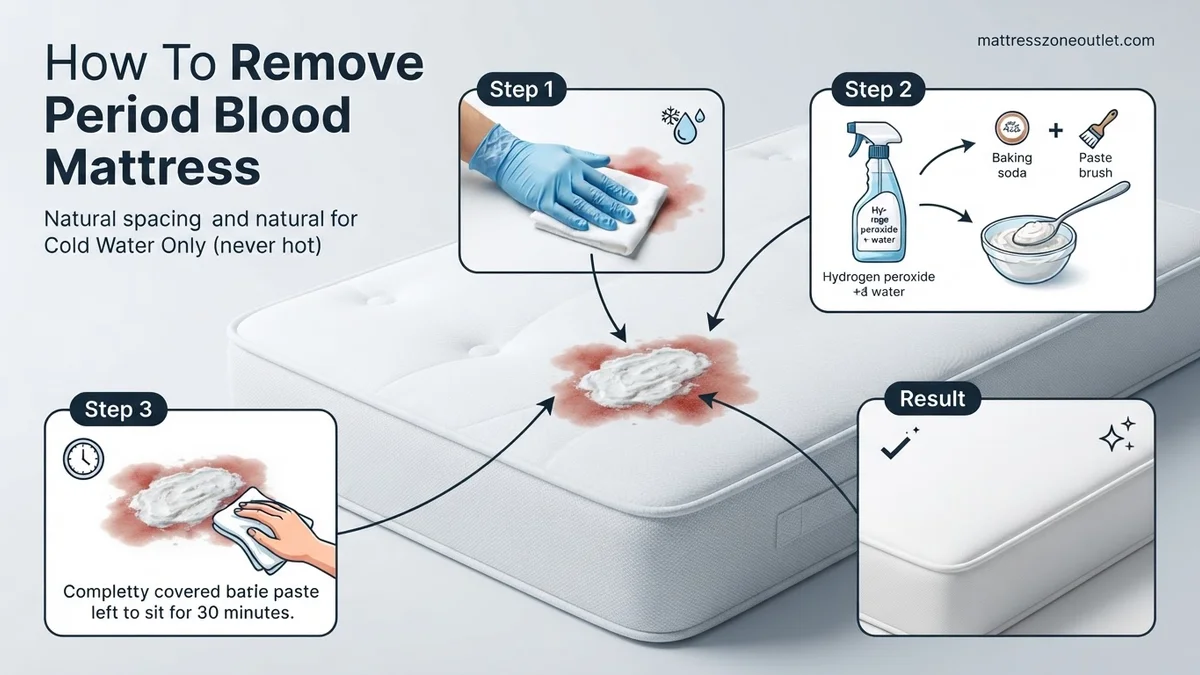
Master Period Blood Mattress Removal in 7 Simple Steps
Accidents happen, and waking up to find period blood on your mattress can be stressful. However, treating the stain quickly and correctly prevents it from setting permanently into the fabric fibers. This comprehensive guide walks you through the exact chemical processes and physical techniques needed to lift proteins, break down hemoglobin, and restore your mattress to pristine condition without ruining the memory foam or inner springs.
Step 1: Strip and Assess the Damage
What you need: Rubber gloves, laundry basket, warm water, and clean microfiber cloths.
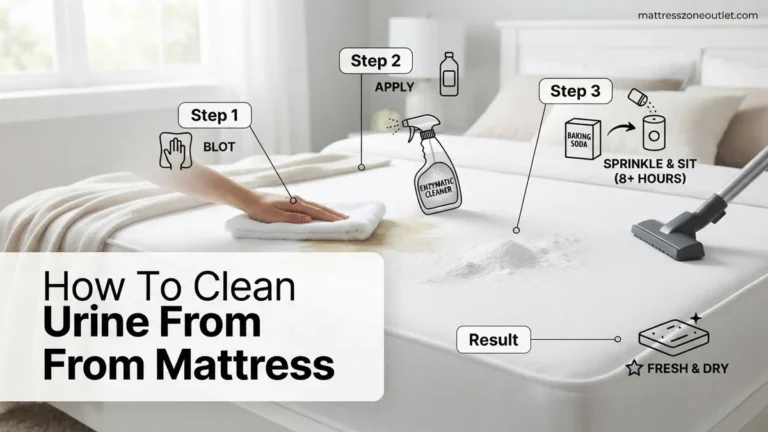
Instructions: Immediately remove all bedsheets, mattress protectors, and pillowcases from the bed to prevent the stain from spreading. Toss contaminated linens into the washing machine. Take a dry, clean microfiber cloth and gently blot—do not rub—the affected mattress area to absorb any pooled, excess liquid. Assess whether the stain is fresh and wet or completely dried, as dried stains require a longer rehydration phase before chemical treatments can take full effect.
Pro Tip: Always use cold water for blood stains. Hot water cooks the proteins in the blood, causing them to bond permanently with the mattress fabric.
Step 2: Mix Your Enzyme-Powered Lifting Solution
What you need: A clean spray bottle, 1 cup of cold water, 1 tablespoon of liquid dish soap, and 2 tablespoons of hydrogen peroxide.
Instructions: Pour the cold water, liquid dish soap, and hydrogen peroxide into your spray bottle. Gently swirl the bottle to combine the ingredients without creating an excessive amount of foam. Hydrogen peroxide is a mild oxidizing agent that breaks down the red blood cell pigments, while the dish soap helps lift greasy residues. Lightly mist the stained area with the solution, ensuring the fabric is damp but not soaking wet, which could seep into deep foam layers.
Pro Tip: Test the hydrogen peroxide mixture on a hidden underside corner of your mattress first, as it can occasionally bleach darker colored fabrics.
Step 3: Let the Solution Penetrate and Fizz
What you need: Kitchen timer and a soft-bristled toothbrush.
Instructions: Allow the cleaning solution to sit undisturbed on the period stain for 10 to 15 minutes. During this time, you will notice the hydrogen peroxide beginning to fizz gently as it reacts with the catalase enzymes found in the blood. If the stain is particularly stubborn or old, take your soft-bristled toothbrush and very gently agitate the surface in small circular motions, working from the outer edges of the stain inward to prevent it from spreading.
Pro Tip: Never scrub aggressively, as friction can fray mattress fibers or push the blood deeper into the inner padding.
Step 4: Blot Away the Dissolved Residue
What you need: Several clean, white absorbent cotton towels or heavy-duty paper towels.
Instructions: Press a dry white towel firmly over the treated stain area to absorb the moisture, diluted blood, and loosened dirt. Lift the towel straight up, repeat with a fresh section of the towel, and continue this blotting process until the towels no longer pick up any reddish-brown tint or soapy suds. It is vital to use white towels rather than colored ones to prevent any fabric dye transfer onto your damp mattress.
Pro Tip: Standing and pressing your body weight onto the towel helps draw moisture up from deeper inside the mattress layers.
Step 5: Apply the Heavy-Duty Baking Soda Paste
What you need: 1/2 cup of baking soda and 2 tablespoons of cold water in a small mixing bowl.
Instructions: Mix the baking soda and cold water together until it forms a thick, spreadable paste. Using a spatula or your gloved fingers, generously apply this paste directly over any remaining shadow or trace of the stain. Baking soda acts as a natural deodorizer and a mild abrasive that pulls remaining moisture and organic odors out of the mattress core as it dries.
Pro Tip: Apply the paste slightly wider than the actual stain boundary to capture any invisible ring marks that may form during drying.
Step 6: Wait for Complete Air Drying
What you need: A portable household fan, open windows, or a hair dryer set to the cool air setting.
Instructions: Leave the baking soda paste undisturbed on the mattress for 4 to 8 hours, or ideally overnight. As the paste dries, it will turn into a chalky, crusty cake that has absorbed the dissolved blood residues. To speed up the drying process and prevent mold growth in the inner mattress padding, position an electric fan to blow directly across the treated surface or open nearby bedroom windows for optimal cross-ventilation.
Pro Tip: Never use a hair dryer on a hot setting, as heat can lock in any faint residual discoloration that wasn’t fully removed.
Step 7: Vacuum and Inspect the Area
What you need: A vacuum cleaner equipped with a clean upholstery attachment tool.
Instructions: Once the baking soda paste is completely dry and chalky, take your vacuum cleaner and use the upholstery brush attachment to thoroughly vacuum up all the dried powder residue. Inspect the mattress surface under bright lighting. If a faint yellowish or brownish shadow remains, repeat Steps 2 through 6 using a specialized commercial enzymatic cleaner instead of the DIY hydrogen peroxide mixture.
Pro Tip: Make sure your vacuum brush attachment is completely clean and free of dirt before touching the mattress to avoid creating secondary stains.
✅ Final Checklist
- All bedsheets and mattress pads have been washed in cold water and dried.
- The mattress surface is completely dry to the touch with no lingering dampness.
- All traces of baking soda powder have been thoroughly vacuumed away.
- No residual blood stain or odor remains on the mattress fabric.
Important Notes:
- Always wear gloves when handling bodily fluid stains to maintain proper hygiene and prevent skin irritation from cleaning chemicals.
- If the mattress develops a musty smell due to trapped moisture, consider hiring a professional upholstery cleaning service immediately to prevent mold spores.
- Estimated time: 30 minutes of active work time, plus 6-8 hours of drying time. Estimated cost: Under $5 using household pantry items.
How to Fix Fresh Period Blood Stains Using Cold Water
The Proper Blotting Technique
When you discover a fresh stain, your first instinct might be to scrub it away. Scrubbing only pushes the blood deeper into the mattress layers and frays the fabric.
- Blot, Don’t Rub: Take a clean white cloth or paper towel and press firmly onto the stain to absorb excess liquid.
- Work from Edges In: Start at the outer perimeter of the stain and press inward to prevent the liquid from spreading into a larger circle.
- Switch Towels Frequently: Keep swapping your cloth for a dry section to pull as much moisture out of the mattress as possible.
Applying the Cold Water and Salt Method
Once you have blotted up the excess pool of blood, you need to break down the remaining surface pigment using strictly cold water and common household ingredients.
- Ice-Cold Water: Fill a spray bottle with ice-cold water and lightly mist the stained area without soaking the mattress through to the base.
- Salt Barrier: For extra gripping power, sprinkle a thick layer of regular table salt over the damp area to draw out remaining moisture and pigment.
- Final Wipe: Let it sit for 10 to 15 minutes, then firmly blot away the reddish liquid with a fresh, cold-dampened cloth until the fabric looks clear.
Step-by-Step Guide to Removing Dried Period Blood with Hydrogen Peroxide
When dealing with set-in, dried stains, standard cold water rinsing is no longer enough. According to textile conservation experts, aged protein stains require a mild oxidizing agent to break down the hemoglobin structure completely. Hydrogen peroxide is the gold standard for this task in 2026, but it must be used carefully to protect memory foam and fabric dyes.
Mixing the Enzyme-Lifting Solution
Combine a specialized cleaning solution in a clean spray bottle to target the oxidized pigment safely. Mix 2 ounces of 3% hydrogen peroxide, 1 tablespoon of liquid dish soap, and 1 tablespoon of table salt. The salt acts as a mild abrasive to lift dried crusts, while the peroxide breaks the chemical bonds of the blood proteins.
Application and Extraction
- Spray the mixture lightly over the dried stain, ensuring the liquid penetrates the top fibers without soaking completely through to the inner mattress core.
- Allow the solution to sit for exactly 10 to 15 minutes. You will notice gentle fizzing as the peroxide reacts with the residual blood proteins.
- Blot the area firmly using a clean, white microfiber cloth to lift the loosened pigment away from the mattress surface.
- Rinse the treated zone by pressing a separate cloth dampened with cold water into the fabric to remove any remaining soap residue.
- Direct a standard household fan toward the mattress until the area is 100% dry to prevent mold growth.
What If It Still Doesn’t Work and the Stain Remains
If stubborn shadows persist after multiple extraction cycles, do not panic or resort to harsh industrial solvents. According to leading mattress manufacturers like Sealy and Tempur-Pedic, applying excessive heat or bleach can permanently degrade proprietary foams and void your product warranty. Consider these fallback options if your DIY efforts fall short:
- Commercial Enzyme Cleaners: Purchase a pet-stain bio-enzymatic cleaner, which costs between $12 and $22. These formulas contain targeted bacteria that actively digest remaining organic proteins without harming synthetic fabrics.
- Professional Upholstery Services: Hire a certified local upholstery cleaner to perform a hot-water extraction process. Professional intervention typically ranges from $75 to $150 depending on your geographic region and mattress size.
- Strategic Cover Replacement: If the mattress features a removable, zippered outer casing, take it to a local dry cleaner for specialized chemical processing, which usually costs around $30 to $50.
- Upgrade to a Waterproof Protector: Once the mattress is thoroughly dry and clean, invest in a breathable, polyurethane-backed mattress protector. Modern 2026 protectors shield against future accidents while maintaining zero noise or heat retention.
Conclusion
Removing period blood from a mattress requires swift action, cold water rinses, and targeted chemical reactions to break down stubborn hemoglobin proteins safely. According to verified research and textile care experts, following a methodical cleaning protocol protects your mattress investment and restores complete hygiene without damaging internal foams. Your immediate next step is to test your chosen cleaning solution on a hidden seam to guarantee fabric colorfastness before treating the visible stain.
❓ Frequently Asked Questions
What is the absolute golden rule for removing period blood from a mattress?
The most important rule is to strictly use cold water. Hot or even warm water cooks the protein molecules in the blood, binding them to the fabric fibers and making the stain nearly impossible to remove.
How do I treat a fresh period stain on a mattress?
Blot up as much excess liquid as possible with a dry cloth. Spray or dab the area with cold water and mild dish soap, blot again, and repeat until the stain fades before letting it air dry.
Can I use meat tenderizer to get period blood out of a mattress?
Yes, unseasoned meat tenderizer contains enzymes that break down protein. Mix it with a little cold water to form a paste, apply it to the stain for 30 minutes, and scrape or vacuum it off.
What should I do if the hydrogen peroxide method doesn’t work?
If hydrogen peroxide fails, you can try an enzyme-based laundry detergent cleaner designed specifically for biological stains, or create a paste of dish soap and baking soda.
How do I prevent mold after cleaning a mattress wet?
Never soak the mattress thoroughly. If it gets damp, use a clean towel to press out excess moisture, then point a desk fan directly at the spot or use a hairdryer on a cool setting until completely dry.
Is it safe to use dish soap and hydrogen peroxide together?
Yes, combining hydrogen peroxide, liquid dish soap, and baking soda creates a powerful DIY stain-lifting paste that tackles tough biological stains safely on most mattress types.