How to Fix Mattress Too Soft Proven Step-by-Step Guide 2026
Stuck sleeping on a mattress that lacks support? You can fix a mattress that is too soft without buying a new one by using targeted DIY adjustments, firm toppers, or foundation reinforcement. This guide walks you through diagnosing the sagging and applying immediate, budget-friendly fixes.
You do not need to drop a grand on a brand-new bed just because your current mattress feels like a sinking hammock. In 2026, sleeper ergonomics lean heavily toward customizable support, meaning you can easily salvage a too-soft mattress using targeted DIY adjustments, sturdy foundations, and high-density materials.
Fixing a mattress that lacks support is crucial for more than just comfort. A sagging or overly plush sleep surface throws your spine out of alignment, leading to chronic lower back pain, restless nights, and groggy mornings. By diagnosing the root cause of the softness and applying strategic reinforcement, you can dramatically improve your sleep quality without completely replacing your mattress.
Key Takeaways
- Place a sheet of exterior-grade plywood beneath the mattress for an instant firmness boost.
- Assess whether the issue stems from a broken foundation or worn mattress materials.
- Add a high-density latex topper to create a firmer, more supportive sleep surface.
- Flip or rotate the mattress to redistribute body impressions and wear patterns.
- Check center support legs on your bed frame to prevent sagging in the middle.
What Causes Your Mattress to Feel Too Soft
Before you start throwing money at accessories, you need to diagnose why your bed feels like a marshmallow. Mattresses rarely lose their firmness uniformly. Pinpointing the exact culprit ensures you apply the right fix the first time around.
Foundation and Support Failures
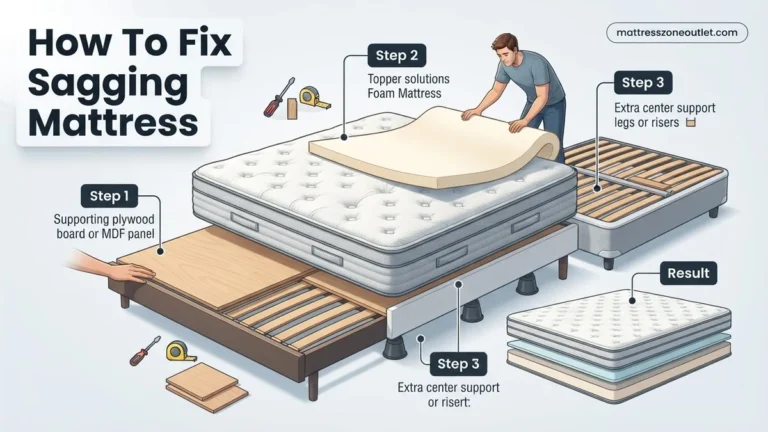
Sometimes the mattress itself is completely fine, but the structure beneath it has given up. Slatted bed frames with slats spaced wider than 3 inches allow soft foam to dip between the gaps. Box springs also degrade internally over time, losing their coil tension and causing the center of the bed to sag. If your mattress feels firmer on the floor than it does on your bed frame, your foundation is the real problem.
Material Wear and Body Impressions
If you sleep in the same position every night, comfort layers compress permanently. Polyfoam and low-density memory foam soften rapidly under continuous body heat and pressure. Once the comfort layer bottoms out, you feel the lack of transitional support. Check for visible body impressions deeper than 1.5 inches using a straightedge and a ruler. If the core materials have softened beyond recovery, you will need to bypass minor tweaks and add dense physical layers.
Mastering Mattress Firmness in 7 Simple Steps
Sleeping on a mattress that feels too soft can lead to chronic lower back pain, poor spinal alignment, and restless nights. Sinking too deeply into your bed forces your spine out of its natural neutral posture, straining muscles and joints. Fortunately, you do not necessarily need to rush out and buy an expensive new mattress immediately. This practical guide will walk you through proven, actionable techniques to firm up your current sleep surface, ranging from quick budget-friendly fixes to permanent structural enhancements.
Step 1: Assess and Rotate Your Mattress
What you need: A partner to help, and a tape measure (optional).
Instructions: Over time, the areas where you sleep most heavily—usually the hips and shoulders—cause localized softening and body impressions in the foam or springs. Begin by completely stripping your bed of all sheets, blankets, and pillows. Grab your partner and rotate the mattress 180 degrees so that the head end is now at the foot. If your mattress is a two-sided flippable model, flip it completely over as well. This shifts your body weight onto a section of the mattress that has experienced less wear and tear, instantly providing a firmer, more supportive feel.
Pro Tip: Mark your calendar to repeat this rotation process every 3 to 6 months to ensure even wear and maintain a consistent surface firmness.
Step 2: Inspect and Upgrade Your Foundation
What you need: A flashlight and potentially a new foundation, box spring, or wooden slats.
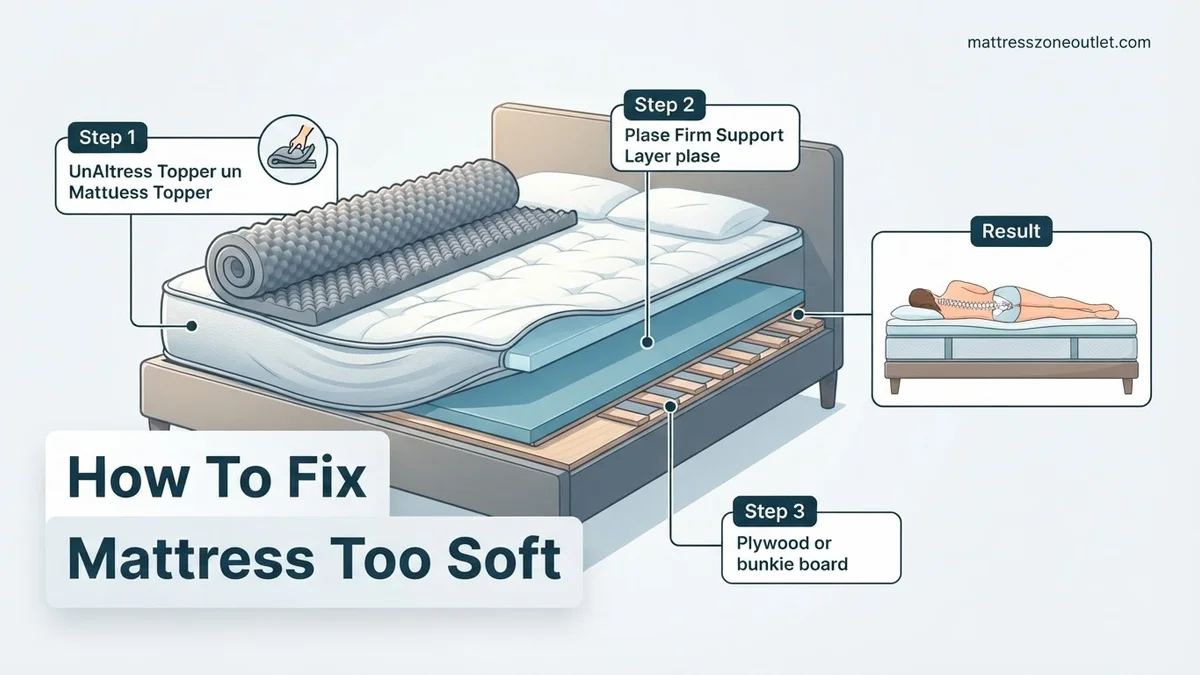
Instructions: A soft mattress feeling is frequently caused by inadequate or sagging support underneath. Shine your flashlight under the bed to inspect the bed frame and foundation. If you are using old wooden slats that are bowed, spaced more than 3 inches apart, or if your box spring has lost its internal spring tension, your mattress will sag into the gaps. Replace old slats with solid ¾-inch plywood cut to size, or install a sturdy bunkie board. A rigid, uncompromising foundation dramatically increases the overall perceived firmness of any mattress resting on top of it.
Pro Tip: Test your mattress on the floor for one night. If it suddenly feels firm enough, your old foundation or frame is definitely the culprit.
Step 3: Introduce a Firm Mattress Topper
What you need: A high-density latex or firm memory foam mattress topper (2 to 3 inches thick).
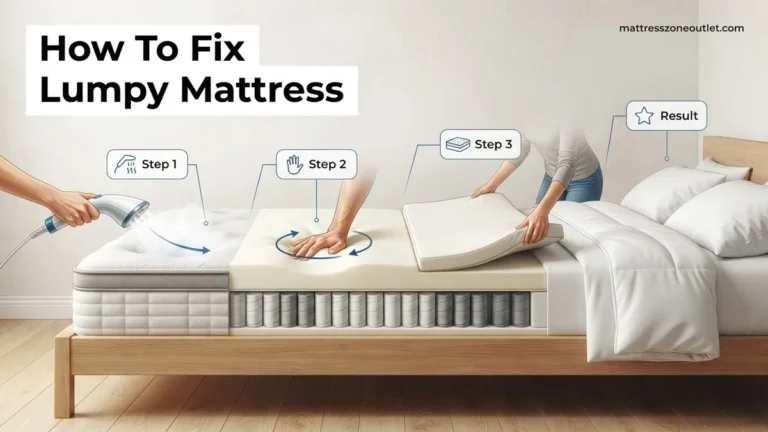
Instructions: While adding a layer to a soft bed sounds counterintuitive, the type of material matters immensely. Avoid plush or plush-gel toppers. Instead, purchase a high-density latex topper or an extra-firm polyurethane foam topper. Latex naturally pushes back against body weight, offering dynamic resistance. Place this firm topper directly on top of your existing soft mattress, then secure it using deep-pocket fitted sheets or corner straps. This creates a supportive transitional top layer that stops your hips from sinking too deeply while still cushioning your pressure points.
Pro Tip: Look for a latex topper with an ILD (Indentation Load Deflection) rating of 32 or higher to ensure it provides genuine firmness.
Step 4: Control Your Bedroom Temperature
What you need: A household thermostat, air conditioner, or breathable cotton bedding.
Instructions: Many modern mattresses utilize memory foam or gel-infused comfort layers that are thermally reactive. These materials soften significantly when exposed to body heat and warm ambient room temperatures. If your bedroom stays above 72 degrees Fahrenheit (22 degrees Celsius), your mattress will inherently feel softer as the night progresses. Lower your thermostat to around 65 to 68 degrees Fahrenheit. Additionally, swap out synthetic microfiber sheets for crisp, breathable percale cotton or linen to help dissipate body heat and keep the foam layers structurally rigid throughout the night.
Pro Tip: Avoid electric blankets or heavy synthetic comforters, as trapped heat is the number one enemy of a firm memory foam surface.
Step 5: Install Plywood Insertion Panels
What you need: A sheet of 3/4-inch CDX plywood, a measuring tape, and a saw (or have it cut at the hardware store).
Instructions: If rotating and upgrading your base did not provide enough rigidity, you can create a completely unyielding support plane by placing plywood directly underneath the mattress. Measure the inner dimensions of your bed frame. Have a hardware store cut a sheet of 3/4-inch exterior-grade plywood to those exact dimensions. Place the plywood panel directly on top of your existing slats or platform base, then lay your mattress back down. This completely eliminates any flex in the mattress support system, forcing the internal coils or base foam to remain flat and firm.
Pro Tip: Sand the edges of the plywood smooth to ensure they won’t snag or tear your mattress fabric or box spring cover.
Step 6: Layer with High-Density Felt or Insertion Pads
What you need: Heavy-duty wool felt pads or dense carpet underlayment cut to size.
Instructions: If you find that the mattress is only too soft in specific zones, such as under your torso, you can target those areas. Strip the mattress down and place dense, high-density felt pads or specialized mattress stiffener pads directly under the sagging zone between the mattress and the foundation. These industrial-grade materials add localized resistance without altering the overall height or appearance of your bed. Test the feel by lying down after placement, adjusting the thickness of the pads until your spine maintains a neutral, straight alignment.
Pro Tip: Avoid using haphazard items like cardboard, as they can absorb ambient humidity, break down over time, and foster mold growth.
Step 7: Know When to Invest in a Replacement
What you need: Warranty documentation, purchase receipt, and a budget plan.
Instructions: Sometimes a mattress is simply past its structural prime. If your mattress is more than 8 to 10 years old, or if the internal support core—whether springs or high-density base foam—has completely degraded and broken down, external fixes will only offer temporary relief. Check your original purchase warranty to see if body indentations exceed the manufacturer threshold (usually 1.5 inches). If DIY modifications fail to alleviate your back pain, it is time to shop for a new, naturally firm hybrid or innerspring mattress.
Pro Tip: When shopping for a new replacement, look for mattresses rated “Medium-Firm” to “Firm” and prioritize models with pocketed coils over all-foam builds.
✅ Final Checklist
- Mattress has been rotated 180 degrees (and flipped if dual-sided).
- Bed slats or foundation verified to have less than 3 inches of space between supports.
- Firm latex or high-density topper securely fitted (if utilized).
- Bedroom ambient temperature maintained between 65°F and 68°F.
- Plywood or support panels checked for stability and lack of movement.
Important Notes:
- Always use caution and wear safety glasses when cutting plywood or handling power tools.
- Consult a medical professional or physical therapist if back pain persists despite achieving proper spinal alignment.
- Estimated time: 1 to 2 hours. Estimated cost: $30 (for DIY plywood or basic adjustments) up to $200 (for a high-quality latex topper).
Step-by-Step Guide on How to Fix a Soft Mattress
Once you know why your bed lacks support, it is time to take action. You can implement these proven, step-by-step methods to instantly boost your mattress firmness and save your back.
Step 1: Reinforce the Foundation
Start from the ground up to maximize immediate firmness gains without altering the sleep surface feel.
- Check slat spacing: If your slats are wider than 3 inches, lay a piece of 3/4-inch plywood cut to size across the frame to create a solid platform.
- Test the floor method: Place your mattress directly on the floor for one night. If the sagging stops, your box spring or frame is the issue.
- Upgrade support: Replace worn box springs with a rigid wooden slat foundation or a heavy-duty metal platform frame.
Step 2: Add High-Density Support Layers
If the foundation is solid, you must alter the mattress surface from the top down.
- Choose latex over memory foam: Buy a 2-inch or 3-inch firm latex topper (around 32 to 38 ILD firmness rating) to add resilient, buoyant push-back.
- Avoid plush toppers: Skip featherbeds, down alternatives, and soft memory foam, which will only exacerbate your sinking problem.
- Use a mattress pad snugly: Secure a thick, quilted cotton mattress pad over your topper to compress the layers slightly and create a cohesive, firmer feel.
Creative DIY Adjustments to Increase Mattress Firmness
When external supports like toppers or box springs are not enough, targeted interior and structural tweaks can alter how a too-soft mattress responds under body weight. These creative interventions provide temporary or semi-permanent stiffness enhancements without buying a brand-new sleep system.
Adjusting Foundation Support Slats
Widely spaced foundation slats allow soft mattress foam to sag, reducing overall surface tension. Closing the gaps instantly creates a firmer feel.
- Measure existing gaps: Verify that your bed frame slats are spaced no more than 2 to 3 inches apart to prevent foam sagging.
- Add a solid bunkie board: Place a 1-to-3-inch thick low-profile bunkie board directly over the slats to distribute weight evenly.
- Insert plywood reinforcement: Cut a piece of 3/4-inch exterior-grade plywood to fit your mattress size and lay it across the base.
Strategic Weight Distribution Tweaks
If a mattress softens primarily in the hip or shoulder zones, localized adjustments can restore spinal alignment.
- Rotate the mattress: Turn the mattress 180 degrees every 3 to 6 months to utilize fresher, firmer foam regions.
- Target high-sink zones: Slide a dense rubber mat or folded yoga mat directly beneath the sagging area inside the mattress cover if accessible.
- Add a plywood layer under the torso: Place a half-sheet of plywood under the middle third of the mattress frame to support heavy pressure points.
What If It Still Doesn’t Work and You Need Replacement?
If structural modifications, high-density toppers, and foundation upgrades fail to eliminate persistent morning back pain, the internal support core has likely degraded past the point of recovery. Consider these fallback steps:
- Check warranty coverage: Review manufacturer documentation for structural indentation clauses. A depression exceeding 1.5 inches usually qualifies for a warranty claim or prorated replacement.
- Calculate cost versus utility: Avoid spending more than $150 to $300 on temporary fixes like toppers and plywood if the mattress itself is over 8 years old.
- Test high-density foam options: If purchasing a replacement in 2026, look for hybrid mattresses featuring pocketed coils paired with high-density polyfoam (minimum 1.8 lbs/cu ft) or latex for long-lasting structural integrity.
- Professional recycling assessment: Contact local municipal waste management or specialized mattress disposal services to haul away the old soft unit, with average pickup costs ranging from $50 to $100.
Conclusion
Sleeping on an overly soft mattress disrupts spinal alignment and accelerates chronic musculoskeletal strain. Implementing targeted solutions like high-density latex toppers, solid plywood foundations, or strategic rotation can successfully salvage an unsupportive bed. According to verified research and sleep ergonomic sources, upgrading your support system drastically reduces spinal pressure within days. Take action today by testing a firm topper or reinforcing your bed frame to achieve optimal spinal neutrality tonight.
❓ Frequently Asked Questions
How can I tell if my mattress is too soft or if my foundation is broken?
Place the mattress on a flat floor. If it still feels excessively soft or sags on the floor, the mattress itself is the problem; if it feels firmer on the floor, your foundation or box spring is failing.
Will a thick memory foam topper fix a soft mattress?
No, a traditional memory foam topper will actually make a soft mattress feel even softer and trap more body heat. Instead, choose a firm latex topper or a dense polyfoam layer.
Is sleeping on a mattress that is too soft bad for your back?
Yes, an overly soft mattress lacks proper spinal alignment, allowing your hips to sink too deeply, which frequently leads to lower back pain and stiffness upon waking.
What type of plywood should I use to firm up a soft bed?
Use a half-inch or three-quarter-inch piece of exterior-grade plywood cut to the exact dimensions of your mattress base to ensure even weight distribution and prevent splintering.
Can adding extra slats to my bed frame help with a soft mattress?
Yes, if your bed frame has wide gaps between slats, the mattress can dip into those spaces. Adding more wooden slats or a bunkie board provides a solid, flat platform that increases perceived firmness.
When is it officially time to give up on fixes and buy a new mattress?
If you have tried a firm topper, plywood support, and frame adjustments, but still wake up with chronic pain or visible body indentations deeper than 1.5 inches, it is time for a replacement.