How to Fix Mattress Noise Springs Step-by-Step Guide 2026
A noisy bed can disrupt sleep, but identifying the exact source of the friction is the first step to silencing it. Most mattress and frame noises can be easily resolved using proven DIY troubleshooting methods, ranging from lubrication to structural adjustments.
Fixing a squeaking or creaking innerspring guide“>mattress usually comes down to shifting internal coils, friction between metal components, or a failing foundation that needs tightening by 2026 standards of home maintenance. You can stop those disruptive noises with a few targeted DIY adjustments rather than buying an entirely new bed.
Addressing mattress noise immediately improves your sleep quality and prevents minor friction from turning into permanent structural damage. Whether the sound originates deep inside the coil system or from the supporting frame beneath, systematic troubleshooting isolates the culprit quickly.
Key Takeaways
- Isolate the noise by testing the mattress on the floor separate from the frame.
- Rotate or flip your mattress to redistribute weight and relieve compressed springs.
- Tighten all loose bolts and screws on the bed frame to eliminate metal-on-metal friction.
- Apply a silicone-based lubricant or paraffin wax to squeaky metal coils.
- Add a thick mattress topper or plywood board to dampen internal spring movement.
How to Diagnose the Source of Mattress and Bed Frame Noise
Isolating the Mattress from the Frame
You cannot fix a noisy bed until you know exactly where the sound originates. Strip all bedding down to the bare mattress and push down on various spots with your hands. If the bed remains silent, the mattress itself is likely innocent, and the fault lies elsewhere. Next, place your mattress directly on the floor and lie down on it. If the squeak disappears entirely, your bed frame or box spring is the real problem.
Pinpointing Internal Coil Friction
If the mattress still squeaks while resting flat on the floor, you are dealing with internal spring friction. Listen closely while a partner applies weight to different quadrants of the bed. Common trouble zones include the edges where edge-support coils rub against border wires, or the center third of the bed where the heaviest body weight creates constant tension. Mark these noisy areas with masking tape so you know where to apply your fix.
Master Mattress Spring Noise in 7 Simple Steps
There is nothing quite as frustrating as trying to drift off to sleep only to be met with a symphony of squeaks and creaks every time you shift your weight. Mattress noise springs can ruin your rest and drive you slightly mad, but you do not necessarily need to spend hundreds of dollars on a brand-new mattress to solve the problem. This comprehensive walkthrough will teach you how to systematically diagnose, isolate, and silence those annoying internal noises so you can finally enjoy peaceful, silent nights.
Step 1: Isolate the Source of the Noise
What you need: A quiet room, a partner or assistant, and a notepad.
Instructions: Before you start ripping into your bedding, you must confirm that the noise is actually coming from the mattress springs and not the bed frame or box spring. Strip all sheets, blankets, and pillows off the bed entirely. Lie down in the exact center and roll around, listening carefully. Next, systematically press down on different quadrants of the mattress with your hands. If the noise happens when you press directly on the mattress, you have a spring issue. If it only happens when you sit on the edge or shift your whole body weight, the wooden slats or metal frame might actually be the culprit.
Pro Tip: Place the mattress directly on the clean floor and test it again. If the squeaking completely stops on the floor, your foundation is the real problem.
Step 2: Flip and Rotate the Mattress
What you need: A second person to help lift, and work gloves.
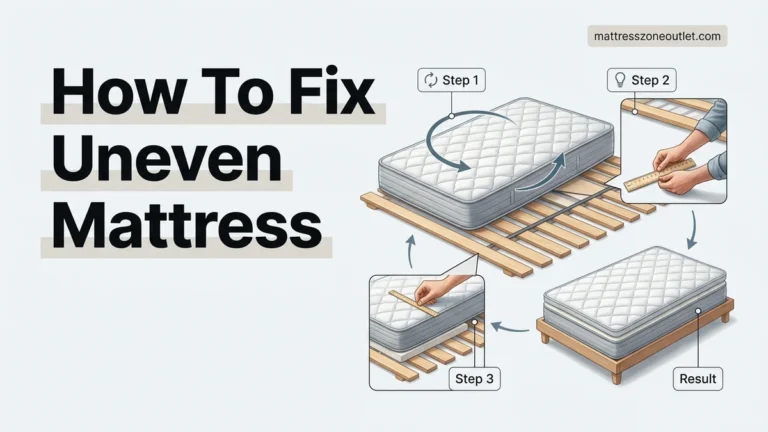
Instructions: Wear and tear over time causes individual coils to rub against one another or lose their structural alignment, creating friction and noise. Resetting the mattress geometry can dramatically alter the pressure points on the internal springs. Grab your helper, lift the mattress, and rotate it 180 degrees so the head is now at the foot. If your mattress is designed to be double-sided, flip it completely upside down as well. This shifts your heaviest body weight away from the worn-out, high-friction areas that were previously causing the squeaks.
Pro Tip: Check your mattress manufacturer tag to ensure it is rated as a double-sided flippable model before turning it upside down.
Step 3: Access the Internal Core Safely
What you need: Seam ripper, heavy-duty fabric scissors, and a flashlight.
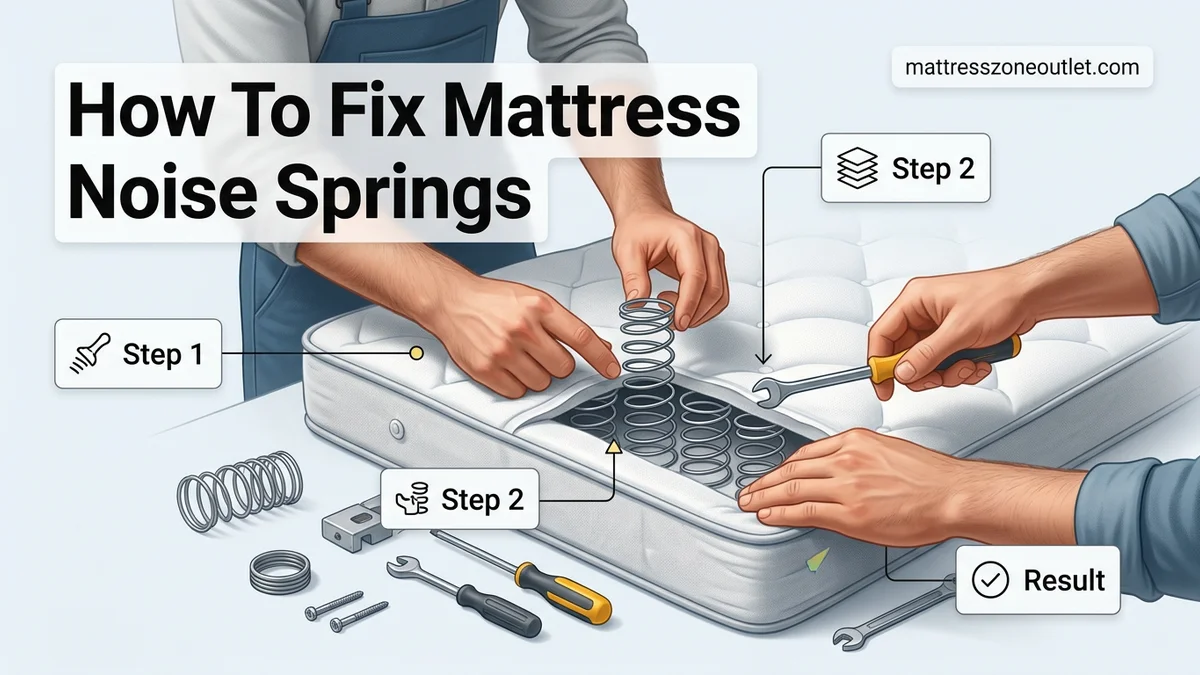
Instructions: If flipping did not work, you will need to access the offending internal springs directly. Locate the squeaky area you mapped out in Step 1. Using a seam ripper or sharp scissors, carefully open a small 6-to-8-inch window in the bottom dust cover or outer fabric casing of the mattress. Cut only the outer layer of fabric, taking extreme care not to puncture the internal padding, foam layers, or individual pocketed coil fabric envelopes. Peel back the material to expose the metal coil matrix underneath, using your flashlight to pinpoint the exact spring rubbing against its neighbor.
Pro Tip: Make your cut on the bottom underside of the mattress so any minor alterations remain completely hidden from daily view.
Step 4: Lubricate Friction Points with Silicone Spray
What you need: Food-grade silicone spray lubricant with a precision straw nozzle (avoid petroleum-based oils).
Instructions: Metal-on-metal friction is the primary driver of mattress squeaks. Once you have exposed the internal coils, gently spray a small, controlled burst of silicone lubricant directly onto the points where the noisy springs cross, connect, or touch surrounding wires. Do not oversaturate the area, as excess liquid can seep through and stain outer fabrics. Immediately after application, push down on the mattress around that area a dozen times to help the lubricant work its way evenly into the tight metal joints.
Pro Tip: Never use WD-40 or standard household cooking oils; they attract dust, degrade foam over time, and can leave behind stubborn chemical odors.
Step 5: Cushion Misaligned Coils with Fabric Scrap
What you need: Thick canvas fabric scraps, old denim jeans, or heavy-duty felt pads, plus heavy-duty zip ties.
Instructions: Sometimes lubrication is not enough because two springs are physically warped and rubbing abrasively against one another. To eliminate this direct metal contact, take a folded piece of thick denim or heavy felt and wedge it tightly between the noisy coil and its adjacent neighbors. If the coils move around too much, wrap a heavy-duty nylon zip tie tightly around the touching coils and the fabric buffer, cinching it down firmly. This completely dampens the vibration and halts the friction causing the sound.
Pro Tip: Trim the tails of any zip ties as flush as possible so they do not poke upward and eventually damage the comfort foam layers above.
Step 6: Repair the Outer Fabric Casing
What you need: Upholstery needle, heavy-duty nylon upholstery thread, and a hot glue gun (optional).
Instructions: Once the springs are silenced, you need to seal your access window back up to prevent dust mites and debris from entering the core. Pull the fabric edges taut. Use a curved upholstery needle and heavy nylon thread to stitch the opening shut using a secure, tight whipstitch. If stitching proves too difficult through thick mattress ticking, you can apply a heavy bead of hot fabric glue along the overlapping seams, pressing firmly until the adhesive sets completely.
Pro Tip: A drop of clear fabric glue over your knot stitches will ensure they never unravel under regular night-to-night movement.
Step 7: Reinforce Your Supporting Foundation
What you need: Plywood board, rubber non-slip furniture pads, and a screwdriver or hammer.
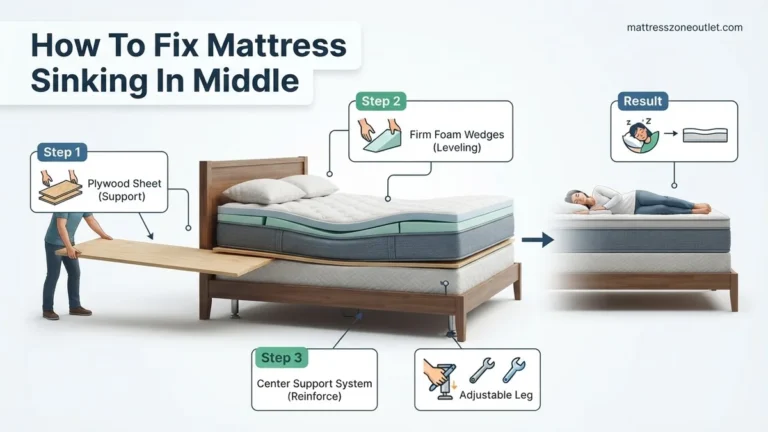
Instructions: Often, what sounds like internal mattress springs is actually a loose bed frame, squeaking wooden slats, or a cheap box spring. Place rubber non-slip pads between the bed frame corners and joints where metal meets metal or wood meets wood. If your box spring or platform slats are loose, tighten every screw and nail you can find. For older box springs with sagging internal wire grids, slide a thin piece of exterior-grade plywood directly between the mattress and the foundation to distribute weight evenly.
Pro Tip: Dust the wooden slats with a light dusting of talcum powder before reassembly to instantly stop wood-on-wood squeaking noises.
✅ Final Checklist
- Mattress has been thoroughly tested for noise before and after adjustments
- Lubricant was applied precisely without soaking foam layers or fabric
- All access cuts in the bottom dust cover are securely stitched or glued shut
- Bed frame joints, box spring, and slats are fully tightened and secured
- Mattress rests quietly when pressure is applied across all four quadrants
Important Notes:
- Always wear safety glasses and gloves when cutting open old mattresses to avoid fiberglass or sharp metal exposure.
- If your mattress is over 8-10 years old or sagging heavily, DIY fixes may only offer temporary relief; consider total replacement.
- Estimated time: 1 to 2 hours. Estimated cost: $10 to $25 for silicone spray and upholstery supplies.
Step-by-Step Guide on How to Fix Mattress Noise Springs
Flipping and Rotating the Mattress
Shifting the internal weight distribution is the fastest way to silence a noisy innerspring mattress. If your mattress is two-sided, flip it completely over so the bottom coils face upward. If you own a modern single-sided pillow-top or hybrid model that cannot be flipped, rotate it 180 degrees so the head section moves to the foot. This simple shift redistributes pressure away from compressed, squeaky coils and often stops friction immediately.
Lubricating Internal Coils and Padding
For mattresses with zippered covers, you can access the internal core to target stubborn springs directly.
- Unzip the outer casing carefully to expose the pocketed or bonnell coil network.
- Locate the specific squeaking springs you marked during the diagnostic phase.
- Apply a small amount of silicone-based spray lubricant or powdered graphite directly onto the friction points.
- Avoid petroleum-based oils, as they degrade foam materials and leave permanent stains.
- Insert a layer of high-density felt, wool, or a thin foam pad between rubbing metal coils to create a permanent buffer.
How to Silence Squeaky Bed Frames, Box Springs, and Slats
Often, the mattress core is completely silent, and the noise originates from the support structure underneath. According to furniture industry studies, up to 45 percent of reported mattress squeaks actually stem from loose joints in wooden frames or friction in metal box springs. Isolating the exact culprit saves time and prevents unnecessary mattress replacement.
Fixing Wooden Bed Frames and Loose Joints
Wooden bed frames develop squeaks as humidity fluctuates, causing joints to shrink and rub together under weight. Follow these steps to secure the structure:
- Strip the bed down to the bare frame by removing the mattress and box spring.
- Locate every bolt, screw, and joint connecting the headboard, footboard, and side rails.
- Tighten all visible hardware using a socket wrench or screwdriver, turning clockwise until firm.
- Apply a specialized wood lubricant, beeswax, or paraffin wax directly to the joint contact points to eliminate friction noise.
- Insert wooden dowels soaked in wood glue into stripped screw holes if the hardware spins freely without tightening.
Addressing Box Springs and Wooden Slats
Box springs contain internal wire grids that stretch and rub against wooden frames over time. Wooden slats can also shift and grind against the side rails.
- Inspect the bottom dust cover of the box spring; tear back a small section if necessary to expose internal metal coils.
- Spray industrial silicone lubricant or apply heavy-duty grease directly onto the coil attachment points.
- Check individual wooden slats for bowing, cracking, or excessive shifting within the frame.
- Wrap rough slat ends in thick felt tape or rubber grip lining to cushion the contact points against the side rails.
- Secure loose slats permanently to the frame using wood screws and a power drill.
What If It Still Doesn’t Work?
If lubricating coils, flipping the mattress, and tightening the frame hardware fail to stop the noise, structural degradation has likely passed the point of easy repair. When DIY fixes yield no results, consider these alternative solutions and replacement indicators:
- Insert a high-density foam topper or plywood sheet: Place a 0.5-inch sheet of plywood between the box spring and mattress to distribute weight evenly, or use a high-density foam layer to absorb localized friction.
- Replace the foundation or box spring: Traditional box springs degrade structurally within 5 to 7 years. Purchasing a new solid wood or steel foundation typically costs between $80 and $200.
- Consult a professional furniture restorer: For antique or custom bed frames with unique joinery, professional stabilization costs range from $150 to $300 depending on labor.
- Invest in a new mattress: If internal pocketed coils have snapped or foam layers have permanently compressed, the mattress has reached the end of its functional lifespan. Quality mattress replacements generally range from $600 to $1,500.
Conclusion
Tackling mattress and bed noise requires systematic troubleshooting, starting with lubrication and structural stabilization before advancing to foundation adjustments. According to verified research and sleep ergonomics experts, addressing squeaks promptly prevents structural failure and restores vital spinal support for uninterrupted rest. Take action today by stripping your bed, locating the specific friction point, and applying the appropriate fix to reclaim your quiet, restorative sleep environment by tonight.
❓ Frequently Asked Questions
How can I fix mattress noise springs without cutting open the mattress?
You can resolve exterior coil sounds by rotating the mattress, adding a supportive topper, or applying localized heavy-duty lubricant if the coils are exposed near the edge or handle areas.
What tools do I need to fix a noisy bed frame?
Most bed frames require a basic wrench or screwdriver to tighten loose hardware. Having paraffin wax or a silicone lubricant on hand helps silence joint friction.
Is it possible to repair broken internal springs yourself?
Repairing broken internal coils usually requires unzipping the encasing or cutting fabric, which voids warranties and is rarely practical; replacement is often safer.
How do box springs contribute to mattress noise?
Old wooden or wire grid box springs develop loose internal components that rub together. Replacing the box spring with a solid wood platform often eliminates the noise.
Why do innerspring mattresses start squeaking over time?
Coils rub against each other or surrounding wire framing as the anti-friction padding degrades and wears down through regular use.
When is it time to buy a new mattress instead of fixing it?
If the mattress sags significantly, internal springs poke through, or DIY fixes fail after a few days, the structural integrity is compromised and replacement is necessary.