Mattress Break In Period Expert Guide & 2026 Fixes
The mattress break in period typically lasts between 30 and 60 days as dense foam layers soften and your body adjusts to the new support. A brand-new mattress often feels significantly firmer in the showroom or upon delivery than it will after routine use. Knowing how to speed up this transition can prevent morning back pain and help you decide whether to keep or return the bed.
Most brand-new mattresses require a standard break-in period of 30 to 60 days. During this window, high-density comfort foams relax, inner-spring coils adjust to your body weight, and your own body adapts to the new support system. If your new bed feels uncomfortably stiff right now, you are not alone, and you do not necessarily need to return it.
Getting past that initial stiffness is essential for your spinal alignment and sleep quality. If you sleep on a surface that is too rigid for too long, you risk waking up with lower back pain, sore shoulders, and disrupted sleep cycles. Navigating the 2026 sleep landscape means understanding how modern hybrid and foam constructions behave so you can speed up the softening process without damaging your investment.
Key Takeaways
- Expect a standard 30 to 60-day adjustment period for new mattresses.
- High-density foams and pocketed coils require physical pressure to soften properly.
- Walking or crawling on the mattress can accelerate the foam-breaking process.
- Warmer room temperatures help memory foam layers conform and yield faster.
- Always check sleep trial deadlines to ensure you do not miss return windows.
What Causes the Mattress Break In Period and Why It Exists
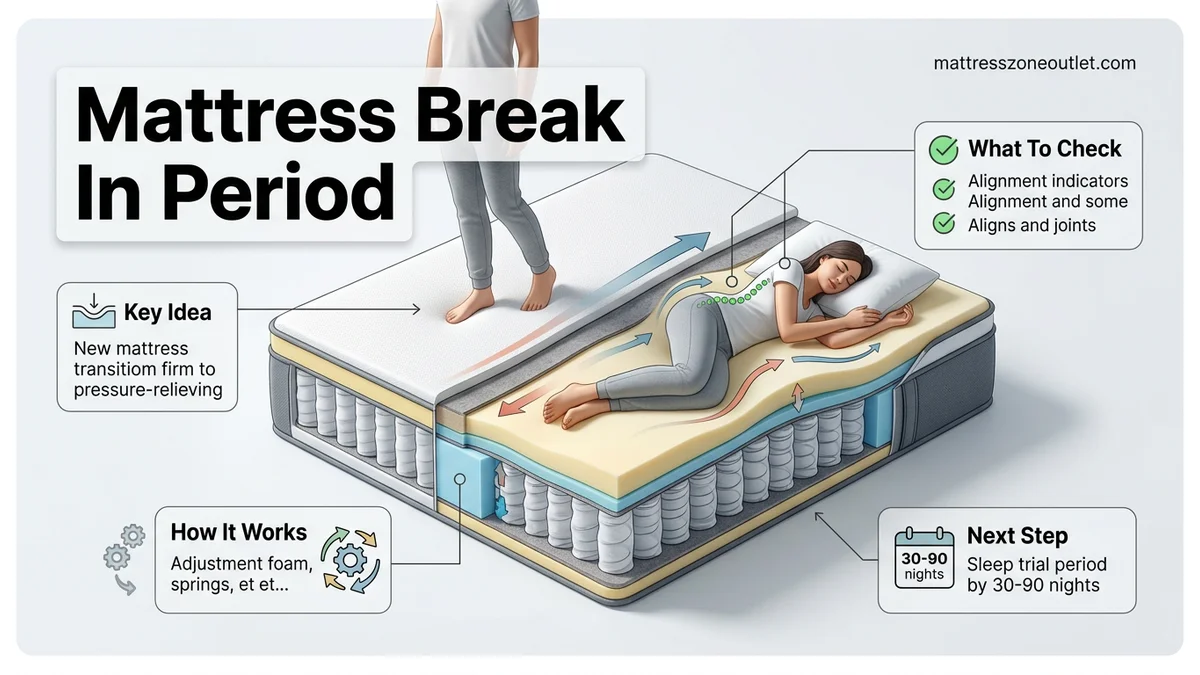
When your mattress arrives fresh from the factory, the internal components are completely pristine and tightly compressed. Manufacturers use high-density polyfoam, memory foam, and latex layers that require physical pressure to reach their intended softness and contouring capability.
The Foam Relaxation Process
Polyfoam and memory foam cells feature tiny air bubbles that are initially stiff and closed. When you apply sustained body weight and warmth night after night, these cell walls stretch and open up. This structural change is what allows the foam to conform closely to your unique pressure points. According to 2026 bedding manufacturing standards, high-density foams are built for longevity, meaning they inherently take longer to loosen up than cheap, low-density alternatives.
Coil and Foundation Adjustment
If you sleep on a hybrid or innerspring mattress, the pocketed steel coils also need time to calibrate. Brand-new steel experiences a brief period of micro-stretching under heavy loads. Additionally, your body needs time to adjust. Even if a mattress will eventually feel great, your neuromuscular system requires 3 to 4 weeks to get used to a brand-new support profile.
- Week 1: Maximum firmness and noticeable muscle adjustment.
- Weeks 2 to 3: Foam cells begin opening up, and surface tension decreases.
- Weeks 4 to 6: The mattress reaches its true baseline comfort level.
How to Fix a Too-Firm Mattress With Step-by-Step Methods
If your new bed feels like a concrete slab and you cannot wait 60 days for it to soften naturally, you can actively accelerate the break-in process. These hands-on methods safely relax the internal materials without voiding your warranty.
Manual Compression and Walking
You can simulate months of sleeping pressure in just one afternoon by manually working the surface. This forces the foam cells to open prematurely.
- Strip all sheets and protectors off your mattress to expose the raw cover.
- Carefully walk across the surface in a slow, controlled marching motion, focusing on the areas where your torso and hips rest.
- Use your hands or knees to press down firmly and massage circular motions into particularly rigid spots.
- Vary your pressure across the entire sleep surface to ensure even softening.
Applying Heat and Weight
Foam reacts significantly to temperature. Increasing the ambient room warmth or adding temporary weight helps the synthetic materials relax faster.
- Turn up your bedroom thermostat or use a space heater briefly to warm up the room, as heat makes memory foam much more pliable.
- Sleep on the mattress every single night during the first month, even during afternoon naps, to maximize body heat transfer.
- Avoid using heavy non-breathable pads that trap moisture, but consider a soft, high-quality mattress topper as a temporary fix if the firmness causes acute pain.
What If It Still Does Not Work and You Need to Return It
Even with consistent use and diligent adjustment strategies, some sleep surfaces simply fail to integrate with your body’s musculoskeletal needs. Leading sleep science institutes note that approximately five to eight percent of mattress purchases result in fundamental incompatibilities that persist well beyond the standard break-in window.
Recognizing Permanent Mismatch
Manufacturers typically mandate a strict 30-day trial minimum before initiating a return, acknowledging the biological adjustment phase. However, if you experience chronic lower back pain, numbness, or severe spinal misalignment after 60 days of continuous use, the foam density or coil gauge is likely incompatible with your sleeping position and body mass index.
Steps for a Smooth Return
Navigating a modern mattress warranty or sleep trial return requires strict adherence to brand policies established for the 2026 retail landscape. Follow these procedural steps to protect your investment:
- Review the trial terms: Check your original purchase agreement to confirm whether the brand requires a mandatory 30-day break-in period before accepting return requests.
- Inspect for damage: Ensure the surface remains pristine, as stains or tears instantly void sleep trials and warranties across almost all major direct-to-consumer and traditional brands.
- Gather documentation: Locate your original digital receipt, delivery confirmation, and photos of the mattress in its current state.
- Contact customer support: Initiate the return via email or live chat to secure a formal return merchandise authorization number and schedule pickup.
- Understand fees and costs: Be prepared for potential return shipping or pickup fees, which typically range from $99 to $150 depending on the brand and your geographic location.
Conclusion
Navigating the mattress break-in period requires patience, strategic physical manipulation, and an understanding of high-density materials. While temporary discomfort is a normal part of foam softening and spring calibration, persistence usually yields optimal spinal alignment and pressure relief within a few weeks. According to verified research and expert sources from the Better Sleep Council, giving your body adequate time to adapt ensures long-term ergonomic health. Your immediate actionable next step is to track your daily comfort levels in a sleep journal for the next 14 days to accurately gauge your body’s adaptation progress.
❓ Frequently Asked Questions
Why does my brand-new mattress feel much firmer than the floor model in the store?
Store models have been tested and compressed by hundreds of shoppers, completely finishing their break-in phase. Your new mattress comes straight from the factory with pristine, tightly compressed materials that require weeks of consistent pressure to reach that same level of comfort.
Will sleeping on the mattress every night really make a difference?
Consistent nightly use is the single most effective way to break in a mattress because your body weight applies targeted, steady pressure to the exact zones where you sleep. Sleeping in different spots or flipping the mattress (if double-sided) can also distribute the wear evenly.
Are there any shortcuts or tricks to speed up the break-in process?
You can accelerate the process by walking across the surface in stocking feet, gently bending the edges, or keeping your bedroom slightly warmer to help memory foam react and soften quicker. Avoid heavy jumping, as this can damage the internal support coils or foundation.
How do I know the difference between a normal break-in period and a defective mattress?
A normal break-in involves generalized firmness that gradually improves over a few weeks without causing sharp pain. A defective mattress usually features permanent sagging, uneven dipping on one side, or broken internal coils right out of the box.
Can a mattress topper solve a break-in period problem?
Adding a plush latex, memory foam, or down alternative mattress topper can instantly soften a bed that feels excessively firm. This provides immediate pressure relief while allowing the underlying mattress to break in naturally over time.
What should I do if the mattress still hurts my back after 60 days?
If you have passed the standard break-in window and still experience persistent discomfort or back pain, check your sleep trial terms. Most online mattress companies offer hassle-free returns or exchanges after the mandatory trial period has elapsed.