How to Fix Mattress Indentation Step-by-Step Guide 2026
A sagging mattress causes poor spinal alignment and back pain, but you do not always need to buy a replacement. Targeted DIY solutions like adding plywood support, using supportive mattress toppers, and rotating the bed can restore comfort and extend your mattress lifespan.
You do not necessarily need to buy a brand-new mattress just because yours has developed an annoying body impression. While a severe sag usually means a replacement is due, minor-to-moderate indentations can often be successfully neutralized with targeted DIY adjustments.
Fixing a sagging mattress saves you hundreds of dollars and extends your bed’s lifespan heading into 2026. This guide walks you through diagnosing the depth of your mattress sag and applying practical, hands-on methods to restore a level sleeping surface.
Key Takeaways
- Rotate your mattress 180 degrees every three to six months to prevent uneven wear.
- Place a piece of solid plywood between your mattress and box spring for immediate support.
- Use a high-density latex or memory foam topper to fill minor body impressions.
- Check your mattress foundation; a failing base often mimics a sagging mattress.
- Indentations deeper than 1.5 inches usually signal that replacement is necessary.
Diagnosing Mattress Indentations and Underlying Causes
Measuring the Depth of the Sag
Before you attempt any fixes, you need to measure the indentation accurately. Strip all bedding down to the bare mattress surface to get a true reading.
- Lay a straightedge, such as a long broom handle or yardstick, directly across the width of the mattress over the indented area.
- Slide a ruler or tape measure vertically into the deepest part of the gap underneath the straightedge.
- A sag measuring less than 1.5 inches is typically a strong candidate for DIY padding and support fixes.
- If the indentation exceeds 1.5 inches for memory foam or 1 inch for innerspring models, the core structural integrity is compromised, and fixes will only offer temporary relief.
Material Differences and Warranty Considerations
Different materials sag for different reasons, which dictates your approach. Memory foam typically contours to your body and softens over time, leaving a permanent depression. Innerspring mattresses usually sag because the steel coils beneath have lost their tension or broken.
- Check your manufacturer warranty before attempting major structural repairs. Many warranties cover sags greater than 1.5 inches if the mattress was used on a proper foundation.
- Flippable hybrid models may just need a simple rotation, whereas single-sided pillow-tops require surface-level interventions.
How to Diagnose and Fix Mattress Indentations Like an Expert
Dealing with a sagging mattress can ruin your sleep quality and leave you waking up with nagging back pain. Whether your bed is memory foam, innerspring, or hybrid, body impressions happen over time as materials compress under daily weight. This comprehensive walkthrough provides a practical action plan to evaluate the severity of the problem, apply targeted DIY fixes, and restore your mattress to a comfortable, supportive sleeping surface without breaking the bank.
Step 1: Measure and Assess the Indentation Depth
What you need: A long straightedge (like a broom handle or yardstick) and a tape measure.
Instructions: Place your straightedge diagonally or horizontally across the mattress surface directly over the suspected sagging area. Ensure the ends of the straightedge rest on high, uncompressed parts of the mattress. Take your tape measure and measure the exact gap between the bottom of the straightedge and the lowest point of the indentation. A normal body impression is typically under 1 inch, while a structural sag that requires intervention usually measures 1.5 inches or deeper. Knowing the exact depth helps you determine whether a simple flip, a topper, or foundation repair is required.
Pro Tip: Do not rely on visual inspection alone; memory foam naturally retains a slight contour that may look deeper than it actually is until measured.
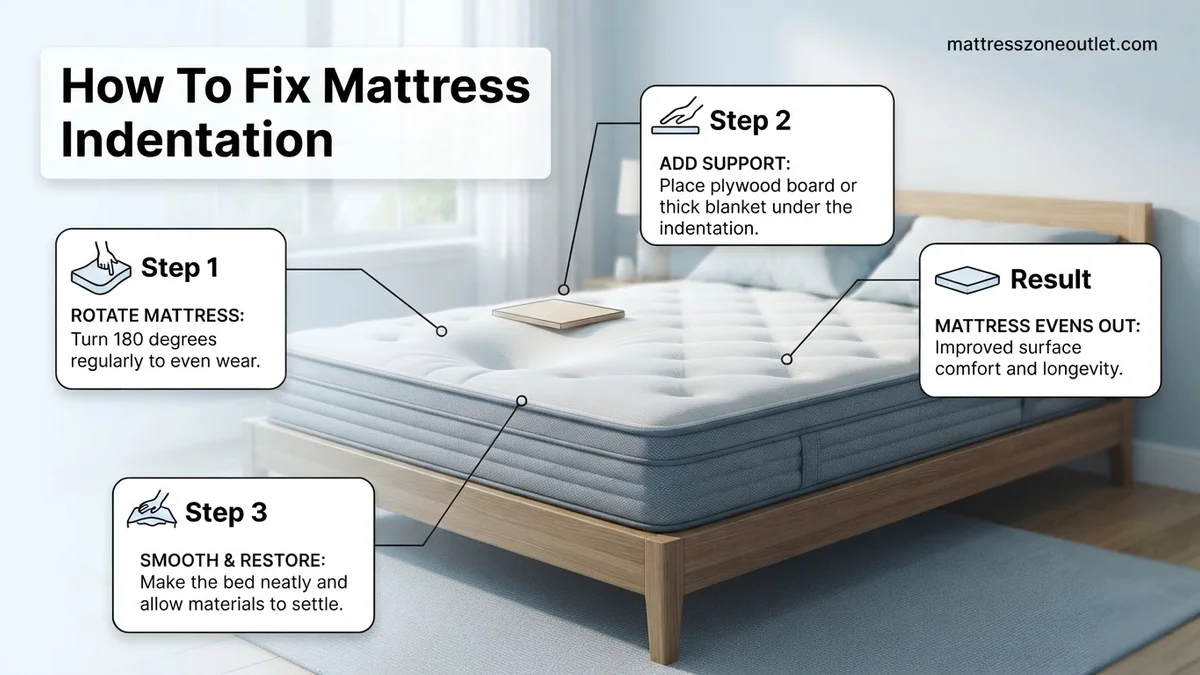
Step 2: Rotate and Flip Your Mattress
What you need: A helper to assist with heavy lifting and a clear floor space.
Instructions: Check your manufacturer label to see if your mattress is designed to be flipped or just rotated. If it is a two-sided innerspring model, rotate it 180 degrees from head to foot, and then flip it over so the bottom side becomes the top. If you have a one-sided memory foam or hybrid mattress, you cannot flip it, but you should still rotate it 180 degrees. This simple redistribution shifts your body weight away from the primary indentation zone, allowing the previously compressed foam materials time to rebound and recover their structural integrity.
Pro Tip: Make a calendar reminder to rotate your mattress every 3 to 6 months to prevent future uneven wear.
Step 3: Inspect and Upgrade Your Foundation
What you need: A flashlight and a level tool.
Instructions: Strip your bed down to the bare foundation or box spring. Check the wooden slats or center support beams for cracks, warping, or excessive spacing. Place a level across the center beam to ensure the frame is not sagging in the middle. If your slats are more than 3 inches apart, or if your box spring has broken internal springs, your mattress will naturally sink into those gaps, mimicking a mattress indentation. Reinforce weak wooden slats by adding plywood cut to size or replacing broken supports entirely to provide a flat, uniform base.
Pro Tip: Never place a heavy mattress on a worn-out box spring, as the old foundation is the hidden culprit behind 50 percent of perceived mattress sags.
Step 4: Use a High-Density Mattress Topper
What you need: A high-density latex, memory foam, or convoluted foam mattress topper (2 to 3 inches thick).
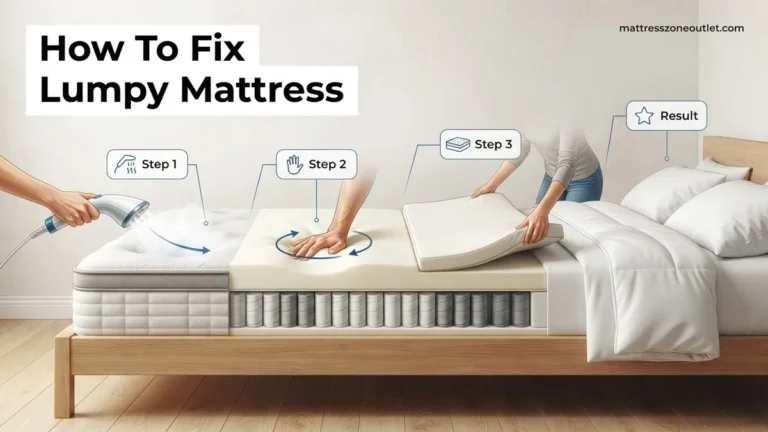
Instructions: Once you have flipped the mattress and secured the foundation, place a firm, high-density mattress topper directly over the surface. The dense material bridges the gap across the indentation, providing a flat, supportive transitional layer that absorbs and distributes your body weight evenly. Secure the topper with deep-pocket fitted sheets or specialized elastic straps so it does not shift throughout the night. This is especially effective for mild to moderate foam sags where the core support layers are still functional.
Pro Tip: Avoid cheap, low-density egg-crate foam toppers; they compress too easily and will only sink further into the existing indentation.
Step 5: Apply Targeted DIY Padding Solutions
What you need: Old towels, folded blankets, or custom foam inserts.
Instructions: If you prefer a localized fix before investing in a full topper, unzip the mattress cover (if removable) or slide padding directly beneath the mattress on top of the foundation. Alternatively, place folded towels, dense upholstery foam cutouts, or a small fleece blanket directly into the bottom of the mattress indentation between the core and the cover. This builds up the depressed area from the inside out, leveling out the sleep surface. Test the feel by lying down and adjusting the thickness of the padding until your spine feels neutral.
Pro Tip: Keep padding layers smooth and wrinkle-free to avoid creating uncomfortable lumps that could cause pressure points.
Step 6: Check Warranty Coverage and File a Claim
What you need: Original purchase receipt, warranty card, and photos of the measurement.
Instructions: If your mattress indentation measures deeper than the manufacturer’s warranty threshold (usually 1.5 inches for foam and 1 inch for innerspring when unweighted), you may be eligible for a replacement. Take clear photographs of the indentation with the straightedge and tape measure clearly showing the depth measurement. Locate your original proof of purchase and check the manufacturer’s care guidelines to ensure you did not violate any terms (such as using an unsupported slat bed). Submit your claim through the retailer or manufacturer’s customer service portal.
Pro Tip: Always keep your mattress clean and use a waterproof protector from day one, as stains or liquid damage will immediately void most standard manufacturer warranties.
✅ Final Checklist
- Verified the exact depth of the indentation using a straightedge and tape measure
- Rotated or flipped the mattress 180 degrees to redistribute weight load
- Inspected the bed frame and foundation slats for structural damage or sagging
- Installed a high-density mattress topper or targeted padding to level the surface
- Reviewed warranty terms and gathered documentation if a replacement is needed
Important Notes:
- Always have at least two people lift and move heavy mattresses to avoid personal injury or strain.
- Seek professional mattress restoration services or purchase a replacement if structural coils are broken or protruding.
- Estimated time: 1 to 2 hours for assessment and adjustments. Estimated cost: $0 (using existing rotation/padding) up to $150 for a quality topper.
Step-by-Step DIY Fixes for Mattress Sagging
Rotating and Flipping Your Mattress
The simplest and most cost-effective fix for a body impression is redistributing your weight pattern. Most modern mattresses are designed to be rotated, and some can even be flipped.
- Rotate your mattress 180 degrees from head to foot every three to six months. This shifts the heavy hip indentation area up toward the lighter foot zone.
- Check if your model is double-sided. If it is, flip it completely over so the worn top side now rests against the foundation.
- Avoid flipping a one-sided or pillow-top mattress, as the bottom side is not designed to support your body weight and lacks comfort layers.
Adding Strategic Foundation Support
Often, the mattress itself isn’t failing; rather, the slats on your bed frame or the box spring underneath have bowed and caused a dip. Strengthening the base instantly pushes the mattress back upward.
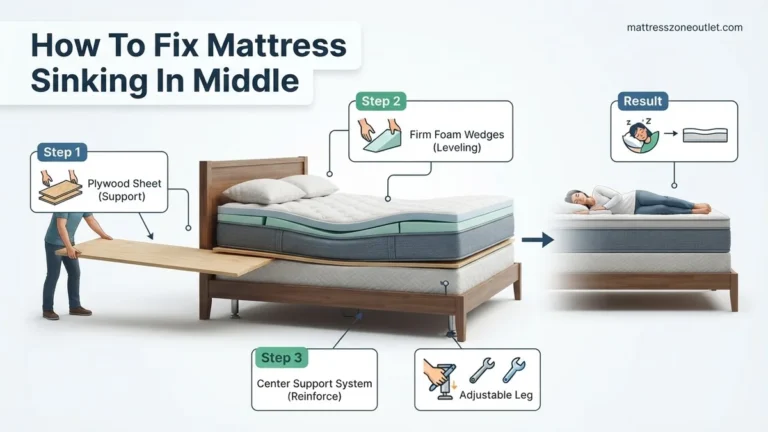
- Slide a piece of 3/4-inch thick plywood cut to the exact dimensions of your mattress directly between the bed frame slats and the bottom of the mattress.
- If you only have a sag on one side, place a thin sheet of plywood or rubber shelf liner under that specific zone to lift the depression.
- Ensure your bed frame center support leg is actually touching the floor, as bent or floating center legs are a primary cause of middle sagging in queen and king-size beds.
Using Plywood and Foundation Adjustments for Extra Support
When surface-level tricks and mattress toppers fail to correct structural sagging, you need to reinforce the mattress foundation from underneath. According to the Better Sleep Council, up to 30 percent of perceived mattress sagging actually stems from a weak or failing foundation, broken box spring slats, or an inadequate bed frame center support.
If your bed lacks rigid support, adding a DIY plywood board directly beneath the mattress provides an immediate, firm counter-surface. However, you must execute this adjustment correctly to avoid trapping moisture or causing uneven pressure points.
How to Install a Plywood Support Board
- Measure the exact interior dimensions of your bed frame using a tape measure to ensure a proper fit.
- Purchase a sheet of three-quarter-inch exterior-grade CDX plywood from a local home improvement center, which typically costs between $45 and $65.
- Have the hardware store cut the plywood to match your mattress size, or use a circular saw at home.
- Drill multiple one-inch ventilation holes across the surface of the plywood to prevent trapped body heat and mold accumulation.
- Sand down any rough edges or splinters to protect the bottom fabric of your mattress.
- Place the plywood board directly onto your bed slats or platform base before positioning the mattress back on top.
For adjustable bed owners, check manufacturer guidelines before adding rigid boards. Standard box springs that show central bowing should be replaced entirely, as internal wire grids lose their tensile strength permanently over time.
What If It Still Doesn’t Work and When to Replace
If rotating, flipping, adding a high-density topper, and reinforcing the foundation fail to eliminate the body impression, the core support layers of your mattress have suffered structural failure. Mattresses past this point cannot be repaired internally.
Consider these final fallback steps before discarding your sleep surface:
- Verify your mattress warranty status with the manufacturer, as most major brands cover physical indentations deeper than 1.0 to 1.5 inches.
- File a formal warranty claim by submitting required proof-of-purchase documents and stretched-string indentation photos.
- Consult a local professional upholstery or mattress restoration specialist if you own a luxury handmade or custom-built mattress, noting that repair costs generally range from $200 to $400.
- Calculate the replacement timeline; industry data shows that standard mattresses reach the end of their functional lifespan after 7 to 10 years of regular use.
Investing in a replacement becomes necessary when spinal alignment is compromised, resulting in morning back pain and disrupted rest.
Conclusion
Fixing a mattress indentation requires targeted intervention, ranging from simple seasonal rotations to structural foundation reinforcement with plywood inserts. According to verified research and expert sources from the Sleep Products Association, addressing early-stage sagging promptly prevents long-term spinal misalignment and extends the usable life of your bed. Your immediate next step is to measure the depth of your mattress indentation today to determine whether a DIY fix or a total replacement is warranted for your 2026 sleep setup.
❓ Frequently Asked Questions
Will a warranty cover a mattress indentation?
Most mattress warranties cover sagging, but only if the indentation exceeds a specific depth, usually 1.5 inches, while no weight is applied. You must also prove your foundation met manufacturer requirements.
How can I prevent my new mattress from sagging?
Prevent premature sagging by rotating your mattress regularly, using a sturdy and compatible foundation, and maintaining a mattress protector to keep core materials dry and clean.
Do memory foam mattresses sag faster than innerspring beds?
Memory foam mattresses do not necessarily sag faster, but they do conform to body weight over time, which makes body impressions more noticeable than in traditional innerspring models.
Can body heat cause my mattress to indent permanently?
Body heat softens memory foam and certain comfort layers, accelerating temporary sinkage that eventually turns into a permanent body impression over years of use.
Is sleeping on a sagging mattress bad for your back?
Sleeping on a sagging mattress prevents proper spinal alignment, which often leads to lower back stiffness, muscle tension, and chronic pain upon waking.
How do I know if the problem is my mattress or the box spring?
Place your mattress directly on the floor. If the sagging disappears, the issue is your bed frame or box spring, not the mattress itself.