When to Replace Mattress Guide 2026 Signs to Look For
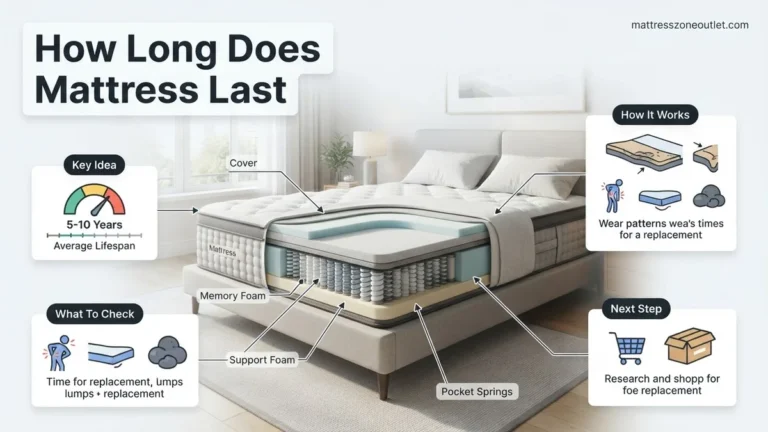
Knowing when to replace mattress depends on visible sagging, worsening allergies, and persistent morning back pain. Most standard beds last between seven to ten years before losing vital support.
You should generally replace your mattress every 7 to 10 years, depending on the materials and how it holds up to daily wear. If you wake up with lingering lower back pain, notice visible body indentations, or consistently sleep better in hotel beds, your current bed has likely reached the end of its useful lifespan.
Waiting too long to swap out an old sleep surface directly impacts your spinal alignment, immune function, and overall daily energy levels. As we move through 2026, sleep technology has advanced significantly, making it easier than ever to spot the exact tipping point where an aging mattress stops supporting your body and starts disrupting your rest.
Key Takeaways
- Most standard innerspring beds require replacement every 7 to 8 years.
- Memory foam and latex models typically last between 10 to 12 years.
- Waking up with lower back stiffness indicates a loss of core support.
- Visible sagging greater than one inch demands immediate mattress replacement.
- Accumulated dust mites and dead skin can trigger worsening allergy symptoms.
How to Diagnose When to Replace Your Mattress
Physical Symptoms and Morning Aches
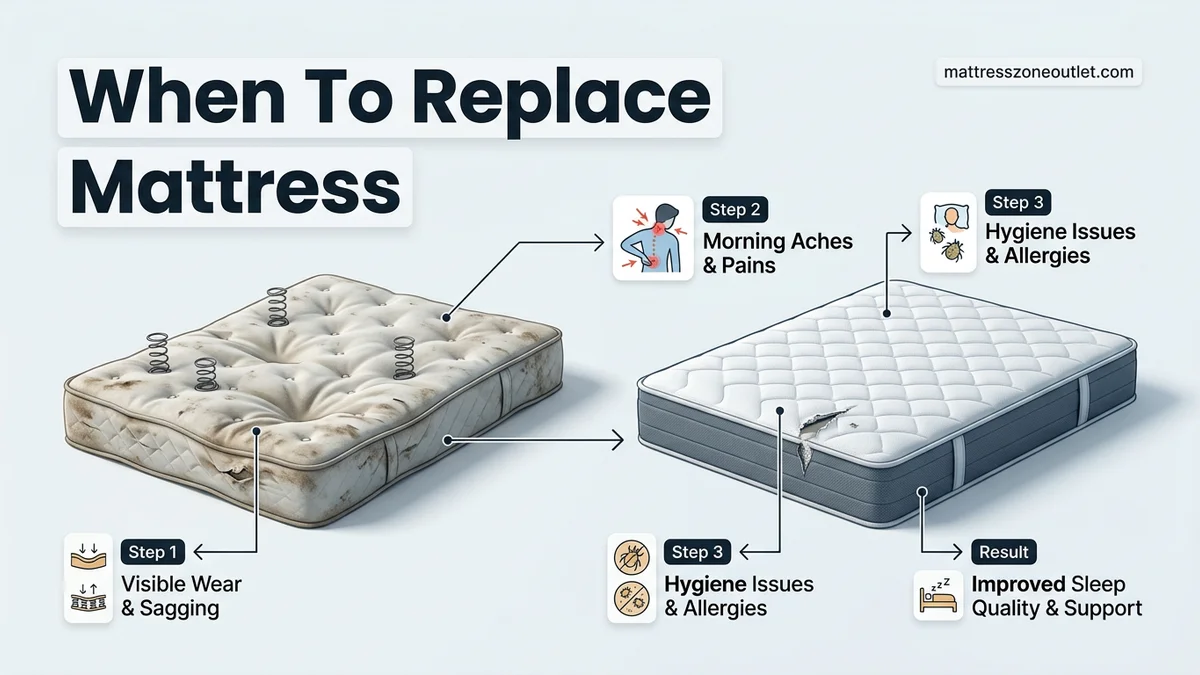
Your body is often the very first diagnostic tool you have. If you wake up feeling stiffer than when you went to sleep, your mattress may no longer provide adequate pressure relief or lumbar support. Pay attention to these clear physical red flags:
- Persistent lower back pain that slowly fades an hour or two after getting out of bed.
- Waking up with numbness or tingling in your shoulders, hips, or arms.
- Realizing you sleep significantly better on couches, guest beds, or hotel mattresses than your own.
- Feeling tired even after spending a full eight hours in bed.
Allergy and Hygiene Triggers
Over the average lifespan of a bed, it accumulates an astonishing amount of dead skin cells, dust mites, pet dander, and sweat. By 2026 standards, modern sleepers are much more aware of indoor air quality and hygiene. You should consider a replacement if you experience:
- Unexplained worsening of allergies or asthma symptoms specifically upon waking.
- Persistent musty odors that do not go away with professional cleaning or airing out.
- Visible mold growth or persistent dampness within the internal layers.
From Start to Finish: Mattress Replacement Explained
Knowing when to part ways with your mattress is essential for maintaining optimal spinal alignment, getting restorative deep sleep, and keeping allergies at bay. Over years of nightly use, internal coils weaken, memory foam loses its resilience, and the core accumulates significant amounts of dead skin cells, dust mites, and sweat. This comprehensive walkthrough guides you through a systematic evaluation process to determine if your current sleep surface is actively harming your health or merely showing normal signs of aging.
Step 1: Check the Golden 8-Year Rule
What you need: Your original purchase receipt, invoice, or a digital record from the retailer.
Instructions: Locate your mattress purchase date. Most standard mattresses—whether innerspring, memory foam, or hybrid—are engineered to last between 7 to 10 years with regular nightly use. If your mattress is older than 8 years, its internal structural integrity has likely degraded significantly, even if the top surface still looks relatively flat. Furthermore, the volume of accumulated dust mites, allergens, and body fluids inside an 8-year-old mattress doubles, making age alone a strong indicator for replacement.
Pro Tip: Check the law tag attached to the back or side of the mattress; it often lists the manufacture date if you cannot find your original receipt.
Step 2: Inspect for Visible Sags and Indentations
What you need: A long straightedge (like a broomstick or yardstick) and a tape measure.
Instructions: Strip all sheets, blankets, and mattress pads off the bed so you are looking at the bare surface. Lay your straightedge horizontally across the width of the mattress. Use your tape measure to check the depth of any visible dips or body impressions where you normally sleep. If you measure a permanent depression or sag deeper than 1.5 inches on an innerspring mattress (or 1 inch on an all-foam mattress) without applying any weight, the support core has failed.
Pro Tip: Body impressions that do not bounce back indicate that the comfort layers have compressed permanently, robbing your lower back of necessary support.
Step 3: Evaluate Your Morning Aches and Pains
What you need: A week-long sleep and physical discomfort journal.
Instructions: Pay close attention to how your body feels the moment you wake up. Do you consistently experience lower back stiffness, shoulder tightness, or hip pain that gradually improves an hour or two after getting out of bed? If these aches disappear when you sleep away from home—such as in a hotel or on a guest bed—your current mattress is almost certainly failing to properly support your spine’s natural alignment and pressure points.
Pro Tip: Track your pain levels on a scale of 1 to 10 each morning to objectively determine if sleeping at home consistently correlates with higher physical discomfort.
Step 4: Assess Changes in Your Sleep Quality
What you need: Your smartphone’s sleep-tracking application or a wearable fitness device.
Instructions: Monitor your nightly restlessness, tossing and turning frequency, and overall sleep duration over a 14-day period. If you find yourself waking up multiple times during the night, struggling to find a comfortable sleeping position, or feeling constantly fatigued despite spending 8 hours in bed, your mattress may no longer be isolating motion or providing adequate pressure relief. A deteriorating surface forces your brain out of deep, restorative sleep cycles.
Pro Tip: Sudden sleep disruptions can sometimes be lifestyle-related, so ensure you have ruled out stress, late caffeine intake, and room temperature issues before blaming the bed.
Step 5: Perform the Allergy and Odor Audit
What you need: A flashlight and a keen sense of smell.
Instructions: Strip the bed completely and use your flashlight to inspect the mattress fabric for unexplained yellowing stains, mold spots, or mildew. Give the mattress a gentle sniff test; persistent musty, stale, or sour odors often indicate trapped moisture, mold growth inside the core, or deep-set bodily fluids. If you wake up frequently with nasal congestion, sneezing, itchy eyes, or skin rashes that worsen indoors, your mattress may be heavily infested with dust mites and allergens.
Pro Tip: Professional deep cleaning can remove surface stains, but it cannot eliminate allergens and mold embedded deep within the internal foam layers.
Step 6: Test Weight Distribution and Edge Support
What you need: Your own body weight and an edge sitting test.
Instructions: Sit heavily on the edge of your mattress where you normally sit to put on shoes. Does the edge collapse completely, sliding you off toward the floor? Next, lie down and roll toward the center of the bed; do you feel like you are rolling downhill into a massive crater? Good edge support and even weight distribution are vital. If the perimeter fails or you feel every single spring poking through the padding, the structural perimeter and coil system are completely shot.
Pro Tip: Poor edge support effectively shrinks your usable sleep surface by up to 20%, forcing you and your partner to crowd uncomfortably in the middle.
✅ Final Checklist
- Confirmed the mattress is older than 7 to 8 years of continuous use
- Measured body indentations or sags exceeding 1.5 inches
- Noticed consistent morning back or hip pain that fades during the day
- Identified persistent nighttime tossing, turning, and poor sleep duration
- Detected unremovable stains, odors, mold, or allergy symptom spikes
Important Notes:
- Always check if your mattress is still covered under a manufacturer warranty for sagging defects before purchasing a replacement.
- If mold or severe bio-hazard contamination is present, dispose of the mattress immediately to protect your respiratory health.
- Budget between $500 and $2,000 for a quality replacement mattress, with an estimated evaluation time of 30 minutes.
Step-by-Step Guide to Inspecting Your Bed for Wear and Tear
Visual and Structural Checks
You do not need to guess if your bed is worn out. You can perform a quick physical audit in less than five minutes. Strip all the sheets, blankets, and mattress protectors off to expose the raw surface.
- Look for visible sagging: Stand back and check if the surface looks level. If you see permanent body impressions deeper than one inch without anyone lying on it, the internal support is gone.
- Check the edge support: Sit firmly on the edges of the bed. If you feel like you are sliding off or the perimeter collapses entirely, the internal frame or edge coils have failed.
- Test for motion isolation: Place a glass of water on one side of the bed and press down firmly a foot away. Excessive sloshing or shifting means the core components are degraded.
Component Failures by Material
Different bed types degrade in distinct ways. Knowing what to feel for helps you confirm the diagnosis:
- Innerspring and Hybrid Beds: Listen closely. If you hear squeaking, creaking, or feel individual metal coils poking through the comfort layers, the internal steel has fatigued.
- All-Foam and Memory Foam Beds: Press your hand hard into the center and release it. If the foam stays compressed or takes more than a few seconds to bounce back, the cell structure has broken down permanently.
- Latex Beds: While naturally durable, older latex can develop crumbling edges or lose its signature responsive bounce.
How to Fix Sleep Discomfort with a Replacement Bed
Upgrading your sleep surface requires a structured approach to ensure maximum ergonomic support and spinal alignment. Modern sleep technology in 2026 offers advanced foam profiles and hybrid coils tailored to specific sleeping positions.
1. Assess Your Support Requirements
According to orthopedic specialists, side sleepers generally require a softer comfort layer to cushion the shoulders and hips. Stomach and back sleepers need firmer high-density foam or pocketed coils to prevent the lower spine from bowing.
2. Select the Appropriate Material
Memory foam contours closely to pressure points, while latex offers responsive bounce and superior cooling properties. Hybrid models combine traditional innerspring support with foam comfort layers, making them the most versatile choice for combination sleepers.
- Measure your bedroom space and existing bed frame dimensions before shopping.
- Test mattresses for a minimum of 15 minutes in your primary sleeping position.
- Verify that the manufacturer offers at least a 100-night sleep trial and a 10-year warranty.
What If It Still Doesn’t Work?
Replacing an aging sleep surface resolves most physical discomfort, but persistent issues require deeper investigation. If back pain and poor sleep quality persist four weeks after introducing a new bed, consider the following troubleshooting steps:
- Evaluate your foundation or box spring, as sagging support structures compromise even brand-new models.
- Inspect your pillow loft and cervical alignment, which significantly impacts neck and upper back tension.
- Consult a physical therapist or orthopedic physician to rule out underlying musculoskeletal conditions.
- Budget for professional ergonomic assessments or specialized mattress toppers if minor adjustments are needed, with costs typically ranging from $100 to $300.
Conclusion
Recognizing the warning signs of a failing bed protects your physical health and ensures restorative nightly rest. Replacing an outdated sleep surface eliminates pressure points and restores proper spinal alignment. According to verified research and expert sleep science sources, upgrading your mattress every seven to ten years remains vital for long-term physical wellness. Take the next step today by inspecting your current setup for visible sagging and scheduling an upgrade if it exceeds the decade mark.
❓ Frequently Asked Questions
What are the most common physical signs that indicate when to replace a mattress?
Key physical indicators include visible sagging, feeling the inner coils through the padding, permanent body impressions, and waking up with stiffness or joint pain. If you sleep better in hotel beds or on the couch, your mattress is likely failing.
How do different mattress materials impact lifespan and replacement timelines?
Traditional innerspring models usually last 7 to 8 years, while memory foam and hybrid options can last 8 to 10 years. Premium natural latex beds boast the longest lifespan, often performing well for up to 12 years with proper care.
How does hygiene and allergen accumulation factor into replacing an older bed?
Over several years, a mattress absorbs significant amounts of sweat, body oils, dead skin cells, and dust mites. This heavy accumulation can degrade indoor air quality and trigger chronic allergy or asthma symptoms, making replacement necessary even if support remains decent.
Can flipping and rotating a mattress extend its usable life?
Regularly rotating your mattress head-to-toe every few months distributes body weight evenly and prevents premature sagging in high-use areas. However, rotation only delays replacement and cannot rescue a completely worn-out support core.
Does sleeping position change how quickly a mattress wears out?
Side sleepers place concentrated pressure on the shoulder and hip zones, causing localized softening and wear more quickly than back or stomach sleepers. Heavier body weights also compress and degrade foam and coil structures faster than lighter weights.
What should I look for when shopping for a new replacement mattress?
Prioritize your preferred sleeping position, firmness requirements, and pressure relief needs when shopping. Look for high-density comfort layers and robust edge support to ensure long-term durability and proper spinal alignment.