What Mattress Firmness Is Best Expert Guide for 2026
Determining what mattress firmness is best depends heavily on your primary sleeping position and body weight. Choosing the correct firmness level ensures optimal spinal alignment and prevents pressure point pain.
The best mattress firmness for you is a medium-feel (around a 5 to 6 out of 10) if you are an average-weight back or combination sleeper, but this shifts dramatically based on your body weight and primary sleeping position. Lightweight sleepers under 130 pounds generally need a softer surface to compress the comfort layers, while heavy sleepers over 230 pounds require an extra-firm or high-density support core to prevent excessive sinking.
Choosing the correct firmness level in 2026 prevents chronic lower back pain, eliminates pressure points on your hips and shoulders, and ensures your spine maintains a neutral alignment all night. Making the wrong choice leads to restless sleep and muscular strain that no pillow can fix.
Key Takeaways
- Side sleepers generally require softer mattresses to cushion shoulders and hips.
- Stomach sleepers need firm support to prevent the hips from sinking.
- Back sleepers benefit from medium-firm surfaces that maintain neutral spine alignment.
- Heavier individuals require firmer mattresses for adequate support and durability.
- Lightweight sleepers often need softer models to compress the comfort layers.
What Causes Incorrect Mattress Firmness Selection
Misunderstanding the Difference Between Firmness and Support
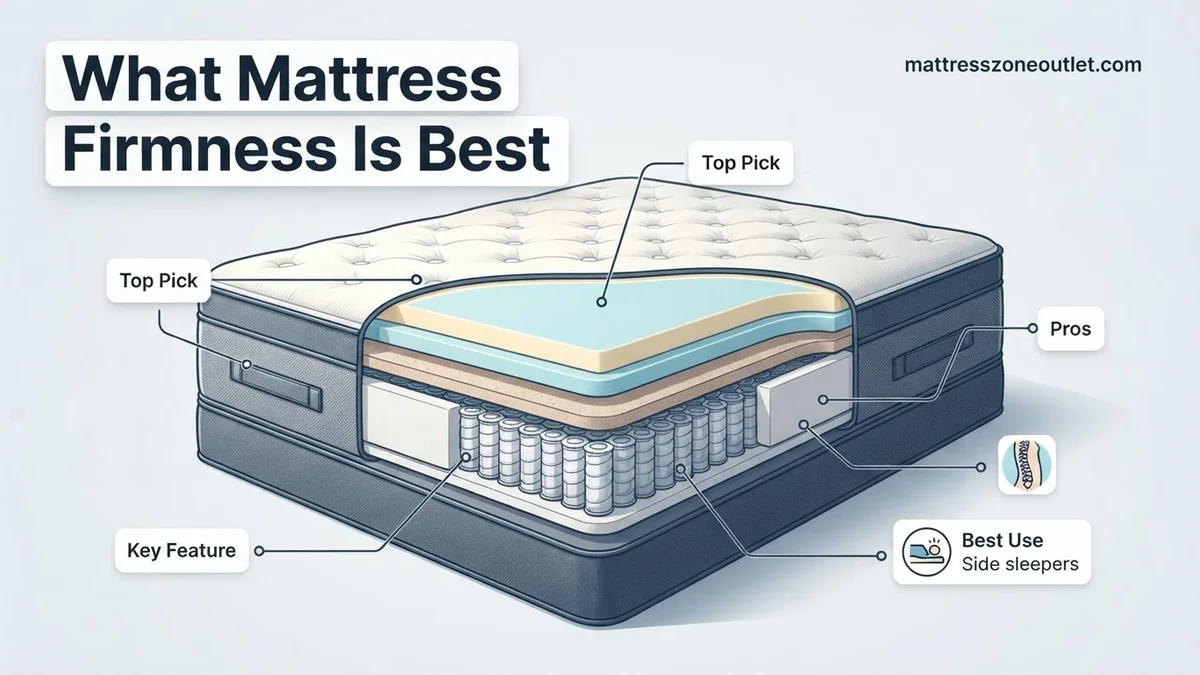
Many sleepers confuse firmness with support, leading to chronic aches. Firmness refers to how a mattress feels on the top layer when you first lie down—whether it feels plush or rigid. Support, however, describes how well the core of the mattress keeps your spine aligned.
- Soft top layers: Provide pressure relief for shoulders and hips.
- Strong support cores: Prevent heavy midsections from sinking too deeply, regardless of surface feel.
- The mismatch trap: Buying an ultra-firm mattress thinking it is supportive often leaves gaps under your lumbar spine, causing severe morning pain.
Ignoring Body Weight and Sleep Position Interactions
Your body weight dictates how much pressure you exert on the mattress, changing how a firmness level actually feels. A mattress that feels medium-firm to a 250-pound person will feel like a rock to a 110-pound person.
- Lightweight factor: Sleepers under 130 pounds do not sink enough into firm beds, causing pressure buildup.
- Heavyweight factor: Sleepers over 230 pounds compress soft comfort layers completely, forcing their spines out of alignment.
- Position shifts: Side sleepers need softer surfaces than stomach sleepers to cushion protruding joints.
How to Diagnose Your Ideal Mattress Firmness Level
Evaluating Your Current Pain Points and Pressure Areas
Your body tells you immediately if your current mattress firmness is wrong. Waking up with specific aches points directly to a need for a softer or firmer sleep surface.
- Shoulder and hip pain: Indicates your mattress is too firm, creating high-pressure zones that restrict blood flow.
- Lower back stiffness: Signals that your mattress is too soft, allowing your hips to sink and curving your spine unnaturally.
- Numbness in arms: A classic sign of side sleeping on a surface that lacks adequate top-layer cushioning.
Matching Your Sleep Profile to the Industry Scale
Mattress firmness is measured on a standardized 1 to 10 scale, where 1 is an ultra-plush cloud and 10 is a rigid wooden board. Most modern 2026 models fall between 3 and 8.
- Soft (3-4): Best for lightweight side sleepers who need deep contouring.
- Medium to Medium-Firm (5-7): The universal sweet spot for average-weight back, stomach, and side sleepers.
- Firm to Extra-Firm (8-10): Essential for heavy stomach and back sleepers requiring maximum pushback.
Step-by-Step Guide to Matching Firmness to Sleeping Position
Your sleeping position fundamentally dictates how body weight distributes across a mattress surface. According to recent sleep science data from 2026 ergonomic studies, aligning the spine correctly prevents micro-arousals and chronic musculoskeletal discomfort.
1. Side Sleepers
Side sleepers require a softer surface to cushion high-pressure zones like the shoulders and hips. A medium-soft to medium firmness (rating 3 to 5 out of 10) allows these heavier areas to sink in comfortably while keeping the spine in a neutral line.
2. Back and Stomach Sleepers
Back and stomach sleepers need a firmer mattress (rating 6 to 8 out of 10) to prevent the midsection from sinking. Excessive sinkage in these positions forces an unnatural curve into the spine, leading to lower back strain by morning.
What If It Still Doesn’t Work For Couples and Back Pain
Navigating different firmness preferences between partners or managing persistent back pain can complicate the selection process. When a single mattress cannot satisfy both sleepers, targeted troubleshooting steps restore sleep quality.
- Utilize dual-firmness mattresses: Invest in customizable mattresses featuring split internal layers, allowing each side to accommodate different firmness needs for an estimated cost of $1,500 to $2,800.
- Add targeted mattress toppers: Modify a too-firm mattress on one side by purchasing a 2-to-3-inch latex or memory foam topper, priced between $150 and $350.
- Incorporate lumbar support inserts: Place specialized orthopedic support pads beneath the mattress cover in targeted zones to alleviate chronic lower back pain.
- Consult physical therapy specialists: If back pain persists despite adjusting sleep surfaces for more than four weeks, seek professional medical evaluation, with clinical consultations typically ranging from $100 to $250 per session.
Conclusion
Choosing the correct mattress firmness requires careful evaluation of your primary sleeping position, body weight, and individual health needs. Selecting the right support profile eliminates pressure points and ensures proper spinal alignment throughout the night. According to verified research and expert sources from leading sleep medicine institutions, taking time to test a mattress during an extended trial period dramatically improves long-term sleep health. Your next actionable step is to assess your current sleep posture tonight and compare it against our expert firmness matrix before making a final purchase.
❓ Frequently Asked Questions
What mattress firmness is best for combination sleepers?
Combination sleepers usually benefit from a versatile medium-firm mattress that accommodates switching between sleeping positions without letting the body sink too deeply.
How do I know if my mattress is too soft?
If your lower back sinks lower than the rest of your body, or if you wake up with lower back stiffness, your mattress is likely too soft.
Can mattress toppers fix a mattress that is too firm?
Yes, adding a plush foam or latex mattress topper can effectively soften a surface that is too firm and relieve pressure points.
What firmness level is recommended for stomach sleepers?
Stomach sleepers need firm support (7 to 9 on the firmness scale) to keep the pelvis from sinking and prevent lower back arching.
How does body weight affect mattress firmness choices?
Lighter individuals experience less compression and need softer beds, while heavier individuals sink deeper and require firmer support layers.
What should couples do if they have different firmness preferences?
Couples with differing needs can choose a split-firmness mattress, customizable modular beds, or use two twin XL mattresses on a king frame.