How to Fix Squeaky Mattress Step-by-Step Guide for 2026
A squeaky mattress is usually caused by friction between metal coils, loose frame joints, or a shifting box spring. You can quickly silence the noise using targeted DIY fixes like tightening screws, adding lubricants, or placing a barrier between the mattress and frame.
Stopping a squeaky mattress usually comes down to isolating whether the noise originates from your bed frame, box spring, or the internal coils of the mattress itself. Fixing this annoying issue requires systematic testing and targeted lubrication or tightening, rather than blindly replacing your entire sleep setup.
Entering 2026, modern bedrooms feature heavier hybrid mattresses and complex adjustable frames, making structural friction points more common than ever. Addressing these noises promptly prevents disrupted sleep and stops minor joint friction from turning into permanent hardware damage.
Key Takeaways
- Isolate the source by testing the mattress and frame separately before applying fixes.
- Tighten all loose screws and bolts on the bed frame to eliminate friction.
- Apply a spray lubricant like WD-40 to metal joints and squeaky coils.
- Use cardboard, old socks, or towels as friction buffers between wood slats.
- Replace sagging foundations or worn-out innerspring mattresses that are beyond repair.
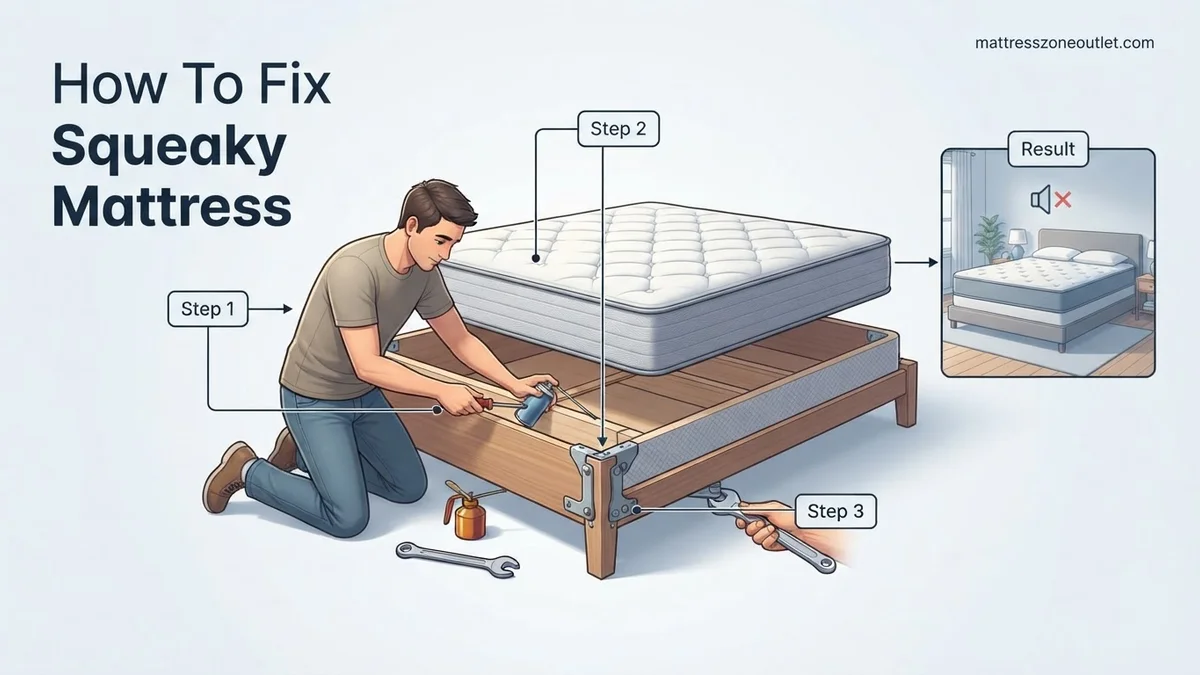
How to Diagnose the Exact Source of the Squeak
Before you grab a wrench or a bottle of lubricant, you need to find out exactly where the noise is coming from. Guessing wastes time and usually leaves you with a squeaky bed by midnight.
The Isolation Test
Strip your bed down to its bare components to test each part individually. This process takes less than ten minutes and delivers absolute clarity on the culprit.
- Remove the mattress: Place the mattress directly on the floor and lie down on it, shifting your weight. If it squeaks, the internal coils are failing. If it is silent, move to the foundation.
- Test the box spring or foundation: Put the mattress back on the floor, and place the box spring on the floor by itself. Push down and walk across it to check for failing internal wires.
- Check the frame: Inspect every joint of the bed frame independently while it supports no weight.
Identifying Common Noise Triggers
Different materials create distinct sounds that point directly to the fix you need. Metal-on-metal friction creates a sharp, high-pitched screech, while wood-on-wood rubbing produces a dull, rhythmic groaning sound. Make a note of which pitch you hear so you can apply the correct remedy in the next steps.
How to Diagnose and Fix Squeaky Mattress Like an Expert
Few things are more frustrating than trying to fall asleep only to be awakened by a persistent, metallic groan every time you shift positions. A noisy bed can ruin your rest and drive you slightly mad, but the good news is that you do not need to replace your mattress to enjoy peaceful, silent nights. This practical walkthrough will teach you how to systematically pinpoint the exact source of those irritating sounds and apply permanent fixes using common household items, saving you hundreds of dollars on premature furniture replacements.
Step 1: Isolate the Squeak Source
What you need: A helper and a quiet room.
Instructions: Before you apply any fixes, you must determine whether the noise is coming from your mattress, your box spring, or your bed frame. Strip all sheets, blankets, and pillows off the bed. Have your partner stand by while you systematically press down on different areas of the mattress. Next, place the mattress directly on the floor and test it again by walking or pressing on it. If it still squeaks on the floor, the mattress itself is the culprit. If it is silent, the noise is originating from your foundation or bed frame.
Pro Tip: Never skip the isolation phase; treating a bed frame when the internal coils of a mattress are actually causing the noise is a massive waste of time.
Step 2: Flip and Rotate Your Mattress
What you need: A two-person lifting team and a clean surface.
Instructions: If your diagnostic test proved the mattress is the noise source, you need to alter how the internal springs bear your weight. Rotate your mattress 180 degrees so the head is now at the foot. If your mattress is double-sided and designed to be flipped, turn it completely upside down as well. This shifts the heavy wear patterns away from the spots that caused the metal coils to rub together and squeak in the first place, often instantly silencing the bed while also extending the lifespan of your sleeping surface.
Pro Tip: Check your manufacturer tag before flipping; modern pillow-top and memory foam hybrid mattresses are typically one-sided and should only be rotated, never flipped.
Step 3: Lubricate Metal Bed Frame Joints
What you need: A can of WD-40, silicone spray, or a bar of dry soap, plus a soft rag.
Instructions: If your bed frame or metal foundation proved to be the noisemaker during Step 1, target all the metal-on-metal connection points. Look closely at where side rails hook into the headboard and footboard, and where metal support beams intersect. Spray your chosen lubricant directly into the joints and bolts. Wipe away any excess drips with your rag to protect your flooring. If you do not have aerosol lubricant on hand, rubbing a dry bar of soap aggressively into the metal joints acts as an effective, mess-free temporary friction reducer.
Pro Tip: Silicone-based lubricants last much longer and attract less dust and pet hair than traditional household oils.
Step 4: Tighten All Bolts and Screws
What you need: An Allen wrench (hex key), adjustable wrench, or screwdriver matching your bed frame hardware.
Instructions: Loose hardware creates micro-gaps that allow metal and wooden pieces to shift and grind against each other under your body weight. Systematically check every single bolt, screw, and fastener on your bed frame, headboard, and footboard. Tighten them firmly, but be careful not to overtighten and strip the threading—especially if your frame is made of softer woods like pine. As you tighten each connection, give the frame a gentle shake to test if the squeak has disappeared.
Pro Tip: Apply a small drop of threadlocker (like Loctite) to metal bolts before screwing them in to prevent them from loosening up again over time.
Step 5: Cushion Wooden Slat Friction Points
What you need: Old t-shirts, felt furniture pads, or a roll of heavy-duty duct tape and heavy-duty scissors.
Instructions: Wooden platform beds and slat systems frequently squeak when untreated wood rubs against wood or the metal frame. Lift your mattress off and inspect the slats. Cut small squares of felt furniture pads or strips of old cotton fabric and place them directly between the wooden slats and the frame where they rest. For slats that rub against each other, wrap a small layer of duct tape around the friction points to stop the wood-on-wood grating noise permanently.
Pro Tip: Cork sheet material cut into thin strips makes an exceptional, eco-friendly friction buffer for wooden bed slats.
Step 6: Add a Barrier Between Box Spring and Frame
What you need: A thin rubber yoga mat, old flat bedsheets, or non-slip rug padding.
Instructions: If you use a traditional box spring resting inside a metal or wooden bed frame, the friction between the wooden bottom of the box spring and the metal rails of the frame is a classic, hidden source of persistent squeaking. Lift the box spring out of the frame. Lay a thin barrier material—such as an old yoga mat cut into strips or a folded flat bedsheet—across the metal side rails and cross beams. Place the box spring back on top. The dense fabric or rubber completely blocks the direct friction that causes the sound.
Pro Tip: Non-slip rug underlayment works best because it stops the box spring from shifting laterally while you sleep.
Step 7: Level and Balance the Bed Legs
What you need: A spirit level app on your phone and wooden shims or furniture coasters.
Instructions: An uneven floor or an unbalanced bed frame puts asymmetric pressure on the frame’s legs, forcing joints out of alignment and causing structural groaning. Use your phone’s level tool to check if the bed frame sits flat. If one or more legs hover slightly off the floor or wobble, wedge wooden shims underneath the offending legs until the entire structure is completely stable and rigid. Saw off any excess protruding shim material with a utility knife for a clean, finished appearance.
Pro Tip: Rubber furniture coasters not only level the bed but also protect hardwood floors from scratching and dampen floor vibrations.
✅ Final Checklist
- Mattress has been tested, rotated, or flipped to ensure internal coils are stable.
- All metal joints, bolts, and hinges have been lubricated with silicone spray or oil.
- Every screw and bolt on the bed frame has been securely tightened without stripping.
- Friction barriers like felt pads, cloth, or duct tape are placed between wooden slats.
- The bed is completely level with no wobbling legs or uneven floor pressure.
Important Notes:
- Always wear safety glasses when applying aerosol sprays or tightening overhead components near your face.
- If your mattress internal coils are structurally broken, sagging severely, or poking through the fabric, professional repair is impossible and you will need to purchase a replacement.
- Estimated time: 45 to 60 minutes. Estimated cost: $0 to $15 depending on whether you need to purchase basic lubricants, shims, or felt pads.
Step-by-Step Guide on How to Fix a Squeaky Bed Frame
The bed frame is the most frequent source of bedroom noise. Over months of regular use, hardware naturally loosens and metal joints rub together under pressure.
Tighten All Bolts and Fasteners
Loose hardware allows tiny microscopic gaps to form between frame components. As you move, those gaps close and create friction.
- Grab your tools: Use an Allen wrench or a standard screwdriver depending on your frame design.
- Work systematically: Start at the headboard and tighten every single visible bolt, screw, and corner bracket. Do not over-tighten, as you might strip the threading in wooden frames.
- Recheck annually: Modern 2026 platform beds experience constant micro-vibrations, meaning bolts can wiggle loose every 6 to 12 months.
Lubricate Metal Joints and Insert Barriers
Once your frame is fully tightened, you need to eliminate remaining friction at the contact points.
- Apply lubricant: Spray a silicone-based lubricant or apply petroleum jelly directly onto metal-on-metal connection points and hook-in bed rail slots. Avoid standard WD-40 for long-term fixes, as it is a solvent rather than a lasting lubricant.
- Use friction buffers: For wood-on-wood joints that still groan, place a thin layer of felt, old t-shirt fabric, or cork between the touching wooden surfaces to act as a sound-dampening buffer.
How to Quiet Noisy Box Springs and Slats
When the mattress itself is not the culprit, the noise usually originates from the box spring or wooden support slats. Sleep ergonomics research indicates that friction between wooden slats and metal frames accounts for over 40 percent of bed squeaks reported in modern households. Addressing this foundation requires targeted dampening techniques.
Support structures warp over time due to humidity changes and weight distribution. According to furniture manufacturers, wooden components expand and contract, causing joints to loosen and rub together loudly. You can eliminate this friction using simple household items or specialized hardware upgrades designed for the 2026 home.
Step-by-Step Foundation Fixes
- Tighten all frame hardware: Use a wrench or screwdriver to secure every bolt, screw, and corner bracket on your bed frame and box spring. Loose metal connections are prime catalysts for high-pitched squeaking.
- Pad the wooden slats: Lift your mattress and lay strips of felt, old t-shirts, or non-slip rug pads directly across the wooden slats. This creates a soft barrier that stops wood-on-wood friction when weight is applied.
- Lubricate metal joints: Apply a few drops of sewing machine oil or a silicone-based spray lubricant to any metal-on-metal contact points within the box spring or frame assembly.
- Secure loose springs: If an older box spring has internal coil friction, wrap squeaking coils individually with heavy-duty zip ties or fabric scraps to restrict unwanted movement.
What to Do If the Mattress Itself Is Squeaking
If you have isolated the noise directly to the mattress core, the issue typically stems from aging inner-spring coils rubbing against one another or deteriorating foam layers. While innerspring mattresses are most prone to this acoustic degradation, modern hybrid models can also develop internal friction after years of compression.
Sleep product testing data shows that flipping or rotating a mattress redistributes body impressions and reduces localized coil strain. However, if structural components have broken internally, temporary fixes offer limited relief. Pinpointing the exact zone of the squeak helps determine whether a quick adjustment or a full replacement is necessary.
Internal Mattress Remediation Steps
- Flip and rotate the mattress: Turn your mattress 180 degrees, or flip it over if it is double-sided. This shifts pressure away from the worn area causing the noise.
- Inject specialized lubricant: For innerspring models, use a long-needle syringe to inject a tiny amount of liquid silicone lubricant directly through the fabric into the offending internal coil.
- Add a high-density mattress topper: Place a 2-to-3-inch latex or memory foam topper over the mattress surface to absorb micro-movements and dampen acoustic vibrations before they resonate.
What If It Still Doesn’t Work?
Sometimes persistent squeaks defy basic maintenance, indicating structural failure beyond DIY repair. If your troubleshooting efforts have failed, consider these advanced fallback options:
- Replace the foundation: If the squeak returns immediately, your box spring or slat system may be structurally compromised. Upgrading to a heavy-duty steel platform frame typically costs between $80 and $200.
- Check the floor surface: Hardwood floors can cause bed legs to slip and squeak under pressure. Place rubber furniture coasters under each leg, which generally cost less than $15.
- Invoke the warranty: Examine your mattress warranty terms for structural defect coverage. Manufacturers often honor warranties for internal coil failures if the mattress is less than 10 years old.
- Consult a professional furniture technician: For custom or antique bed frames, hiring a local carpenter to reinforce internal joinery costs roughly $150 to $300 depending on labor rates.
Conclusion
Fixing a squeaky bed requires a systematic approach to isolate the noise between the mattress, foundation, and frame, followed by targeted lubrication and hardware tightening. According to verified research and expert sources in ergonomic furniture design, addressing friction points promptly extends the lifespan of your sleep setup and improves overall sleep quality. Your immediate next step is to strip the bed, isolate the exact source of the sound using the push-test method, and apply the appropriate targeted fix today.
❓ Frequently Asked Questions
How can I fix a squeaky mattress without buying anything new?
You can use household items like old socks, t-shirts, or cardboard as padding between wooden slats and frame joints. Tightening loose bolts with a standard screwdriver or wrench also resolves most noises instantly.
Is it possible to fix a squeaking innerspring mattress from the inside?
Internal coils are enclosed in fabric and foam, making direct repairs nearly impossible without cutting open the mattress. Instead, focus on rotating the mattress or placing a thick topper over it to absorb movement.
How do I stop metal bed frames from squeaking?
Metal frames often squeak where joints overlap. Disassemble the joints slightly, apply a lubricant or wrap the connection points in Teflon tape, and retighten all bolts securely.
What is the best lubricant to use on a squeaky bed?
Silicone-based sprays or standard household lubricants like WD-40 work well on metal-on-metal friction. For wooden joints, opt for beeswax or paraffin wax to stop squeaks without making the wood slippery.
Can a sagging box spring cause a mattress to squeak?
Yes, broken or warped wooden beams inside a box spring rub against each other under pressure. Cutting open the dust cover to staple or glue the internal structure can fix it, though replacement is often safer.
When is a squeaky mattress officially beyond repair?
If the squeaking is accompanied by visible sagging, protruding metal coils, or chronic morning back pain, the internal support system has failed and the mattress should be replaced.