How to Fix Sagging Mattress Step-by-Step Fix Guide 2026
A sagging mattress causes lower back pain and poor sleep quality, but you can often fix it temporarily using budget-friendly DIY methods without buying a brand-new bed immediately. This guide covers how to diagnose the core issue, reinforce the foundation, and apply quick structural fixes.
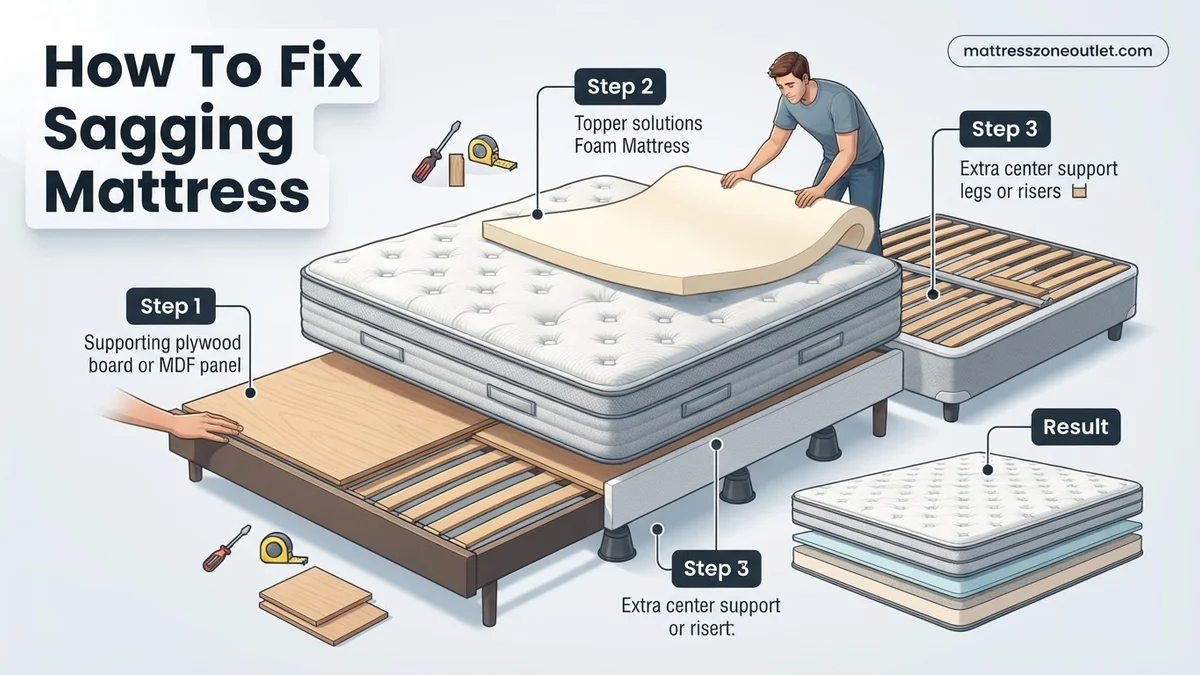
You can fix a sagging mattress temporarily by rotating or flipping it, sliding a sturdy plywood board underneath, or adding a high-density support topper to level out the indentation. These quick interventions relieve pressure on your lower back and buy you time before investing in a replacement.
Dealing with a sagging bed ruins your sleep quality and causes nagging morning back pain. By 2026, mattress prices have risen significantly, making immediate replacement a costly burden. Applying targeted DIY structural fixes restores proper spinal alignment and extends your mattress lifespan by one to three years.
Key Takeaways
- Check if the sag stems from the mattress or the foundation before attempting repairs.
- Rotate or flip the mattress to distribute body weight evenly across the surface.
- Place a piece of cut-to-size plywood beneath the mattress for instant firm support.
- Use a high-density mattress topper to mask minor dips and level out the sleeping surface.
- Sliding pillows or towels underneath specific low spots can offer temporary relief.
What Causes a Mattress to Sag and How to Diagnose It
Identifying the Root Cause of Bed Indentations
Mattress sagging happens when internal support materials break down under repeated body weight and pressure. Innerspring coils lose their tension, while memory foam and polyfoam layers permanently compress and lose their bounce. Heavier areas like your hips and torso typically cause the deepest indentations, disrupting your body’s natural alignment during sleep.
When Is Your Mattress Beyond Saving?
Before attempting any DIY repairs, you need to measure the severity of the damage. A mattress that is past its prime will not respond to temporary fixes and will continue to harm your posture.
- The String Test: Pull a tight string across the width of the mattress. Measure the deepest part of the dip. If it exceeds 1.5 inches, the structural integrity is completely gone.
- Age Factor: If your mattress is older than 8 to 10 years, materials are naturally degraded beyond repair.
- Waking Pain: If you wake up with consistent lower back pain even after trying temporary supports, it is time for a full replacement.
Sagging Mattress: What Causes It and How to Fix It
A sagging mattress can ruin your sleep, leave you with persistent lower back pain, and prematurely age your bed. Instead of rushing out to spend hundreds or thousands of dollars on a brand new replacement, you can often breathe new life into your current sleeping surface with a few clever interventions. This guide covers everything you need to know to accurately diagnose the root cause of your mattress dip and apply the most effective remedies, ranging from simple nighttime fixes to structural reinforcements.
Step 1: Diagnose the Depth and Location of the Sag
What you need: A long straightedge (like a broomstick or yardstick) and a tape measure.
Instructions: Strip all sheets, blankets, and pillows off your bed down to the bare mattress surface. Lay your straightedge horizontally across the width or length of the mattress, spanning completely over the suspected sagging area. Take your tape measure and measure the vertical gap between the bottom of the straightedge and the lowest point of the mattress dip. A dip measuring less than one inch is usually just comfort layer compression, while anything over 1.5 inches indicates structural failure that requires immediate intervention.
Pro Tip: Do not skip this assessment; knowing the exact depth helps you decide whether a quick mattress topper will suffice or if you need heavy-duty structural reinforcement underneath.
Step 2: Strip and Flip or Rotate Your Mattress
What you need: A helper (optional, but mattresses are heavy), cleaning supplies, and your stripped mattress.
Instructions: Check your mattress manufacturer tags to see if your model is double-sided (flippable) or single-sided (non-flip). If you have a traditional double-sided mattress, grab a partner, lift the mattress, and completely flip it upside down so the bottom becomes the new top. If you have a modern pillow-top or memory foam mattress that cannot be flipped, rotate it 180 degrees so that the heavy body impressions that used to sit under your hips are now located under your feet, where less weight is applied during sleep.
Pro Tip: Make rotating or flipping your mattress a seasonal habit, performing this task every three to six months to ensure even wear over the product’s lifespan.
Step 3: Inspect and Reinforce Your Bed Foundation
What you need: A flashlight, screwdriver, and a sturdy piece of plywood (optional).
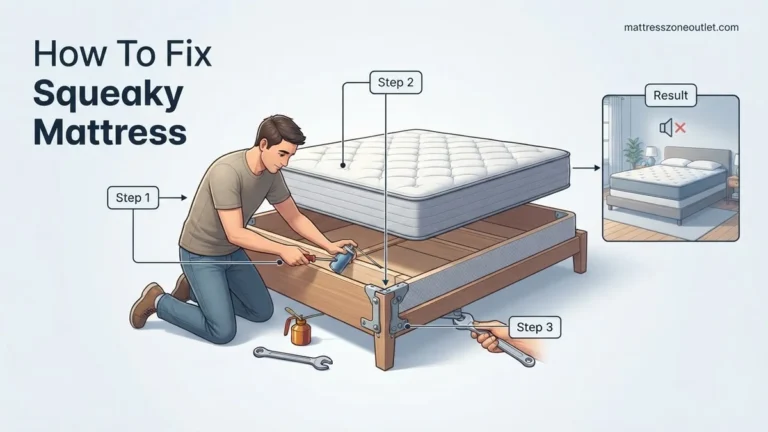
Instructions: Sometimes the mattress isn’t actually sagging at all—the foundation underneath is failing. Strip the mattress off the bed entirely and examine the box spring, slats, or platform. Look for cracked wooden slats, rusted wire grids inside old box springs, or missing center support legs on queen and king-size metal bed frames. Tighten all loose screws in the wooden frame. If your slats are spaced wider than three inches apart, your foam or innerspring mattress will push down into the gaps, mimicking a sag.
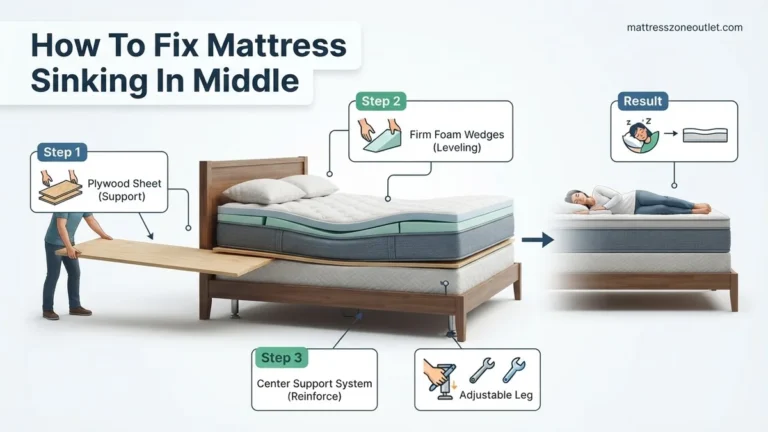
Pro Tip: If your bed uses flimsy wooden slats, lay down a sheet of cut-to-size 3/4-inch plywood over the frame to create an instantly rigid, uniform foundation that prevents future dipping.
Step 4: Use Strategic Plywood Inserts for Spot Support
What you need: A piece of exterior-grade plywood cut to match the exact dimensions of your mattress dip (usually about 2×2 feet), and fine-grit sandpaper.
Instructions: If your mattress frame is structurally sound overall but a specific spot has lost its internal tension, you can target the repair locally. Sand the edges of your cut plywood board so there are no sharp splinters that could puncture your mattress fabric. Lift your mattress up and slide the piece of plywood directly between the mattress bottom and the bed slats underneath the exact area where your hips normally rest. This localized hard surface pushes the sagging foam or coils back up to a flush level.
Pro Tip: Wrap the plywood board in an old cotton bedsheet or felt fabric before placing it under the mattress to prevent friction noise and protect the mattress underside from abrasive wood grain.
Step 5: Invest in a High-Density Mattress Topper
What you need: A high-density memory foam or latex mattress topper (2 to 3 inches thick) and a fitted sheet.
Instructions: If the internal coils or high-density core of your mattress are still supportive, but the top comfort layers have softened and formed a permanent body impression, a mattress topper acts as a brand-new comfort layer. Unroll a high-density memory foam or latex topper directly on top of your sagging mattress. The dense material bridges across minor dips, creating an even, supportive sleeping plane that distributes your body weight more uniformly across the entire surface.
Pro Tip: Choose a latex topper if you sleep hot, as memory foam tends to trap body heat in deep pockets, whereas latex offers a cooler, more buoyant lift.
Step 6: Apply Specialized Mattress Support Inserts
What you need: A commercial mattress sag corrector kit (often containing inflatable air bladders or foam wedges).
Instructions: If DIY plywood feels too rigid or heavy, purchase a commercial mattress sag eliminator kit. These typically consist of wedge-shaped foam pads or adjustable inserts that you slide between the mattress and the box spring. Place the thickest part of the wedge directly beneath the deepest part of the sag. Adjust the positioning until the top surface of the mattress looks and feels flat when you lie across it.
Pro Tip: Follow the manufacturer instructions carefully regarding placement; placing inserts too high up toward the head of the bed can throw your spine out of neutral alignment.
✅ Final Checklist
- Mattress has been thoroughly rotated or flipped according to manufacturer guidelines
- Bed slats or box spring foundation checked for cracks, sags, and loose hardware
- Center support leg of the bed frame verified to be touching and bearing weight on the floor
- Targeted DIY plywood board or commercial insert securely positioned beneath the dip
- Comfort level tested by lying down in your usual sleeping position for at least 10 minutes
Important Notes:
- Always check your mattress warranty before attempting DIY structural modifications, as unauthorized changes may void your coverage.
- If your mattress has deep structural sags exceeding two inches and none of these fixes restore proper spinal alignment, it is time to invest in a brand-new mattress to prevent chronic back injury.
- Estimated time to complete these fixes: 1 to 2 hours. Estimated cost range: $20 for plywood up to $150 for a premium mattress topper.
How to Fix a Sagging Mattress Using Step-by-Step DIY Methods
Rotation and Flipping Tactics
The easiest zero-cost method to combat sagging is changing how your body interacts with the sleep surface. This distributes wear evenly across the entire bed.
- Rotate 180 Degrees: Turn your mattress head-to-toe every 3 to 6 months. This shifts the heavy hip indentation area up to where your lighter shoulders rest.
- Flip the Mattress: If you own a double-sided traditional innerspring model, flip it completely over. Note that modern memory foam and hybrid beds are usually one-sided and cannot be flipped.
Adding Structural Under-Support
Often, the sag is not entirely the mattress’s fault, but rather a weak foundation or broken bed slats. Reinforcing the base instantly flattens the sleeping surface.
- Plywood Insertion: Measure the interior of your bed frame and cut a piece of 3/4-inch plywood to fit directly beneath the mattress. This creates a rigid plane that eliminates sagging caused by drooping box springs or wide slat gaps.
- Slat Reinforcement: If your wooden slats are more than 3 inches apart, add extra slats or cut-to-size MDF boards to bridge the gaps and provide uniform support.
How to Reinforce Your Bed Foundation and Slats
Often, a sagging bed is not actually a mattress failure. A worn-out box spring, bowed wooden slats, or a weak center support beam can cause the entire sleep surface to dip. According to sleep ergonomics data from the International Sleep Products Association (ISPA), bed frames without center support legs under Queen and King sizes will inevitably sag within two to three years. Reinforcing the foundation restores proper alignment.
Step-by-Step Slat Reinforcement
- Inspect the existing wooden or metal slats beneath your mattress to identify weak or cracked boards.
- Measure the span of your bed frame and cut 1×4 inch hardwood boards to replace any broken or overly flexible slats.
- Add extra slats so that the gaps between them measure no more than 3 inches, preventing the mattress material from dipping into empty spaces.
- Install vertical center support legs underneath the middle slat of full, queen, and king frames to distribute weight evenly to the floor.
If you use a traditional box spring that has lost its internal spring tension, a quick fix involves placing a 3/4-inch piece of cut-to-size plywood directly over the box spring. This creates a solid, flat platform that instantly eliminates dips caused by broken internal foundation coils.
What If It Still Doesn’t Work and Replacement Is Necessary
When DIY interventions, mattress toppers, and foundation reinforcements fail to restore proper spinal alignment, the internal support core has suffered permanent structural breakdown. As of 2026, industry durability standards indicate that standard foam and innerspring mattresses reach the end of their lifespan after 7 to 10 years of regular use. If you have exhausted all temporary fixes, consider these final fallback steps:
- Check your mattress warranty documentation. Most manufacturers cover physical depressions greater than 1.5 inches if the mattress was paired with a supportive, compliant foundation.
- Rotate or flip the mattress one final time to evaluate if the structural degradation spans the entire core or is isolated to one heavy sleep zone.
- Consult with a local professional mattress restorer or furniture repair technician if you own a high-end latex or custom build, though repair costs often range from $150 to $400.
- Budget for a replacement mattress. High-density foam, hybrid, and latex models engineered for superior longevity currently range from $600 to $2,500 depending on size and materials.
Conclusion
Dealing with a sagging mattress disrupts your nightly rest and can lead to persistent lower back pain. Implementing targeted solutions like high-density foam toppers, strategic pillow inserts, and reinforced bed slats provides an effective temporary bridge. According to verified research and expert sources from ergonomic sleep studies, timely intervention prevents long-term postural strain. For your immediate next step, measure the depth of your mattress sag today to determine whether a quick structural fix will suffice or if investing in a 2026 replacement model is required.
❓ Frequently Asked Questions
How can I tell the difference between a body impression and a structural sag?
Body impressions are normal indentations up to 1.5 inches that form where you sleep, while structural sags involve a total loss of support across the core. If the depression remains visible when you get out of bed and exceeds 1.5 inches, it is a structural sag.
Will putting a mattress topper on a sagging mattress actually help?
A high-density latex or memory foam topper can mask minor dips and provide a temporarily even surface. However, it will not restore core support if the internal coils or support foam have completely broken down.
Can I use cardboard or folded blankets under the mattress for support?
While folded blankets or cardboard can provide a very short-term lift for minor dips, they compress quickly and offer little structural benefit. Plywood is a much sturdier and longer-lasting solution for sagging beds.
How do I fix a sagging memory foam mattress?
Memory foam cannot be flipped, so your best options are rotating the mattress, placing a dense foam topper on top, or reinforcing the foundation underneath. Check the warranty, as many manufacturers cover structural sagging.
Is sleeping on a sagging mattress bad for my back?
Yes, a sagging mattress forces your spine out of neutral alignment and prevents your back muscles from fully relaxing during the night. This frequently leads to morning stiffness, lower back pain, and interrupted sleep.
When is it officially time to give up and buy a new mattress?
If you have tried rotating, adding plywood, and using a topper, but you still wake up in pain, it is time for a replacement. Most mattresses last between 7 to 10 years before the materials degrade beyond repair.