Twin vs Full Mattress Difference 2026: Which Is Better?
Most shoppers assume a Full mattress gives you double the sleeping surface of a Twin, but the reality is far more modest. In fact, a Twin measures 38 inches wide while a Full stretches to 54 inches — meaning you are only gaining a narrow 16 inches of lateral room, not double the space. That single mathematical reality surprises many buyers who upgrade expecting a massive master-suite transformation. Choosing between these sizes isn’t just about floor space; it defines your nightly comfort, how well you sleep, and how much cash stays in your wallet. We broke down the exact specifications, dimensions, and everyday performance metrics to settle the ultimate debate on the twin vs full mattress difference.
Quick Verdict: The Full Mattress is the overall winner for versatility, offering 15 inches of extra width that easily accommodates growing teens and restless adult combination sleepers. However, the Twin remains the ultimate choice for tight spaces, bunk beds, and strict budgets. Your decision ultimately hinges on bedroom square footage and how much personal sprawling space you require nightly.
Small bedrooms, bunk beds, budget-conscious shoppers, and toddlers.
Teenagers, guest rooms, single adults, and combination sleepers.
- The Twin measures 38 by 75 inches, whereas the Full Mattress measures 54 by 75 inches.
- A Full Mattress provides 4,050 square inches of space, offering 42 percent more surface area than a Twin.
- Twin mattresses save money with entry-level prices starting around $150.
- Full mattresses require a minimum bedroom size of 10 by 10 feet for comfortable placement.
- Neither mattress is wide enough for two adults, though a Full works well for a single sleeper and a pet.
Twin vs Full Mattress: Head-to-Head Specs
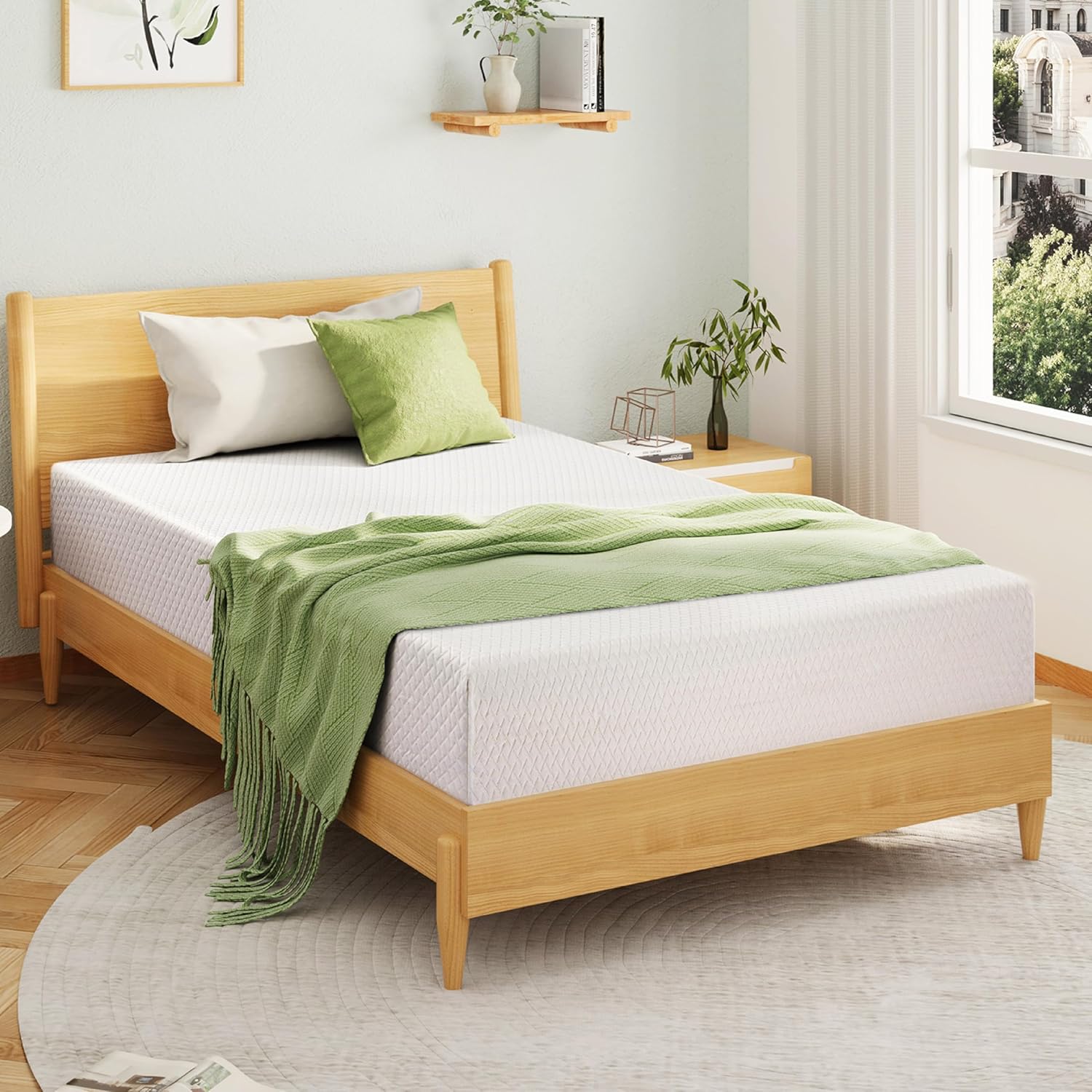
Looking at the raw specifications reveals why these two sizes cater to entirely different buyers. The Twin spans 38 inches by 75 inches, whereas the Full Mattress measures 54 inches by 75 inches, delivering identical 75-inch lengths that suit average-height adults just fine. However, that 16-inch width gap completely alters the room layout, leaving tight quarters for the Twin while demanding a minimum 10×10 foot bedroom footprint for the Full Mattress to avoid feeling cramped.
✓ = better value in that row. Sourced from manufacturer specifications.
Twin vs Full Mattress: Performance & Category Ratings
Breaking down our performance categories highlights clear winners depending on your priorities. Space & Comfort heavily favors the Full Mattress, which scores an 8.4 out of 10 thanks to its sprawling width that easily accommodates growing teens and restless adult combination sleepers. The Twin lags behind here with a 6.2, feeling restrictive for anyone who tosses and turns. When we look at Value & Affordability, the tables turn completely. The Twin crushes this category with a 9.2 rating because it costs significantly less upfront and lets you outfit the bed with cheaper 🛒 Twin Sheet Sets → that save you money right out of the gate. The Full Mattress holds its own with an 8.0, but you’ll pay more for every accessory.
Space Efficiency belongs squarely to the Twin at an outstanding 9.5 out of 10. It slips effortlessly into studio apartments, bunk beds, and narrow guest rooms where every single square inch matters. The Full Mattress manages a respectable 7.5 here, requiring noticeably more breathing room in the bedroom. Build Quality is remarkably close, with the Full Mattress edging out a slight 8.2 over the Twin’s 8.0 due to its heavier internal core construction designed to support adult weight distribution. Bedding Availability ties at an identical 8.5 for both sizes, meaning you’ll never struggle to find comforters or blankets at local retailers. Finally, Versatility is owned by the Full Mattress with an 8.8 rating. It bridges the gap between child, teen, and adult guest use smoothly, whereas the Twin tops out at a 6.5 because most adults simply outgrow its narrow boundaries.
Twin Mattress
Full Mattress
Twin Vs Full Mattress Difference by the Numbers
Data tells the real story when comparing these two mattress sizes across dimensions, pricing tiers, and room footprint requirements. Here is how the numbers stack up side by side.
Twin Mattress
Full Mattress
Hover any bar for exact values. Each metric scaled independently.
Twin: Strengths and Weaknesses
The Twin shines brightest when you need to maximize floor space without draining your bank account. Its primary strength is extreme space efficiency, making it the undisputed king of children’s bedrooms, multi-child bunk bed setups, and compact college dorms. Furthermore, it scores a massive 9.2 for affordability, saving you cash on both the initial mattress purchase and everyday accessories like a 🛒 Waterproof Twin Mattress Protector → that keeps spills at bay. Setup is an absolute breeze because the lightweight frame is easy to rotate, flip, and haul up narrow staircases by yourself.
Yet, those savings come with strict compromises. The narrow 38-inch width offers very little room for error if you toss and turn throughout the night. Adults will quickly feel trapped on a Twin, and combination sleepers will find their arms or knees occasionally dangling off the edge. It lacks the long-term versatility needed for growing teenagers or adult guests, meaning you may outgrow it faster than you think.
Ready to lock down your choice? Let’s take a look at what the Full mattress brings to the table.

Price & availability subject to change. As an Amazon Associate we earn from qualifying purchases.
Full Mattress: Strengths and Weaknesses
The Full Mattress excels by providing genuine room to breathe. Its standout strength is versatility, scoring an impressive 8.8 by accommodating growing teens, single adults, and even co-sleeping pet owners without feeling cramped. That extra 16 inches of width changes everything for restless sleepers who need space to spread out their arms and legs. It also anchors a guest bedroom beautifully, offering enough adult-friendly scale that visiting relatives won’t feel like they are sleeping on a child’s cot.
On the downside, the Full Mattress demands more compromise on floor space and budget. It receives a 7.5 for space efficiency because it completely overwhelms tiny studio apartments or small kids’ rooms, forcing you to sacrifice precious walking space. It is also noticeably heavier and harder to maneuver through tight hallways during moving day. Pairing your setup with a 🛒 Memory Foam Pillow → will complete your comfort, but expect to pay higher baseline costs for the mattress and all matching bedding across the board.
Consider your room dimensions carefully before making your final selection.
Price & availability subject to change. As an Amazon Associate we earn from qualifying purchases.
- ✅ Takes up minimal floor space in small bedrooms
- ✅ Significantly cheaper mattress and bedding costs
- ✅ Lightweight and easy to move or rotate alone
- ✅ Perfect fit for standard bunk beds and daybeds
- ❌ Too narrow for adults or restless sleepers
- ❌ Can be outgrown quickly by children and teenagers
- ❌ Lacks edge support surface area
- ✅ 15 inches wider than a Twin for extra elbow room
- ✅ Accommodates growing teenagers and single adults comfortably
- ✅ Fits well in standard guest bedrooms without crowding
- ✅ Wide selection of support cores and firmness levels
- ❌ Tight fit for two adults to sleep comfortably
- ❌ Takes up noticeably more floor space in small rooms
- ❌ Bedding and frames cost moderately more than Twin versions
Twin or Full Mattress: Which Should You Choose?
Your bedroom square footage and your sleeping style dictate the right choice here. If you are outfitting a tiny guest room, a child’s first big-kid bed, or a cramped studio apartment where floor space is your absolute top priority, go with the Twin. It delivers unbeatable value, lets you squeeze furniture into tight layouts, and handles low-traffic sleeping quarters with ease. It is the practical, no-nonsense pick for tight budgets and smaller rooms.
Conversely, step up to the Full Mattress if you are shopping for a teenager, a single adult who loves to sprawl, or a multi-purpose guest suite. The extra 16 inches of width prevents that caged-in feeling and easily accommodates restless sleepers who change positions all night long. If your room measures at least 10×10 feet and you plan to host adult guests regularly, the Full Mattress provides the long-term comfort and versatility you need to avoid replacing the bed in a few years.
Small bedrooms, bunk beds, budget-conscious shoppers, and toddlers.
Teenagers, guest rooms, single adults, and combination sleepers.
Final Verdict: Twin vs Full Mattress
The Full Mattress is the overall winner for versatility, offering 15 inches of extra width that easily accommodates growing teens and restless adult combination sleepers. However, the Twin remains the ultimate choice for tight spaces, bunk beds, and strict budgets. Your decision ultimately hinges on bedroom square footage and how much personal sprawling space you require nightly.
As an Amazon Associate we earn from qualifying purchases.
Twin vs Full Mattress Difference: Frequently Asked Questions
Is Twin better than Full Mattress?
Neither is universally better; it depends on your space and sleeper. A Twin is ideal for toddlers or rooms under 70 square feet, costing around $150 to $400. A Full Mattress offers 54 inches of width, making it much better for single adults and teenagers who need room to spread out.
Can two adults sleep on a Full Mattress?
While technically possible, it provides each adult with only 27 inches of personal space—equivalent to a crib mattress. Most couples find a Full Mattress far too cramped for nightly sleeping and prefer at least a Queen size.
What is the biggest difference between Twin and Full mattresses?
The primary difference is width. Both mattresses share the exact same standard length of 75 inches, but a Full Mattress is 16 inches wider than a Twin, providing 4,050 square inches of total surface area compared to the Twin's 2,850 square inches.
Which size is best for growing teenagers?
A Full Mattress is strongly recommended for teenagers. As kids hit growth spurts, a standard Twin can feel confining, whereas a Full Mattress accommodates taller frames and allows for tossing and turning without hanging off the edge.
Do Full sheets cost a lot more than Twin sheets?
Sheet sets for a Full Mattress typically cost $35 to $75, which is roughly $15 to $30 more expensive than standard Twin sheets. However, the price difference for the mattress itself is usually $100 to $200 between the two sizes.