How to Stop Mattress Noise in 2026 Proven Step-by-Step Fix
A noisy bed can ruin a good night’s rest, but finding the exact source is the key to silencing it. Isolating whether the noise comes from the mattress, box spring, or frame allows you to apply targeted DIY fixes using household items or basic tools.
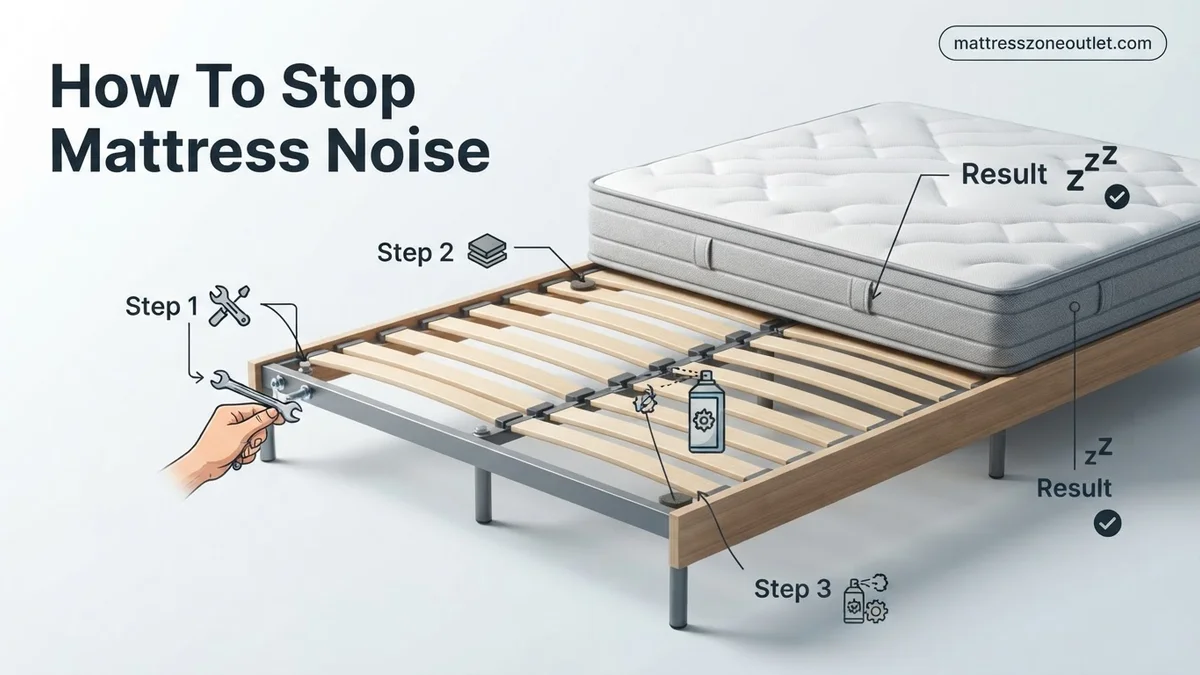
Stopping a noisy mattress comes down to isolating the exact friction point and applying a targeted mechanical fix, whether that means tightening loose hardware, lubricating metal-on-metal contact, or shoring up a sagging foundation. Most annoying bed sounds are actually caused by the frame, box spring, or loose bolts rather than the mattress coils themselves.
Fixing this issue in 2026 is essential for protecting your sleep quality and extending the lifespan of your bedroom furniture. A persistent squeak disrupts your deep sleep cycles every time you shift positions, leading to chronic fatigue. By systematically testing each component of your bed setup, you can permanently silence the noise in less than thirty minutes.
Key Takeaways
- Isolate the noise by placing the mattress directly on the floor.
- Tighten all loose bolts and screws on the bed frame.
- Lubricate metal friction points with wax, petroleum jelly, or WD-40.
- Add a barrier pad or towel between wooden slats and the mattress.
- Replace sagging box springs or damaged bed frames that cannot be repaired.
What Causes Mattress Noise and How to Diagnose the Source
Isolating the Mattress from the Foundation
You need to find out whether the noise comes from the mattress itself or the support structure underneath. Strip all bedding down to the bare mattress and push down on various spots. Next, slide the mattress off the frame and place it directly on the floor. If the mattress still squeaks on the floor, the internal coils are rubbing together. If the noise stops, your issue lies entirely in the frame, box spring, or platform.
Pinpointing Specific Friction Points
Once you identify the general area, you must locate the exact micro-movement causing the sound. Have a partner sit or gently rock the bed while you place your ear close to different joints. Pay close attention to these common trouble zones:
- Metal bed frame corners where side rails meet the headboard and footboard
- Wooden slats rubbing against the outer frame ledges
- Center support legs that are slightly lifted off the floor
- Old box spring wire grids losing tension
How to Diagnose and Fix Noisy Mattresses Like an Expert
There is nothing quite as frustrating as trying to drift off to sleep, only to be jolted awake by a loud squeak or groan every time you shift your weight. Mattress noise can severely disrupt your sleep quality and leave you feeling exhausted the next day. Fortunately, you do not necessarily have to run out and buy an expensive replacement. This comprehensive guide will walk you through the exact diagnostic and repair process to pinpoint the source of the noise and silence it for good, saving you both money and frustration.
Step 1: Isolate the Source of the Sound
What you need: Just your hands, a partner if available, and a quiet room.
Instructions: Before applying any fixes, you must determine whether the noise is coming from the mattress itself, the box spring, or the bed frame. Strip all pillows, sheets, and blankets off the bed. Place the mattress directly on the floor and lie down on it, moving around as you normally would. Next, test the box spring or foundation by itself, and finally check the metal or wooden bed frame. If the mattress is silent on the floor, the culprit is your foundation or frame, not the mattress.
Pro Tip: Do not skip this diagnostic phase. Applying lubricant to your mattress coils will be a complete waste of time if the squeak is actually coming from a loose bolt in your wooden headboard.
Step 2: Flip and Rotate the Mattress
What you need: A second person to help safely maneuver the mattress and prevent strain.
Instructions: Over time, inner springs experience uneven pressure, causing coils to rub against one another or internal padding to shift. Working with a partner, grab the handles or corners of the mattress and flip it over so the bottom side is now facing up. If your mattress is a modern pillow-top model that cannot be flipped due to its top-only comfort layer, simply rotate it 180 degrees so the head end is now at the foot. This redistributes your body weight and relieves the pressure points that cause internal spring friction and noise.
Pro Tip: Check your mattress manufacturer’s tag before flipping. While traditional innersprings are double-sided, many modern hybrid and memory foam models are strictly one-sided.
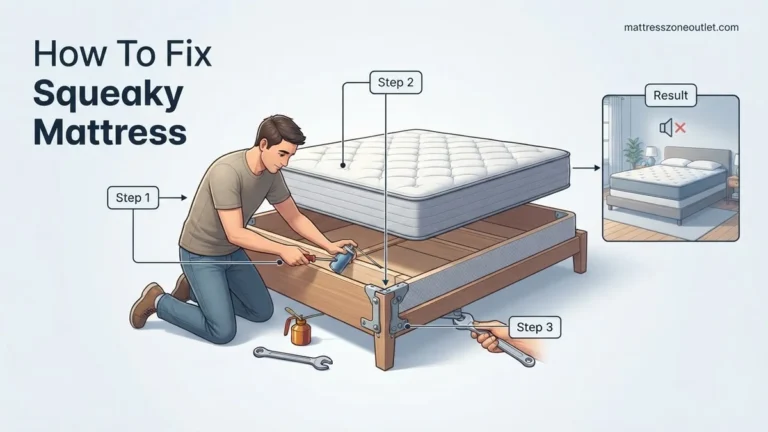
Step 3: Tighten All Bed Frame Fasteners
What you need: An adjustable wrench, a set of Allen wrenches (hex keys), and a screwdriver.
Instructions: Metal-on-metal or wood-on-wood friction from loose hardware is the number one cause of bed noises. Take a systematic approach by examining every joint, leg, corner bracket, and headboard attachment point on your bed frame. Use the appropriate wrench or screwdriver to tighten every single screw, bolt, and nut you can find. Even a microscopic gap between components will allow them to rub together under your body weight, creating that classic annoying squeak every time you move.
Pro Tip: Do not over-tighten wooden frame screws, as this can strip the wood threads and permanently ruin the structural integrity of the frame. Stop turning the moment you feel firm resistance.
Step 4: Lubricate Metal-on-Metal Joints
What you need: WD-40 Specialist Silicone Lubricant, a spray bottle of olive oil, or household candle wax.
Instructions: If your bed frame or box spring contains exposed metal springs, hooks, or interlocking brackets that continue to squeak after tightening, lubrication is your best defense. Apply a targeted spray of silicone-based lubricant directly to the friction points. If you prefer a natural household alternative, rub a block of paraffin wax or candle wax heavily across metal joints and hook-in bed rails. The wax creates a microscopic barrier that prevents metal surfaces from grinding together directly.
Pro Tip: Avoid using standard petroleum-based WD-40 for long-term fixes, as it can attract dust and eventually degrade certain plastics and finishes. Opt for a silicone spray or dry wax instead.
Step 5: Add a Friction-Reducing Barrier
What you need: Old t-shirts, felt pads, cork sheets, or a thick wool blanket.
Instructions: Wooden bed slats rubbing against the wooden or metal side rails of your frame are notorious noise-makers. Remove your mattress and box spring, then lift out the wooden slats. Cut strips of old felt, cork, or even fabric from an old t-shirt and lay them across the frame rails wherever the wooden slats make contact. When you replace the slats, this soft material will act as a buffer, completely absorbing the friction that causes creaking and groaning sounds as you sleep.
Pro Tip: For a quick temporary fix, you can slide folded pieces of paper, dryer sheets, or scrap fabric between mattress springs or wooden joints until you have time for a permanent solution.
Step 6: Support Sagging Foundation Areas
What you need: Plywood board cut to size (approx. 0.5 to 0.75 inches thick), a measuring tape, and a saw.
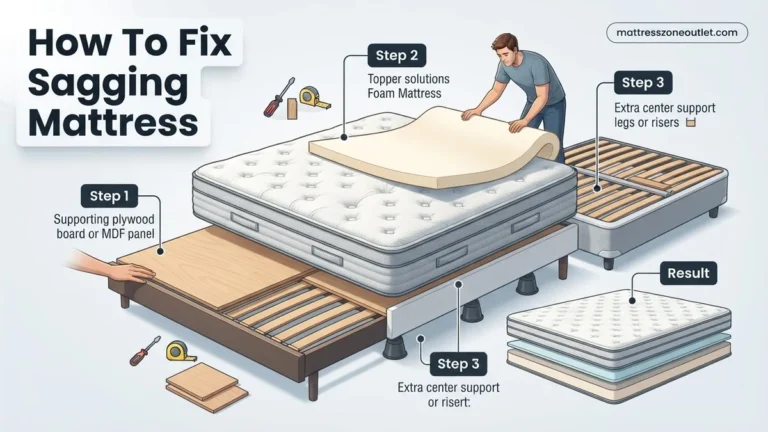
Instructions: If your box spring or foundation has broken internal wires or weakened wood, the mattress will sag and cause internal coils to bend awkwardly and rub together. Measure the internal dimensions of your bed frame and have a hardware store cut a piece of sturdy plywood to fit directly beneath your mattress. Placing a solid piece of plywood over a squeaky box spring or old slatted frame instantly stabilizes the sleeping surface, eliminates sagging, and dampens unwanted movement sounds.
Pro Tip: If using a solid plywood board, drill a few two-inch ventilation holes across the surface to allow proper airflow and prevent trapped moisture or mold growth underneath the mattress.
Step 7: Invest in a High-Quality Mattress Pad
What you need: A thick quilted mattress pad or a 2-inch memory foam mattress topper.
Instructions: Sometimes the squeaking sound originates from the top layers of the mattress where aging internal foams rub against the fabric cover. Adding a plush, high-density mattress pad or memory foam topper creates an extra layer of shock absorption. This extra padding not only enhances your overall sleeping comfort and spinal alignment, but it also helps distribute your body weight more evenly across the entire surface, taking localized pressure off noisy individual internal coils.
Pro Tip: Look for a topper with elastic straps that wrap securely around the corners of your mattress to ensure it stays firmly in place throughout the night without shifting.
✅ Final Checklist
- Verified the exact source of the noise by testing the mattress on the floor separate from the frame.
- Rotated or flipped the mattress to relieve pressure on heavily worn internal coils.
- Tightened all visible nuts, bolts, screws, and corner brackets on the bed frame.
- Applied silicone lubricant or wax to all metal-on-metal joints and friction points.
- Placed felt pads or fabric buffers between wooden slats and frame rails.
Important Notes:
- Always have at least two people lift heavy mattresses and box springs to avoid back strain or injury.
- If your mattress has exposed broken wires poking through the fabric, discontinue use immediately to prevent injury and consider professional replacement.
- Estimated time to complete all steps: 45 to 90 minutes. Estimated cost: $0 to $30 for lubricants, felt pads, or a plywood board.
How to Fix Bed Frame and Hardware Squeaks Step-by-Step
Tightening Loose Bolts and Screws
Loose hardware is the number one culprit behind modern bed frame noise. Grab a socket wrench or screwdriver and check every connection point on your frame. Metal tends to expand and contract over time, causing factory bolts to loosen.
- Tighten all headboard and footboard attachment bolts completely.
- Check the corner brackets where the side rails connect to the posts.
- If screw holes have stripped out, insert a small piece of wood glue and a toothpick into the hole before re-inserting the screw for a tight grip.
- Consider adding rubber washers between metal joints to absorb future vibrations.
Lubricating Metal-on-Metal Friction Points
When metal parts grind against each other under your body weight, they create a sharp metallic squeak. Applying the right lubricant will instantly silence these friction points.
- Spray a silicone-based lubricant or apply paste wax directly onto the threaded bolts and metal brackets.
- Avoid using cooking oils, as they attract dust and eventually gum up the mechanism.
- For persistent squeaks in metal spring frames, apply a few drops of sewing machine oil or professional-grade graphite powder to the coil crossing points.
- Wipe away any excess lubricant so it does not stain your bedding or carpet.
How to Silence Noisy Box Springs and Wooden Slats
When the noise originates from beneath the mattress, investigating the foundation is essential. Box springs and wooden slats frequently develop squeaks due to friction and dried-out lumber.
Fixing Squeaky Wooden Slats
Wooden slats rub against the bed frame rails whenever weight shifts. To eliminate this friction, follow these steps:
- Strip the bed entirely, removing the mattress and box spring to expose the slat system.
- Unscrew each wooden slat from the side rails to access the contact points.
- Apply a strip of heavy-duty felt tape or rubber gasket material along the supporting ledges.
- Reattach the slats securely, ensuring screws are tightened to prevent lateral movement.
Silencing Internal Box Spring Coils
Traditional box springs contain interconnected steel coils that lose tension over time. According to sleep ergonomics researchers, internal wire friction accounts for nearly 40 percent of bed noise complaints. To stop the sound:
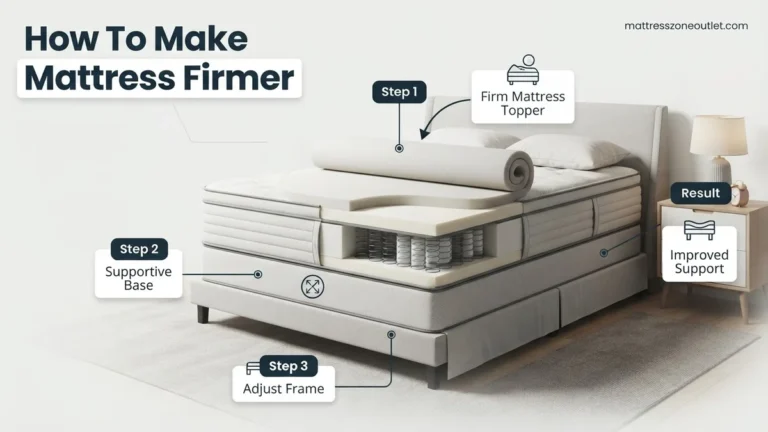
- Place a thick, high-density foam pad directly between the metal box spring and the mattress.
- If the noise persists, slice open the dust cover on the bottom of the box spring to inspect the interior coils.
- Spray all intersecting metal coils with a silicone-based lubricant, wiping away excess residue to protect the fabric.
What If It Still Doesn’t Work and You Need a Replacement
If targeted lubrication, hardware tightening, and padding fail to eliminate the sounds, structural fatigue is likely the root cause. Metal fatigue and warped wood cannot be permanently repaired at home. Consider these fallback steps if DIY methods fail:
- Inspect the manufacturer warranty status. Many modern mattress brands in 2026 offer up to 10-year coverage for structural defects, which often includes excessive sagging and frame noise.
- Upgrade to a modern platform bed with tightly spaced solid wood slats or a continuous metal grid, which reduces friction points.
- Consult a local furniture repair specialist if you own a valuable antique frame. Professional reinforcement typically ranges from $150 to $350 depending on the woodwork required.
- Invest in a high-density latex or pocketed coil replacement mattress if internal degradation has compromised the core support layers.
Conclusion
A noisy bed disrupts deep sleep cycles and degrades overall bedroom comfort. Fortunately, silencing unwanted mattress sounds simply requires systematic troubleshooting, from tightening loose hardware to lubricating internal coils. According to verified research and sleep hygiene experts, addressing structural friction promptly extends the lifespan of your sleep system and preserves spinal alignment. Take the most direct next step today by isolating the noise source and applying a targeted, long-lasting fix.
❓ Frequently Asked Questions
How can I stop a mattress from squeaking without buying anything?
You can use household items like old socks, t-shirts, or towels to pad wooden slats and metal joints. Tightening loose screws with a standard screwdriver or wrench also requires no special purchases.
Is it normal for a brand new mattress to make noise?
New innerspring mattresses sometimes make minor creaking sounds as the internal steel coils settle and adjust to weight. However, persistent loud squeaking usually indicates a manufacturing defect or an issue with the foundation.
How do I lubricate a metal bed frame properly?
Wipe down metal joints to remove dust and debris, then apply a silicone-based spray, candle wax, or petroleum jelly to the friction points. Avoid using excessive oil that could stain your bedding.
What is the best material to put between mattress slats?
Felt strips, cork tape, rubber pads, or even folded fabric work exceptionally well to stop wooden slats from rubbing against the bed frame rails.
Can a sagging box spring cause mattress noise?
Yes, a worn-out box spring with broken internal wires or loose wooden beams will creak loudly under pressure. Replacing the box spring or upgrading to a solid platform base is usually necessary.
When should I give up on DIY fixes and buy a new bed frame?
If the metal frame is bent, wooden beams are split, or bolt holes are stripped beyond repair, DIY fixes will only offer temporary relief. Purchasing a sturdy replacement frame is the safest long-term solution.