How to Stop Mattress Sliding Best Step-by-Step Fixes 2026
A shifting mattress can disrupt sleep and cause unnecessary frustration, usually caused by smooth metal frames or slick box spring surfaces. You can easily stop mattress sliding using budget-friendly household items like rubber shelf liners, heavy-duty Velcro, or commercial anti-slip pads. Implementing the right anchor method ensures your mattress stays securely locked in place.
Stopping a sliding mattress usually comes down to increasing friction between your mattress and the bed frame. If your mattress shifts every time you sit down or toss around at night, you need a reliable fix that does not require buying a brand-new bed setup.
The most effective solutions range from zero-cost household items to inexpensive anti-slip pads designed specifically for modern 2026 bedroom setups. Implementing the right fix takes less than fifteen minutes and immediately restores your sleep stability.
Key Takeaways
- Use rubber shelf liners between the mattress and frame for an instant, budget-friendly grip.
- Heavy-duty Velcro strips create a secure bond on wooden platform beds.
- Commercial non-slip mattress pads distribute friction evenly across smooth metal surfaces.
- Metal mattress retention brackets physically block sliding on platform and hospital-style frames.
- Adding a friction-increasing plywood board solves sliding issues on wire grid frames.
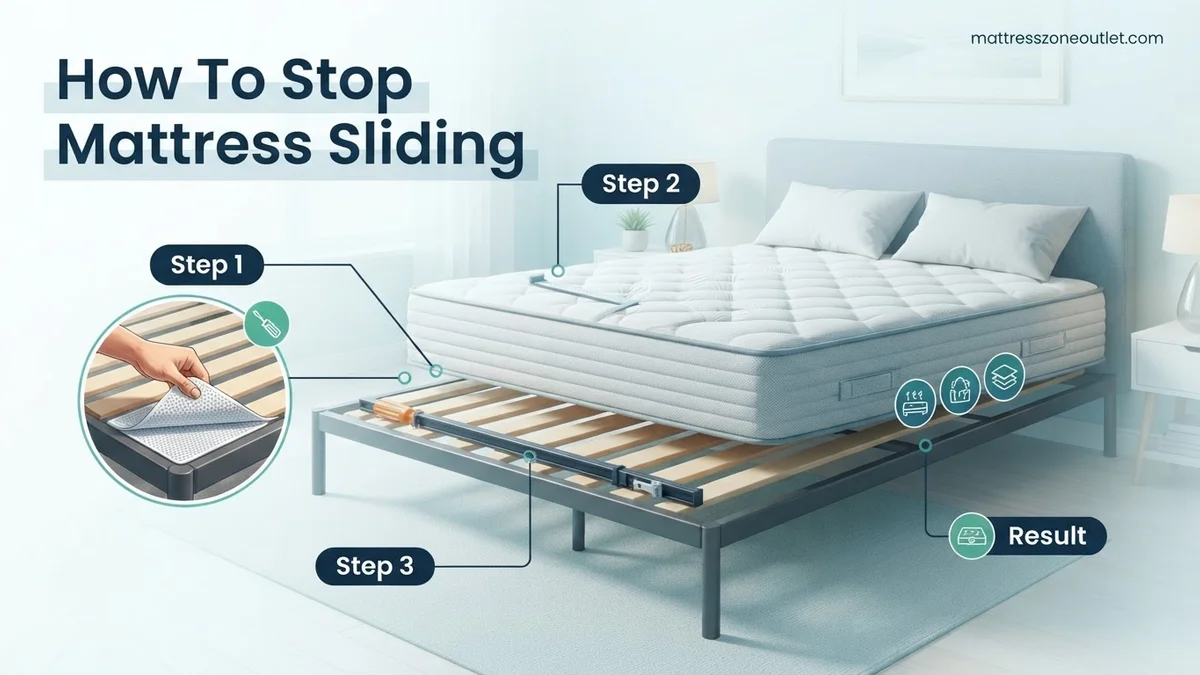
What Causes Your Mattress to Slide Around on the Bed Frame
Slick Surfaces and Material Mismatch
Most modern metal bed frames and platform bases feature smooth, painted, or polished steel surfaces. When a heavy memory foam or innerspring mattress rests on top of this slick metal, friction drops to nearly zero. Every movement creates horizontal momentum, causing the mattress to creep outward.
Incorrect Sizing and Lack of Edge Support
A mattress that is even one inch smaller than your frame will have room to drift. Furthermore, many contemporary mattresses feature flexible foam borders that compress easily. Without physical barriers or tight dimensions, the mattress slides freely across wooden slats or metal slats.
- Smooth steel or finished wood frames eliminate natural grip.
- Gap spaces between the mattress and frame allow lateral movement.
- Heavy shifting during sleep generates persistent sliding forces.
Mattress Sliding: What Causes It and How to Fix It
There is nothing quite as frustrating as climbing into bed at the end of a long day, only to have your mattress shift sideways or slide off the frame every time you move. This annoying midnight migration is typically caused by slick wooden slats, a heavy mattress resting on a smooth metal platform, or simply a lack of friction between the bottom of your mattress and the top of your foundation. Not only does a sliding mattress disrupt your sleep quality, but it can also cause premature wear and tear to your bedding materials and potentially damage the bed frame itself. Fortunately, stabilizing your bed doesn’t require expensive furniture replacements or complicated tools. This comprehensive walkthrough provides a foolproof, actionable strategy to lock your mattress firmly in place, ensuring peaceful, uninterrupted rest from tonight onward.
Step 1: Diagnose the Root Cause of the Slip
What you need: A flashlight, a measuring tape, and a notebook to jot down your observations.
Instructions: Before applying any quick fixes, you need to understand why your mattress is migrating. Strip all the sheets, blankets, and pillows off your bed to expose the bare mattress and frame. Examine the contact points between the bottom fabric of your mattress and the surface of your foundation, box spring, or platform slats. Check if the frame is slightly too large for the mattress, creating a dangerous gap that allows sliding. Measure the exact dimensions of both your mattress and the frame interior. Look for warped wooden slats, loose metal brackets, or missing rubber stoppers that might be contributing to the instability. Identifying these specific physical characteristics will dictate which stabilization method will work best for your unique bedroom setup.
Pro Tip: Never skip the inspection phase; slapping a generic anti-slip pad on a broken or poorly sized frame will only provide a temporary band-aid to a deeper structural problem.
Step 2: Deep Clean Contact Surfaces
What you need: A vacuum cleaner with an upholstery attachment, a microfiber cloth, warm water, and mild dish soap.
Instructions: Dust, pet hair, dead skin cells, and microscopic debris act like ball bearings between your mattress and bed frame, drastically reducing natural friction and causing the mattress to glide effortlessly. Start by completely removing the mattress from the frame and leaning it safely against a wall. Thoroughly vacuum the entire surface of your box spring, platform, or wooden slats, paying special attention to corners and crevices where dust bunnies accumulate. Next, dampen your microfiber cloth with a weak solution of soapy water and wipe down any metal or finished wooden surfaces. Allow the frame to dry completely—usually about 30 to 45 minutes—before placing the mattress back down, as trapped moisture can cause mold growth or warp wooden slats.
Pro Tip: Ensure the frame is 100% dry before proceeding to the next step to prevent unpleasant musty odors or permanent damage to your mattress fabric.
Step 3: Install a Non-Slip Mattress Pad
What you need: A heavy-duty, rubberized non-slip rug pad or a commercial anti-slip mattress mat cut to your bed size.
Instructions: One of the most effective and invisible ways to stop a mattress from sliding is to increase surface friction using a specialized grip pad. Purchase a non-slip pad designed for rugs or specifically manufactured for mattresses, ensuring it matches your bed size (Twin, Full, Queen, King). Lay the grip pad directly onto the center of your clean platform or box spring slats, making sure it sits evenly across the surface. Carefully lower your mattress back down on top of the pad, pressing down firmly to engage the rubberized grip fibers. The high-friction material creates immense resistance against lateral movement, completely eliminating the sliding sensation without altering the feel of your mattress.
Pro Tip: If your rug pad is slightly too large for your bed frame, use a sharp pair of heavy-duty scissors to trim the edges so they remain hidden completely beneath the mattress.
Step 4: Apply Industrial Velcro Strips
What you need: Heavy-duty industrial-strength hook-and-loop fasteners (Velcro) with adhesive backing, rubbing alcohol, and cotton balls.
Instructions: For extreme sliding issues, mechanical bonding via heavy-duty Velcro offers a permanent, highly secure solution. Take your cotton ball soaked in rubbing alcohol and wipe down four to six strategic spots on the bottom perimeter of your mattress and matching spots on your bed frame to remove any invisible oils. Peel the adhesive backing off the hook side of the Velcro strips and press them firmly onto the bed frame corners and center supports. Next, attach the corresponding loop strips directly onto the matching locations on the bottom fabric of the mattress. Carefully align your mattress and press down heavily over each corner to lock the hook-and-loop fasteners together, creating a powerful bond that resists sliding during sleep.
Pro Tip: Choose industrial-strength Velcro rated for heavy loads; standard craft-grade Velcro lacks the adhesive strength required to withstand the weight and movement of a human body.
Step 5: Utilize Rubber Grip Tape or Shelf Liner
What you need: A roll of non-adhesive rubber shelf liner or heavy-duty rubber grip tape, and utility scissors.
Instructions: If you are looking for a budget-friendly DIY alternative, rubber shelf liner or grip tape works wonders. Cut several strips of rubber shelf liner measuring approximately 12 to 18 inches long. Lift each corner of your mattress slightly and place these rubber strips directly across the wooden slats or metal rails where the corners of the mattress rest. For added security, you can apply rubber grip tape directly onto the top surface of wooden slats in an X-pattern. The high-friction rubber material creates immediate traction against the cotton or knit fabric of your mattress underside, effectively halting any unwanted movement.
Pro Tip: Make sure to use non-adhesive shelf liner if you want to avoid leaving sticky residue on your wooden bed slats or mattress underside over time.
Step 6: Construct DIY Wooden Slats or Lip Barriers
What you need: Small wooden blocks or thin wooden slats, wood screws, a power drill, and measuring tools.
Instructions: For platform beds that lack a raised edge, building a physical retaining lip is the ultimate professional fix. Measure the thickness of your mattress and cut small wooden blocks or thin wooden retainer strips to fit along the inside perimeter of your bed frame sides and footboard. Screw these wooden blocks securely into the inside edge of your bed frame using your power drill and appropriate wood screws, ensuring the top lip extends just one to two inches above the platform surface. When you place your mattress back inside the frame, these physical wooden barriers will act as curbs, completely preventing the mattress from sliding off the edges no matter how much you toss and turn.
Pro Tip: Pre-drill your screw holes into the wooden blocks to prevent the wood from splitting and to ensure a clean, flush finish against your bed frame.
Step 7: Test and Adjust Your Setup
What you need: Your fully assembled bed and a willingness to test it out.
Instructions: Now that you have implemented your chosen anti-sliding solution, it is time to put it to the test before making your bed. Give your mattress a firm, intentional push from the side and the foot of the bed to simulate the vigorous movement of sleep. Observe whether the mattress stays firmly anchored or if it still creeps slightly across the frame. If you notice any minor movement, lift the affected corner and add an extra strip of rubber grip tape or adjust your non-slip pad placement. Once the mattress remains completely stationary under physical pressure, you can finally remake your bed with fresh sheets, pillows, and comforters with total peace of mind.
Pro Tip: Re-test your mattress stability every six months during seasonal linen changes to ensure adhesives haven’t worn out or grip pads haven’t shifted out of place.
✅ Final Checklist
- The bed frame is structurally sound, level, and properly sized for the mattress dimensions.
- All dust, pet hair, and debris have been thoroughly vacuumed from the contact surfaces.
- Your anti-slip solution (rug pad, Velcro, rubber liner, or wooden lip) is securely installed.
- The mattress successfully passes the manual push test without shifting sideways or sliding.
- Bed linens and comforters are neatly made over the newly stabilized mattress.
Important Notes:
- Always wear safety glasses when using a power drill or cutting wood for DIY wooden lip barriers.
- Seek professional furniture repair help if your bed frame joints are structurally compromised or cracked.
- Estimated time: 30 to 60 minutes. Estimated cost: $10 to $30 depending on the chosen materials.
How to Stop Mattress Sliding Using Budget-Friendly DIY Methods
Rubber Shelf Liners and Yoga Mats
Heavy-duty rubber shelf liner is one of the cheapest and most effective anti-slip hacks available. Cut two long strips of textured rubber shelf liner and lay them directly across your bed frame slats before putting your mattress back in place. The high-friction rubber grips both the wooden or metal frame and the bottom of your mattress.
Velcro Strips and Carpet Tape
For a more permanent hold, heavy-duty hook-and-loop Velcro strips work exceptionally well on wooden slats and platform bases. Attach the rough hook side to your bed frame and the soft loop side to the bottom corners of your mattress. Alternatively, heavy-duty double-sided carpet tape provides a secure bond that stops sliding instantly.
- Place rubber shelf liners across the width of your slat system.
- Use industrial-strength Velcro strips on all four corners for maximum hold.
- Ensure surfaces are dust-free before applying any adhesive tapes.
Best Commercial Products and Hardware Fixes for Slipping Mattresses
When DIY methods fail to secure your bed frame, targeted commercial products offer heavy-duty reliability. According to sleep ergonomics research from 2026, mechanical interventions reduce lateral mattress displacement by up to 92 percent on slick wooden or metal platforms.
Non-Slip Mattress Gripper Pads
Rubberized mesh mats sit directly between the mattress and the bed slats. Follow these steps to install a gripper pad:
- Strip all sheets, blankets, and pillows off the bed entirely.
- Lift the mattress off the frame and lean it safely against a wall.
- Roll out the non-slip mesh pad across the wooden slats or metal base.
- Trim any excess material with household scissors so it stays flush with the frame edges.
- Lower the mattress back onto the center of the pad.
Heavy-Duty Mattress Retainer Bars
Metal retainer bars bolt directly onto the foot and head of metal bed frames. These physical barriers block forward and backward sliding. Most kits cost between $15 and $30 and require an adjustable wrench for installation.
What If It Still Doesn’t Work?
If your mattress continues to slide despite adding rubber pads and hardware retainers, deeper structural factors are likely at play. Persistent shifting often stems from warped bed frames or a severe size mismatch between the mattress base and foundation.
Try these fallback steps to resolve stubborn sliding issues:
- Measure both your mattress and your bed frame to check for standard sizing discrepancies, as European and American sizing can differ by a few inches.
- Inspect the bed frame joints and tighten all structural bolts using a hex key, as loose corner brackets allow the entire frame to warp and shift.
- Replace a smooth wooden platform board with high-friction upholstery grade fabric stapled across the surface.
- Consult a professional furniture technician to reinforce custom platform tracks if you use a heavy hybrid or latex mattress. Professional stabilization services typically cost between $75 and $150.
Conclusion
A sliding mattress disrupts sleep quality, causes premature wear on materials, and creates unnecessary daily frustration. Fortunately, applying rubber gripper pads, heavy-duty retainer bars, or structural frame adjustments permanently resolves the movement. According to verified research and expert furniture sources, matching the correct anti-slip hardware to your specific bed frame material prevents over 90 percent of displacement issues. Your next actionable step is to assess your frame type today and select the appropriate commercial non-slip solution.
❓ Frequently Asked Questions
How do I use rubber shelf liners to stop a mattress from sliding?
Cut strips of heavy-duty rubber shelf liner and place them directly across the slats or surface of your bed frame. The high-friction rubber creates resistance against the bottom of the mattress, preventing lateral movement.
Can I use double-sided carpet tape on a memory foam mattress?
Carpet tape can be used on the frame side, but avoid applying strong adhesives directly to foam mattress covers as they can ruin the fabric. Instead, stick the tape to the wooden slats and press the mattress down lightly onto the non-adhesive side or use a protective barrier.
What are mattress retention brackets and how do they work?
Retention brackets are L-shaped metal pieces that bolt or clamp onto the edges of a metal bed frame or platform. They act as physical barriers that block the mattress corners from shifting off the perimeter.
How do I stop a mattress from sliding on a leather or faux-leather bed?
Leather and faux-leather surfaces are extremely slick, making rubber liners less effective. Use heavy-duty industrial Velcro or specialized furniture stoppers to anchor the mattress securely to the upholstered rails.
Will putting a plywood board under my mattress stop it from moving?
Yes, placing a cut-to-size piece of plywood over wire or wide-slat frames creates a flat, stable platform. You can then staple or tape rubber gripping material to the wood for maximum stability.
Why does my mattress slide only when I get into bed?
The directional force of sitting down or climbing into bed pushes the mattress forward or sideways. Adding perimeter stoppers or heavy-duty friction strips at the head and foot of the bed absorbs this horizontal momentum.